If you’ve been comparing a faucet water filter PUR vs Brita and can’t tell why two similar-looking plastic units have wildly different price tags and filter lives, you’re not alone — the marketing on both boxes is nearly identical, but what they actually certify to remove is not. This guide breaks down the real differences that matter at your kitchen sink: contaminant removal, certifications, filter cost per gallon, flow rate, and whether either one will even fit your faucet. As a brand that sells and installs kitchen faucets every day, we care about one thing the filter companies gloss over — will it thread onto your aerator without leaking? That’s where most buyers get burned.
What’s the real difference between a PUR and a Brita faucet water filter?
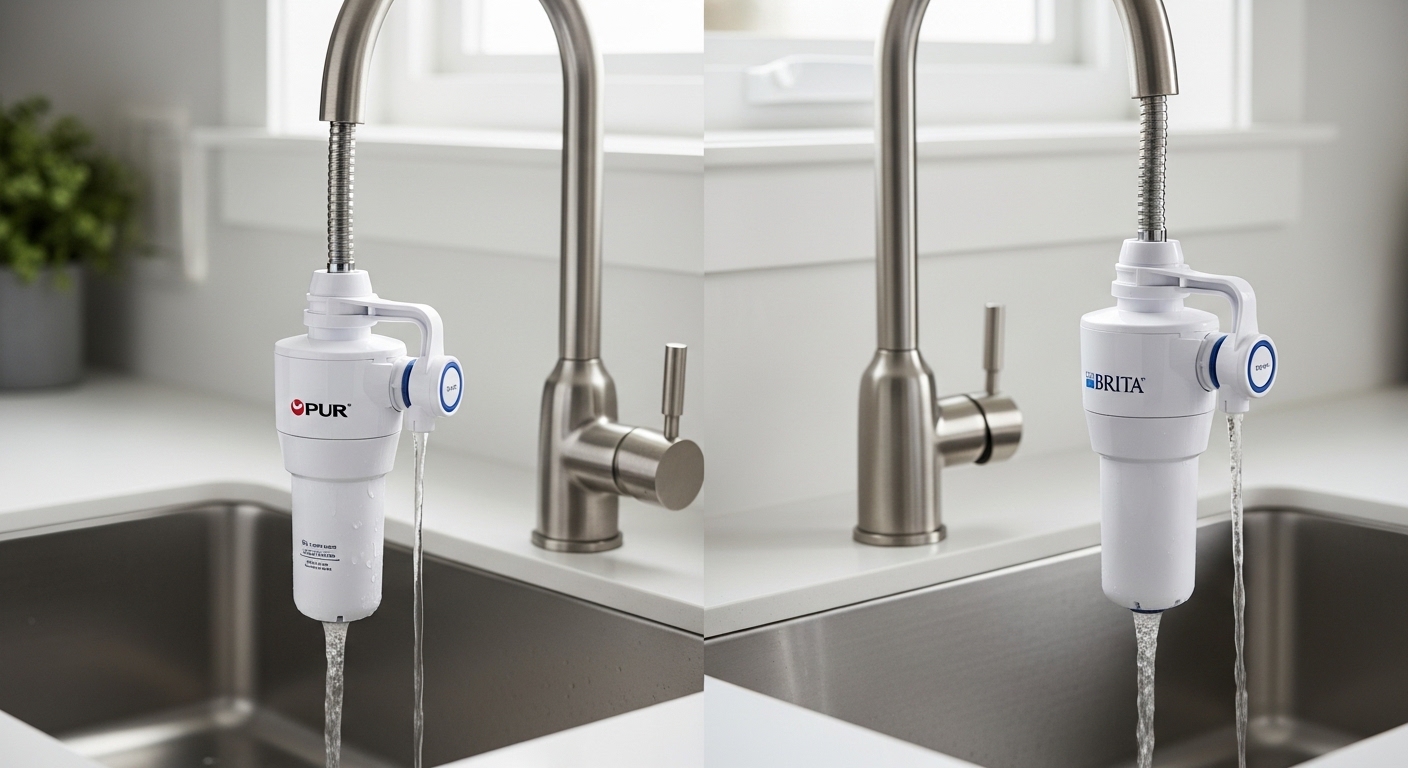
The real difference is scope of filtration and product focus. PUR builds its whole reputation around faucet-mounted filtration and certifies its faucet filters to reduce more contaminants — including lead, mercury, certain pesticides, and industrial pollutants — while Brita’s faucet mount is a smaller part of a company that lives and dies by its pitchers.
Both attach the same basic way: you unscrew your faucet’s aerator, thread on an adapter, and clip the filter housing to the spout. Both use an activated carbon block as the core media. But PUR layers in ion-exchange and additional adsorption media specifically to grab heavy metals, which is why its faucet filters carry broader NSF/ANSI certifications. Brita’s faucet system removes chlorine (taste and odor), lead, and a solid list of common contaminants, but historically it certifies to fewer total contaminants than PUR’s comparable faucet unit.
Here’s the honest framing: if your question is “which pitcher is best,” Brita is arguably the stronger brand. If your question is specifically about a faucet filter that mounts on your tap, PUR is the more serious contender because that’s the product category it was built for.
Which one removes more contaminants — PUR or Brita?
PUR removes more, at least on paper and by certification. PUR’s faucet filters are NSF/ANSI certified to reduce over 70 contaminants (their marketing often cites “up to 70+”), including lead, mercury, and a range of pesticides, herbicides, and pharmaceuticals. Brita’s faucet system is certified for a smaller list — strong on chlorine, lead, and common taste/odor issues, but narrower overall.
The number that matters most for families is lead. Both PUR and Brita faucet filters are certified to NSF/ANSI Standard 53 for lead reduction, so if lead is your only concern (older home, pre-1986 plumbing, or a lead service line), either brand handles it. Where PUR pulls ahead is the “everything else” bucket — VOCs, certain pesticides, and heavy metals beyond lead. If you’re on a private well or in an area with known agricultural runoff or industrial contamination, PUR’s broader certification list gives you more coverage.
One important caveat: certifications are per-model. Not every PUR or Brita filter cartridge is certified for the same things. Always check the specific model’s certification sheet against the actual contaminants in your water. If you don’t know what’s in your water, pull your local utility’s annual Consumer Confidence Report (it’s free and public) or run an at-home test kit before you spend a dime on a filter.
- Lead reduction: Both certified (NSF/ANSI 53). Tie.
- Chlorine taste & odor: Both excellent (NSF/ANSI 42). Tie, slight edge to Brita on taste.
- Heavy metals beyond lead (mercury, etc.): PUR wins.
- Pesticides, herbicides, VOCs: PUR generally certifies for more.
- Overall contaminant count: PUR (70+) > Brita (~60).
PUR vs Brita faucet filter: full spec comparison
Here’s the head-to-head at a glance so you can decide in thirty seconds. The exact numbers shift slightly by model year and cartridge, but this reflects the current lineup as of 2026.
| Feature | PUR (Faucet Mount) | Brita (Faucet Mount) |
|---|---|---|
| Contaminants reduced | 70+ (incl. lead, mercury, pesticides) | ~60 (lead, chlorine, common metals) |
| Key certifications | NSF/ANSI 42, 53, 401 (model dependent) | NSF/ANSI 42, 53 (model dependent) |
| Filter life | ~100 gallons (2–3 months) | ~100 gallons (~4 months typical use) |
| Flow rate | ~0.5–0.6 GPM (filtered) | ~0.5 GPM (filtered) |
| Filter change indicator | Yes (electronic light on most models) | Yes (sticker/electronic on some) |
| Upfront unit price | $$ (slightly higher) | $ (slightly lower) |
| Replacement cartridge cost | $$ per cartridge | $ per cartridge |
| Best for | Max contaminant removal, well water, older homes | City water, taste, budget buyers |
Notice the filter life line. Both are rated around 100 gallons, but the “months” estimate is misleading — it assumes a fixed household usage. A family of four cooking daily will burn through a cartridge faster than a single person. Judge by gallons, not by the calendar, and use the change indicator light.
Which is cheaper over a year — PUR or Brita faucet filters?
Brita is usually cheaper over a year, both on the initial unit and on replacement cartridges. If your only concerns are chlorine taste and lead on city water, Brita’s lower cost-per-gallon makes it the value pick. PUR costs a bit more per cartridge, and you’re paying for the broader contaminant certification you may or may not need.
Run the math on cost per gallon, not sticker price. At roughly 100 gallons per cartridge, divide the cartridge price by 100 and you’ve got your true operating cost. For most households the annual difference between the two brands is modest — often $20 to $40 a year — so don’t let a small price gap push you toward a filter that doesn’t remove what’s actually in your water. Paying slightly more for PUR is worth it if you have well water or heavy-metal concerns; paying less for Brita is smart if you’re on treated municipal water that already tests clean.
Will a PUR or Brita filter actually fit my faucet?
Not always — and this is the number one reason faucet filters get returned. Both PUR and Brita faucet filters only fit standard threaded faucets. They will NOT fit pull-down or pull-out spray faucets, faucets with built-in sprayers, or many “designer” faucets with non-standard or hidden aerators.
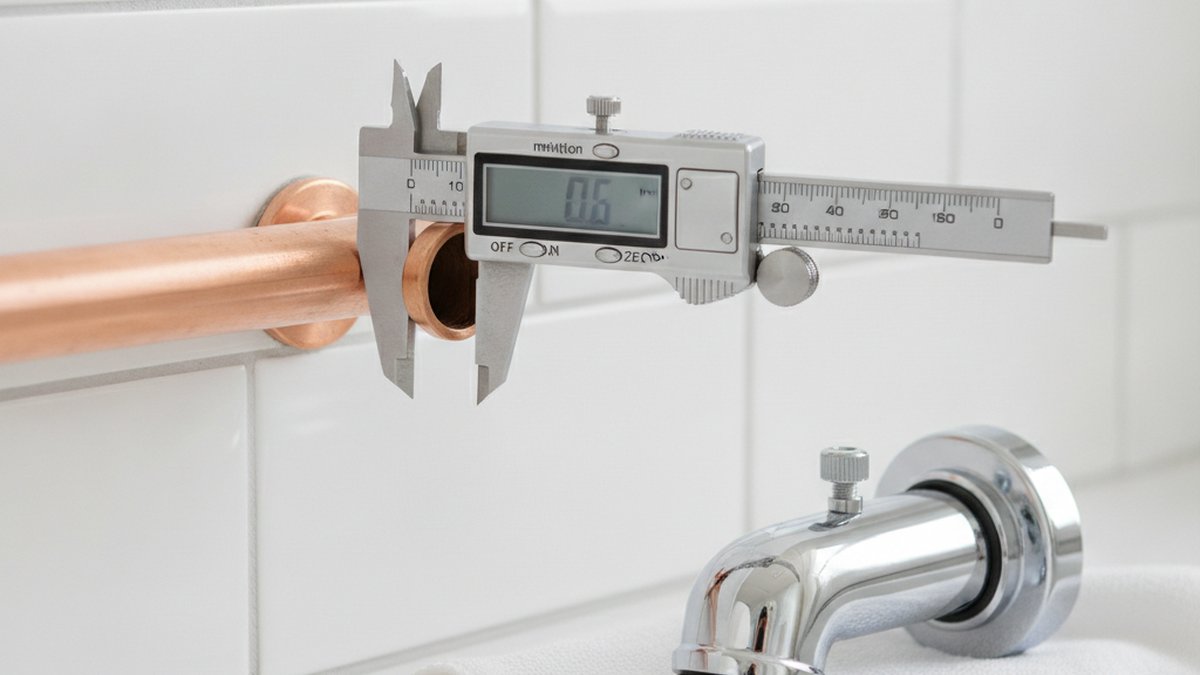
Before you buy either brand, look at your faucet’s tip. If you can unscrew the aerator (the little screen at the very end of the spout) and it has standard threads, you’re in business — both brands include adapters for the common male and female thread sizes. If your spout is a smooth, tapered pull-down head, or the aerator is a proprietary snap-in type, neither faucet filter will thread on, full stop. In that case you’d need an under-sink filter or a pitcher instead.
This is exactly where a lot of buyers get stuck, and it’s worth reading our deep dive on which kitchen faucet is compatible with a PUR water filter before you order — it walks through thread sizes and how to confirm a fit in under a minute. If you’d rather not deal with faucet-mount compatibility headaches at all, a dedicated filtered tap is another route; our guide to whether a Waterdrop faucet water filter is worth it covers that alternative, and if you’re weighing an under-sink cartridge system, the Waterdrop X16 faucet hole size guide explains what your sink needs to accommodate one.
Do faucet filters kill water pressure like an aerator can?
A little, yes — expect roughly half your normal flow when the filter is engaged, because water is being forced through a dense carbon block. That’s normal and not a defect. Both PUR and Brita drop to around 0.5 GPM in filtered mode, versus a standard faucet’s 1.5–2.2 GPM. You’ll notice it most when filling a large pot.
Both units let you switch between filtered and unfiltered flow with a lever, so you can run full pressure for dishes and switch to filtered only for drinking and cooking — which also makes your cartridge last longer. If your pressure feels worse than “half,” the culprit is often a clogged cartridge overdue for replacement, or sediment building up in the aerator threads. It’s the same physics behind why a faucet aerator can cause low pressure — restrict the opening, restrict the flow. If your water is heavy with sediment, expect to change filters more often on either brand.
One more note on water safety that’s easy to overlook: a filter reduces contaminants coming through the pipe, but the faucet body itself matters too. If you’re this concerned about drinking water quality, it’s worth confirming your tap is built from safe materials — our explainer on whether a lead-free brass kitchen faucet is really safer for your drinking water is a useful companion read, because a great filter on a leaded faucet body is a half-measure.
Which should you buy: PUR or Brita?
Buy PUR if you want maximum contaminant removal, especially lead plus heavy metals, pesticides, or you’re on well water — its broader NSF certifications are the real reason to choose it. Buy Brita if you’re on clean municipal water, mainly want better taste, and want the lowest running cost. Here’s the decision in plain terms:
- Choose PUR if: you have an older home, a well, known lead or heavy-metal concerns, or you simply want the widest safety margin and don’t mind paying a bit more per cartridge.
- Choose Brita if: you’re on treated city water that tests clean, your main gripe is chlorine taste, and you want the cheapest cost per gallon.
- Choose neither (go under-sink or pitcher) if: you have a pull-down or non-standard faucet, or you want higher flow without a bulky unit hanging off your spout.
FAQ
Is PUR or Brita better for removing lead?
They’re essentially tied for lead. Both PUR and Brita faucet-mounted filters are NSF/ANSI Standard 53 certified for lead reduction, so either one will meaningfully cut lead from your tap water — provided you replace the cartridge on schedule. PUR pulls ahead only when you need lead plus other heavy metals like mercury.
Do PUR and Brita faucet filters remove fluoride?
No, generally not. Standard PUR and Brita faucet cartridges are not certified to remove fluoride. Fluoride removal requires reverse osmosis, activated alumina, or bone char media — none of which are in a typical carbon-block faucet filter. If fluoride removal is your goal, a faucet mount from either brand won’t do it, and you’ll want an under-sink RO system instead.
How often do I need to change a PUR or Brita faucet filter?
Roughly every 100 gallons, which is about 2 to 4 months for an average household. Go by the change-indicator light rather than the calendar, since usage varies. Running only filtered water for drinking and cooking (and unfiltered for dishes) stretches cartridge life significantly. A clogged, overdue filter is the top cause of weak flow.
Can I put a PUR or Brita filter on any faucet?
No. Both only fit standard faucets with a removable, threaded aerator. They will not attach to pull-down, pull-out, or spray-head faucets, or to faucets with proprietary aerators. Check that your aerator unscrews and has standard threads before buying — this is the most common reason faucet filters get returned.
Does a faucet filter reduce water pressure?
Yes, filtered flow drops to about half of normal (around 0.5 GPM) because water is pushed through a dense carbon block. This is expected on both brands. Use the bypass lever to run full unfiltered pressure for chores and switch to filtered only for drinking water, which also extends cartridge life.
Is PUR or Brita cheaper in the long run?
Brita is usually cheaper both upfront and per replacement cartridge, making it the value choice for city-water households that mainly want better taste. PUR costs a little more but removes more contaminants, so it’s the better spend if you have well water or heavy-metal concerns. Compare cost per gallon (cartridge price ÷ 100), not sticker price.
About the author: This guide was written by the product team at aleashafaucet, who spec, test, and install kitchen and bathroom faucets year-round. We fit faucet-mounted filters onto dozens of spout and aerator types, so our compatibility advice comes from hands-on experience — not a spec sheet.
Why trust aleashafaucet: We’re a dedicated faucet and bathroom-fixtures brand at www.aleashafaucet.com. Our recommendations reference NSF/ANSI Standards 42, 53, and 401 — the independent certifications that govern water-filter performance claims — and we always advise checking a specific model’s certification sheet and manufacturer warranty against your own water report before you buy. We don’t manufacture PUR or Brita filters, so this comparison is independent.