If you’ve ever leaned awkwardly over a shallow sink because the water lands two inches short of where your hands are, a faucet extender pipe is the cheap, five-minute fix you’ve been looking for. It’s one of the least glamorous fixtures we sell, and also one of the most quietly useful — it solves a specific, annoying problem without replacing the whole faucet. Below, I’ll walk through exactly what it does, the different types, how to pick the right one for your sink, and where people go wrong so you don’t waste $15 on a part that won’t thread on.
What exactly does a faucet extender pipe do?
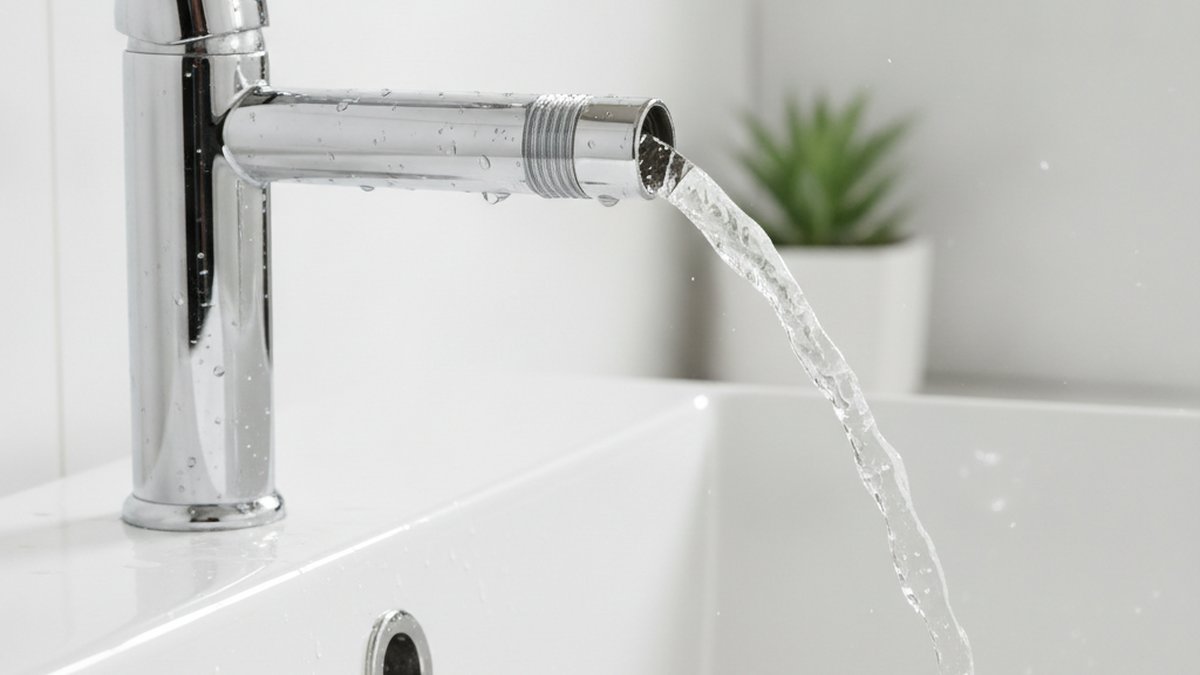
A faucet extender pipe extends the reach and/or height of your water stream by adding a rigid or gently curved tube between your spout and the point where water exits. In plain terms: it moves the water. You screw it into the threaded tip of your faucet (where the aerator sits), and now the stream comes out farther forward, higher up, or angled down into the basin — depending on the shape you buy.
People reach for one in a handful of very specific situations:
- Shallow or short spouts where water hits the back wall of the sink instead of the drain, causing splash-back all over the counter.
- Deep farmhouse or utility sinks where the factory spout barely clears the rim and you can’t fit a pot under it.
- Kids’ bathrooms — a curved “extender spout” brings the water forward so a toddler can actually reach it without climbing.
- Filling buckets, watering cans, or pet bowls that don’t fit in the sink.
- Elderly or limited-mobility users who need the stream to come to them rather than reaching deep into the bowl.
It’s worth being clear about what an extender is not. It won’t increase your water pressure, it won’t turn a bathroom faucet into a high-arc kitchen faucet, and it won’t fix a leak coming from your valve or cartridge. If your real problem is a drip or a worn seat, an extender pipe is the wrong tool — you’d want to look at the actual valve internals instead.
What are the different types of faucet extender pipes?
There are four common styles, and picking the right one is mostly about the shape of the problem you’re solving. Here’s the quick version: straight extenders add reach, gooseneck extenders add height and reach, swivel extenders add aim, and children’s “spout guards” add reach plus a soft, safe edge.
| Type | Best for | Typical length | Material options | Price range |
|---|---|---|---|---|
| Straight threaded extender | Adding forward reach on a shallow sink | 1–3 in | Brass, chrome-plated brass, ABS plastic | $8–$18 |
| Gooseneck / curved extender | Deep basins, filling tall containers | 4–8 in | Brass, stainless | $15–$30 |
| Swivel / adjustable-angle extender | Aiming the stream, dual-basin sinks | 2–6 in | Brass with ball joint | $18–$35 |
| Child spout extender (silicone-tipped) | Kids’ hand-washing, safety | 2–4 in | ABS + silicone | $6–$14 |
If you only care about not splashing your counter, a short straight brass extender does the job. If you’re trying to fill a stockpot or a watering can in a bathroom sink, go gooseneck. If you have a dual-bowl kitchen sink and want to hit both basins, a swivel model earns its slightly higher price.
Brass vs. plastic faucet extender pipe — which lasts longer?
Buy brass if you want it to last, and only choose plastic if it’s a temporary or kids’ fixture. Solid brass (or chrome-plated brass) resists corrosion, holds thread integrity when you tighten it, and won’t crack under hot water. ABS plastic extenders are cheaper and lighter, which is genuinely nice for a child’s step-stool sink, but the threads strip more easily and they can discolor over a couple of years of hot water and toothpaste.
A couple of practical notes from years of fielding return questions:
- Chrome-plated brass is the sweet spot for most bathroom and kitchen faucets — it matches common finishes and won’t rust.
- Stainless steel gooseneck extenders look great on modern faucets but tend to cost a few dollars more.
- Plastic is fine for a garage utility sink or a toddler bathroom where you’ll swap it out anyway.
- Whatever material you choose, make sure it ships with a rubber or silicone washer — that washer, not the threads, is what actually seals the connection and stops drips at the joint.
How do I know which faucet extender pipe will fit my faucet?
Match the thread type and size of your existing aerator — that’s the whole game. Nearly every faucet extender pipe screws into the same spot where your aerator currently lives, so if you know your aerator size, you know your extender size. Get this wrong and the part simply won’t thread on.
Here’s how to check in about two minutes:
- Unscrew your current aerator by hand (turn it toward you / counter-clockwise as you look up at it). If it’s stuck, wrap it in a cloth and use pliers gently.
- Look at the threads. Male aerators have threads on the outside; female aerators have them hidden inside. Your extender must match the opposite so it mates correctly.
- Measure the diameter. The two most common bathroom sizes are Regular (15/16 in male, 55/64 in female); kitchen faucets are often Large (15/16 in–27 male). Junior and Tom Thumb sizes exist for compact faucets.
- Check for a hidden aerator. Some newer pull-down faucets have a recessed aerator that needs a special key — those often are not compatible with universal extenders, so read the listing carefully.
When in doubt, take the aerator to a hardware store or match it against the spec in the product listing. A universal multi-thread adapter kit (which includes several washers and both male and female fittings) is a smart buy if you’re not sure — it covers roughly 90% of standard faucets. If your aerator is corroded or stuck so badly it won’t budge, that’s a related-but-separate repair; the same patience and penetrating-oil tricks that work when you remove an old, stuck tap seat apply to freeing a seized aerator too.
How do you install a faucet extender pipe (and is it a DIY job)?
Yes, it’s a genuine no-tools, five-minute DIY job for the vast majority of people. If you can screw the lid onto a jar, you can install a faucet extender pipe. Here’s the full sequence:
- Turn off the faucet (you don’t need to shut off the supply valves under the sink for this).
- Unscrew the existing aerator by hand and set it aside — keep it, you’ll want it back if you ever remove the extender.
- Seat the rubber/silicone washer into the extender’s female end so the seal sits flat.
- Hand-thread the extender onto the faucet, turning clockwise. Get it finger-tight first to avoid cross-threading.
- Snug it up an extra quarter-turn — by hand, or with pliers wrapped in cloth if it’s brass and you want it secure. Don’t crank it; over-tightening splits washers and strips threads.
- Screw your aerator (or the extender’s included aerator tip) onto the far end.
- Run the water and check the joint. A drip at the connection almost always means the washer isn’t seated or needs a slight tighten — not that the part is defective.
If, after all that, water is dripping from the spout tip itself rather than the joint, the extender isn’t your problem — that points to a worn cartridge or valve upstream, which is a different repair entirely.
When should you NOT use a faucet extender pipe?
Skip the extender if the real issue is low pressure, a leak, or a faucet that’s simply too small for the sink. An extender treats reach and height — nothing else. Reaching for one to solve the wrong problem is the single most common mistake we see. A few honest “buy something else instead” scenarios:
- You want more water pressure. An extender can slightly reduce perceived pressure by adding length. Check your aerator’s GPM rating instead, or clean out mineral buildup.
- Your faucet drips when off. That’s a valve/cartridge issue. An extender will just move the drip a few inches forward.
- You constantly need high clearance and reach. At some point it’s cheaper and cleaner to buy a proper high-arc faucet. If you’re weighing a full replacement anyway, it’s worth reading up on how faucet configurations differ — for a small vanity, for instance, a vessel sink one-hole faucet is purpose-built for tall basins, and knowing the correct fixture name for the part you’re replacing saves you from ordering the wrong thing.
- You have a laundry or utility setup with hose threads. That’s a different adapter category — closer to a garden hose faucet fitting or a laundry faucet cap — not a standard aerator extender.
How much should a faucet extender pipe cost, and what do you actually get?
Expect to pay $8–$30, and the price mostly tracks material and shape rather than brand. A plain plastic child’s extender runs $6–$14; a solid brass straight or swivel extender lands around $15–$25; a stainless gooseneck can hit $30. Above that, you’re usually paying for a finish match (matte black, brushed gold) rather than better function.
Here’s a straight-talk value breakdown so you don’t overspend:
| Budget | What you get | Good for |
|---|---|---|
| Under $10 | Basic plastic or single-finish chrome, one washer | Kids’ sinks, temporary fixes, garages |
| $10–$20 | Chrome-plated brass, multiple washers, universal adapter | Most bathrooms and kitchens |
| $20–$35 | Solid/stainless brass, swivel joint, finish options | Deep sinks, finish matching, daily heavy use |
My honest recommendation for a typical home: a chrome-plated brass extender in the $12–$18 range that includes a universal washer/adapter kit. It fits almost everything, seals reliably, and lasts years.
A note on quality, testing, and warranty
A faucet extender pipe is a small part, but it’s still carrying pressurized potable water past a threaded joint, so material quality genuinely matters. Look for extenders whose brass is certified lead-free to NSF/ANSI 372 (the low-lead standard for drinking-water fixtures) and, ideally, listed to NSF/ANSI 61 for drinking-water safety. At aleashafaucet, we pressure-test our brass fittings and threaded components before they ship, and our extenders and adapters carry a limited warranty against thread failure and finish defects — because the number-one real-world complaint with cheap extenders is stripped threads, not dramatic failures. If a washer degrades or a thread won’t seat, that’s exactly what a warranty should cover.
FAQ
Will a faucet extender pipe reduce my water pressure?
Slightly, in some cases — but usually not enough to notice. The extra length adds a small amount of flow resistance, and a gooseneck adds more than a short straight extender. If pressure is already marginal, choose the shortest extender that solves your reach problem and make sure the aerator on the tip isn’t a low-flow (0.5 GPM) restrictor unless you want one.
Are faucet extender pipes universal, or do I need a specific size?
Most are sold as “universal,” but that really means they include adapters for the two or three most common aerator threads. They fit roughly 90% of standard faucets. The exceptions are faucets with recessed/hidden aerators (common on newer pull-down kitchen faucets) that use a proprietary key — always check your aerator type before ordering.
Can I use a faucet extender pipe in the kitchen for filling pots?
Yes — a gooseneck or swivel extender is great for this, as long as your kitchen faucet has a standard male or female aerator thread. It’s a cheap way to buy clearance without replacing the faucet. Just confirm the extender is rated for hot water (brass or stainless is best) since kitchen use runs hotter and more often.
Why is my faucet extender pipe leaking at the joint?
Almost always the washer. Either it isn’t seated flat, it’s the wrong size, or the connection is slightly loose. Unscrew it, check that the rubber/silicone washer sits squarely in the recess, and re-tighten to hand-tight plus a quarter turn. If it still weeps, wrap two or three turns of plumber’s PTFE tape around the male threads and try again. A leak at the joint is a seal issue, not a defective pipe.
Is a faucet extender pipe safe for drinking water?
It is if the material is certified for potable water. Choose brass certified lead-free (NSF/ANSI 372) and ideally NSF/ANSI 61 listed. Avoid unmarked ultra-cheap alloys for any tap you drink from. Silicone-tipped children’s extenders are fine as long as the silicone is food-grade.
Can a faucet extender pipe fix a dripping faucet?
No. If your faucet drips when it’s turned off, the problem is inside the valve — a worn cartridge, washer, or seat — and an extender will simply relocate the drip. Fix the valve first, then add the extender if you still want more reach.
Author note: This guide was written by the aleashafaucet fixtures team, drawing on hands-on installation and years of customer support on aerator sizing, thread matching, and small-fixture leaks. aleashafaucet designs and sells faucets and bathroom fixtures direct to homeowners, and we test our brass components for lead content and pressure integrity before they ship. When a part is the wrong solution for your problem, we’ll tell you — as we did above.