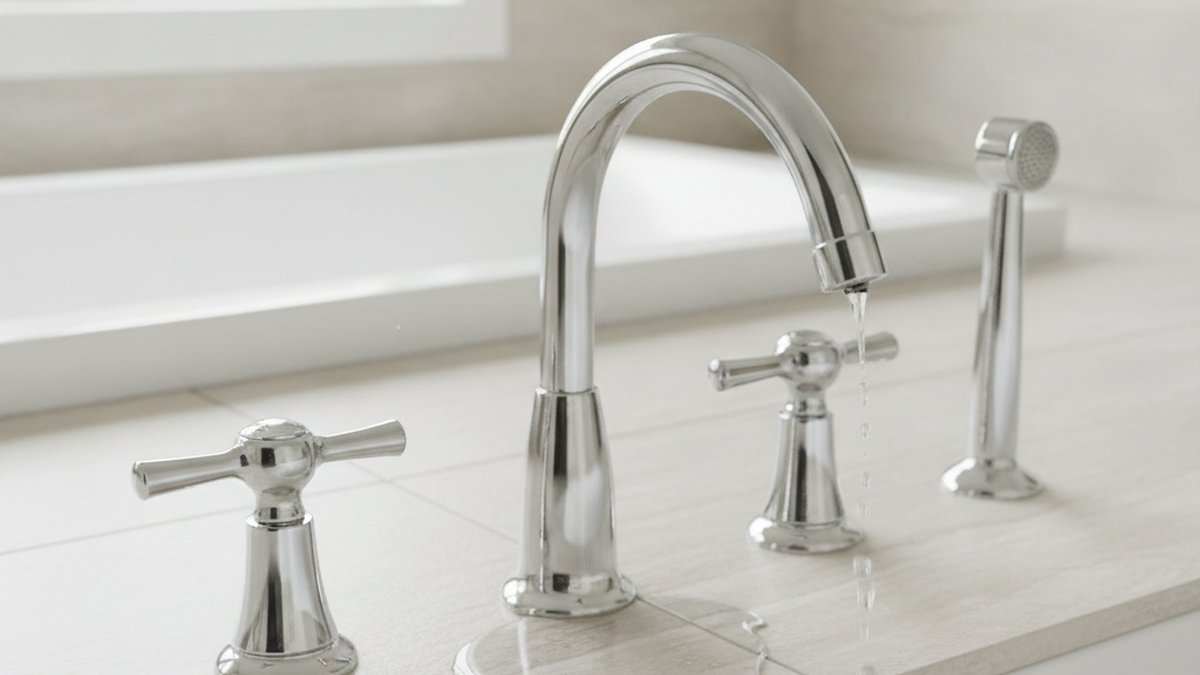
If you have a roman tub spout leaking onto your deck or dripping into the tub long after you’ve shut the water off, the good news is that the spout you can see is rarely the real culprit. Roman tubs use a deck-mounted spout fed by valves buried under the tub rim, and a leak almost always traces back to a worn cartridge, a dried-out O-ring, or a tired diverter down in that valve body. That’s actually great news for your wallet: a $12–$40 repair part usually solves it, and you very likely don’t need to call a plumber.
Below, I’ll walk you through exactly where roman tub leaks come from, how to diagnose which one you have in about five minutes, and how to fix each type step by step. I’ll also cover when a repair isn’t worth it and it’s smarter to replace the whole faucet.
What Is a Roman Tub Spout and Why Does It Leak in the First Place?
A roman tub spout is the low, wide-arc faucet that mounts on the flat deck (rim) surrounding a drop-in or freestanding-style tub, rather than on the wall. It leaks because the spout is only the visible tip of a system — the actual water control happens in separate valve bodies mounted below the deck, and those valves contain the moving parts that wear out.
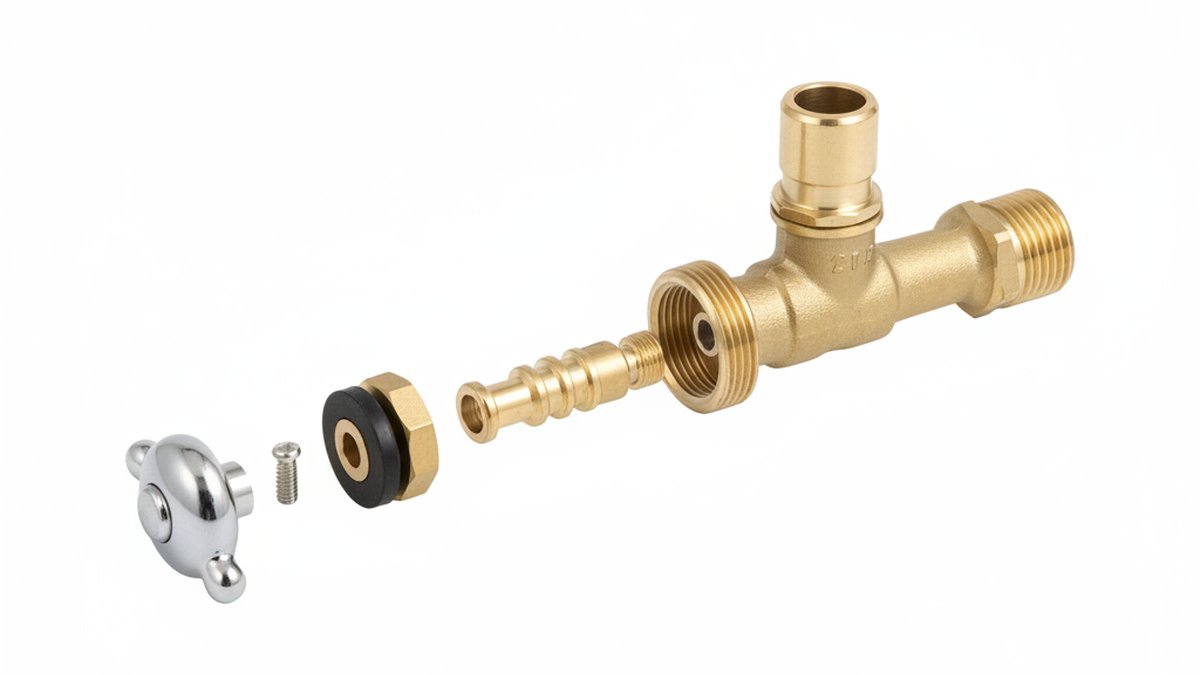
Here’s the anatomy that matters. A typical roman tub set has a spout, two handles (hot and cold), and often a hand shower with a diverter. Under the deck, each handle connects to a valve with an internal cartridge or stem sealed by rubber O-rings and a seat. When you shut the handle off, that cartridge is supposed to fully block flow. When the rubber inside hardens, cracks, or gets chewed up by hard-water minerals, water sneaks past and dribbles out the spout. Because roman tubs sit on a horizontal deck, even a slow drip pools instead of running away, so leaks get noticed fast.
The three failure points, in order of how often I see them:
- Worn valve cartridge or stem washer — causes a steady drip from the spout tip when everything is off. Most common by far.
- Cracked or flattened O-ring — causes water to seep from the base of the spout or handles, especially when water is running.
- Failed diverter — on sets with a hand shower, water leaks out the spout even while the sprayer is on, or vice versa.
How Do I Tell Where My Roman Tub Faucet Is Actually Leaking From?
Watch when and where the water appears — that single observation tells you which part to buy before you touch a wrench. A drip from the spout tip when everything is off means a bad cartridge; water at the spout base means an O-ring; water only during use that won’t divert to the sprayer means a diverter.
Run this quick 60-second test:
- Dry the entire spout and deck with a towel so you’re starting clean.
- Turn both handles fully off and wait 5–10 minutes. If drops form at the spout opening, you have a cartridge/washer problem on one of the valves.
- Turn the water on and feel around the base of the spout and each handle. Water welling up here points to a failed O-ring or a loose spout connection.
- If you have a hand shower, engage the diverter. If water keeps pouring from the spout instead of switching cleanly to the sprayer, the diverter is worn.
To figure out which handle is the offender, shut off the hot supply only (at the under-deck stop or the main). If the drip stops, it’s the hot-side cartridge; if it continues, it’s the cold. This tells you that you may only need to rebuild one valve, not both. This same logic applies to most tub valves — the process I describe in our guide on why a faucet drips from the valve and how to fix it maps almost directly onto roman tub cartridges.
How Do I Fix a Roman Tub Spout That Drips When It’s Turned Off?
Replace the valve cartridge (or the stem washer and seat on older two-handle sets). A drip from the spout when the handles are closed means the valve isn’t sealing, and swapping the cartridge restores that seal — it’s a 30–45 minute job with no soldering.
Step by step:
- Shut off the water. Look for under-deck shut-off stops in the cabinet or access panel below the tub. No local stops? Turn off the house main.
- Relieve pressure. Open the handles to drain residual water, then close them.
- Pull the handle. Pop off the decorative cap, remove the set screw (usually a 1/8″ hex/Allen key), and lift the handle off the stem.
- Remove the bonnet/retaining nut. Use a deep socket or an adjustable wrench to back off the nut holding the cartridge.
- Extract the cartridge. Pull it straight up. Note its orientation — cartridges are keyed and must go back the same way. Take the old one to the store or match the model number to get an exact replacement.
- Lubricate and install the new cartridge. Smear silicone plumber’s grease (never petroleum jelly) on the new O-rings, seat it, and reassemble in reverse.
- Test slowly. Turn the water back on gradually, check for drips, then reattach the handle.
On older sets there’s no cartridge — instead there’s a stem with a rubber washer that presses against a brass seat. If the seat itself is pitted or corroded, a new washer won’t hold, and you’ll need to remove and replace it; we cover exactly that stubborn job in how to remove an old tap seat that’s stuck or corroded. If the valve body itself is cracked or the leak is deeper in the wall/deck plumbing, our walkthrough on replacing a bathtub faucet valve yourself takes you through the bigger repair.
What If Water Leaks From the Base of the Spout, Not the Tip?
Replace the spout O-ring and re-seat the spout on its mounting. Base leaks mean water is escaping the connection between the spout and the deck riser, which is sealed by one or two O-rings that dry out and crack over time.
Most roman tub spouts lift or unthread off a riser tube. Many are held by a small set screw hidden underneath the spout — loosen it, and the spout slides straight up. Once it’s off, you’ll see the O-rings on the riser. Pull the old ones, clean any mineral crust with white vinegar, grease new O-rings with silicone, slide the spout back down, and re-tighten the set screw. If your spout is threaded instead, wrap fresh PTFE (plumber’s) tape on the threads and hand-tighten plus a quarter turn.
A base leak that keeps coming back usually means either the wrong O-ring size or a scored riser tube. Bring the old O-ring to a hardware store and match it by inner diameter and thickness — a loose fit will weep no matter how much you tighten.
Roman Tub Leak Types Compared: Which Fix Do You Actually Need?
Here’s a quick reference that matches the symptom to the part, the cost, and the difficulty so you can decide in seconds whether this is a DIY night or a call to a pro.
| Symptom | Likely Cause | Part Needed | Typical Cost | DIY Difficulty |
|---|---|---|---|---|
| Drip from spout tip when off | Worn cartridge / stem washer | Cartridge or washer kit | $12–$40 | Easy–Moderate |
| Water at spout base | Cracked O-ring / loose spout | O-ring set + silicone grease | $5–$15 | Easy |
| Spout leaks while sprayer runs | Failed diverter | Diverter cartridge | $15–$35 | Moderate |
| Water under deck / in cabinet | Cracked valve body or supply line | New valve body / braided line | $25–$90 | Moderate–Hard |
| Corroded seat won’t seal | Pitted brass seat | Seat + seat wrench | $8–$20 | Moderate |
How Much Does It Cost to Fix a Leaking Roman Tub Faucet, DIY vs. Plumber?
DIY runs $5–$90 in parts; a plumber typically charges $150–$400 for the same repair. The gap is almost entirely labor, because the parts are inexpensive — you’re paying for diagnosis, teardown, and the reassurance that it’s done right.
For a simple cartridge or O-ring swap, DIY is a no-brainer if you’re comfortable with a wrench and a hex key. Where I’d pick up the phone: if you can’t locate shut-off stops and dread killing the whole house’s water, if the valve body is cracked and buried under a tiled deck, or if you’ve replaced the cartridge and it still drips (which usually means a damaged seat or the wrong part). One more honest checkpoint — if the faucet is 15+ years old, in an obsolete finish, and parts are hard to source, putting $40 into it may not be worth it versus a fresh set.
When Should I Just Replace the Whole Roman Tub Faucet Instead of Repairing It?
Replace the entire faucet when parts are discontinued, the finish is worn through, or you’ve done two repairs in a year. At that point a new set costs less in time and frustration than chasing leaks on a faucet that’s reached the end of its service life.
Signs it’s replacement time:
- Discontinued cartridges. If you can’t buy the exact cartridge, you can’t reliably fix the leak.
- Recurring leaks. Multiple failures point to a corroded valve body, not just a seal.
- Finish is flaking or pitted. Once the plating goes, a repair still leaves you with an ugly faucet.
- You’re upgrading anyway. Adding a hand shower or switching to a modern finish is easier during a full swap.
When you do shop for a replacement, confirm your deck hole spread first — roman tub sets are sold by center-to-center handle spacing, and getting the wrong spread means new holes or filler plates. If you’re not sure what to even call the fixture you’re buying, our primer on the right bathtub faucet name for what you’re replacing clears up the terminology, and if you’re eyeing a whirlpool or jetted tub, see whether a matte black jacuzzi tub faucet fits your setup and style. At Aleasha Faucet, our roman tub sets ship with ceramic-disc cartridges rated for 500,000 open-close cycles and drip-free performance, so you’re far less likely to be back under the deck a year later.
How Do I Stop My Roman Tub Spout From Leaking Again?
Use ceramic-disc cartridges, grease seals with silicone during any repair, and address hard water — those three habits prevent the vast majority of repeat leaks. Mineral buildup is the number-one enemy of tub valve seals, and it’s controllable.
Practical prevention:
- Don’t overtighten handles. Cranking a handle “extra hard” to stop a drip crushes the seat and guarantees the next leak.
- Descale periodically. If you have hard water, wipe the spout and soak the aerator/sprayer in white vinegar every few months.
- Always use silicone grease on O-rings and cartridges — it keeps rubber pliable and prevents the tearing that causes base leaks.
- Buy quality replacement parts. Off-brand cartridges often use softer rubber that fails within a season.
Author Note, Brand Credibility & Standards
This guide was written by the Aleasha Faucet product team, drawing on hands-on bench testing of roman tub valves and years of fielding real customer repair questions. Aleasha Faucet designs and sells bathroom and kitchen fixtures direct to homeowners at www.aleashafaucet.com, and every faucet we ship is built to meet ANSI/NSF 61 and NSF/ANSI 372 lead-free standards and cUPC certification for North American plumbing codes. Our roman tub cartridges are cycle-tested to industry endurance benchmarks, and our fixtures are backed by a limited lifetime warranty on the finish and function — so if a leak is a manufacturing defect rather than normal wear, you’re covered. As always, verify local plumbing codes before major work, and when in doubt, consult a licensed plumber.
FAQ
Why does my roman tub spout drip hours after I turn it off?
A slow drip that continues long after shut-off is a worn valve cartridge or stem washer that no longer seals fully. Some water trapped in the spout will always drip out for a minute or two after use — that’s normal — but a persistent drip means it’s time to replace the cartridge on the offending handle.
Can I fix a leaking roman tub faucet without turning off the whole house water?
Often yes — many roman tubs have dedicated shut-off stops in the cabinet or access panel directly below the tub deck. Look there first. If your installation has no local stops, you’ll need to shut off the house main for the duration of the repair.
Do I need to replace both handle cartridges or just one?
Usually just the one that’s leaking. Shut off the hot supply alone; if the drip stops, replace the hot-side cartridge, and vice versa. That said, if both cartridges are the same age and one has failed, replacing both while you’re in there saves a second teardown later.
What’s the difference between fixing a roman tub spout and a wall-mounted tub faucet?
The internal repair — replacing cartridges, washers, and O-rings — is nearly identical; the difference is access. Roman tub valves sit under the deck and are reached from below or by pulling the handles from above, while wall-mounted valves are behind an access panel. Our guides on replacing a shower tub faucet and replacing a bathtub faucet valve cover both approaches.
How long does a roman tub faucet cartridge last?
A quality ceramic-disc cartridge typically lasts 10–15 years, while older rubber washer-and-seat designs may need service every 3–5 years, especially in hard-water areas. Descaling regularly and never overtightening the handles both extend that lifespan significantly.