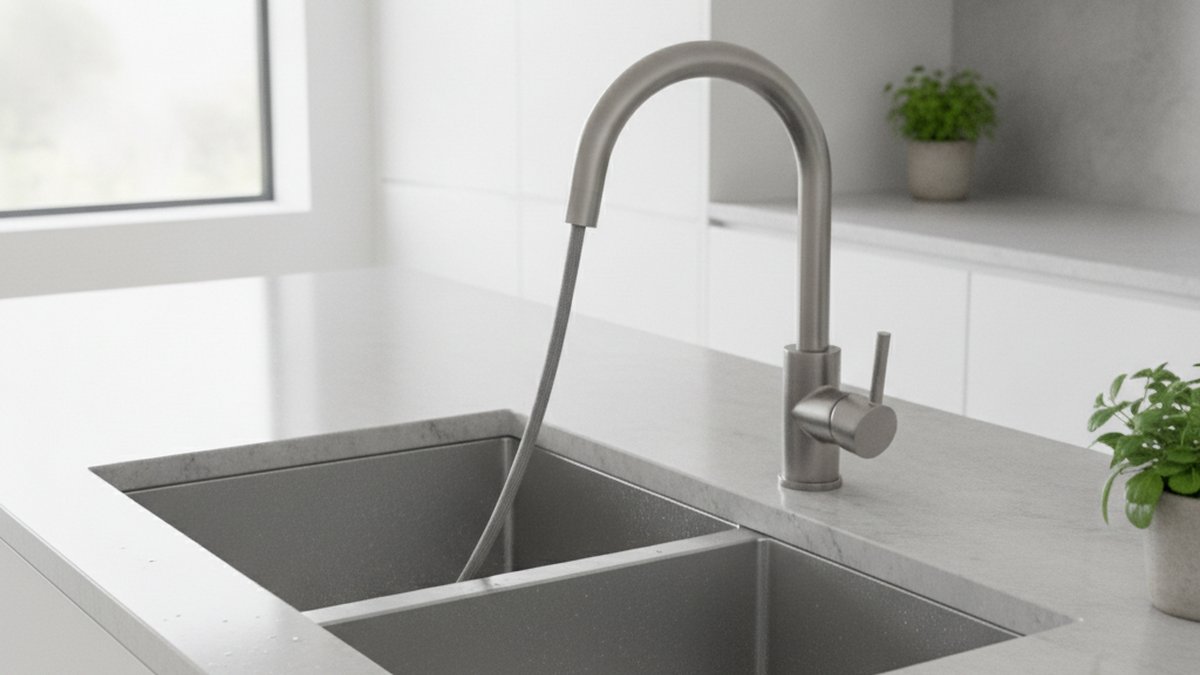
The grohe zedra single handle pull down kitchen faucet is one of those fixtures people research hard before buying, because it sits at a price point where you expect it to be close to perfect. The short version: it’s a high-quality, well-balanced faucet with a genuinely useful pull-down sprayer, GROHE SilkMove ceramic cartridge, and a finish that holds up to daily scrubbing. It’s not the cheapest pull-down out there, and it’s not the flashiest, but it nails the fundamentals — flow, feel, and durability — which is exactly what you want in the one faucet you touch twenty times a day.
Below, I’ll answer the real questions buyers actually ask about this faucet: how it performs, how it compares to Delta and Moen, whether the installation is DIY-friendly, which finish to pick, and where it genuinely falls short. No fluff — just what you’d want a plumber friend to tell you before you spend the money.
What exactly is the Grohe Zedra single handle pull down kitchen faucet?
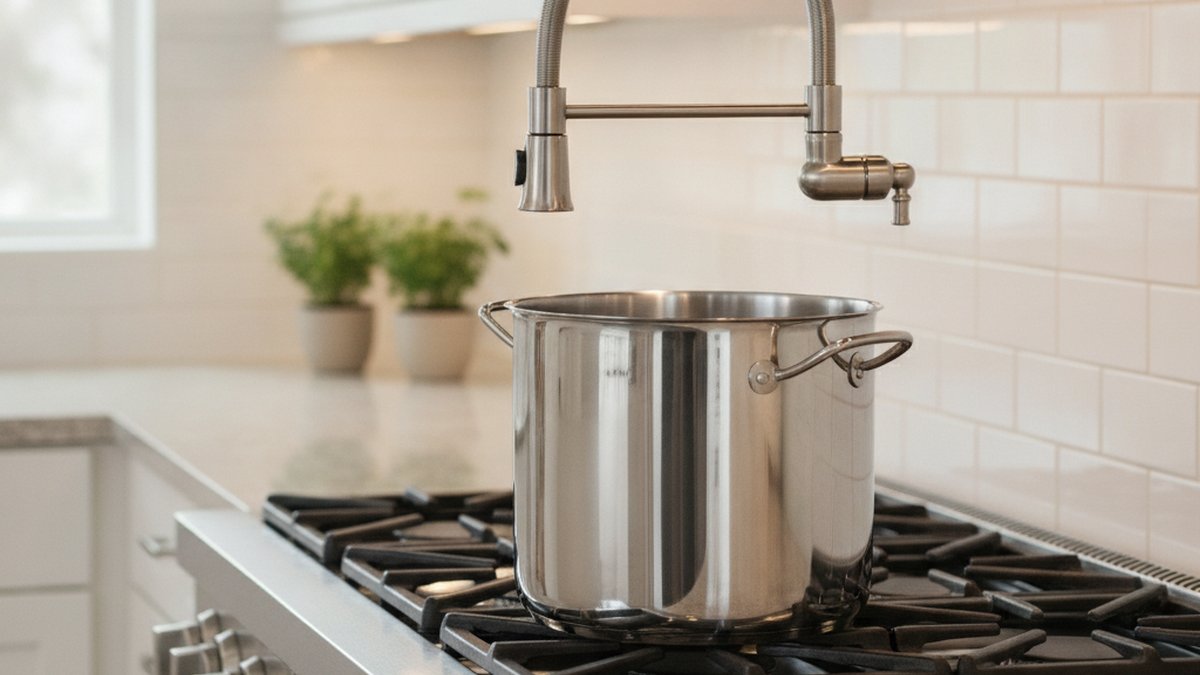
It’s a single-lever, high-arc kitchen faucet with a spray head that pulls straight down and toward you on a hose, giving you reach across the whole sink and into adjacent basins. “Single handle” means one lever controls both temperature and flow; “pull down” means the spray wand detaches from the spout and retracts on a weighted hose rather than pulling out horizontally.
Grohe builds the Zedra around a few signature technologies that are worth knowing by name, because they’re the reason for the price:
- GROHE SilkMove ceramic cartridge — a hard-wearing ceramic disc valve that gives that buttery, resistance-free handle movement and resists the gritty, stiff feel cheaper cartridges develop after a few years.
- GROHE EcoJoy / dual spray — the spray head toggles between a soft aerated stream for filling pots and glasses and a stronger spray for rinsing dishes and the basin.
- GROHE StarLight chrome / PVD finishes — a dense, non-porous surface that resists limescale, fingerprints, and scratching, so it stays looking new with just a wipe.
- SpeedClean anti-limescale nozzles — silicone nozzles you can rub clean with a thumb when hard water starts to clog the spray.
The Zedra comes in a few spout shapes (standard high-arc and a semi-pro / professional version with a coiled spring spout) and several finishes, so “the Zedra” is really a small family rather than one single SKU. When you shop, always confirm the exact model number and finish code so you get the spout and spray pattern you actually want.
Is the Grohe Zedra actually good for a busy kitchen that cooks every day?
Yes — the Zedra is built for daily, heavy use, and that’s arguably where it earns its price. The high arc clears tall stockpots, the pull-down hose reaches every corner of a double-bowl sink, and the SilkMove cartridge is rated for the kind of constant on-off cycling a cooking household puts a faucet through.
A few concrete reasons it holds up in a real working kitchen:
- Reach and height: the tall gooseneck spout makes filling and washing big pans easy, and the pull-down wand extends far enough to rinse the far bowl or a tray resting on the counter.
- Weighted retraction: the hose has a counterweight that pulls the spray head back into the dock cleanly, so it doesn’t droop or sag over time the way some budget pull-downs do.
- Stream quality: the aerated flow is soft enough not to splash out of a shallow sink, and the spray is strong enough to clear stuck-on food without you scrubbing twice.
If your kitchen is the hub of the house and your faucet gets used constantly, the Zedra is squarely in its element. If you cook rarely and just need something that turns on and off, you can honestly spend less and be fine — the Zedra’s strengths mostly show up under heavy use.
How does the Grohe Zedra compare to Delta and Moen pull-down faucets?
Short answer: Grohe generally wins on build feel and finish durability, Delta wins on sprayer tech and easy DIY parts, and Moen wins on availability and value. All three make reliable pull-downs; the “best” one depends on what you prioritize. Here’s a direct comparison of the things that actually matter day to day.
| Factor | Grohe Zedra | Delta (e.g. Trinsic/Leland) | Moen (e.g. Arbor/Sleek) |
|---|---|---|---|
| Typical price | $250–$450 | $180–$350 | $160–$320 |
| Cartridge / valve | SilkMove ceramic | Diamond Seal ceramic | 1255 Duralast ceramic |
| Handle feel | Smoothest, most “solid” | Very good | Good |
| Spray tech standout | Dual spray + SpeedClean nozzles | MagnaTite dock + Touch2O (touch models) | Power Boost + Reflex dock |
| Finish resilience | StarLight / PVD, excellent | SpotShield, very good | Spot Resist, very good |
| Parts / DIY repair | Good, but order via Grohe | Easiest, parts everywhere | Easy, widely stocked |
| Warranty | Limited lifetime (residential) | Limited lifetime | Limited lifetime |
If you want the most refined feel and a finish that still looks pristine in a decade, the Zedra is the pick. If you want a faucet you can get replacement cartridges for at any hardware store on a Sunday, Delta or Moen edge ahead on convenience. For a deeper head-to-head on those two American brands, our guide on whether a Moen faucet is better than Delta breaks down the trade-offs in detail, and if you’re leaning Delta specifically, see our rundown of the best pull-out kitchen faucet Delta makes.
Which finish should you pick — chrome, SuperSteel, or black?
For most kitchens, GROHE SuperSteel (brushed stainless look) is the easiest finish to live with because it hides water spots and fingerprints better than polished chrome and matches stainless appliances. Pick chrome if you want a brighter, classic shine and don’t mind wiping it more often; pick matte black only if your kitchen’s hardware already leans dark, because black shows limescale and dried water droplets more readily in hard-water areas.
Here’s how I’d decide:
- SuperSteel / brushed: best all-rounder, forgiving on spots, pairs with stainless sinks and appliances. My default recommendation.
- StarLight chrome: brightest, most traditional, very scratch-resistant — but shows fingerprints, so expect to wipe it.
- Matte black: striking in modern kitchens, but in hard-water homes you’ll see white mineral residue unless you dry it. Great look, slightly higher maintenance.
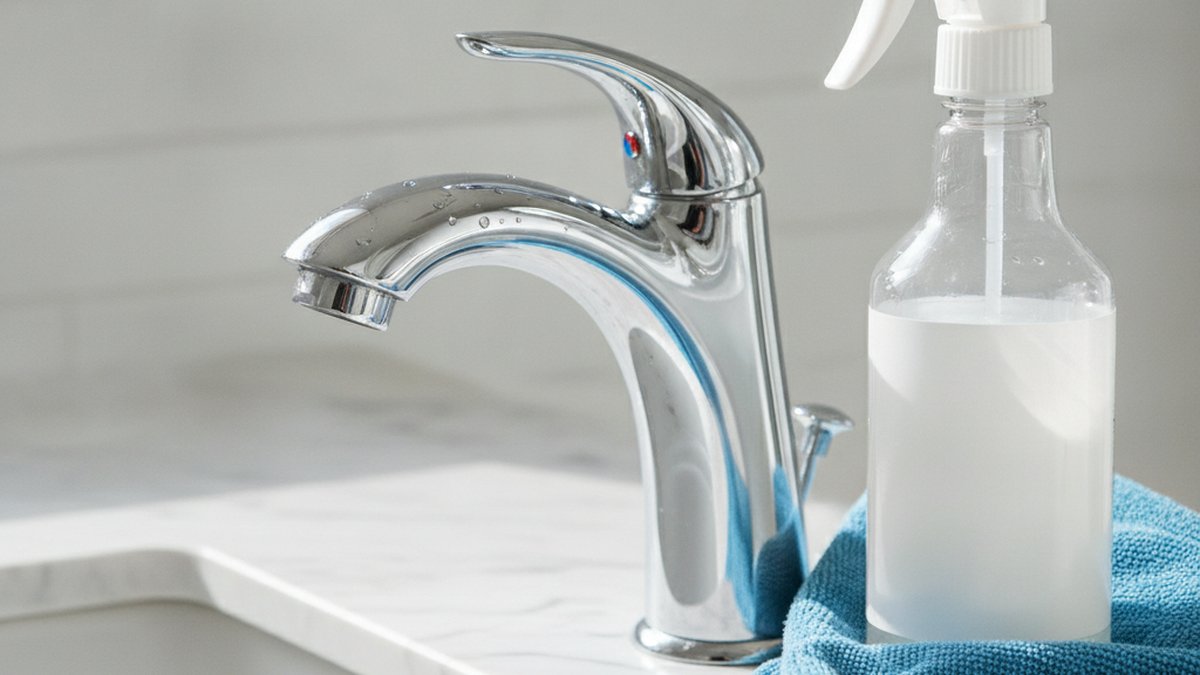
One important care note that applies to every finish: never clean a Grohe faucet with harsh chemical cleaners, abrasive pads, or bleach. Use a soft cloth with mild soap and water. If you’re ever tempted to reach for something stronger on a shiny finish, read our warning on using bleach on a chrome faucet first — it can permanently dull or pit the surface and void the finish warranty.
Can you install the Grohe Zedra yourself, and how hard is it?
Yes, most people can install the Zedra themselves in about 45–90 minutes with basic tools — it’s a standard single-hole, deck-mount install with a pre-attached supply and a quick-connect hose for the sprayer. You don’t need a plumber unless your supply lines are old, corroded, or in an awkward cabinet.
Here’s the realistic DIY walkthrough:
- Shut off the water at the two angle stops under the sink and open the old faucet to release pressure.
- Disconnect and remove the old faucet — supply lines first, then the mounting nut from below. A basin wrench makes this far less painful in a tight cabinet.
- Feed the Zedra’s hoses down through the mounting hole and set the spout, then secure it from underneath with the included mounting bracket and nut.
- Connect the supply lines to your hot and cold stops (hand-tight plus a quarter turn — don’t overtighten).
- Attach the pull-down hose to the quick-connect fitting and clip on the counterweight at the marked position on the hose.
- Turn the water back on slowly, check every joint for drips, then run the faucet for a minute to flush the line and confirm both spray modes work.
The one step people skip and regret is flushing the lines before fully seating the aerator/spray head — debris from the pipes can clog the new nozzles on day one. Run water through first. If you do spot a drip at a connection after install, it’s almost always a fitting that needs a slight snug or a reseated washer, not a defective faucet; our guide on how to fix a leaking kitchen faucet yourself covers the usual culprits.
What are the real downsides of the Grohe Zedra?
The honest drawbacks are price, parts logistics, and hose-dock fit on certain models. None are deal-breakers for most buyers, but you should know them before you commit.
- Price: you’re paying a premium for Grohe engineering. A perfectly functional pull-down from another brand can cost $100 less. You’re buying feel and longevity, not just function.
- Parts sourcing: Grohe cartridges and spray heads are easy to get, but you’ll usually order them through Grohe or a specialty supplier rather than grabbing one off a big-box shelf, so plan a day or two of lead time for repairs.
- Spray-head docking: on some Zedra versions the magnetic/mechanical dock isn’t as aggressively “snappy” as Delta’s MagnaTite, so if the counterweight isn’t clipped at the right spot the wand can sit slightly proud of the spout. It’s a setup issue, not a defect — adjust the weight position and it seats correctly.
- Hard water: like any faucet, mineral-heavy water will eventually crust the nozzles. The SpeedClean nozzles make this a 10-second thumb-rub fix, but it’s still maintenance you’ll do a few times a year.
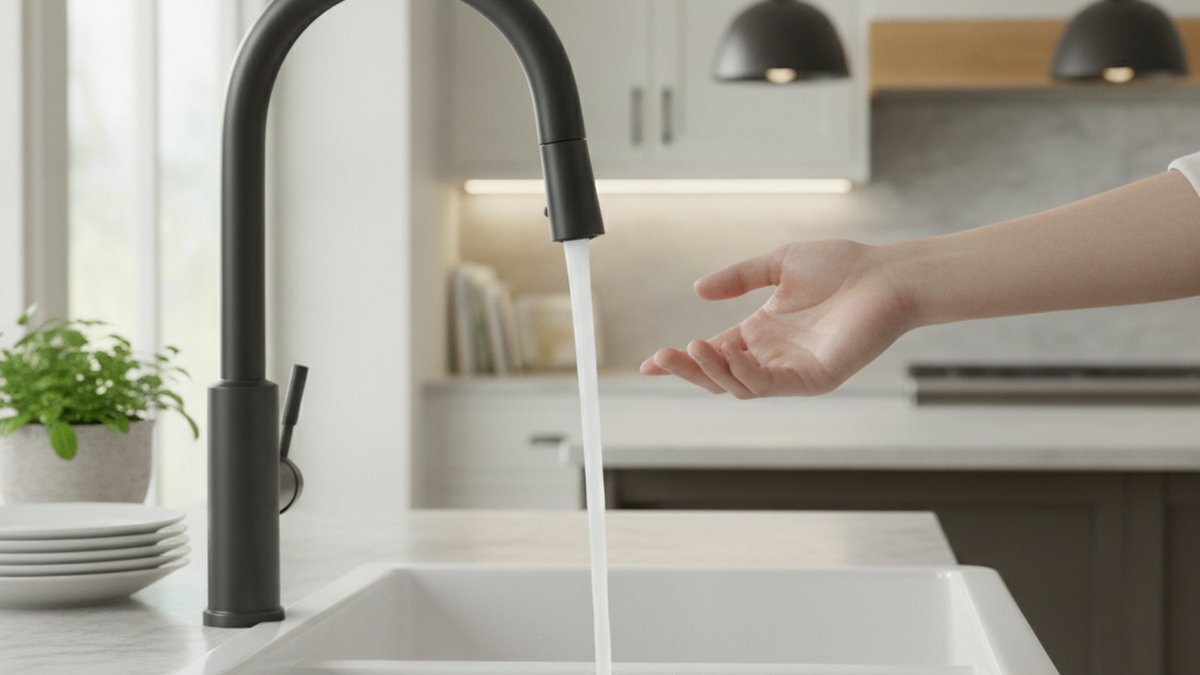
If you specifically want hands-free operation, note that the standard Zedra is a manual single-handle faucet, not touch or touchless. If a touch-free workflow is a priority, you’d want to look at a dedicated touchless model instead — our guide on which touchless kitchen faucet in black to buy is a better starting point for that use case.
Who should buy the Grohe Zedra — and who shouldn’t?
Buy it if you cook often, keep fixtures for 10+ years, and care about how a faucet feels and holds its finish. Skip it if you’re on a tight budget, flipping a house, or you specifically need touchless operation or same-day local parts.
Put simply, the Zedra rewards people who think of a kitchen faucet as a long-term tool. The SilkMove cartridge and StarLight/PVD finish are genuinely built to outlast cheaper faucets, so the higher upfront cost spreads out over many years of daily use. If you’re going to keep this kitchen a while, that math works in your favor. If you’re optimizing purely for lowest cost or quick resale, a solid mid-range Delta or Moen does the job for less.
FAQ
Is the Grohe Zedra pull-down faucet lead-free and safe for drinking water?
Yes. Grohe kitchen faucets sold in North America are built to meet low-lead requirements (compliant with the U.S. Safe Drinking Water Act / NSF-61 and NSF-372 lead standards) and are certified to the relevant ASME/NSF plumbing standards. Always confirm the specific model’s certification on the spec sheet, but the Zedra line is designed and tested for potable water use.
How long does the Grohe Zedra last, and what’s the warranty?
With normal residential use and basic care, a Zedra typically lasts well over a decade, and the ceramic cartridge often outlives that. Grohe backs its residential faucets with a limited lifetime warranty against defects in material and finish for the original owner — keep your proof of purchase and model number, since warranty claims and replacement parts both reference the exact SKU.
Can I replace the Grohe Zedra cartridge myself if it starts to drip?
Yes. A dripping single-handle faucet is almost always the cartridge, and the SilkMove cartridge is replaceable with a few hand tools once you shut off the water and pop the handle. Order the correct Grohe cartridge for your exact model first. The general process — shut off water, remove handle, pull the old cartridge, seat the new one — mirrors the steps in our broader guide on fixing a leaking kitchen faucet.
Does the Grohe Zedra work with low water pressure?
It works with standard household pressure, but like most aerated pull-downs it feels best at roughly 30 PSI and up. If you’re on a well or a low-pressure system, a clogged aerator or SpeedClean nozzle is the first thing to clean, since mineral buildup chokes flow long before the faucet itself is the problem. Remove and rinse the spray head nozzles before assuming it’s a pressure issue.
What’s the difference between the Zedra and the Zedra SmartControl or Touch versions?
The standard Zedra is a manual single-lever faucet. Some Zedra variants add a Touch (tap-to-activate) function or SmartControl, where you press or turn to switch flow and spray without gripping the lever. If you see “Touch” in the model name it includes electronic touch activation (and needs batteries or power); the plain Zedra does not. Match the model name to the feature you actually want before ordering.
Is the Grohe Zedra available in a professional / spring-spout style?
Yes — Grohe offers a semi-pro “Zedra” style with a coiled spring spout and a high-reach spray head, alongside the standard gooseneck. The spring version suits people who want a commercial-kitchen look and maximum sprayer flexibility; the standard high-arc suits most home kitchens and tucks more neatly under upper cabinets. Check the spout height against your cabinet clearance before choosing.
About the author: This guide was written by the aleashafaucet product team — a group that spends its days specifying, installing, and testing kitchen and bath fixtures. We evaluate faucets on real-world criteria: cartridge feel after repeated cycling, finish resilience to daily cleaning, spray performance in single and double-bowl sinks, and how serviceable they are years down the line.
Why trust aleashafaucet: We sell and service faucets across every major brand, so we’re not tied to one manufacturer’s marketing. Our recommendations weigh independent certification (NSF/ASME standards), published warranty terms, and hands-on installation experience — not spec-sheet hype. When we say a faucet is worth the money, it’s because it earns it on the counter, not just on paper.