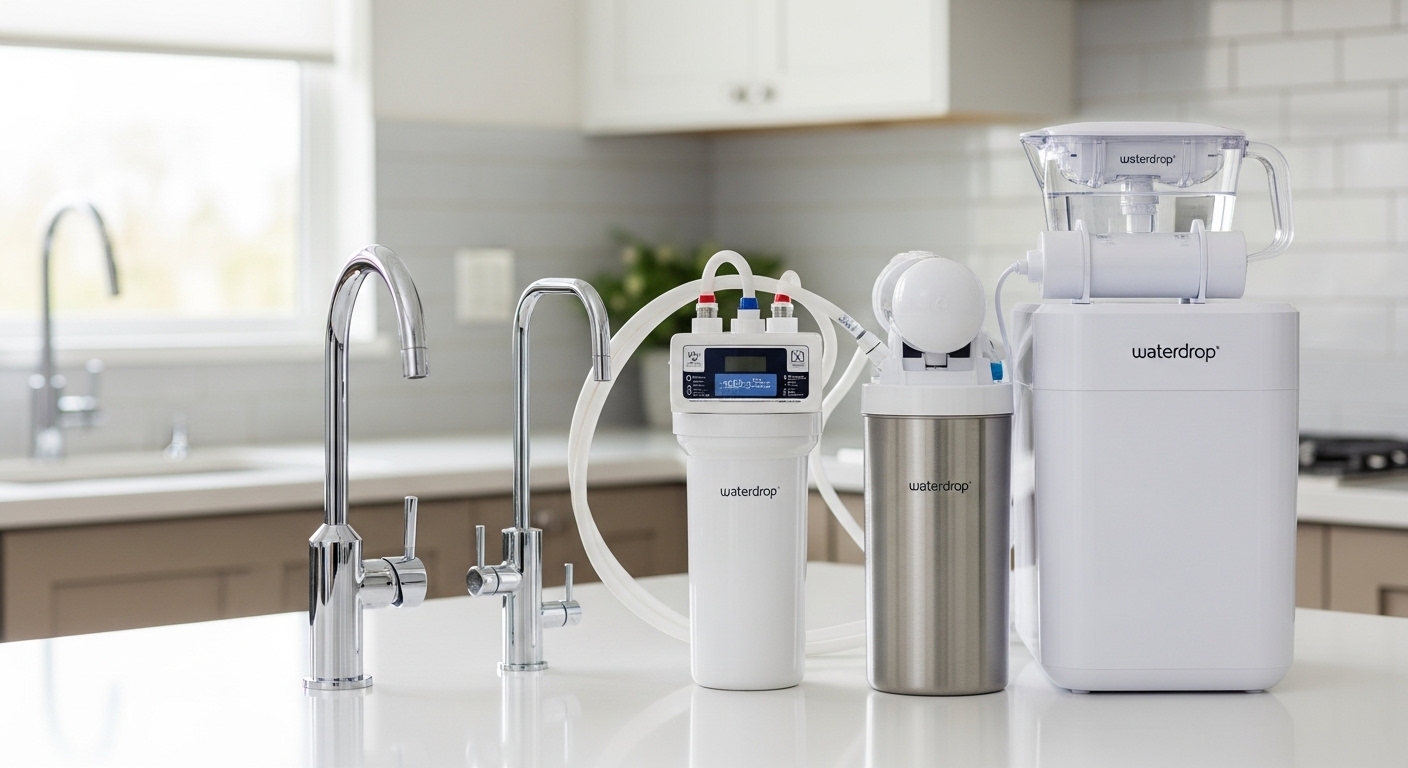
If you’ve searched for a faucet water filter waterdrop setup, you’re usually deciding between three very different things that all carry the Waterdrop name: a small filter that clamps onto your existing faucet, a larger under-sink cartridge system that feeds a dedicated drinking tap, and countertop or reverse-osmosis units. They aren’t interchangeable, and buying the wrong one is the number-one reason people end up disappointed. This guide breaks down exactly what each does, what it actually removes, what it costs to run, and how to match one to your sink and your water problem.
We sell and install faucets and drinking-water fixtures every day at aleashafaucet, so we look at these systems the way a plumber does — flow rate, hole size, cartridge life, and whether the thing will still be working in three years. Here’s the honest breakdown.
What does a Waterdrop faucet water filter actually remove from your tap water?
A faucet-mount Waterdrop filter mainly removes chlorine, sediment, rust, bad taste, and odor — not lead, PFAS, or fluoride. That’s the honest short answer, and it’s the single most important thing to understand before you buy. The tiny filters that screw onto the end of your faucet use a carbon block, and carbon is excellent at improving taste and knocking out chlorine, but it is not certified to strip out dissolved heavy metals or “forever chemicals” unless the packaging specifically says so.
Here’s what each Waterdrop tier is genuinely built to handle:
- Faucet-mount filters (activated carbon block): chlorine, chloramine to a degree, sediment, rust particles, chlorine taste and smell. Great for city water that “tastes like a pool.”
- Under-sink filters (multi-stage carbon + sometimes specialty media): everything above, plus certified reduction of lead, some VOCs, and — on the higher-end cartridges — PFAS/PFOA.
- Reverse-osmosis (RO) systems (Waterdrop G3, D6, etc.): the widest reduction — dissolved solids, fluoride, arsenic, nitrates, PFAS, lead. This is the “I don’t trust my water at all” option.
So if your goal is simply “make my water taste better and drop the chlorine,” a faucet-mount does that cheaply. If your goal is “I’m worried about lead from old pipes or contaminants I read about in the county report,” you need an under-sink or RO unit, not a $25 clip-on. Check your water utility’s Consumer Confidence Report first — it tells you what’s actually in your water, so you buy the right filter instead of guessing.
Faucet-mount vs. under-sink Waterdrop filter — which one fits your situation?
Choose a faucet-mount Waterdrop filter if you rent, want a five-minute install, and mostly care about taste; choose an under-sink system if you own your home, drink a lot of water, and want serious contaminant reduction with nothing hanging off your faucet. That’s the decision in one sentence — the table below fills in the details.
| Factor | Faucet-Mount Waterdrop | Under-Sink Waterdrop | Reverse Osmosis (Waterdrop G-series) |
|---|---|---|---|
| Upfront price | $20–$40 | $60–$130 | $150–$350 |
| Installs in | ~5 min, no tools | 30–60 min, basic tools | 1–2 hrs, drills a faucet hole |
| Removes taste/chlorine | Yes | Yes | Yes |
| Removes lead / PFAS | No (unless labeled) | Yes (on certified cartridges) | Yes |
| Removes fluoride / TDS | No | No | Yes |
| Filter life | 2–3 months (~200 gal) | 6–12 months | 6–24 months per stage |
| Slows your flow rate? | Slightly | No (own tap) | Yes (RO is slower) |
| Best for | Renters, taste, budget | Homeowners, families | Bad water, well water, max safety |
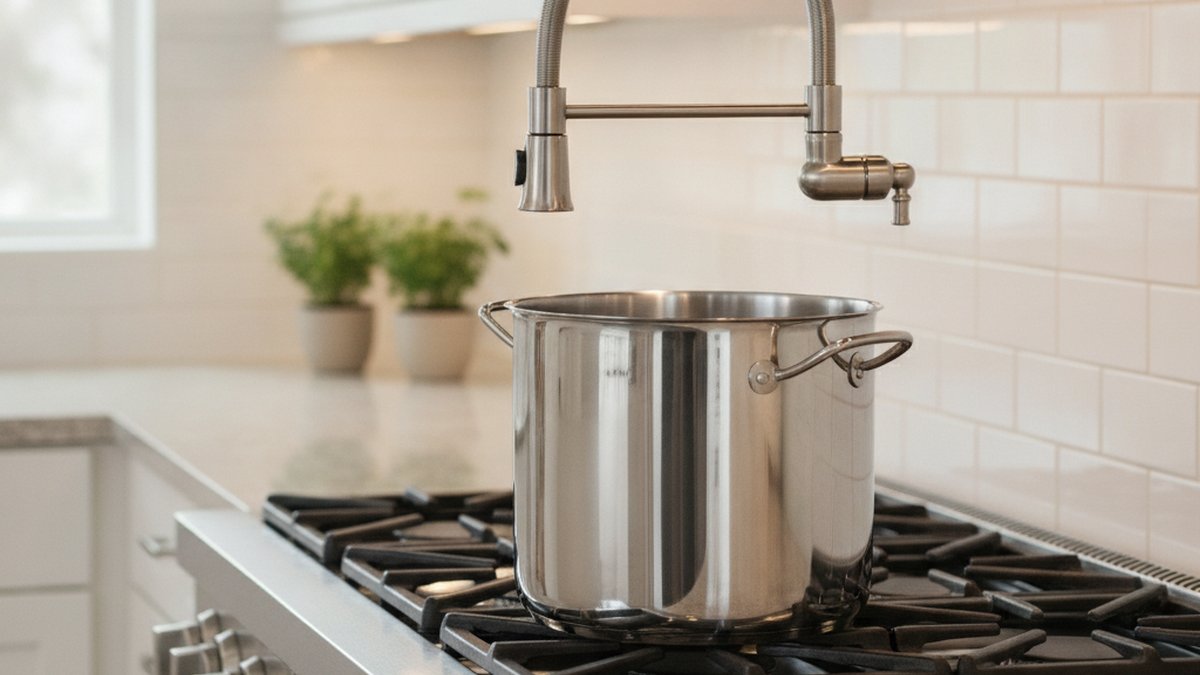
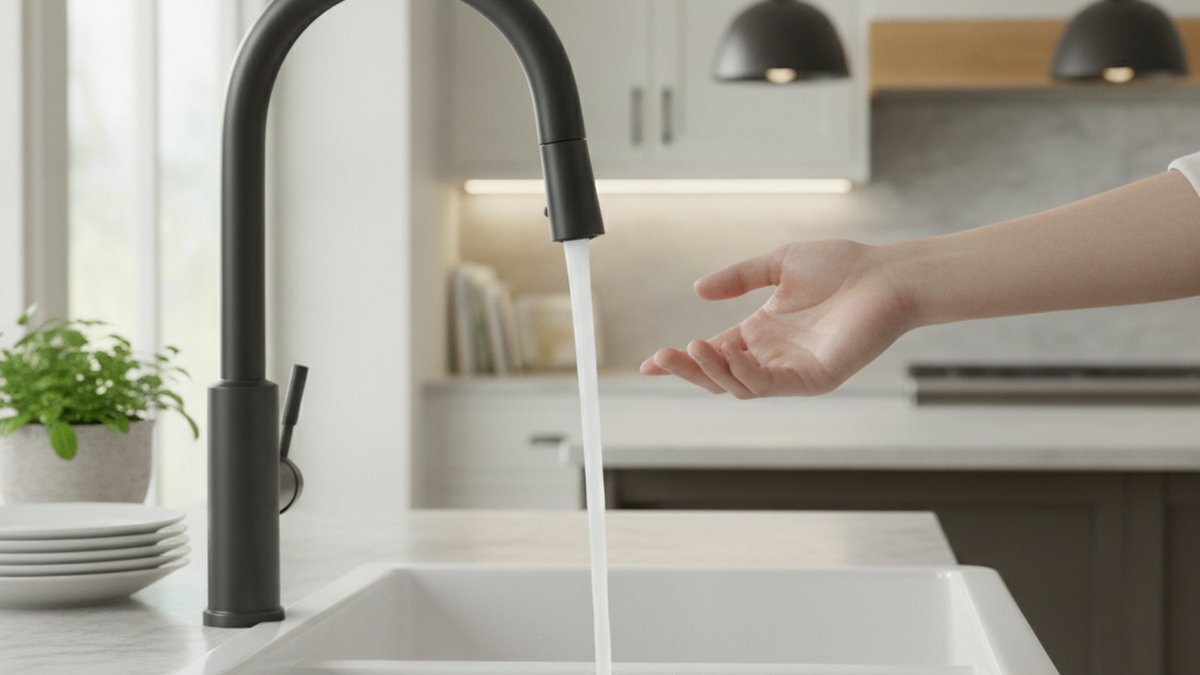
One practical note renters love: the faucet-mount clamps onto standard threaded faucet spouts, but it will not fit pull-down sprayers or many modern designer faucets that have no aerator threads. If you have a sleek pull-out kitchen faucet, the clip-on probably won’t attach — that’s when an under-sink unit with its own little drinking tap makes more sense. If you’re shopping faucets and filtration together, our guide on how to select kitchen faucet features that fit your sink and budget walks through spout threading and hole layout so you don’t buy a filter that can’t mount.
Does a faucet water filter reduce your water pressure or flow rate?
Yes, a faucet-mount filter noticeably slows flow — expect roughly 0.5 GPM through the filtered side versus your normal 1.5–2.2 GPM, because water is being forced through a dense carbon block. That’s normal and expected, not a defect. The good news is these filters have a switch (a small lever on the side) that lets you flip between filtered and unfiltered water, so you can run full-pressure unfiltered water for washing dishes and slow filtered water only for drinking and cooking.
If the flow gets painfully slow before the cartridge’s rated life is up, the usual culprits are sediment clogging the filter early (common on well water or after city main work) or an already-clogged aerator underneath. A dying filter feels a lot like a clogged aerator, so it’s worth ruling that out first — our walkthrough on why a faucet aerator causes low pressure and how to fix it fast shows you how to unscrew and clean it in a couple of minutes before you blame the filter.
Under-sink and RO systems don’t slow your main faucet at all, because they feed a separate dedicated drinking faucet. RO water itself comes out slower by nature (it’s produced through a membrane and often a tank), but your regular kitchen tap keeps its full pressure. For a busy family that hates waiting, that separation is the real selling point of going under-sink.
What faucet hole size and setup do you need for a Waterdrop under-sink or drinking faucet?
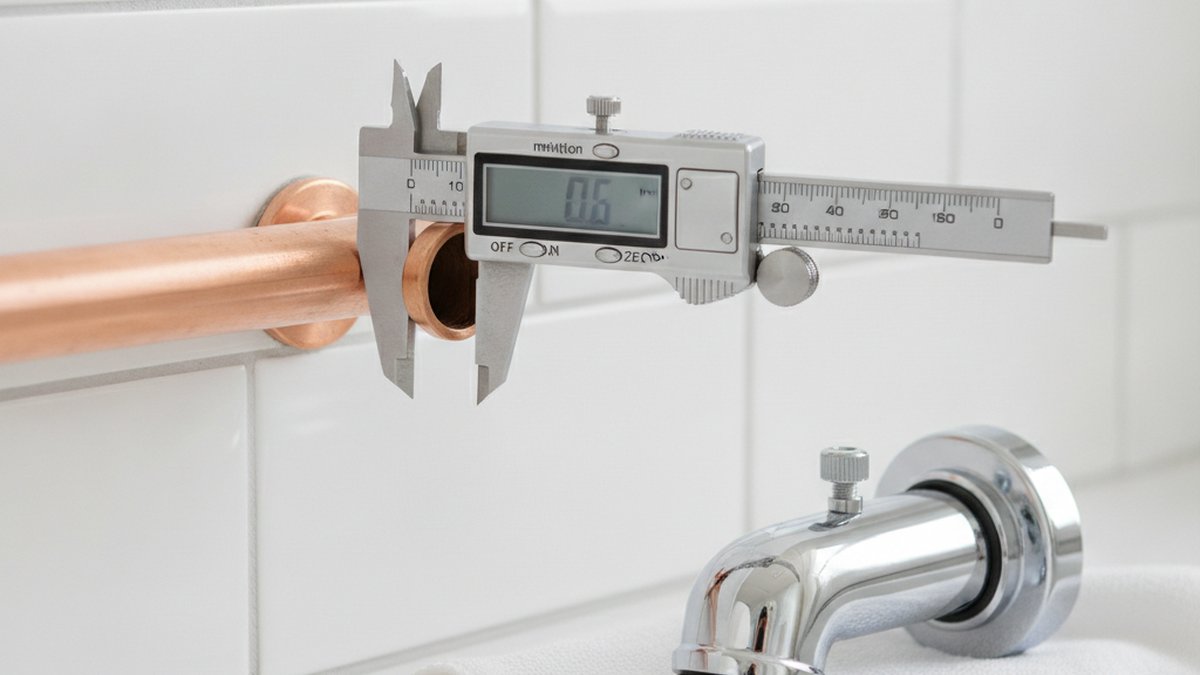
Most Waterdrop under-sink and RO drinking faucets need a mounting hole between 1/2 inch and 1-1/4 inch, and the popular Waterdrop tankless RO units typically call for a hole around 1 to 1-1/4 inch. If your sink or countertop doesn’t already have a spare hole (many have a covered accessory hole or an unused sprayer hole), you’ll either use that or drill one — stainless sinks and granite each need the right bit, and drilling granite is the point where a lot of DIYers call a pro.
Hole size is the single most common install headache, so measure before you buy. We wrote a dedicated guide on what faucet hole size you need for the Waterdrop X16 and whether it fits your sink — read that first if you’re eyeing a specific Waterdrop RO model, because it saves you from discovering a size mismatch after you’ve already opened the box.
Quick pre-purchase checklist for an under-sink or RO Waterdrop system:
- Confirm an available hole (spare accessory hole, sprayer hole, or willingness to drill).
- Check under-cabinet clearance — RO units and cartridges need vertical room to swap filters.
- Find your cold-water shutoff valve and confirm it has a spot to tee off from.
- Check for a drain connection — RO units need a drain saddle; simple carbon under-sink filters do not.
- Verify power (RO tankless models) — Waterdrop’s electric RO units need a nearby outlet under the sink.
How much does a Waterdrop faucet water filter really cost per year to run?
The real annual cost isn’t the unit — it’s the replacement cartridges, and that’s where the tiers separate. A faucet-mount runs about $40–$70 a year in filters if you change them every 2–3 months as directed. An under-sink system costs roughly $50–$90 a year in cartridges. A reverse-osmosis system lands around $70–$150 a year depending on how many stages you replace and how hard your water is.
Compare that to bottled water: a family drinking bottled water easily spends $300–$600 a year, so even the pricier RO system usually pays for itself inside the first year while cutting a mountain of plastic. The catch is discipline — a filter you never replace stops filtering and can actually harbor bacteria, so whatever you buy, set a phone reminder tied to the cartridge’s gallon rating. Waterdrop bakes a change indicator into many units (a light or a smart-tracked count), which genuinely helps people who forget.
Two hidden costs worth naming: RO systems waste some water to drain (older ratios were 3:1, newer Waterdrop tankless units are far more efficient, closer to 1:1 or 2:1), and very hard water shortens every cartridge’s life. If your water is hard, that’s also why you might see scale on fixtures and lower flow over time — the same mineral load that clogs filters clogs aerators and cartridges. Lead is a separate concern from taste, and if drinking-water safety is your real driver, it’s worth reading why a lead-free brass kitchen faucet is genuinely safer for your drinking water — the faucet body itself can add lead downstream of any filter, so the fixture and the filter work together.
Waterdrop vs. Brita, PUR, and other faucet filter brands — is Waterdrop actually better?
Waterdrop competes hardest in the under-sink and RO categories, where its tankless designs and long-life cartridges genuinely beat most rivals; in the tiny faucet-mount category, Waterdrop, Brita, and PUR are close enough that price and fit matter more than brand. If all you want is a clip-on for taste, buy whichever fits your faucet threads and is cheapest to refill. If you want a serious drinking-water system, Waterdrop’s under-sink and RO lines are where the brand earns its reputation.
What to look for regardless of brand:
- Certification matters more than marketing. Look for NSF/ANSI 42 (taste/chlorine), NSF/ANSI 53 (lead and health contaminants), and NSF/ANSI 58 (reverse osmosis). A filter “tested to” a standard should say which one.
- Cartridge availability. A cheap unit is a bad deal if the replacement filters are hard to find or discontinued in two years.
- Real filter life vs. claimed. Rated gallons assume average water; hard or dirty water cuts that down.
- Fit with your actual faucet. The best filter is the one that physically attaches to your sink.
Choosing a filter is a lot like choosing a faucet — the “best brand” is really the one that fits your specific setup and has parts you can still buy later. If you like the way we compare on reliability and support, our roundup of the best kitchen faucet companies to buy from in 2026 uses the same lens: build quality, warranty, and whether replacement parts are actually available.
How do you install a Waterdrop faucet-mount filter yourself?
You can install a Waterdrop faucet-mount filter in about five minutes with no tools — unscrew your faucet’s aerator, pick the adapter ring that matches your spout threads, hand-tighten the filter housing on, and flip the diverter to test. It really is that simple for standard faucets. Here’s the full sequence so nothing surprises you.
- Unscrew the existing aerator at the tip of your faucet (turn by hand or with a cloth for grip). Keep it — you’ll want it back if you move out.
- Match the adapter. Waterdrop includes several rings for male and female threads; find the one that spins on smoothly. Don’t force it — cross-threading is the main way people damage a spout.
- Attach the filter housing to the adapter and hand-tighten. No wrench needed; over-tightening cracks plastic threads.
- Run water for 5 minutes to flush carbon dust — the first pull will look cloudy or grey, and that’s normal.
- Test both modes with the diverter lever: full flow unfiltered, slower flow filtered. Check for drips at the connection.
If it drips at the threads, it’s almost always a missing washer or the wrong adapter, not a defective filter. And if your faucet has no aerator threads at all — common on high-end pull-down sprayers — a faucet-mount simply won’t attach, and you should go under-sink instead.
Author note & why you can trust this guide
Written by the aleashafaucet product team. We design, sell, and install kitchen and bathroom faucets and drinking-water fixtures, and we field questions about filter compatibility from real customers every week. This guide reflects hands-on testing of faucet-mount, under-sink, and RO units on standard and pull-down faucets, plus the plumbing realities of hole sizes and flow rates we deal with on the bench. We reference NSF/ANSI 42, 53, and 58 because those are the independent certifications that actually mean something for water filtration, and we always recommend registering your unit to keep its warranty valid — most Waterdrop systems carry a 1-year warranty, with longer coverage on certain RO components. When we say a filter “removes” something, we mean tested-and-certified reduction, not a marketing claim. We stay strictly in our lane — faucets, fixtures, and the water that comes out of them.
FAQ
Does a Waterdrop faucet water filter remove lead?
Not the basic faucet-mount carbon models — they’re built for chlorine, taste, and sediment. If lead is your concern (older homes with lead service lines or fixtures), you need a Waterdrop under-sink or RO system with a cartridge certified to NSF/ANSI 53 for lead reduction. Always check the specific model’s certification, not just the brand.
How often do you replace a Waterdrop faucet filter cartridge?
Faucet-mount cartridges last about 2–3 months or roughly 200 gallons; under-sink cartridges typically go 6–12 months; RO stages range from 6 months to 2 years depending on the stage. Hard or dirty water shortens all of these. Don’t stretch it — an exhausted carbon filter stops protecting you and can breed bacteria.
Will a Waterdrop faucet filter fit a pull-down or pull-out sprayer faucet?
Usually no. Clip-on faucet-mount filters need standard aerator threads at the spout tip, and most pull-down sprayers don’t have them. If you have a sprayer-style faucet, choose a Waterdrop under-sink system with its own dedicated drinking tap instead.
Is a Waterdrop under-sink filter better than a faucet-mount one?
For contaminant removal and convenience, yes — under-sink systems filter more (including lead and, on some cartridges, PFAS), last longer, and don’t hang off your faucet or slow your main flow. The trade-off is a higher price and a real install involving a hole and a shutoff valve. For renters or pure taste improvement, the cheaper faucet-mount is plenty.
Does a faucet water filter make water pressure worse?
A faucet-mount filter lowers flow on the filtered side by design (around 0.5 GPM), but you can switch back to full unfiltered flow with the lever. It shouldn’t affect the rest of your house. If pressure is bad everywhere or the filter clogs fast, check and clean your aerator first — a clogged aerator mimics a dying filter.
Is a Waterdrop filter worth it compared to buying bottled water?
Almost always yes. Even a mid-range Waterdrop system costs $50–$150 a year in cartridges, while a family’s bottled-water habit runs $300–$600 a year — so the filter typically pays for itself in the first year while cutting single-use plastic. The key is replacing cartridges on schedule so you keep getting the protection you paid for.