If you’ve been searching for a bar faucet Delta option to finish off a wet bar, island prep sink, or basement kitchenette, here’s the honest answer: Delta makes some of the most dependable small-scale faucets on the market, but “the best one” depends entirely on your sink size, hole count, and finish. A bar faucet is not just a shrunken kitchen faucet — it’s built for a smaller basin, tighter deck space, and lighter daily use. Below, we’ll walk through exactly how to pick the right one, what the real specs mean, how Delta stacks up against the alternatives, and where you can spend less without giving up quality.
What exactly is a bar faucet, and how is it different from a kitchen faucet?
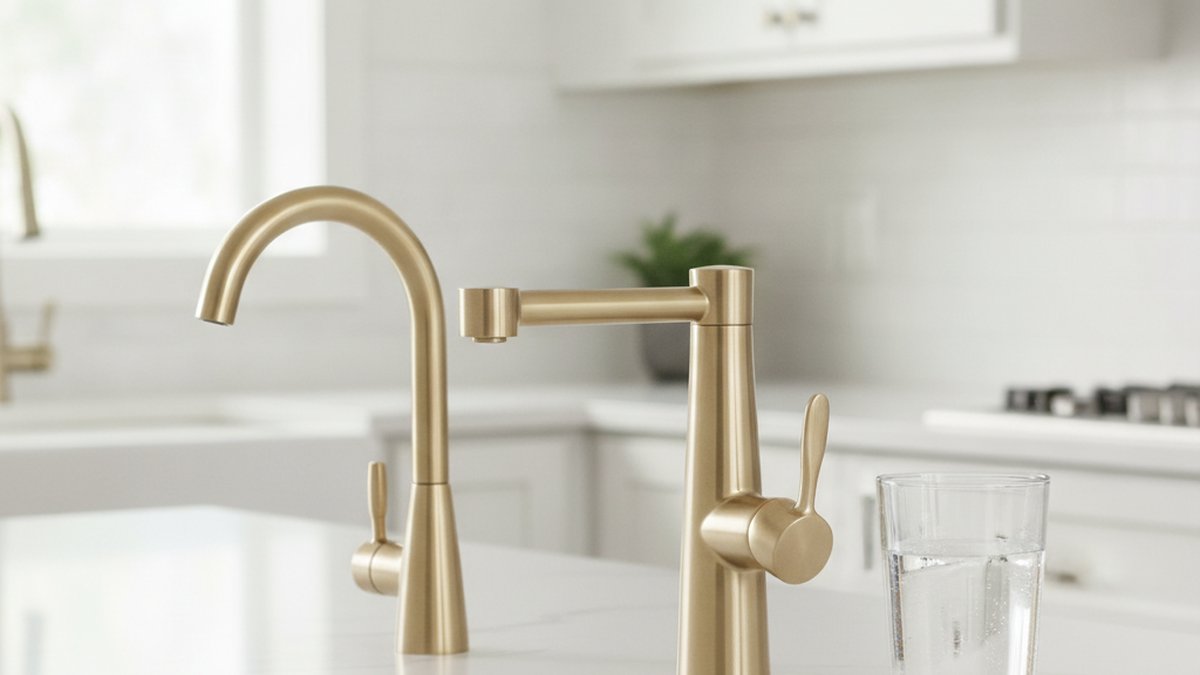
A bar faucet is a compact single-handle faucet designed for a small secondary sink — think a 12″ to 16″ bar sink, an island prep station, or a butler’s pantry. It’s physically smaller and lower in flow than a main kitchen faucet, but it uses the same internal engineering.
The practical differences come down to three things:
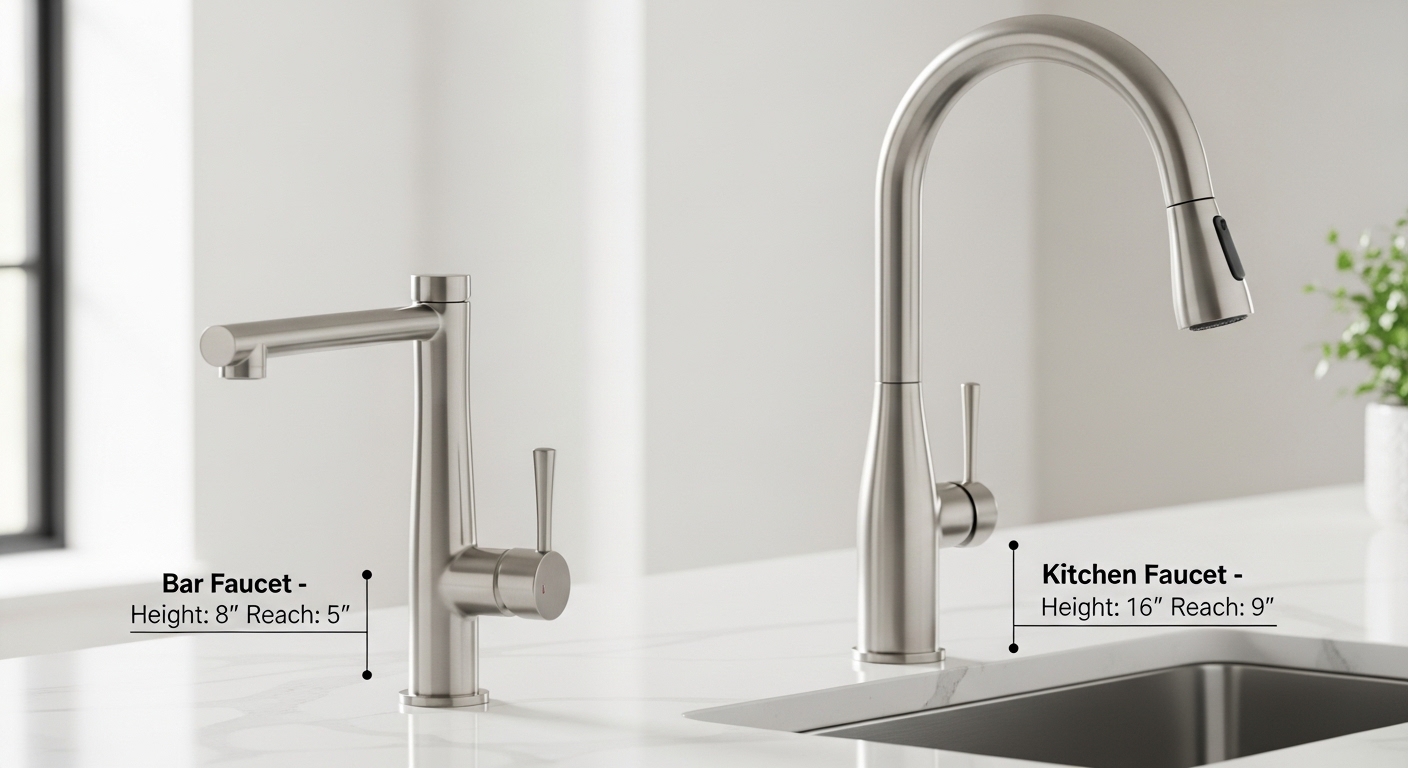
- Size and reach: Bar faucets usually have a spout reach of 7″–9″ and an overall height of 11″–14″, versus 9″–11″ reach and 15″–18″ height on full kitchen faucets. That smaller footprint matters when your bar sink sits close to a backsplash or under a cabinet.
- Flow rate: Most bar faucets are capped around 1.5–1.8 GPM (gallons per minute), which is plenty for rinsing glasses, filling a cocktail shaker, or washing a cutting board — but not meant for filling stockpots.
- Handle and spray style: Almost all are single-handle for tight-space ergonomics, and many now include a compact pull-down or pull-out spray head for rinsing.
The reason people specifically search for a bar faucet Delta model is trust — Delta’s ceramic-disc and Diamond Seal cartridges have a strong track record for not dripping after a few years, which is exactly where cheaper no-name bar faucets tend to fail.
Which Delta bar faucet is best for a small wet bar under $250?
For a small wet bar under $250, the Delta Trinsic 1959LF pull-down bar faucet is the best all-around pick, followed closely by the Delta Leland and Essa bar/prep models. All three share Delta’s core internals; you’re mostly choosing a style and finish.
Here’s how the main Delta bar/prep faucets compare so you can match one to your setup:
| Delta Model | Style | Spray Type | Height / Reach | Best For |
|---|---|---|---|---|
| Trinsic 1959LF | Modern, sleek cylinder | Pull-down | ~12″ / 7.6″ | Contemporary kitchens & wet bars |
| Leland 9954 | Traditional, curved | Pull-down | ~13″ / 8″ | Classic or transitional decor |
| Essa 9913 | Minimalist high-arc | Pull-down | ~13″ / 8.5″ | Busy prep sinks needing extra reach |
| Trinsic 1900LF | Modern, no spray | Fixed spout | ~11″ / 8″ | Pure glass-rinse bar sinks |
All of these use Delta’s DIAMOND Seal Technology, which coats the internal valve in a diamond-embedded ceramic disc. In plain language: it’s a cartridge engineered to keep a smooth, leak-free seal far longer than standard rubber-and-brass valves, and it’s a big reason Delta backs these with a lifetime limited warranty on both function and finish.
How many holes does my sink need for a Delta bar faucet?
Most Delta bar faucets are designed for a single-hole installation, but nearly all of them ship with an optional escutcheon (deck plate) so they can cover a 3-hole configuration too. Before you buy, count the holes in your bar sink or countertop.
Here’s the quick decision:
- One hole: Install the faucet directly — no deck plate needed. This is the cleanest modern look.
- Three holes (4″ spread): Use the included escutcheon to cover the extra two holes, or add a matching soap dispenser and a filtered-water tap.
- Non-standard spacing: Measure center-to-center. Bar sinks are usually drilled for a single hole, but older bars may have a wider spread that needs a base plate.
If you’re unsure how hole sizing works or worried a new faucet won’t fit an existing drilled hole, our guide on faucet hole size and whether it fits your sink walks through the exact measurements, and it applies just as well to a bar sink as a kitchen one. The standard faucet hole is 1⅜” (35mm), which fits virtually every Delta bar faucet, but always double-check before drilling stone or stainless.
What finish should I choose — and will it look dated in a few years?
Choose a finish that matches your existing cabinet hardware and any nearby appliances, not the trend of the moment. For a bar faucet that will still look right in 2030, Delta’s SpotShield Stainless, Matte Black, and Champagne Bronze are the safest long-term bets; chrome remains the most timeless of all.
A few real-world notes from installing and living with these finishes:
- Chrome: Never goes out of style, hides water spots reasonably well, and is the cheapest. The “vanilla” choice — and that’s not an insult.
- SpotShield / Brushed Stainless: Delta’s SpotShield coating genuinely resists fingerprints and water spots, which matters on a bar faucet you’re touching with wet, cocktail-sticky hands all night.
- Matte Black: Still very much on-trend for 2026 and pairs beautifully with white quartz or wood bar tops. It shows dried water minerals more than chrome, so wipe it occasionally.
- Champagne Bronze: Delta’s warm gold-bronze; a designer favorite that reads as luxurious without the yellow-brass look aging poorly.
If matte black is on your shortlist, it’s worth reading what actual owners report before you commit — our roundup of what Reddit really says about matte black faucets covers the maintenance reality (spoiler: it’s easier than the internet fears). And if you love a warm metal tone, the same longevity logic in our piece on whether brushed gold taps will look dated applies directly to Champagne Bronze bar faucets.
Is a Delta bar faucet actually worth the money vs. a cheaper brand?
For most buyers, yes — but not because Delta is magic. It’s worth it because of three concrete things a budget brand often skips: a real ceramic-disc cartridge, all-metal construction in the wear points, and a lifetime warranty that Delta actually honors with free replacement parts.
Where a $40 no-name bar faucet typically cuts corners is the cartridge (plastic instead of ceramic disc) and the spray hose (thin, kink-prone tubing). Those are exactly the two parts that fail first. A Delta bar faucet in the $150–$250 range front-loads that cost so you’re not replacing the whole thing in three years.
That said, “Delta or nothing” isn’t the right mindset. Plenty of comparable brands — including many faucets from established manufacturers we cover in our guide to the best kitchen faucet companies to buy from — offer ceramic cartridges and solid warranties at bar-faucet sizes. The smart move is to match the internal spec (ceramic disc + metal body + real warranty), then pick the brand whose finish and price you like best. If overall dependability is your top priority, our breakdown of the most reliable kitchen faucets uses the same durability criteria you’d want in a bar faucet.
What about flow rate and water efficiency?
A bar faucet’s 1.5–1.8 GPM flow is intentionally lower than a kitchen faucet’s, and for bar use that’s ideal — you’re rinsing, not filling large pots. Look for a WaterSense-labeled model if you want certified efficiency, which caps flow at 1.5 GPM while maintaining good pressure through an aerated stream. Lower flow also means less water heater load if you run hot water at the bar.
How hard is it to install a Delta bar faucet yourself?
Installing a single-hole Delta bar faucet is one of the easier DIY plumbing jobs — most people finish in 45–90 minutes with basic tools, no plumber required. The compact size and single supply line actually make it simpler than a full kitchen faucet install.
The basic sequence looks like this:
- Shut off the hot and cold supply valves under the bar sink and open the faucet to relieve pressure.
- Remove the old faucet (if any) — disconnect the supply lines and the mounting nut from below.
- Drop the new faucet’s shank through the sink hole; if you have three holes, seat the escutcheon and gasket first.
- Tighten the mounting nut from underneath, connect the pull-down hose and weight, then attach the braided supply lines to your shutoff valves.
- Turn the water back on slowly, remove the aerator, and flush the line for 15 seconds to clear debris before checking for leaks.
If you’re replacing an existing setup and want a step-by-step feel for the connections and torque involved, our walkthrough on how to install kitchen taps and mixers yourself covers the same supply-line and mounting steps you’ll use on a bar faucet. The main difference is scale — a bar faucet is lighter and easier to maneuver in tight cabinet space.
What tools do I need for the install?
You’ll need very little: an adjustable wrench, a basin wrench (for the hard-to-reach mounting nut), plumber’s tape for the supply connections, a bucket and towel for drips, and a flashlight. Delta typically includes the gaskets, escutcheon, and mounting hardware in the box, so you rarely need to buy extras.
What if my Delta bar faucet starts dripping down the road?
If a Delta bar faucet drips years later, it’s almost always the cartridge — and the good news is Delta’s lifetime warranty covers a free replacement cartridge, plus the swap is a 20-minute job you can do yourself. You do not need to replace the whole faucet.
The repair is the same principle across most single-handle faucets: shut off the water, pop the handle cap, remove the handle screw, lift out the old cartridge, and drop in the new one aligned to the same notches. If you’ve never done a cartridge swap, our general guide on replacing a kitchen tap cartridge without a plumber maps almost exactly to a Delta bar faucet. Keep your model number handy — you’ll need it to request the correct warranty part from Delta.
Delta bar faucet buying checklist
Before you check out, run through this quick list so you don’t end up returning a faucet that doesn’t fit:
- Measure your sink hole(s): Confirm 1 vs. 3 holes and the standard 1⅜” diameter.
- Check spout clearance: Make sure the ~12″–13″ height clears any upper cabinet and the spout reach lands in the basin, not the countertop.
- Match the finish to your existing bar hardware and appliances.
- Decide pull-down vs. fixed: Pull-down for rinsing glassware; fixed spout if you only fill and pour.
- Verify the cartridge type: Ceramic disc / Diamond Seal, not plastic.
- Confirm the warranty: Delta offers a lifetime limited warranty on function and finish for residential use — register it after install.
FAQ
Can I use a regular kitchen faucet on a bar sink instead of a bar faucet?
You can, but it’s often too tall and too far-reaching for a small bar sink, causing splashing and awkward clearance under cabinets. A dedicated bar faucet is sized so the water lands in the middle of a compact basin. If your “bar” is really a full second kitchen sink, a standard kitchen faucet is fine.
Are Delta bar faucets lead-free and safe for drinking water?
Yes. Delta bar faucets sold in the U.S. meet the federal Safe Drinking Water Act lead-free standard (NSF/ANSI 372) and are certified to NSF/ANSI 61 for drinking-water safety. If lead-free construction is a top concern for you, our article on whether a lead-free brass faucet is really safer explains what those certifications actually guarantee.
What’s the difference between a bar faucet and a prep faucet?
Practically none — the terms are used interchangeably. “Bar faucet” emphasizes a wet bar or beverage station, while “prep faucet” emphasizes an island prep sink for food. The faucets themselves are the same compact, single-handle design, and Delta markets several models as “bar/prep.”
How much should I expect to spend on a good Delta bar faucet?
Expect $120–$260 for a genuine Delta bar/prep faucet with a pull-down spray and a real ceramic cartridge. Fixed-spout models run cheaper (around $90–$150). Anything under $60 branded as “Delta” on a marketplace is worth verifying for authenticity, since counterfeit cartridges are common at that price.
Does a Delta bar faucet come with everything I need to install it?
Yes — Delta bar faucets ship with the mounting hardware, gaskets, an optional deck plate for 3-hole sinks, and the pull-down hose and weight where applicable. You’ll only need to supply braided supply lines (if yours are old) and plumber’s tape. Everything else is in the box.
About the author: This guide was written by the aleashafaucet product team, who spec, test, and install faucets year-round across kitchen, bath, and bar applications. Our recommendations are based on hands-on installation, cartridge teardown comparisons, and finish wear testing over multiple seasons — not just spec sheets.
About aleashafaucet: aleashafaucet is a dedicated faucet and bathroom-fixtures retailer at www.aleashafaucet.com. We focus exclusively on faucets, showers, tub fillers, and sink hardware, and every product we recommend is evaluated against real durability standards — ceramic-disc cartridge quality, NSF/ANSI drinking-water certification, and manufacturer warranty terms — so you buy once and buy right.