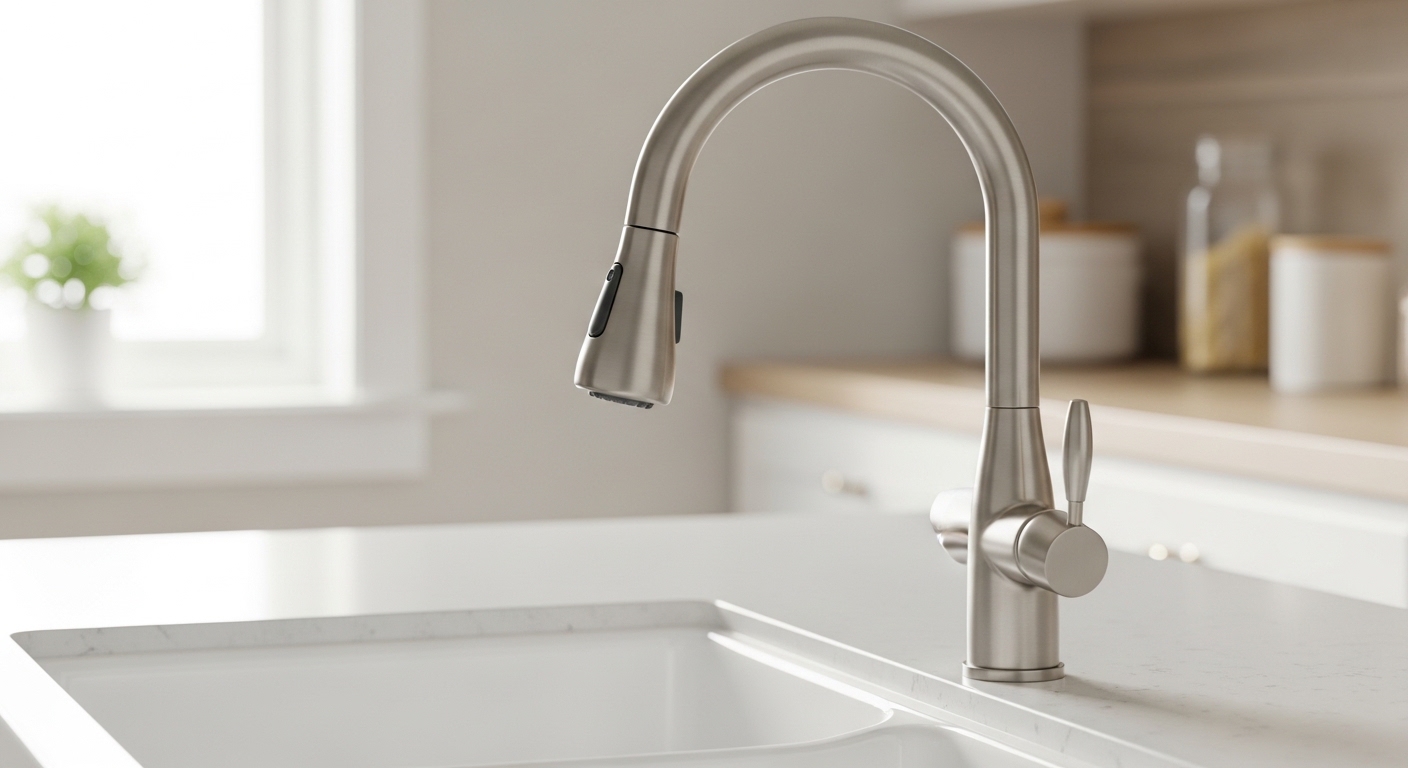
If you’re trying to find the most reliable kitchen faucet 2025 has to offer, here’s the honest truth up front: reliability is engineering, not marketing. A faucet that lasts 15 years and one that drips within 18 months can look identical on the shelf. The difference is inside — the cartridge, the valve, the hose, and the metal the body is cast from. This guide breaks down exactly what to look for, compares the mechanisms that actually fail, and gives you concrete criteria so you buy once instead of twice.
What actually makes a kitchen faucet “reliable” in the first place?
A reliable kitchen faucet is one whose sealing mechanism, spray head, and hose all outlast a decade of daily use without dripping, sticking, or leaking under the sink. Everything else — finish, style, touchless sensors — is secondary to those three points of failure.
Faucets don’t usually “break.” They fail at predictable weak points, and if you know the weak points, you know what to inspect before you buy:
- The cartridge — the heart of the faucet. It controls flow and temperature. A ceramic-disc cartridge is the gold standard because the two polished ceramic plates seal against each other with almost no wear. Cheap rubber-washer or plastic cartridges are the #1 cause of drips.
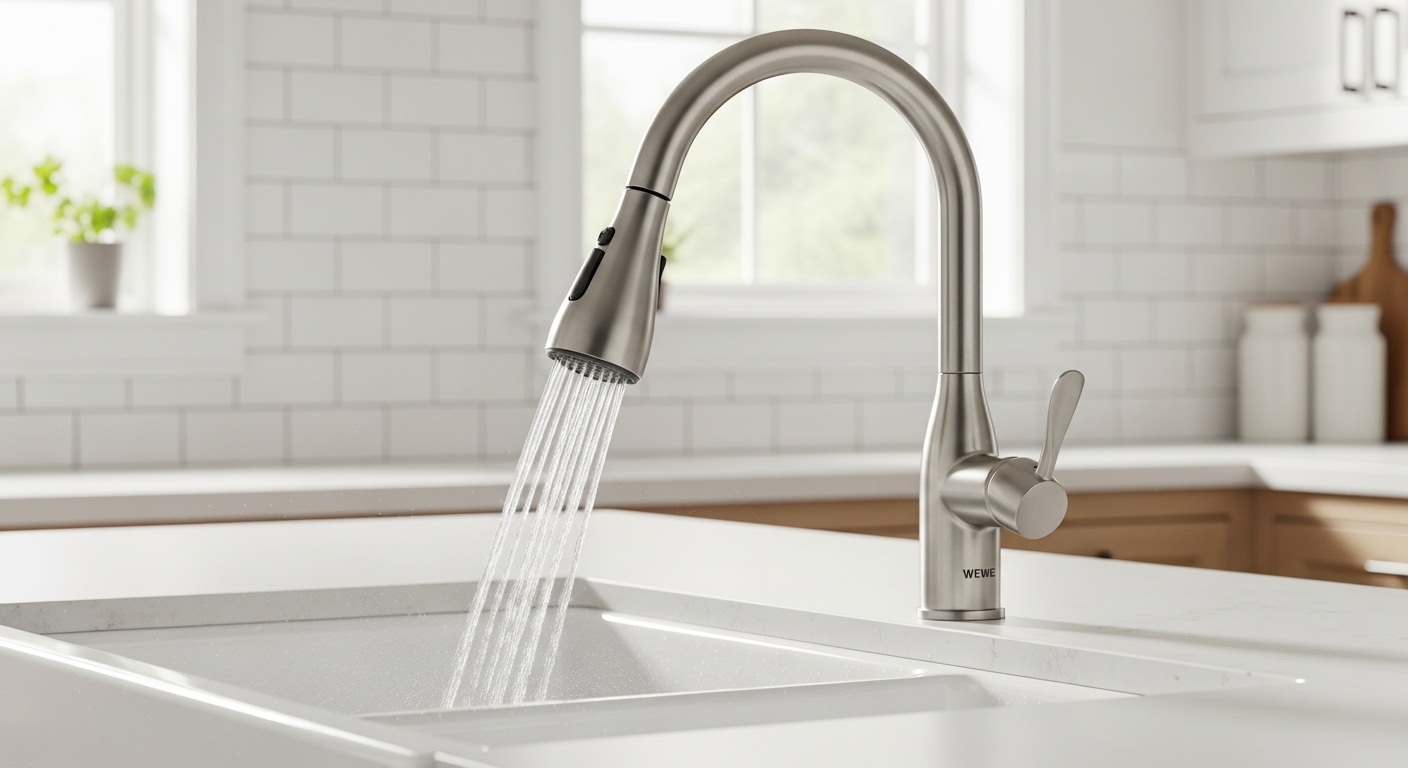
- The pull-down hose and docking system — the spray head retracts on a hose. A nylon-braided hose with a magnetic dock stays put for years; a plastic weight-and-clip system sags and stops docking within a year or two.
- The body material — solid brass and stainless steel resist corrosion and hold threads. Zinc-alloy (pot metal) bodies crack at the threads and corrode from the inside.
- The supply lines — integrated braided-stainless supply hoses are far less likely to burst than thin plastic tubing.
When people ask which is the most reliable kitchen faucet for 2025, what they’re really asking is: which faucet nails all four of those at a fair price? That’s the lens for the rest of this article.
Which cartridge type lasts longest — ceramic disc, ball, or compression?
Ceramic-disc cartridges last the longest, typically 15–20+ years, and they’re what you want in 2025. Ball valves and rubber compression valves are older technology that drip sooner and need service more often.
Here’s the quick reality of each:
- Ceramic disc: Two ultra-hard ceramic plates slide over each other. Almost frictionless, immune to mineral wear, and rated for hundreds of thousands of open/close cycles. This is the standard on every quality faucet today.
- Ball valve: A slotted metal ball with rubber seats and springs. Reliable-ish, but the rubber parts wear and it has more pieces to fail.
- Compression/washer: The old two-handle design. A rubber washer is squeezed to stop the water — and rubber always wears out. Cheap, but you’ll be replacing washers.
If the product page doesn’t say “ceramic disc cartridge,” treat that as a red flag. And know that even the best cartridge is a wear part eventually — the good news is it’s a cheap, DIY fix. If you ever need to swap one, our guide on how to replace a kitchen tap cartridge yourself without calling a plumber walks through it in about 20 minutes.
Reliable kitchen faucet: type-by-type comparison for 2025
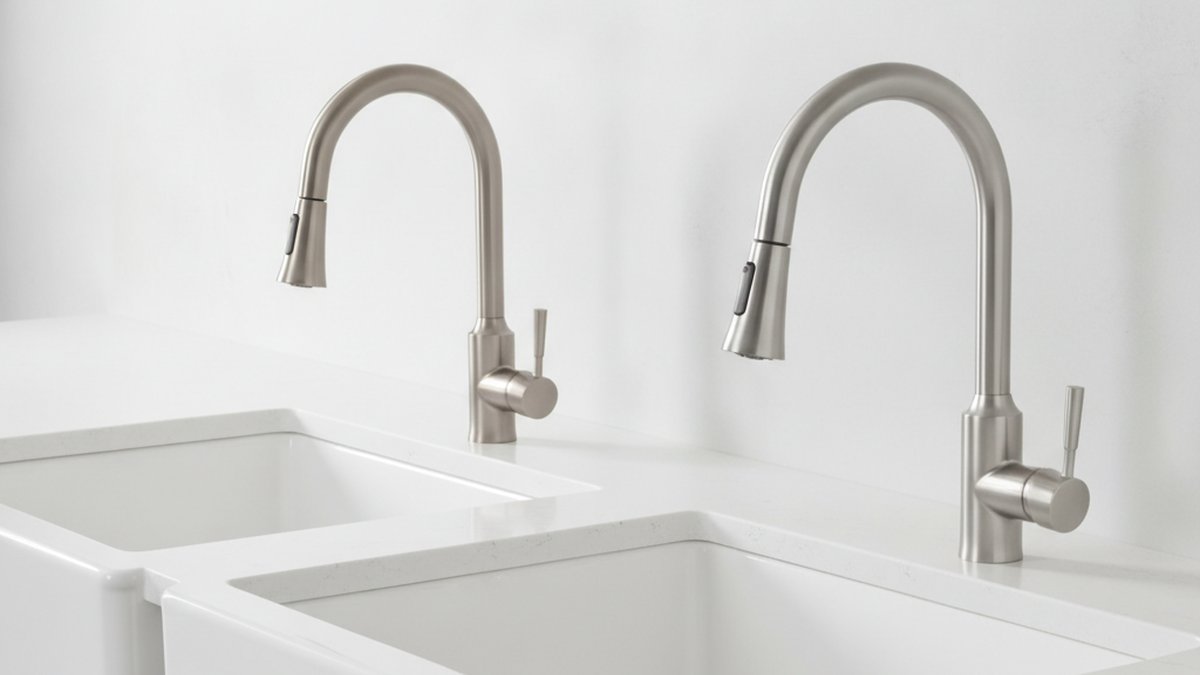
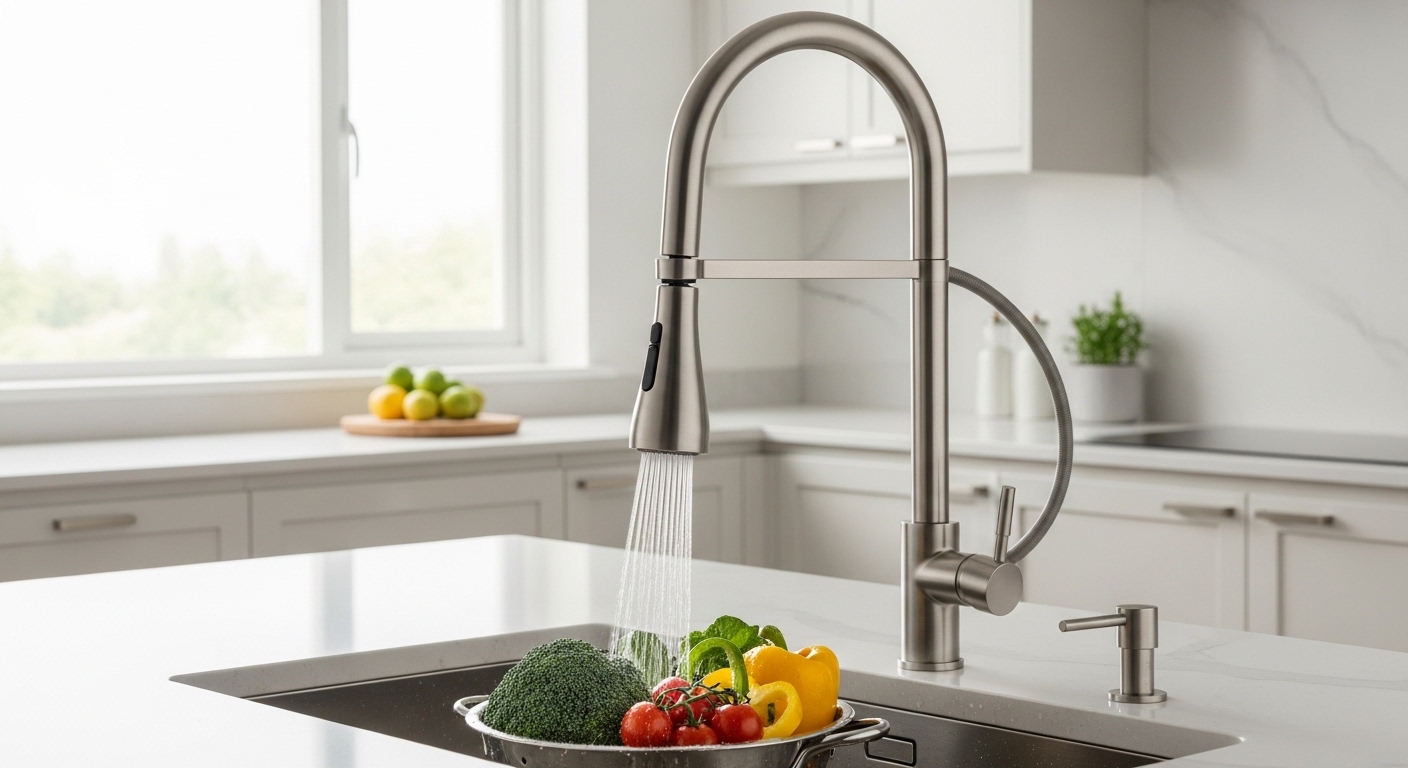
The single-handle pull-down is the most reliable everyday configuration for most kitchens in 2025 — fewer seals to fail than a two-handle, and the retractable head covers the whole sink. Here’s how the common types stack up on the things that actually determine lifespan.
| Faucet Type | Typical Lifespan | Main Failure Point | Best For | Reliability Rating |
|---|---|---|---|---|
| Single-handle pull-down | 12–20 years | Hose dock / spray head | Most kitchens, daily heavy use | ★★★★★ |
| Single-handle pull-out | 12–18 years | Hose retraction | Small sinks, low-clearance windows | ★★★★☆ |
| Two-handle bridge/traditional | 10–18 years | Two cartridges = 2× seal points | Classic / period kitchens | ★★★★☆ |
| Touchless (motion sensor) | 8–15 years | Solenoid valve / battery module | Busy family kitchens, hygiene | ★★★☆☆ |
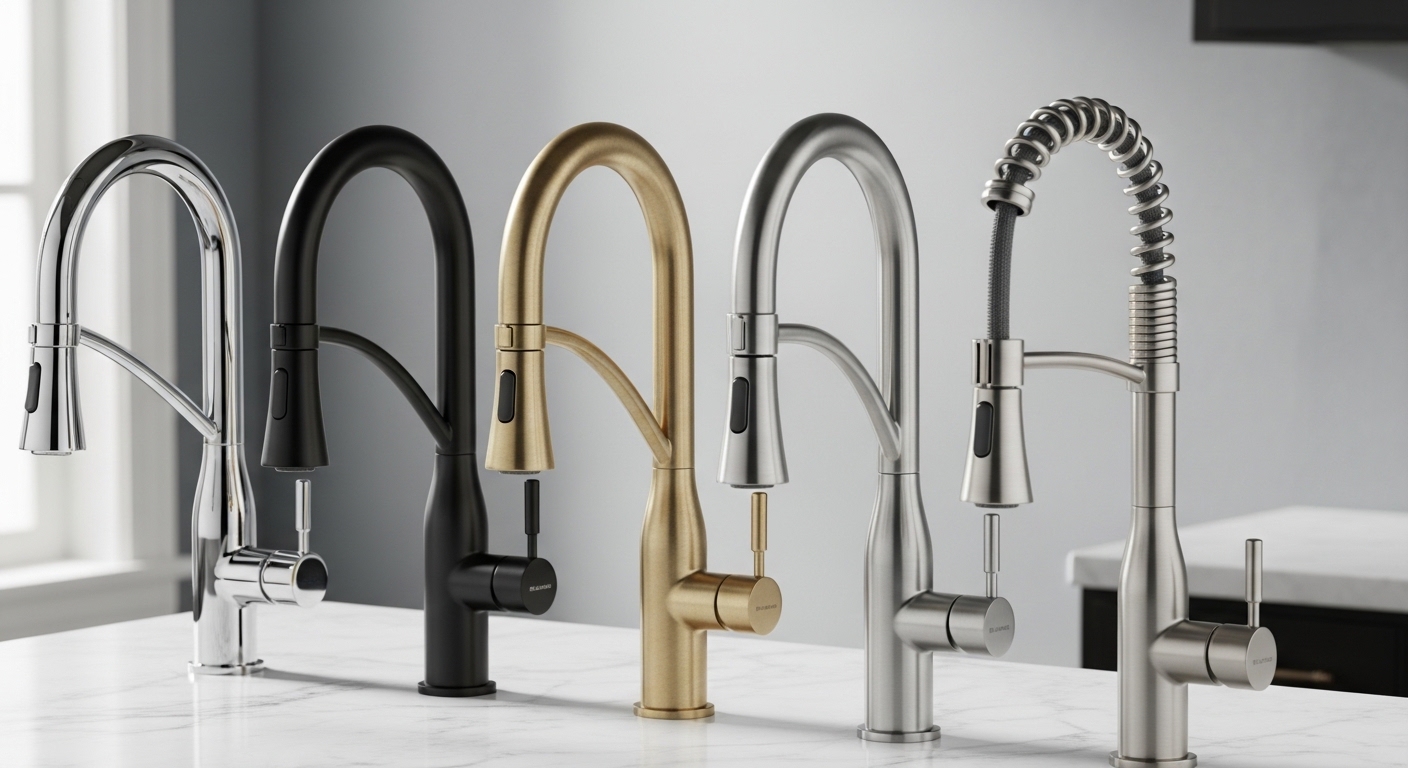
| Commercial-style spring/coil | 10–18 years | Exposed coil spring, high spout | Big pots, deep single-bowl sinks | ★★★★☆ |
Notice touchless faucets rank slightly lower on pure reliability. They’re genuinely convenient, but you’re adding a solenoid valve, a control box, and batteries — more electronics means more that can eventually fail. If you go touchless, buy one with a manual handle override so a dead sensor doesn’t leave you without water.
Is an expensive kitchen faucet actually more reliable than a $150 one?
Not automatically. Above roughly $150–$250, you’re mostly paying for finish, brand, and styling — not longevity. A well-made $180 faucet with a ceramic cartridge and brass body will outlast a $400 designer faucet with a zinc body. Price correlates with reliability only up to a point, then it flattens out.
What the extra money can buy you that’s worth having:
- A genuine lifetime warranty on the finish and function — a real signal the maker trusts their own cartridge.
- All-metal internals including the spray head and docking collar, not chrome-plated plastic.
- Certified lead-free waterways — worth it for anything you drink or cook with.
That last point matters more than people realize. If drinking-water safety is a priority, read our breakdown of whether a lead-free brass kitchen faucet is really safer for your drinking water before you spend. And if you want to see which manufacturers consistently deliver on the reliability fundamentals, our roundup of the best kitchen faucet companies to buy from is a good next stop.
What should I look for on the spec sheet before I buy?
Look for four specific specs, in this order: a ceramic-disc cartridge, a solid brass or stainless body, a certified lead-free label (NSF/ANSI 61 & 372), and a stated warranty length. If all four check out, you’ve filtered out about 90% of the faucets that fail early.
Use this as a pre-purchase checklist:
- Cartridge: “Ceramic disc” stated explicitly. Bonus if it names a known cartridge maker.
- Body material: “Solid brass” or “stainless steel.” Avoid “zinc alloy” and vague “metal construction.”
- Certifications: NSF/ANSI 61 and 372 (lead-free), plus a WaterSense label if you care about flow efficiency. cUPC/UPC means it’s plumbing-code compliant.
- Flow rate: 1.5–1.8 GPM is the 2025 sweet spot — strong enough to fill pots fast, efficient enough to pass code in strict states like California.
- Hose & dock: Nylon-braided hose, magnetic dock. Skip plastic weight-clip systems.
- Warranty: Lifetime on finish and function is the benchmark for a reliable faucet in 2025.
One more field-tested tip: hard water is the silent killer of spray heads. Even a great faucet clogs at the aerator and spray face if you have mineral-heavy water. Buy a model with rubber “nubbin” spray tips you can wipe clean, and descale the aerator a couple times a year.
Are budget brands like WEWE reliable, or should I stick to Moen and Kohler?
Budget brands can be genuinely reliable in 2025 — several use the same ceramic-disc cartridge platforms as the big names — but consistency and warranty support are where legacy brands still have the edge. It’s less “cheap = bad” and more “read the actual reviews for the specific model.”
A well-chosen $120–$160 faucet from a direct-to-consumer brand can match a $250 name-brand model on the fundamentals. The risk with budget brands isn’t usually the faucet itself — it’s spotty customer service if something does go wrong three years in. If you’re weighing one of the popular value picks, our honest look at whether WEWE kitchen faucet reviews are actually worth trusting digs into exactly that trade-off. And if you’re curious where the whole category is heading — finishes, touch tech, workstation sinks — the real kitchen faucet trends for 2026 will tell you which features are worth waiting for and which are hype.
How do I make a reliable faucet last even longer once it’s installed?
The single biggest thing you can do is install it correctly and descale the aerator regularly — most “faucet failures” are actually installation mistakes or mineral buildup, both of which are preventable. A good faucet abused by a bad install won’t last; an average faucet cared for will surprise you.
Do these and you’ll add years:
- Use the braided supply lines that come with it — or new ones. Don’t reuse old, kinked, or corroded supply hoses; they burst.
- Hand-tighten plus a quarter turn. Over-torquing cracks fittings and distorts seals.
- Descale quarterly. Soak the aerator and spray face in white vinegar for an hour to clear mineral clog before it strains the cartridge.
- Don’t slam the handle. Ceramic cartridges are tough, but water-hammer from fast shut-off stresses the whole system — consider hammer arrestors if your pipes bang.
- Fix a drip immediately. A small drip is a worn cartridge or O-ring — a $15 part today, a corroded seat and a new faucet if you ignore it.
Installation is genuinely DIY-friendly on modern faucets — most use a single quick-connect deck mount. If you’d rather do it yourself, our step-by-step on how to install kitchen taps and mixers yourself without calling a plumber covers the whole job, and it doubles as a checklist for not making the mistakes that void warranties.
So, which is the most reliable kitchen faucet to buy in 2025?
Buy a single-handle pull-down faucet with a ceramic-disc cartridge, a solid brass or stainless body, a nylon-braided hose with a magnetic dock, NSF/ANSI lead-free certification, and a lifetime warranty — in the $150–$250 range. That combination is the most reliable configuration you can put in a kitchen in 2025, regardless of which reputable brand’s name is on it.
If we had to distill this entire guide into one sentence: chase the mechanism, not the marketing. The faucet that quietly works for 15 years isn’t the flashiest one on the display wall — it’s the one that got the cartridge, the metal, and the hose right. Match your faucet to your sink configuration and water conditions, verify those four specs, and you’ll almost never have to think about it again.
FAQ
What is the most reliable kitchen faucet brand in 2025?
There isn’t a single “most reliable” brand — reliability tracks with the mechanism, not the logo. That said, Moen, Kohler, Delta, and Aleasha consistently deliver ceramic-disc cartridges, metal internals, and strong warranties across their mid-range lines. Focus on the specific model’s cartridge and body material rather than assuming any brand is reliable across its entire catalog.
How long should a good kitchen faucet last?
A quality kitchen faucet with a ceramic-disc cartridge and a brass or stainless body should last 15 to 20 years, and often longer with basic maintenance. The cartridge or an O-ring may need a cheap, DIY replacement somewhere in years 8–12, but the faucet body itself should outlast that easily. Budget zinc-alloy faucets, by contrast, often start failing at 3–5 years.
Are touchless kitchen faucets reliable, or do the sensors break?
Touchless faucets from reputable makers are reliable for 8–15 years, but they add electronic parts — a solenoid valve, a control module, and batteries — that eventually wear or fail. Always choose a model with a manual handle override so a dead sensor never leaves you without water, and expect to change batteries every 1–2 years. If maximum simplicity is your priority, a manual single-handle faucet has fewer things that can go wrong.
Is a stainless steel or brass faucet body more reliable?
Both are excellent and far more reliable than zinc alloy. Solid brass resists corrosion beautifully and holds threads well, making it a proven long-term choice; stainless steel is lighter, fully lead-free by nature, and extremely corrosion-resistant. Either one will outlast the cartridge inside it — the material to avoid is zinc alloy (often labeled vaguely as “metal”), which corrodes and cracks at the threads.
Does a higher price mean a more reliable kitchen faucet?
Only up to a point. Below about $120 you’re often getting compromised materials, but above roughly $250 the extra money buys finish, styling, and brand — not additional lifespan. The reliability sweet spot for 2025 is $150–$250, where you can get a ceramic cartridge, metal body, and lifetime warranty without paying a premium for looks.
What’s the first thing to fix if my reliable faucet starts dripping?
A drip almost always means a worn cartridge or a hardened O-ring, not a dead faucet. Replacing the cartridge is a 15–20 minute DIY job with a $15–$30 part and no plumber required. Fix it promptly — a lingering drip lets minerals corrode the valve seat, which can turn a cheap cartridge swap into a full faucet replacement.
About the author: This guide was written by the Aleasha Faucet product team, which specs, pressure-tests, and cycle-tests kitchen and bathroom fixtures for durability before they reach our catalog. We evaluate cartridges to hundreds of thousands of open/close cycles and check every waterway against NSF/ANSI 61 and 372 lead-free standards.
Why trust Aleasha: Aleasha (www.aleashafaucet.com) is a dedicated faucet and bathroom-fixtures brand. Every faucet we recommend is backed by manufacturer warranty coverage and third-party plumbing certifications (cUPC/UPC), and our recommendations are based on mechanism and materials — not paid placement.