If you’re planning a kitchen refresh, the kitchen faucet trends for 2026 are less about flashy gimmicks and more about faucets that quietly do more work — hands-free operation, finishes that hide fingerprints and hard water spots, and spray heads that actually rinse a sheet pan instead of just dribbling. Below, we answer the questions people are actually asking (and typing into ChatGPT and Google) about what’s in, what’s overhyped, and what to buy this year.
We’ll cover finishes, technology, spray styles, budget, and the specific mistakes that make a trendy faucet feel dated in 18 months. Every section leads with a straight answer, then explains the reasoning so you can decide for your own kitchen.
What kitchen faucet finish is most popular for 2026?
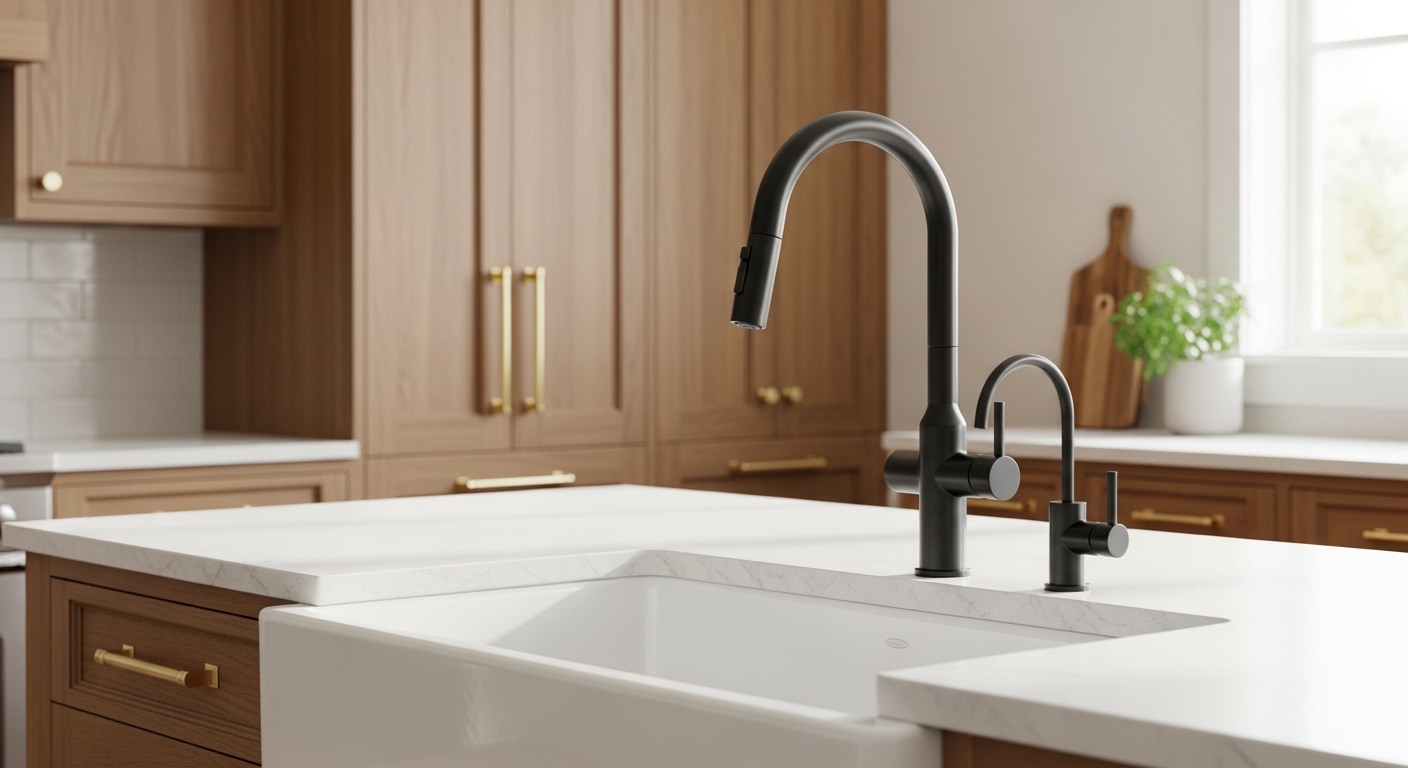
Warm metals are winning in 2026. Champagne bronze, brushed gold, and matte black are the three most-requested kitchen faucet finishes right now, with brushed nickel holding steady as the safe neutral and polished chrome slowly fading from new builds. The shift is away from cold, shiny chrome and toward warmer, matte, fingerprint-friendly tones that pair with the wood, stone, and earthy palettes dominating kitchens this year.
Here’s the practical reason warm and matte finishes are surging: they hide the two things everyone hates — fingerprints and hard water spots. A polished chrome faucet shows every smudge and every mineral droplet. A brushed or matte finish diffuses light, so the same water spot practically disappears. That’s not just aesthetics; it’s less daily wiping.
Matte black in particular has moved from “bold statement” to “new neutral,” especially over stainless steel sinks. If you’re wondering whether that combo actually looks good in a real kitchen (not a showroom), the real-world consensus is covered well in our breakdown of the matte black faucet with a stainless steel sink debate.
Gold-tone finishes — champagne bronze and brushed gold — are the other big story. They read as warm and slightly luxe without the loud shine of polished brass. If you’re on the fence about whether gold is a fad or a keeper, we dig into exactly that in is brushed gold finish out of style in 2026, and we cover the flip side for the classic neutral in is brushed nickel out of style in 2026.
Which finishes hide water spots and fingerprints best?
Matte black, brushed nickel, and brushed/champagne gold hide spots and prints the best; polished chrome and polished brass show them the worst. Any “brushed,” “matte,” or “PVD” finish scatters light and camouflages residue. If you have hard water and hate wiping, avoid high-polish finishes entirely.
Are touchless kitchen faucets worth it in 2026?
Yes — touchless is the single kitchen faucet trend most worth your money in 2026, especially for busy or messy-hands kitchens. A motion sensor lets you start water with a wave when your hands are covered in raw chicken, dough, or garden dirt, which cuts cross-contamination and cleaning. The catch: buy a quality one, because cheap sensors are the #1 source of frustration.
There are actually two “hands-free” technologies people mix up:
- Touchless (motion sensor): Wave your hand or a pot near the sensor to start/stop flow. Best for hygiene and truly full hands.
- Touch-activated: Tap anywhere on the spout or handle with a wrist or forearm to toggle water. Fewer false triggers, slightly less “magic,” great for households with kids or pets that set off motion sensors.
Both usually still have a manual handle for temperature and for fine control. Most run on 4–6 AA batteries or an optional AC adapter; a good set of batteries lasts roughly 6–12 months depending on use. In 2026, look for models with adjustable sensor sensitivity and an auto-shutoff (typically 3 minutes) that prevents flooding if the sensor gets bumped.
What’s the downside of a touchless faucet?
The two real downsides are battery dependence and false triggers. When batteries die, most faucets still work manually, but the sensor stops. Cheap units may activate when you just reach for a sponge, or fail to notice your hand at all. Spend a bit more, pick a brand with a solid warranty and replaceable solenoid valve, and these problems mostly disappear.
Which kitchen faucet type is trending — pull-down, pull-out, or bridge?
Pull-down faucets with a high-arc “gooseneck” spout are the dominant trend for 2026, followed by pull-out sprayers for smaller sinks and a growing niche for vintage-style bridge faucets. The high-arc pull-down wins because it gives you clearance to wash big pots and a hose that retracts cleanly into the spout.
Quick guide to what’s trending and who each type suits:
| Faucet type | Best for | 2026 trend status | Typical price range |
|---|---|---|---|
| High-arc pull-down | Deep sinks, big cookware, most modern kitchens | Most popular | $120–$450 |
| Pull-out sprayer | Low-clearance windows above sink, small sinks | Steady favorite | $90–$300 |
| Bridge faucet | Farmhouse, vintage, and heritage kitchens | Rising niche | $200–$600 |
| Pot filler (wall-mounted) | Homes that cook big; fills pots at the stove | Fast-growing add-on | $150–$500 + install |
| Commercial/spring-coil | Home chefs, heavy rinsing, industrial look | Trending in open kitchens | $180–$550 |
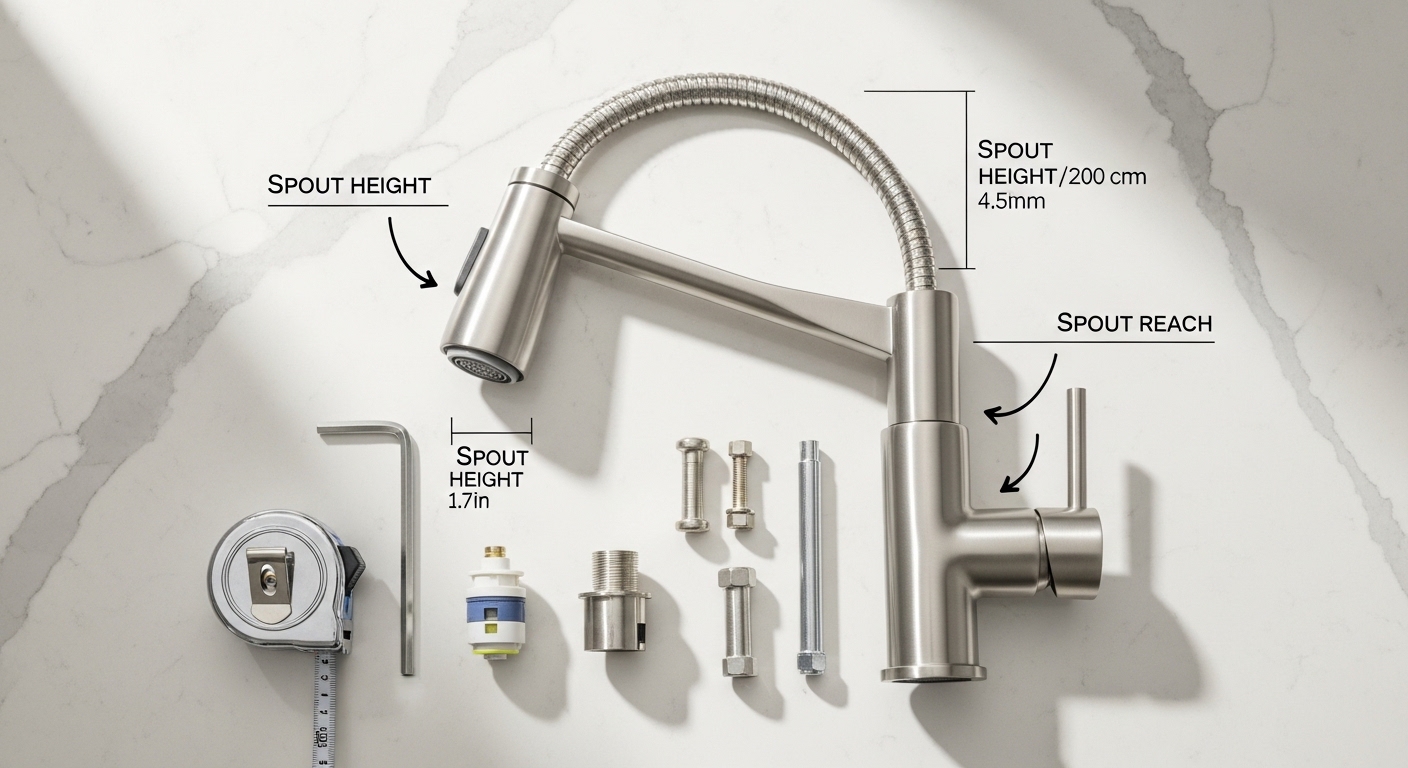
The spray head itself is where 2026 quality shows up. Look for a dual-function head that toggles between an aerated stream (for filling) and a powerful spray (for rinsing), a magnetic dock that snaps the sprayer back into place instead of letting it droop over time, and a silicone/rubber nozzle you can wipe to remove mineral buildup. Those three details separate a faucet that still feels great in year five from one that sags and clogs.
Is a pot filler worth adding in 2026?
A pot filler is worth it if you regularly cook large batches and have a range against a plumbed wall; otherwise it’s a luxury. It’s a wall-mounted, folding faucet over the stove that fills big pots where they sit, so you don’t haul heavy water across the kitchen. The main cost is running the water line, so it’s easiest during a remodel — we break the numbers down in how much it costs to install a pot filler faucet.
Are filtered-water kitchen faucets a real trend or a gimmick?
Built-in filtration is a genuine, fast-growing 2026 trend — but read the fine print before you buy. Faucets with an integrated filter or a dedicated filtered-water waterway are convenient, but many lock you into proprietary cartridges that cost more over the life of the faucet than the faucet itself. For most kitchens, a separate under-sink or point-of-use filter paired with any faucet you love is the smarter, more flexible move.
The appeal is obvious: no countertop pitcher, no separate filter faucet cluttering the sink. Three approaches are trending:
- Integrated-filter faucets: Filter lives in or under the faucet body. Cleanest look, highest cartridge cost, least flexibility.
- Dual-flow / three-way faucets: One faucet, two waterways — regular tap plus filtered water from a separate under-sink cartridge you choose.
- Standard faucet + under-sink system: Any faucet you want, filtration hidden in the cabinet. Most flexible and usually cheapest per gallon.
Before you commit to filtration built into the faucet, price the replacement cartridges and check the certified contaminant list (NSF/ANSI 42 for taste/chlorine, 53 for lead and heavier contaminants). If you mainly want cleaner-tasting water without marrying a proprietary cartridge, compare your choices in our guide to tap water filter options.
What kitchen faucet trends should you avoid in 2026?
Avoid ultra-trendy colored finishes you’ll tire of, no-name touchless faucets with sealed batteries, and any faucet whose spray head or cartridge you can’t easily buy a replacement for. Trends that photograph beautifully can still be regret purchases if they’re hard to clean, hard to repair, or too loud a color for a fixture you’ll look at every day for a decade.
Specific things to be cautious about this year:
- Extreme colors (deep green, navy, red faucets): Fun now, dated fast, and harder to resell your home around. If you love color, put it in cabinet hardware, not the faucet.
- Cheap “smart” faucets with app dependence: Voice and app control sound futuristic, but a faucet that needs a working app and cloud server to run is a liability. Make sure it works fully as a manual faucet too.
- Proprietary everything: Sealed batteries, glued-in cartridges, one-of-a-kind spray heads. When something wears out (and it will), you want standard, buyable parts.
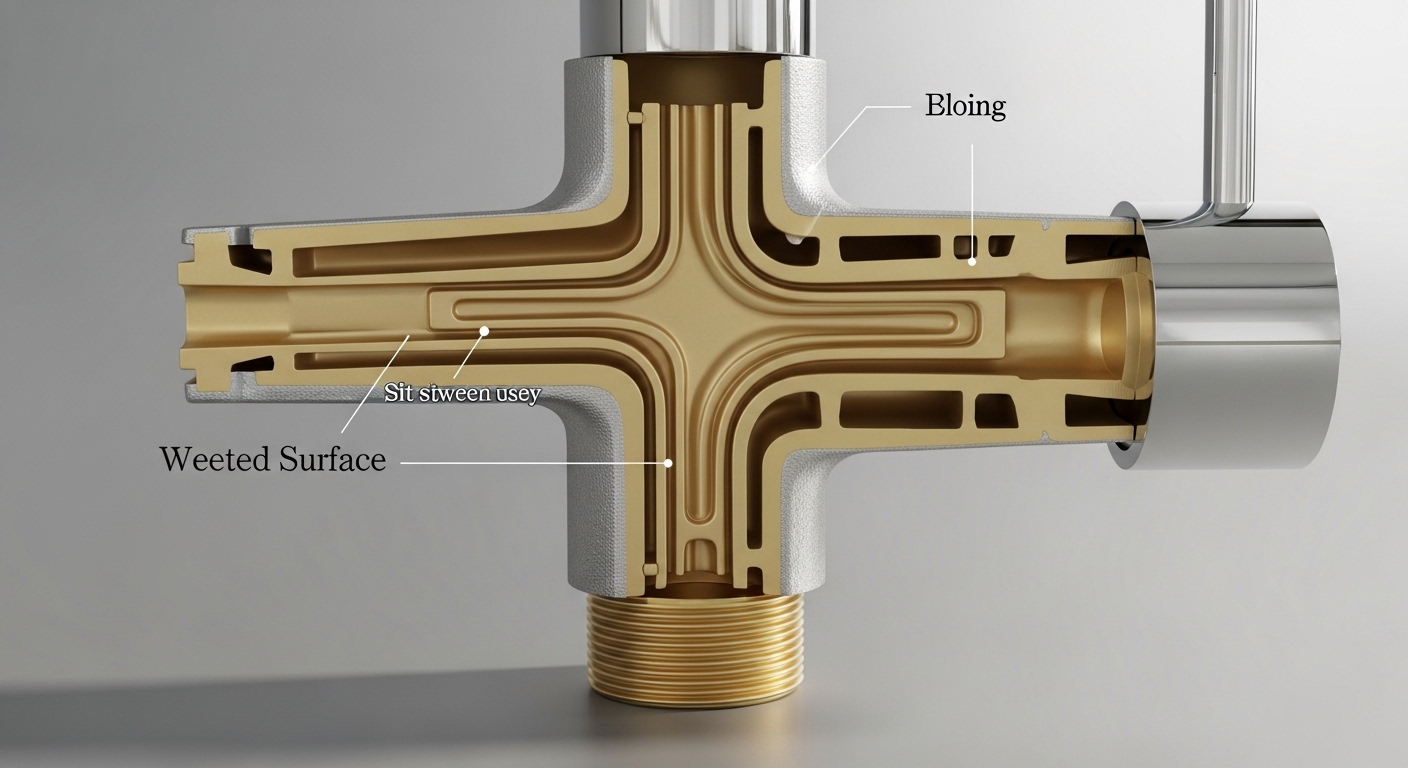
- Skimping on the valve/cartridge: A ceramic-disc cartridge is the trend-proof choice — it resists drips and lasts far longer than cheap rubber-washer valves.
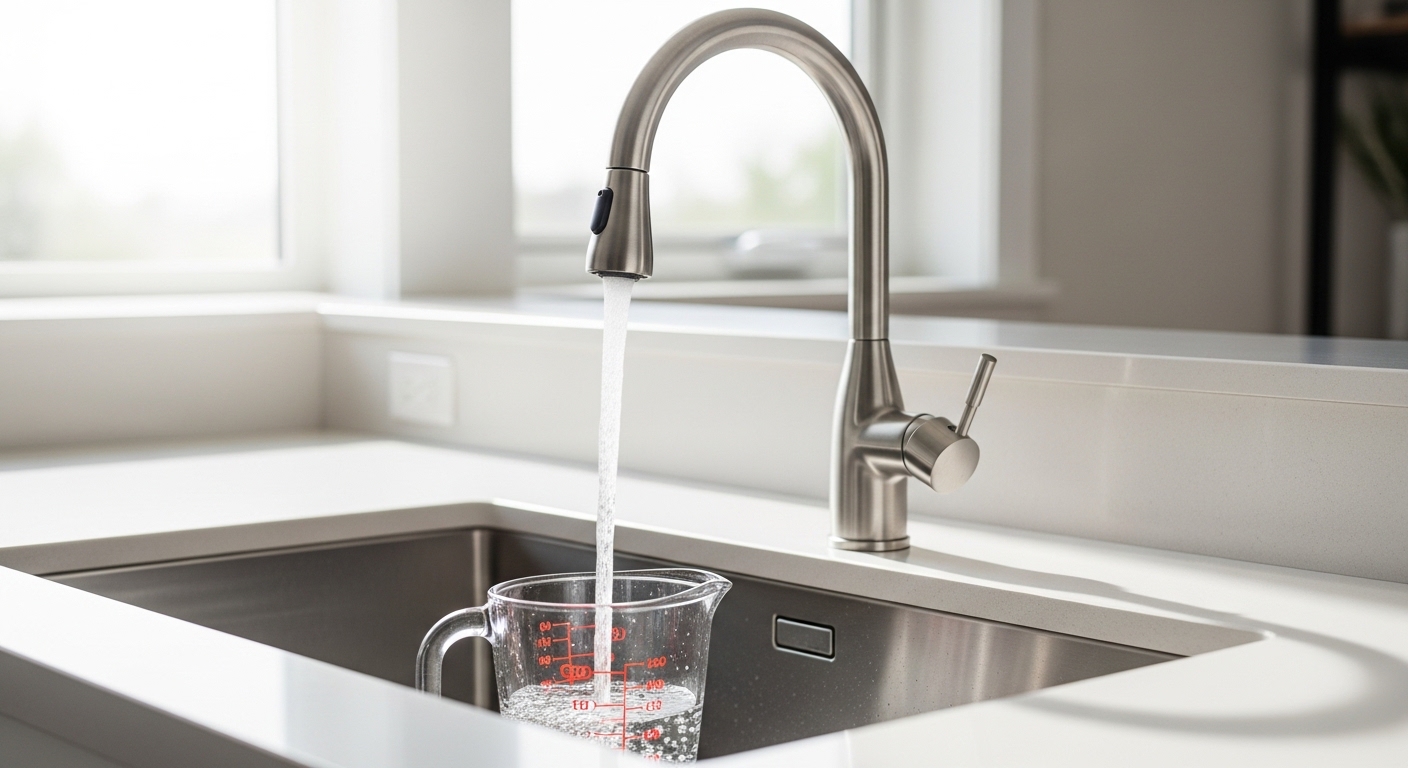
A quick durability tell: check the flow rate and the cartridge type. Modern kitchen faucets typically flow at 1.5–1.8 gallons per minute (GPM); anything WaterSense-labeled is capped at 1.8 GPM and often feels just as strong thanks to better aerators. Pair a 1.8 GPM flow with a ceramic-disc cartridge and a solid-brass body, and you’ve got a faucet that survives trends, not just follows them.
How much should you spend on a trend-worthy kitchen faucet in 2026?
For a durable, on-trend kitchen faucet in 2026, plan on $150–$300 for a quality pull-down, $250–$450 if you want reliable touchless activation, and $400+ for premium finishes or integrated filtration. Under about $100, you’re usually getting plastic internals and a finish that wears; over $500, you’re mostly paying for brand and design, not better function.
Where the money actually goes:
- $80–$150: Solid entry pull-down or pull-out, brushed nickel or matte black, ceramic cartridge — great value if you skip touchless.
- $150–$300: The sweet spot. Better spray head, magnetic dock, warm designer finishes, longer warranty.
- $300–$500: Reliable touchless/touch tech, champagne bronze or brushed gold PVD finishes, dual-function everything.
- $500+: Premium brand design, integrated filtration, commercial-style spring faucets, smart features.
Buy on the metal and the mechanism, not the marketing. A $180 solid-brass faucet with a ceramic-disc cartridge will outlast a $350 faucet that’s mostly zinc and plastic under a pretty finish.
FAQ
Is chrome really out for kitchen faucets in 2026?
Polished chrome isn’t “out,” but it’s no longer the default. It’s slipping in new kitchens because it shows fingerprints and water spots and reads cold against the warm, natural materials that are trending. Brushed nickel remains the safe neutral, and warm metals (champagne bronze, brushed gold) and matte black are where the momentum is. If you already have chrome fixtures elsewhere, chrome is still perfectly fine — it’s timeless, just no longer the star.
Do touchless kitchen faucets still work if the power or batteries die?
Almost all of them do. Quality touchless faucets keep a manual handle, so if the batteries die or the sensor fails, you operate it like a normal faucet — you just lose the wave-to-start feature until you swap batteries (usually 4–6 AA, lasting 6–12 months). Before buying, confirm the model has manual override; avoid any faucet that becomes unusable without power.
What’s the most timeless kitchen faucet finish if I don’t want to chase trends?
Brushed nickel and stainless are the most timeless — neutral, spot-hiding, and compatible with almost any palette. Matte black is now nearly as safe and pairs especially well with stainless sinks and white or wood cabinets. If you want warmth without risk, champagne bronze is the most “grown-up” of the gold tones. Keep the finish consistent with your cabinet hardware and sink for the most durable look.
Are gold and bronze kitchen faucets hard to keep clean?
No — quality PVD (physical vapor deposition) gold and bronze finishes are extremely durable and easy to maintain; you just wipe with a soft cloth and mild soap, avoiding abrasive or acidic cleaners. The finish is bonded at a molecular level, so it resists tarnish and scratching far better than older electroplated brass. For finish-specific care that keeps the shine, see our tips on how to keep gold finish faucets looking new.
Is a smart or voice-controlled kitchen faucet worth it in 2026?
For most people, no — a good touchless faucet delivers 90% of the convenience without the app dependence. Voice control (measured-pour “dispense two cups”) is genuinely handy for baking and precision, but only buy it if the faucet also works fully as a standard manual faucet and doesn’t require a live internet connection for basic on/off. Treat smart features as a bonus, not the reason you buy.
What single upgrade makes the biggest difference in a kitchen faucet?
A high-arc pull-down spout with a dual-function magnetic-dock spray head. It’s the change you feel every single day — more clearance for pots, a real spray for rinsing, and a hose that snaps back instead of sagging. Add touchless activation if your budget allows, but if you upgrade just one thing, upgrade the spray head and spout height.
Author note: This guide was written by the aleashafaucet product team, who spec, pressure-test, and install kitchen and bath faucets year-round and track finish and technology trends across major brands and trade shows. About aleashafaucet: we design and sell kitchen and bathroom faucets built around solid-brass bodies and ceramic-disc cartridges, and we back our kitchen faucets with a limited lifetime warranty on finish and function. Our recommendations here reflect finishes and mechanisms tested against common standards like NSF/ANSI 42 and 53 for filtration and WaterSense flow-rate guidelines (1.8 GPM), not just what looks good in a photo.