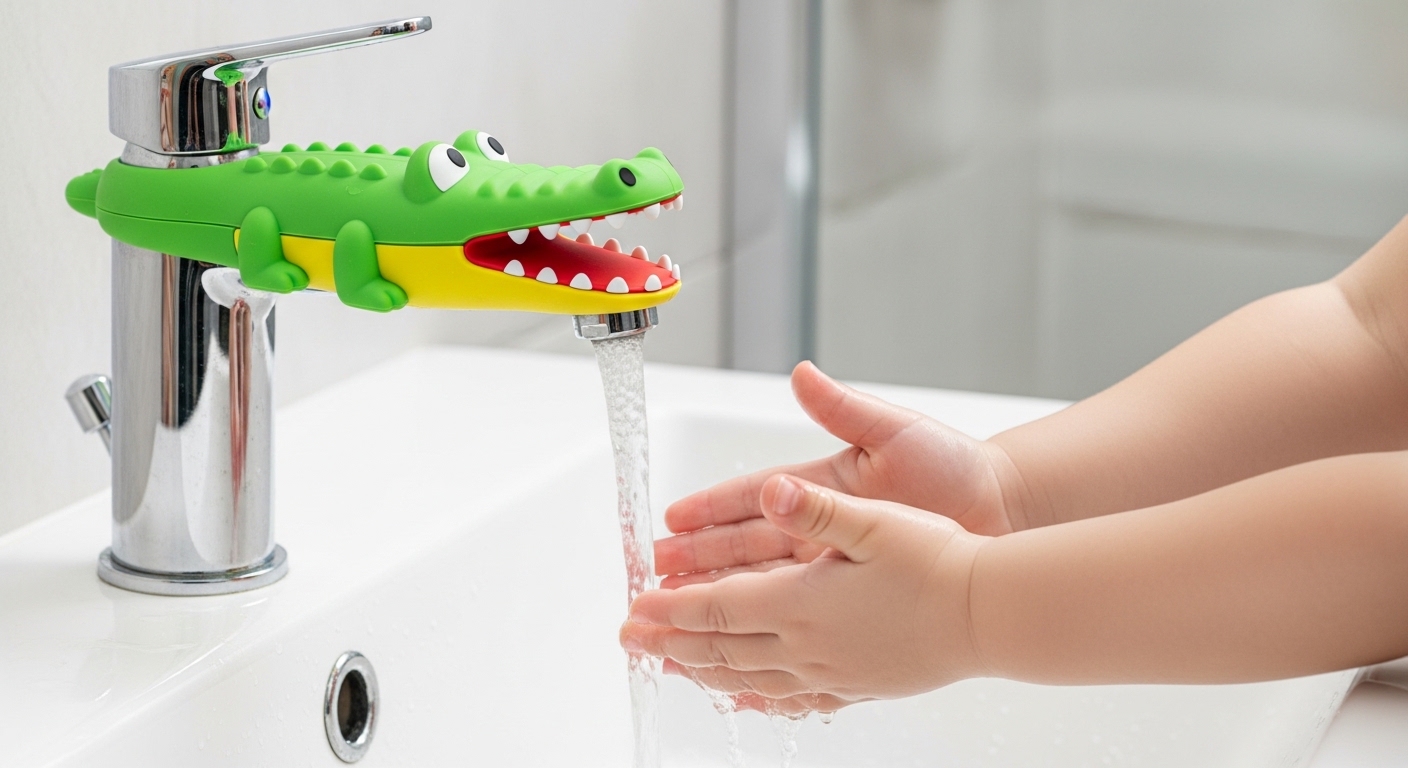
If you’ve ever watched a three-year-old climb the vanity like a rock wall just to rinse their hands, you already understand the problem a faucet extender for bathroom sink solves. Modern bathroom faucets — especially tall vessel-sink spouts and wall-mounted designs — often drop water right against the back of the basin, out of easy reach. A faucet extender grabs that stream and carries it a few inches forward, closer to the front edge where hands, cups, and toothbrushes actually are. It’s one of the cheapest, fastest upgrades you can make to a bathroom, and most people install one in under 60 seconds with zero tools.
Below, I’ll walk you through the real differences between extender types, how to know if yours will fit, what to avoid, and which style makes sense for your exact situation — whether you’re childproofing a family bathroom or fighting a badly-placed spout in a rental.
What exactly does a faucet extender do, and how is it different from an aerator?
A faucet extender redirects and lengthens the reach of your water stream — it does not change the water itself. It clips or threads onto the very tip of your spout and channels the flow forward by 3–6 inches, and usually downward, so the water lands closer to the front of the sink. That’s the whole job: reposition where the water comes out without moving the faucet.
An aerator, by contrast, screws inside the spout tip and mixes air into the water to reduce splashing and save water. People confuse the two constantly. Here’s the clean distinction:
- Faucet extender — changes where the water lands (reach and angle). Great for toddlers, deep basins, and awkward spout placement.
- Aerator — changes how the water feels and flows (softness, splash, flow rate). If you’re chasing a gentler stream, that’s an aerator job, not an extender.
- Sprayer/nozzle attachment — changes the pattern (spray vs. stream). If you’re replacing the very end of a pull-down spray head, that’s a different part entirely — see our guide on the faucet sprayer end for that.
Many toddler-focused extenders combine both functions: they extend the reach and add a bit of aeration so the flow is softer and safer for little hands. That’s usually what parents are actually looking for.
Which type of faucet extender is best for my bathroom sink?
The best type depends on who’s using the sink and why. For kids, choose a soft silicone clip-on. For a permanent fix to a badly-placed spout, choose a threaded metal extension. For accessibility (arthritis, limited reach), choose a lever-style or long-reach silicone spout. Here’s how the main categories stack up:
| Extender type | Best for | Attachment | Typical price | Reach added |
|---|---|---|---|---|
| Silicone clip-on (toddler) | Kids, hand-washing, shared family baths | Snaps over spout tip, no threads needed | $6–$12 | 3–5 in. forward + down |
| Threaded brass/metal extension tube | Deep vessel sinks, permanent repositioning | Screws into aerator threads (M22/M24 or 15/16″) | $12–$30 | 2–6 in., adjustable |
| Swivel / angle adapter | Stream hitting basin wall or too far back | Threaded, rotates 90–360° | $8–$18 | Angle change, minimal length |
| Long silicone accessibility spout | Elderly, limited mobility, wheelchair reach | Universal clip or strap | $10–$20 | 4–6 in. forward |
For the vast majority of buyers — parents of young kids — the silicone clip-on is the right answer. It’s cheap, requires no tools, fits almost any spout, and comes off in seconds for cleaning. The threaded metal extenders matter when you want something that looks built-in and stays put permanently, especially over a tall or deep basin where you’re constantly reaching too far.
How do I know a faucet extender will actually fit my faucet?
Most clip-on extenders fit spouts between roughly 0.6 and 1.2 inches in diameter — which covers the majority of standard bathroom faucets — but threaded models must match your aerator thread size exactly. So the fit question splits in two:
For clip-on (silicone) extenders: measure the outer diameter of your spout tip. If it’s between about 15mm and 30mm (roughly 5/8″ to 1-1/8″), a universal clip-on will grip it. These use flexible silicone that stretches over the tip, so they’re forgiving. The main failure cases are very slim European-style spouts and unusually wide or square modern designs.
For threaded extenders: you need to know your aerator thread. Common bathroom sizes are:
- Male 15/16″–27 (the aerator threads onto the outside of the spout) — most common in the US.
- Female 55/64″–27 (threads on the inside).
- Metric M22 or M24 — common on imported and European faucets.
The easiest way to find yours: unscrew your current aerator and take it to the store, or measure the diameter and count whether the threads are inside or outside. If the numbers make your eyes cross, a clip-on sidesteps the whole issue because it never touches the threads. Understanding your spout also matters for water behavior — if you want context on how much water your faucet is actually pushing, our breakdown of average tap flow rate explains why some extenders splash more than others.
Are faucet extenders worth it for toddlers, or just a gimmick?
For toddlers, a faucet extender is genuinely worth it — it’s one of the few “kid gadgets” that solves a real, daily problem rather than just adding clutter. The value is simple: it moves the water to where a short child can reach without leaning their whole body over a hot, hard basin edge. That means fewer soaked sleeves, fewer step-stool tumbles, and — this is the part parents underrate — kids who actually wash their hands because it stopped being a struggle.
The honest caveats: cheap silicone extenders can harbor mildew if you never remove and dry them, and the fun animal shapes wear out or discolor over a year of daily use. They’re consumable, not forever-products. But at $6–$12, replacing one annually is trivial. Look for these when buying:
- Food-grade silicone that’s BPA-free — it’s touching water your kid puts on their hands and face.
- A design that pops off easily for weekly cleaning and drying (the #1 cause of mildew is extenders that are a pain to remove).
- Some built-in aeration so the softened stream doesn’t blast little hands.
- A snug clip — if it slips off under water pressure, it’s useless and frustrating.
One thing an extender does not do: control water temperature. If scalding is your worry, pair the extender with a thermostatic mixing valve or a simple faucet temperature limiter. The extender handles reach; temperature safety is a separate system.
Can a faucet extender fix water that hits the back of the basin or splashes everywhere?
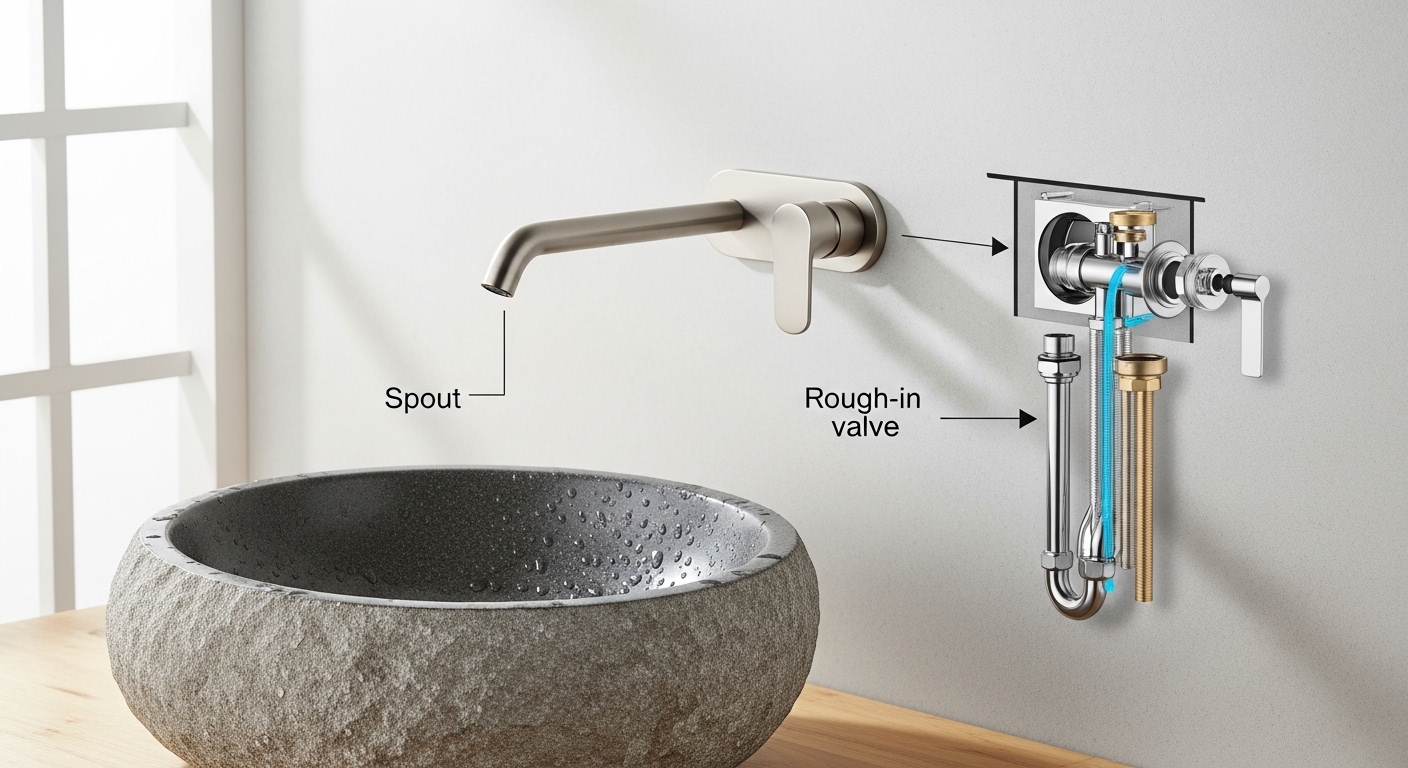
Yes — repositioning a poorly-aimed stream is the second-biggest reason people buy extenders, right after childproofing. If your spout dumps water against the back wall of the basin, or so close to the drain that you can’t fit a cup under it, an angle-adapter or extension tube pulls that stream forward into usable space. This is extremely common with tall vessel-sink faucets and wall-mounted spouts, where the geometry was designed for looks, not for actually washing your hands.
Splashing is trickier. Extenders can help splashing by moving the impact point away from a shallow basin’s steep back wall, but if the real issue is high pressure hitting a hard flat surface, you may need aeration too. A combined extend-and-aerate model tackles both at once. If the splashing comes with other symptoms — spitting, sputtering, uneven flow — the problem may be upstream in the aerator or cartridge, not something an extender can fix.
For wall-mounted setups specifically, repositioning the stream sometimes means the spout itself is in the wrong place, and no attachment fully fixes it. In that case it’s worth reading our guide on wall mount faucet spout replacement before you spend money on an extender that only masks the real geometry problem.
How do I install and clean a faucet extender the right way?
Installing a clip-on extender takes about 30 seconds and no tools; a threaded one takes about two minutes and maybe a wrench. Here’s the reliable process:
- Clean the spout tip. Wipe off mineral scale and grime so the extender grips evenly.
- For clip-ons: stretch the silicone opening over the spout tip and push it up until it seats firmly. Give it a gentle tug to confirm it won’t slide off.
- For threaded extenders: unscrew your existing aerator, wrap the extender’s threads with one or two layers of plumber’s (PTFE) tape, then hand-tighten the extender on. Snug it a quarter-turn more with a wrench or cloth-wrapped pliers — don’t overtighten or you’ll crack the housing.
- Test it. Run water at full pressure and check for drips at the seam and for a stream that lands where you want it.
Cleaning is where extenders live or die. At least once a week, pop off the clip-on, rinse it, and let it dry fully — silicone that stays wet 24/7 grows pink or black mildew fast. For threaded metal extenders, soak the removable tip in a 50/50 white-vinegar-and-water solution monthly to dissolve limescale, especially if you have hard water. A clogged, scaled extender produces exactly the weak, spitting stream people mistakenly blame on their whole faucet.
What should I look for when buying a quality faucet extender?
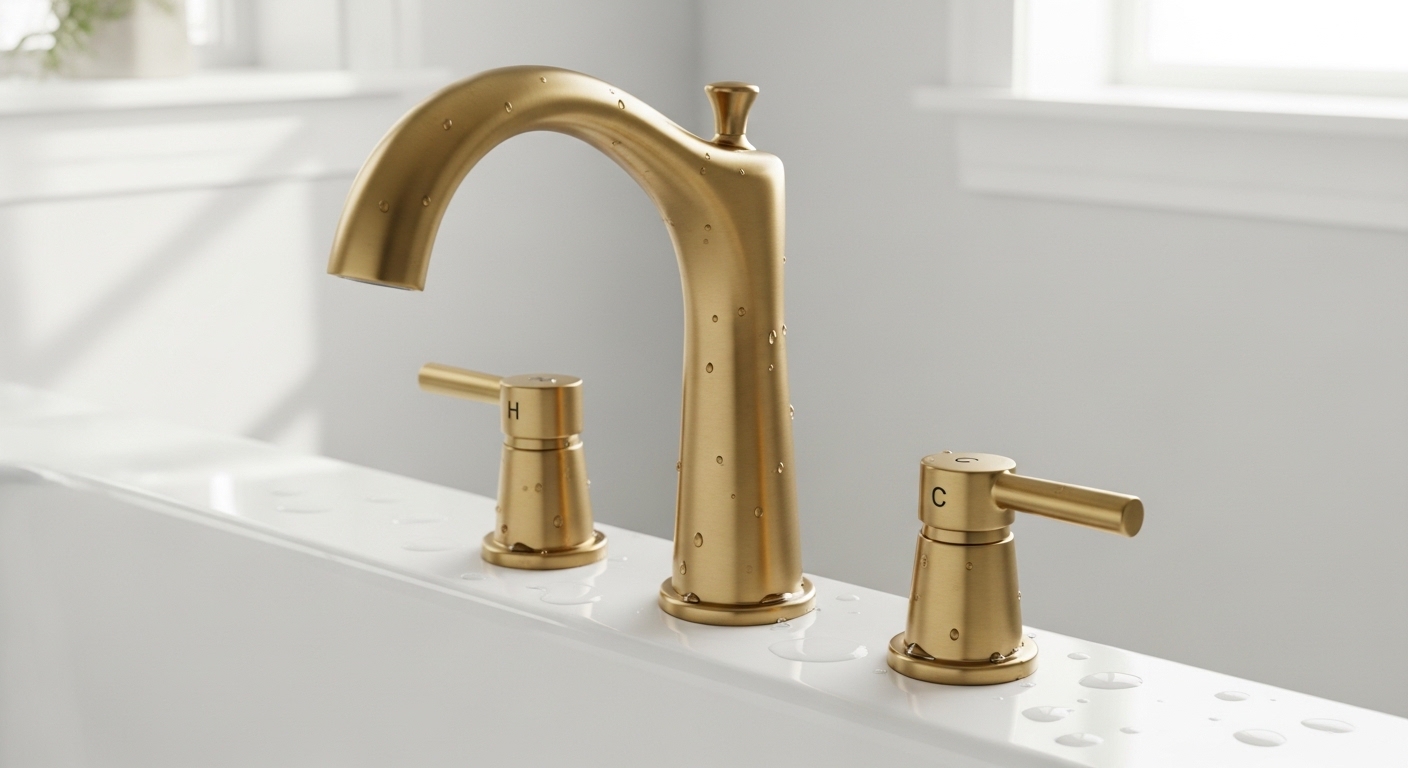
Buy on material, fit range, and cleanability — not on the cute animal face. A good extender lasts, seals without dripping, and comes off easily. The finish matters too if it’s a visible metal model: a mismatched chrome extender on a brushed-gold faucet looks like an afterthought, so match your existing hardware. If you care about premium bathroom finishes generally, our overview of the best unlacquered brass bathroom faucet options shows how much finish consistency affects the overall look.
Quick buyer’s checklist:
- Material: food-grade silicone (kids) or solid brass (permanent) — avoid brittle hard plastic that cracks at the seam.
- Fit: confirm your spout diameter (clip-on) or thread size (threaded) before ordering.
- Seal: look for reviews mentioning “no leaks” — a dripping extender seam is the top complaint.
- Removability: if you can’t clean it easily, you won’t, and it’ll get gross.
- Flow compatibility: an extender that chokes flow too much makes rinsing frustrating.
- Warranty/returns: even on a $10 part, a seller who stands behind fit tells you they’ve tested it.
FAQ
Do faucet extenders fit all bathroom sink faucets?
No, but clip-on silicone models fit the large majority — anything with a spout tip between roughly 5/8″ and 1-1/8″ in diameter. Threaded extenders are pickier and must match your aerator thread (commonly 15/16″–27 male, 55/64″–27 female, or metric M22/M24). Very slim European spouts and oversized square modern designs are the usual exceptions. When in doubt, a clip-on is the safest universal choice.
Will a faucet extender reduce my water pressure?
A well-made extender causes only a small, barely noticeable drop, because it’s just redirecting flow through a short channel. Extenders with built-in aeration will feel gentler by design — that’s intentional, not a defect. If you notice a big pressure loss, the extender is probably clogged with mineral scale and needs a vinegar soak, or the tip opening is simply too narrow for your faucet.
How long do faucet extenders last?
Silicone clip-ons typically last about a year of daily family use before they discolor or lose their snug grip; solid brass threaded extenders can last many years. Lifespan depends heavily on cleaning and water hardness — hard water and neglect can scale up a cheap extender in a few months, while regular rinsing and drying extends it well past a year.
Are faucet extenders safe for drinking water?
Yes, if you buy one made from food-grade, BPA-free silicone or a lead-free metal. Cheap unbranded extenders may use questionable plastics, so check the material specification. For anyone especially concerned about what touches their water, the same lead-safety logic that applies to fixtures — discussed in our article on lead-free brass — applies to any small attachment you add to the stream.
Can I use a kitchen faucet extender on a bathroom sink?
Sometimes, but it’s usually a poor fit. Kitchen extenders are built for taller, wider spouts and higher flow, so they can look bulky and grip poorly on a slimmer bathroom faucet. Bathroom-specific extenders are sized for smaller spouts and lower flow, which gives you a cleaner look and a more secure hold. Buy the one made for the room you’re using it in.
Do I need any tools to install one?
For a clip-on silicone extender, no — you just stretch it over the spout tip by hand in about 30 seconds. For a threaded metal extender, you’ll want plumber’s tape and possibly a cloth-wrapped wrench to snug it without scratching the finish. Neither installation requires a plumber or any permanent modification to your faucet.
Why is my faucet extender leaking or dripping?
Leaks almost always come from a bad seal at the connection point. On threaded models, add a wrap or two of PTFE plumber’s tape and hand-tighten a quarter-turn more. On clip-ons, the silicone may have stretched out or the spout tip may be too small or too large for a firm grip — try a different size. Persistent dripping after the water is off, though, usually means the faucet’s cartridge is worn, not the extender.
About the author: This guide was written by the aleashafaucet product team, who spend their days testing spouts, aerators, cartridges, and attachments across dozens of faucet brands. We’ve fit-tested clip-on and threaded extenders across standard US and metric spout sizes to confirm the diameter and thread guidance above.
Why trust aleashafaucet: aleashafaucet is a dedicated faucet and bathroom-fixtures brand at www.aleashafaucet.com. Our fixtures and components are built to recognized plumbing standards for lead-free wetted surfaces and flow performance, and our faucets ship with a manufacturer warranty. We recommend parts based on how they actually perform on real sinks — not on marketing — and we tell you when a cheaper solution (like a $10 extender) beats a full replacement.