If your faucet sprayer end is dribbling, stuck in one mode, or caked with white hard-water crust, you don’t always need a whole new faucet — most of the time you just need to clean, re-seat, or replace that spray head. This guide breaks down exactly what the sprayer end is, the different types, how to pick a compatible replacement, and how to swap it yourself. We’ll keep it concrete: real specs, real prices, and the small details that decide whether your new sprayer clicks back into place or annoyingly droops an inch out of the spout.
What exactly is the “faucet sprayer end” — and is it the same as a sprayer head?
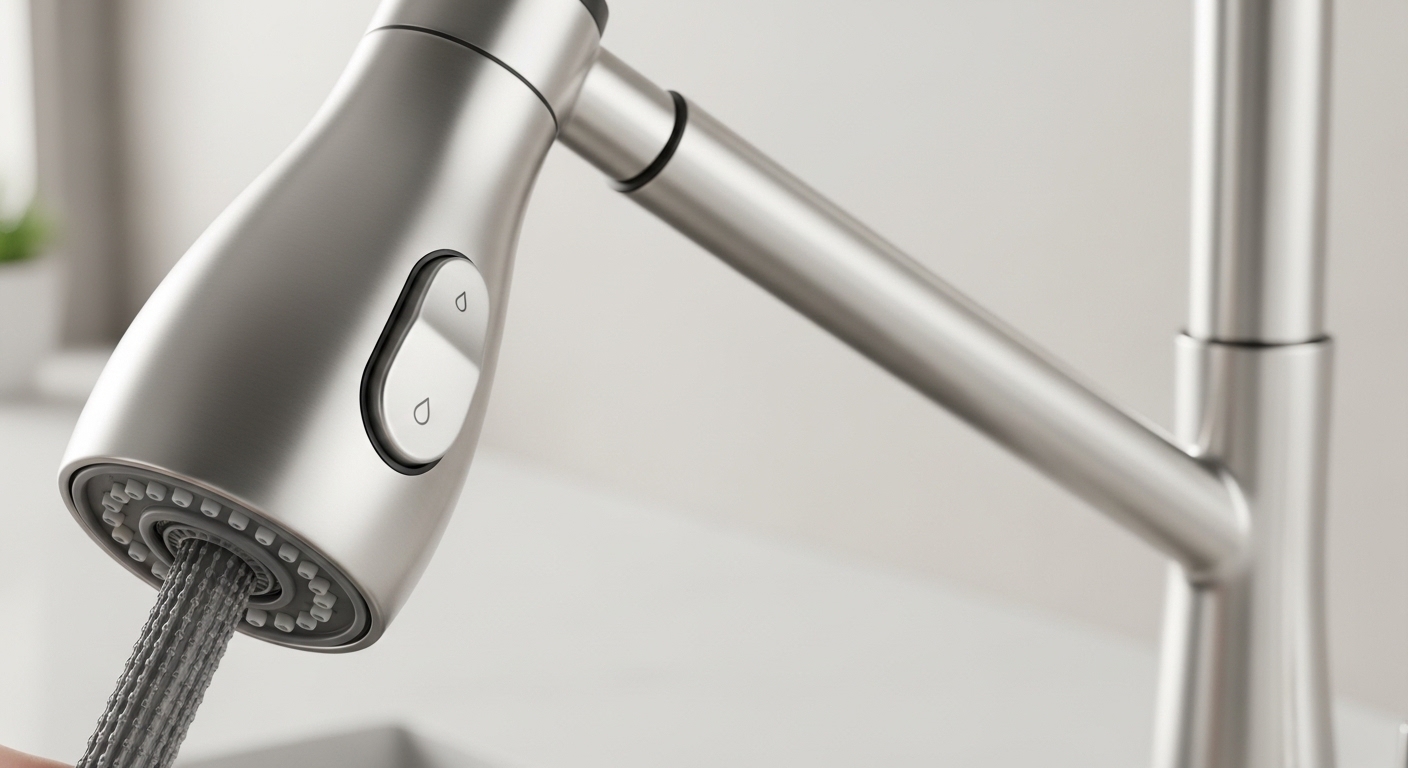
The faucet sprayer end is the business tip of your faucet’s hose — the part that actually shapes and aims the water. “Sprayer end,” “spray head,” “sprayer nozzle,” and “wand” all refer to the same component, just spoken differently by different brands and plumbers. On a pull-down or pull-out kitchen faucet it’s the piece you grip and pull toward your sink; on an older two-hole setup it’s the separate handheld side sprayer that sits in its own deck hole.
Functionally, the sprayer end does three jobs: it houses the nozzle face (the rubber or silicone disc with all the little water holes), it contains the diverter or toggle that switches between stream and spray, and it provides the magnetic or weighted dock that snaps the wand back into the spout. When people say “my sprayer is broken,” 80% of the time the failure is in one of those three sub-parts — not the faucet body itself.
- Nozzle face: the flexible rubber/silicone pad with spray holes — easy to wipe descale.
- Mode toggle/diverter: the button or lever that flips stream ↔ spray.
- Hose coupling: the threaded or quick-connect fitting that joins the wand to the supply hose.
- Dock collar: the lip that seats into the spout, often with a magnet (magnetic docking) or counterweight.
What are the different types of faucet sprayer ends?
There are four main types of faucet sprayer ends: pull-down spray heads, pull-out spray heads, separate side sprayers, and fixed/integrated sprayers. The right one for you depends on your faucet style and how deep your sink is. Here’s how they compare side by side.
| Sprayer End Type | Best For | Typical Reach | Spray Modes | Replacement Cost |
|---|---|---|---|---|
| Pull-down spray head | Deep single-bowl kitchen sinks | 20–24 in. hose | 2–3 (stream, spray, pause) | $15–$45 |
| Pull-out spray head | Shallow sinks, low-clearance windows | 24–30 in. hose | 2 (stream, spray) | $12–$38 |
| Side sprayer (separate) | Older 3–4 hole faucet setups | 30–48 in. hose | 1–2 (spray, sometimes stream) | $10–$25 |
| Fixed/integrated sprayer | Bar & prep faucets, bathroom | No pull-out | 1 (aerated stream) | Sold as full spout |
Pull-down heads sit vertically inside a tall gooseneck spout and drop straight down into the bowl — ideal when you’re rinsing large pots. Pull-out heads pull horizontally toward you on a longer hose, which is friendlier under a low window or in a tight galley kitchen. Side sprayers are the classic separate nozzle in their own deck hole; they’re the cheapest to replace but the most prone to hose kinks and diverter clogs.
How do I know which replacement faucet sprayer end fits my faucet?
Match three things and you’re safe: the hose connection thread, the brand’s docking style, and the spout opening diameter. The hose connection is the make-or-break detail — most failed replacements happen because the new sprayer’s coupling doesn’t match the existing hose. Take 60 seconds to check before you buy.
The most common hose couplings are a universal 15/16-inch or 55/64-inch threaded nut, plastic quick-connect clips, and brand-proprietary connectors. Many brands (Moen, Delta, Kohler, Grohe) use their own quick-connect, so a generic sprayer end may physically thread on but leak or droop. When in doubt, buy the OEM spray head for your faucet model — the part number is usually printed on a sticker under the sink or on the original box. A correctly matched faucet sprayer end should seat flush with the spout and dock with a soft, magnetic “click,” not hang loose.
- Unscrew the existing sprayer from the hose (turn counter-clockwise) and look at the coupling — note threaded vs. quick-connect.
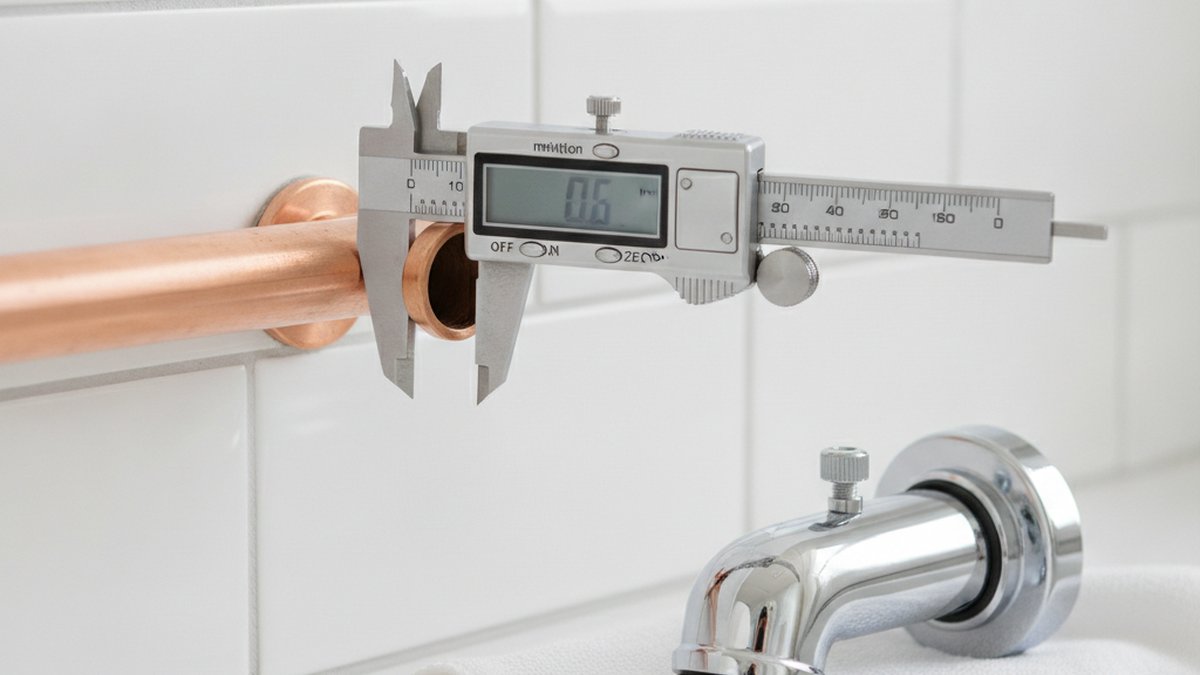
- Measure the thread diameter with calipers or compare to a listed size (15/16″ is the most common universal size).
- Identify your brand and finish so the new wand matches your faucet’s look (chrome, brushed nickel, matte black, etc.).
- Confirm docking type — magnetic dock, ball-and-socket, or simple drop-in collar.
If your goal is a quick fix rather than a full upgrade, our guide on how to fix a Moen kitchen faucet from leaking walks through the brand-specific quick-connect that trips up a lot of DIYers. And if you’re eyeing a complete pull-down upgrade rather than just the head, our overview of pull-down kitchen faucets in 2026 covers spray-head performance across price tiers.
Why is my faucet sprayer end leaking, dripping, or losing pressure?
A leaking or weak sprayer end is almost always one of three things: a clogged nozzle face, a worn rubber gasket at the hose coupling, or a failing diverter inside the faucet body. Start with the cheapest fix — descaling the nozzle — before you assume the part is dead.
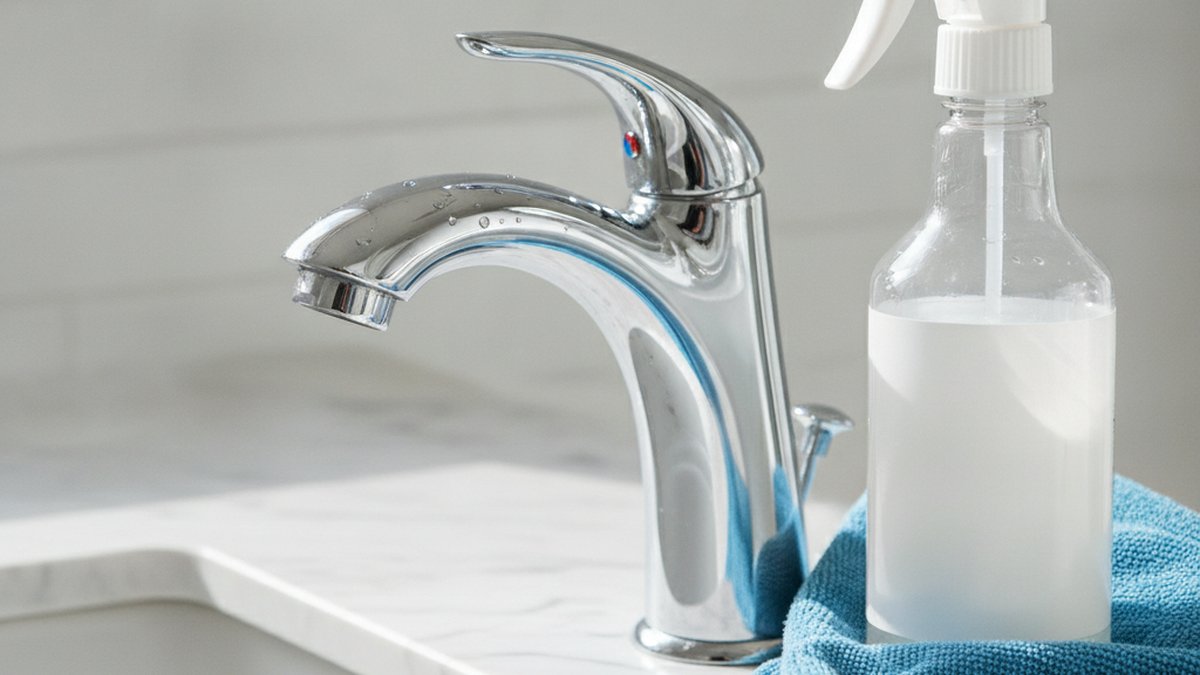
Hard water is the number-one enemy of the sprayer end. Calcium and magnesium deposits build up on the silicone nozzle holes and inside the toggle valve, which causes that classic “some holes spray sideways, others don’t spray at all” pattern. A 30-minute soak in a 50/50 white-vinegar-and-water solution dissolves most of it. Because the same mineral buildup clogs aerators too, the same technique in our walkthrough on how to clean a clogged faucet aerator applies directly to a sprayer face — rub the softened rubber pad with your thumb and the white crust flakes right off.
If water leaks from where the wand meets the hose, the small O-ring or washer inside the coupling is worn — a $3 O-ring kit fixes it. If pressure drops only in spray mode (or the head dribbles when docked), the diverter valve in the faucet body is the culprit, and that’s a separate part deeper inside the spout. If hard water is a chronic problem in your home, pairing a new sprayer with one of the tap water filter options at the supply line will dramatically slow down future scaling.
How do you replace a faucet sprayer end yourself?
Replacing a sprayer end is a five-minute, no-tools (or one-wrench) job for most pull-down and pull-out faucets — you simply unscrew the old head from the hose and thread on the new one. You don’t need to shut off the water for the head itself, though it’s good habit to turn off the supply valves under the sink anyway.
- Pull the spray head out of the spout to expose the hose connection.
- Hold the hose and unscrew the head counter-clockwise. On quick-connect models, squeeze the plastic clip and pull straight off.
- Transfer the counterweight if needed — some hoses have a clip-on weight that helps the wand retract; keep it on the hose.
- Check the new O-ring/washer is seated in the coupling, then thread the new head on hand-tight, plus a quarter turn with pliers if threaded.
- Run water in both modes and check for leaks at the joint. Re-dock the head and confirm it seats flush.
Two pro tips. First, wrap two turns of plumber’s PTFE tape on threaded connections to prevent slow weeping. Second, don’t overtighten — the plastic threads on most spray heads strip easily, and a cracked coupling means buying the part twice. If your faucet still leaks at the base after a new head, the problem is upstream in the cartridge or body, not the sprayer end.
Is it worth replacing just the sprayer end, or should you buy a whole new faucet?
Replace just the sprayer end when the faucet body is solid and only the head is clogged, cracked, or stuck — that’s a $15–$45 fix versus $120–$400 for a full faucet. Replace the whole faucet when the finish is peeling, the cartridge leaks, or the hose has split inside the spout.
Here’s the honest math. A genuine OEM spray head for a mid-range faucet runs $25–$45. A full mid-range pull-down faucet runs $150–$300 installed. So if your faucet is under 7–8 years old, the body is sound, and you just hate the spray pattern or it’s mineral-clogged, a new head is the obvious call. But if you’re already fighting a leaking cartridge AND a tired sprayer, the labor of two repairs often justifies a clean replacement — especially if you want to switch finishes to something current. Brushed and matte finishes age the look of a kitchen fast, and our take on whether brushed nickel is out of style in 2026 can help you decide if a refresh is worth it.
| Situation | Best Move | Rough Cost |
|---|---|---|
| Clogged or sideways spray, body fine | Descale, then replace head if needed | $0–$45 |
| Cracked wand or stripped coupling | Replace sprayer end (OEM) | $15–$45 |
| Leaking at faucet base + weak spray | Replace cartridge or whole faucet | $15–$400 |
| Peeling finish, old faucet, dated style | Replace whole faucet | $150–$400 |
FAQ
Are faucet sprayer ends universal?
Partly. Many use a universal 15/16-inch or 55/64-inch threaded coupling that fits a wide range of faucets, but major brands like Moen, Delta, and Kohler use proprietary quick-connect fittings. Always check whether your hose end is threaded or a brand-specific clip before buying, and when in doubt buy the OEM spray head listed for your exact faucet model.
How do I stop my faucet sprayer end from dripping after I turn the water off?
A sprayer that keeps dribbling after shutoff usually has a worn diverter or a mineral-clogged nozzle holding back water that then seeps out. Descale the head in vinegar first; if it persists, the diverter valve inside the faucet body needs cleaning or replacing. A leak at the wand-to-hose joint, by contrast, is just a worn O-ring.
Can I put a pull-down spray head on a faucet that came with a pull-out?
Not interchangeably. Pull-down and pull-out heads are engineered for different spout geometries and hose lengths, and the docking won’t seat correctly if you swap types. Replace like with like — a pull-out head for a pull-out faucet, a pull-down head for a pull-down — unless you’re replacing the entire faucet.
Why does my new sprayer head droop out of the spout instead of clicking in?
It’s usually a docking mismatch or a missing magnet/counterweight. Many modern faucets use magnetic docking; if you fit a non-OEM head without the matching magnet, it won’t snap home. Confirm your replacement uses the same docking system, and make sure the counterweight stayed clipped on the hose during the swap.
How often should I clean the faucet sprayer end?
Every 2–3 months in hard-water areas, or whenever you notice the spray pattern getting uneven. A quick vinegar soak and a thumb-rub over the silicone nozzle face is enough. Regular cleaning prevents the deeper diverter clogs that lead to dripping and pressure loss, and it extends the life of the head significantly.
Will a replacement sprayer end void my faucet warranty?
Using the manufacturer’s OEM spray head will not void your warranty and is often covered as a free replacement part under lifetime finish-and-function warranties. Installing a generic third-party head can affect coverage on some brands, so check your faucet’s warranty terms before going aftermarket.
The bottom line on choosing a faucet sprayer end
The faucet sprayer end is one of the few faucet parts you can diagnose, clean, and replace yourself in minutes — and most “broken faucet” complaints are really just a clogged or mismatched spray head. Match the hose coupling and docking style, keep at least two spray modes, soak the nozzle every couple of months, and you’ll get years more life out of a faucet you already own. Spend the $15–$45 on the right OEM head before you spend hundreds on a full replacement you may not need.
Author note: This guide was written by the aleashafaucet product team, drawing on hands-on testing of pull-down, pull-out, and side-sprayer assemblies across major faucet brands. aleashafaucet has specialized in kitchen and bathroom faucets and fixtures for over a decade, and our recommendations follow standard plumbing fitting sizes (NSF/ANSI-listed components and common 15/16″ couplings). Always confirm part numbers against your faucet’s warranty documentation before ordering a replacement spray head.