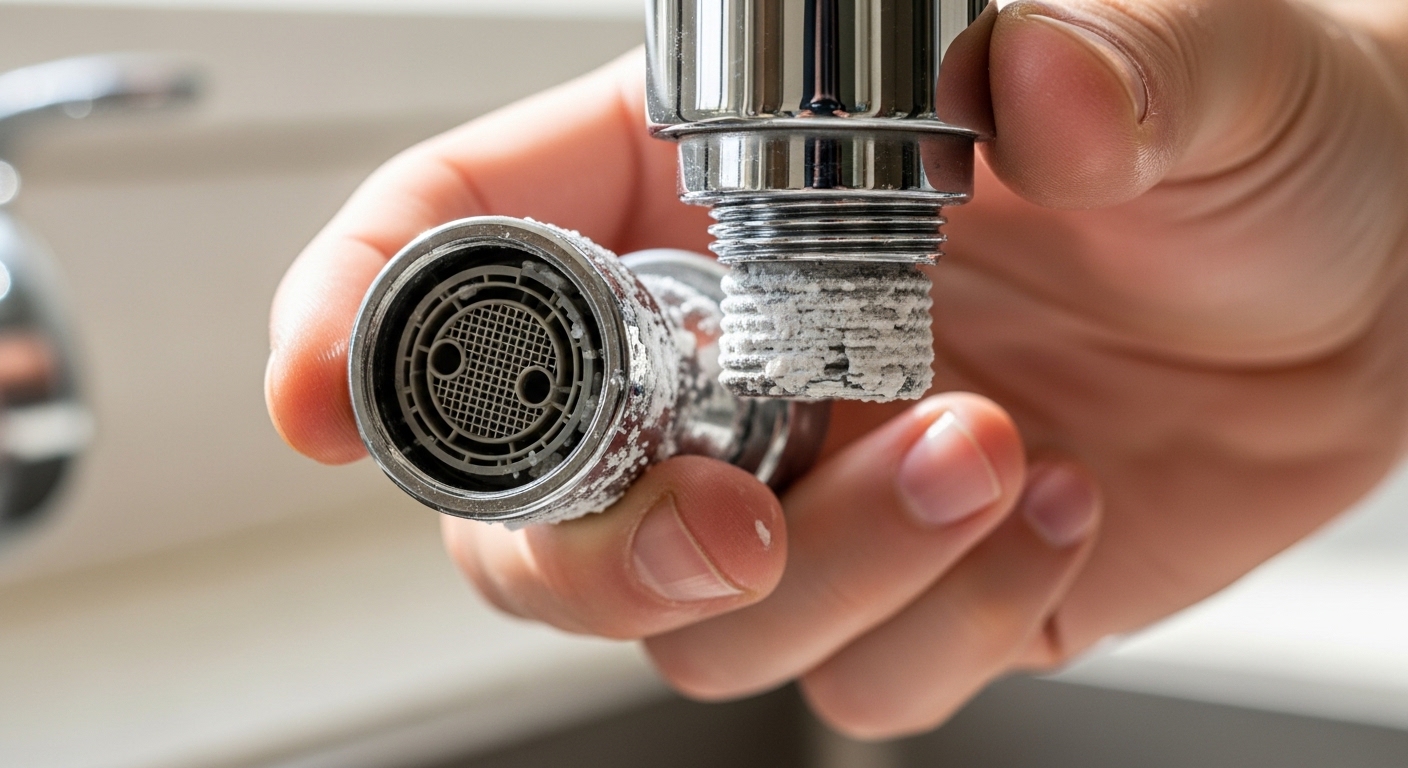
If you’re dealing with a faucet aerator low pressure problem — a strong stream everywhere else in the house but a sad trickle at one faucet — the aerator is almost always the culprit, not your pipes or your water supply. The aerator is the small screw-on tip at the end of your spout, and it holds a fine mesh screen that catches every bit of grit the water carries. Over months and years, that screen slowly plugs with calcium, magnesium, sediment, and even little rubber shards from a failing supply hose. The fix is cheap and fast, and this guide walks you through diagnosing it, cleaning it, deciding when to replace it, and choosing the right replacement flow rate so you never have to guess again.
Below, I answer the real questions people actually ask about this — the ones showing up in “People Also Ask,” on Reddit plumbing threads, and typed into ChatGPT at 9pm when the kitchen tap suddenly slows down.
Why is only one faucet low pressure when the rest of the house is fine?
When a single faucet loses pressure but every other tap runs strong, the problem is local to that faucet — and 8 times out of 10 it’s the aerator or the cartridge, not your home’s water supply. Whole-house pressure issues show up everywhere at once (shower, toilet fill, other sinks). A one-faucet problem means something is restricting flow at that fixture specifically.
Here’s the quick logic I use to isolate it:
- Both hot and cold are weak? The aerator is the prime suspect, because water passes through it no matter which handle you open.
- Only hot is weak? Look upstream at the water heater or a partially closed hot-side shutoff valve, or sediment in the hot supply line.
- Only cold is weak? Suspect a clogged cold-side supply line, a kinked braided hose, or a nearly closed angle-stop under the sink.
- Weak even with the aerator removed? Now you’re looking at the cartridge, a clogged supply hose, or the shutoff valve — not the aerator.
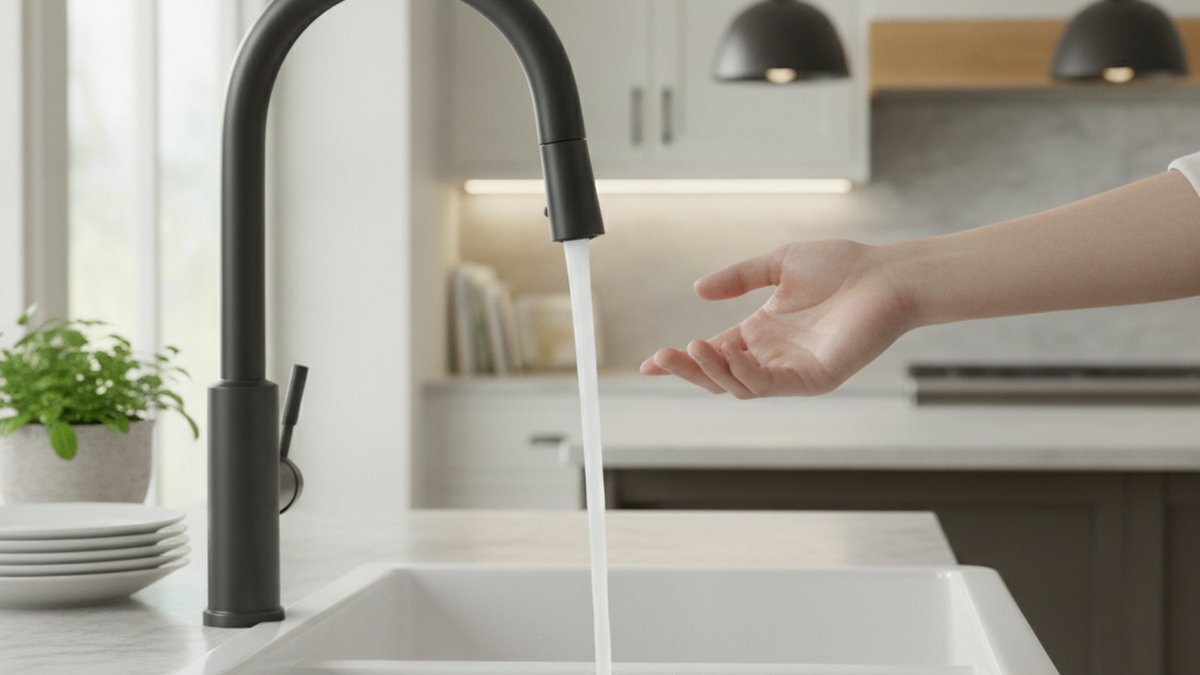
That last test is the single most useful thing you can do. Unscrew the aerator, turn the faucet on, and watch the flow. If it roars back to full force with the aerator off, you’ve confirmed the aerator is the restriction. If it’s still weak, the problem is deeper in the faucet — often a gummed-up cartridge, which you can address the same way you would when you replace a kitchen tap cartridge yourself.
How do I clean a clogged faucet aerator to fix low pressure?
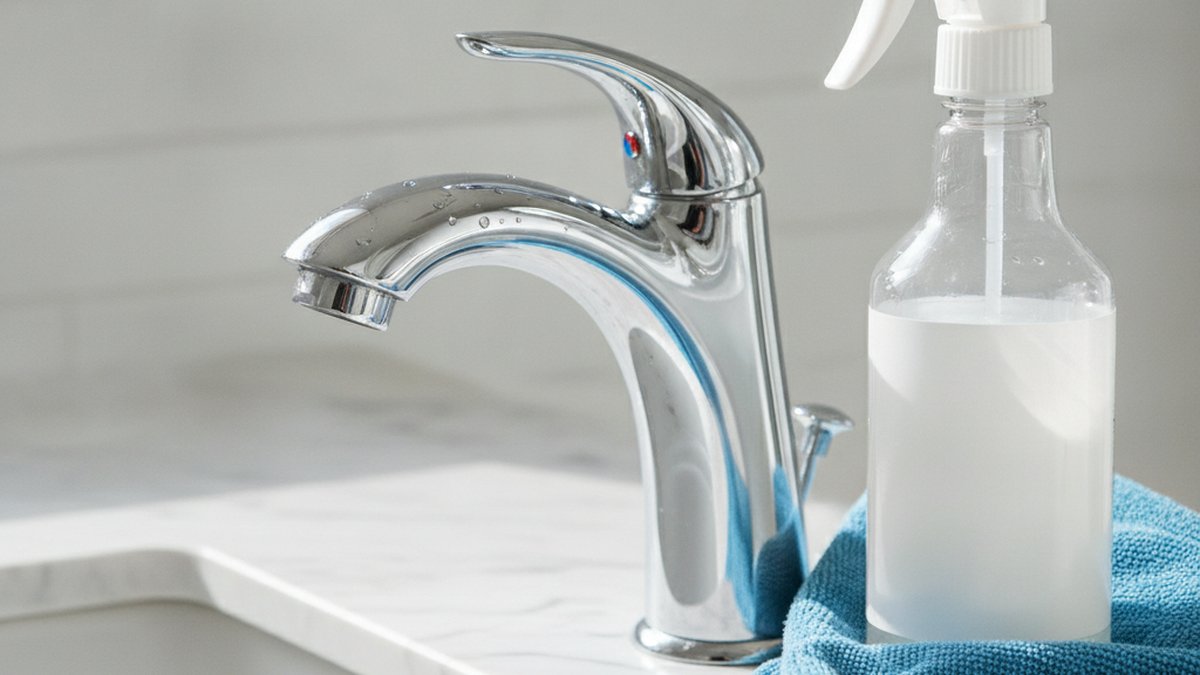
To fix a clogged aerator: unscrew it from the spout, disassemble the parts, soak them in white vinegar for 30 minutes to dissolve mineral scale, scrub the mesh with an old toothbrush, rinse, reassemble, and screw it back on. Total time is about 15 minutes plus soak time, and the only supply you need is household vinegar.
Step by step:
- Cover the drain with a rag or stopper so no small parts fall in.
- Unscrew the aerator by hand — turn it toward you (clockwise when viewed from below, since you’re looking up at it). If it won’t budge, wrap the housing in a cloth to protect the finish and use pliers gently.
- Note the order of the parts as you take them apart: housing, screen, flow restrictor, and a rubber washer. Lay them out left to right so reassembly is foolproof.
- Soak everything in white vinegar for 30 minutes (up to overnight if the scale is heavy and crusty).
- Scrub the screen with an old toothbrush and poke stubborn holes clear with a toothpick or a straightened paperclip.
- Rinse under running water and hold the screen up to the light — you should see clean, open mesh with no dark clogged patches.
- Reassemble in the same order and hand-tighten back onto the spout. Snug it a quarter-turn with a cloth-wrapped plier if it drips.
Turn the faucet on and check. If pressure is restored, you’re done. If it drips at the threads, the rubber washer is either misseated or worn — reseat it or replace it. This same mineral-scale problem is exactly what quietly strangles shower flow too; if that’s your situation, our guide on why your shower head has low pressure while the rest of the house is fine uses the identical diagnostic approach.
Should I clean or just replace my faucet aerator?
Clean it first — cleaning is free and works most of the time. Replace it if the mesh is torn, the housing threads are stripped or corroded, the plastic is cracked, or cleaning doesn’t restore flow. A new aerator costs $3–$12, so replacement is cheap insurance if the old one is clearly worn out.
Replace instead of clean when you see any of these:
- Torn or bent screen — a damaged mesh won’t seal or filter properly and can rattle.
- Corroded or stripped threads — if it won’t tighten without leaking, no amount of scrubbing helps.
- Chronic hard-water buildup — if you’re cleaning it every few weeks, upgrade to a new aerator and consider a water softener; hard water is relentless.
- You want a different flow rate — swapping the aerator is the easiest way to change how much water your faucet delivers.
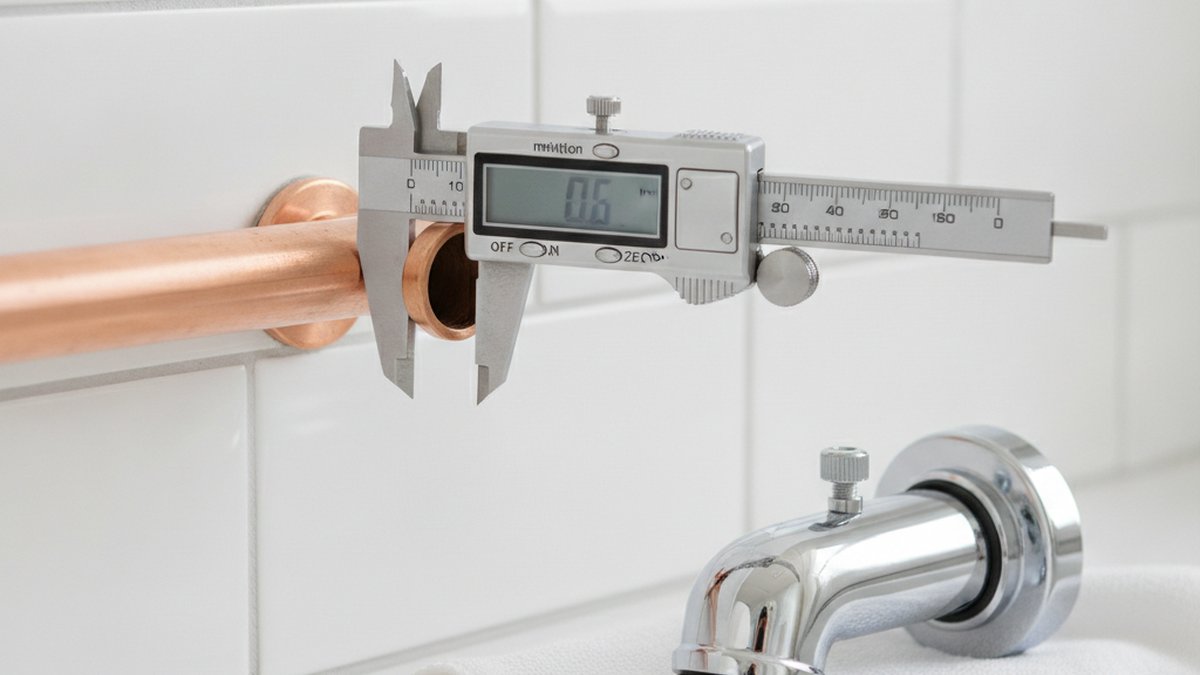
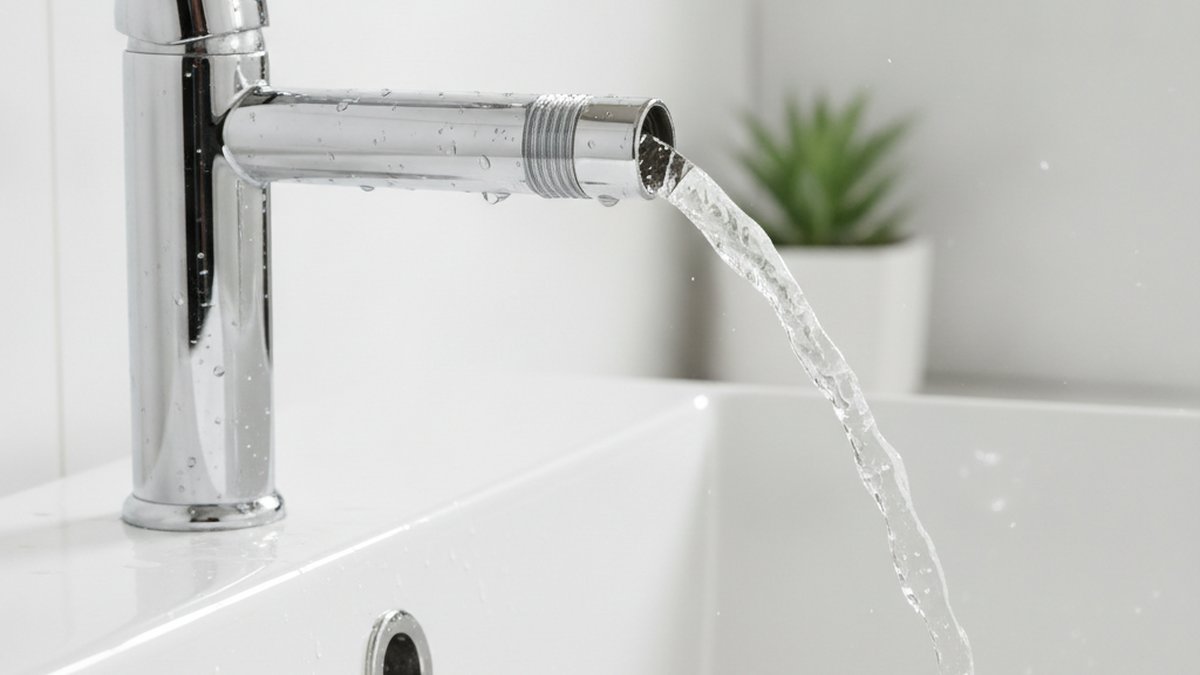
One important note on sizing: aerators come in two thread types — male (threads on the outside) and female (threads inside the housing) — and two common diameters, regular (~15/16″ male, 55/64″ female) and junior/Tom Thumb sizes. Bring the old one to the store or measure it before buying. If you’re not sure what your faucet takes, unscrewing and matching the old part is far more reliable than guessing.
What flow rate aerator should I choose — and will a low-flow one feel weak?
For most bathroom faucets, choose 1.0–1.5 GPM (gallons per minute); for kitchen faucets, 1.5–2.2 GPM. A well-designed low-flow aerator mixes air into the stream so it feels full and forceful even while using less water — so “low flow” does not have to mean “low pressure.”
This is the part people get wrong. They blame their low pressure on a low-flow aerator and rip it out, when in reality a quality aerated stream feels just as satisfying as a higher-GPM one because the entrained air gives it body. The federal maximum in the U.S. is 2.2 GPM for kitchen faucets and 1.5 GPM for lavatory (bathroom) faucets, and many efficient models go well below that without feeling weak. Here’s how the common types compare:
| Aerator Type | Typical Flow (GPM) | Stream Feel | Best For |
|---|---|---|---|
| Aerated (mesh + air) | 1.0–2.2 | Soft, full, splash-resistant | Everyday bathroom & kitchen use |
| Laminar (non-aerated) | 1.5–2.2 | Clear, solid column of water | Filling pots, hygiene-sensitive settings |
| Spray / needle | 0.5–1.5 | Wide, gentle rinse | Hand-washing, low-splash sinks |
| Water-saving / eco | 0.35–1.0 | Air-boosted, feels stronger than GPM | Cutting water bills, low-use faucets |
| Pressure-compensating | Fixed regardless of PSI | Consistent even on well systems | Homes with fluctuating pressure |
If your home genuinely has low incoming pressure (say, a well system running at 40 PSI), a pressure-compensating aerator is worth the extra dollar or two — it holds a steadier flow even as your pressure dips and spikes. For a deeper look at what “normal” flow even means, our breakdown of the average kitchen tap flow rate puts the numbers in real-world context.
Why does my faucet aerator keep clogging so quickly?
If your aerator clogs again within weeks of cleaning, the usual causes are hard water (high mineral content), sediment stirred up after plumbing work, or debris shedding from a corroding galvanized pipe or a deteriorating braided supply hose. Fix the source, not just the symptom.
Run through these in order:
- Hard water: White, crusty, chalky buildup is calcium and magnesium scale. A whole-house or under-sink water softener dramatically slows the clogging. Until then, plan on periodic vinegar soaks.
- Recent plumbing work or a water main repair: Sediment gets stirred up and lands in your aerator screens. This clears itself after a few cleanings once the water runs clear again.
- Old galvanized pipes: Rust flakes (reddish-brown debris) mean the pipe interior is corroding. The aerator is catching the flakes — which is actually protecting your faucet, but the pipe eventually needs attention.
- Failing supply hoses: Little black or white rubber crumbs are a classic sign the internal lining of a braided hose is breaking down. Replace the hose.
The color of the debris is your best clue. White = minerals, reddish = pipe rust, black rubber bits = hose. Match the debris to the fix and you’ll stop chasing the same clog every month. If you’re also seeing weeping around the base or spout, low pressure combined with a slow leak points to a worn seal — the same pattern we cover in our fix for a shower head with low water pressure and a leak.
Can a faucet aerator improve low pressure — or does it only make it worse?
An aerator doesn’t create pressure — it can only restrict flow — but a clean, correctly sized aerator gives you the strongest, most usable stream your faucet can deliver while cutting splash and saving water. Removing it entirely gives you raw flow but a messy, splashy, wasteful stream.
Think of the aerator as a tuner, not a booster. Your incoming water pressure is set by your municipal supply or well pump. What the aerator does is shape that flow: it mixes in air to make the stream feel fuller, reduces splashing, and meters total volume for efficiency. If your pressure feels weak, the goal isn’t to remove the aerator — it’s to make sure it’s clean and rated for a flow your supply can actually push. On a low-pressure supply, an overly aggressive water-saving aerator (0.35 GPM) can feel starved, so bumping up to 1.5–2.2 GPM sometimes restores the “strong” feel you want.
When is low pressure NOT the aerator’s fault?
If cleaning the aerator doesn’t help — or if the faucet is weak even with the aerator removed — the problem is elsewhere: a clogged cartridge, a kinked or clogged supply line, a partially closed shutoff valve, or a whole-house pressure issue. Don’t keep re-cleaning a clean aerator.
Work through this quick checklist before you assume the worst:
- Open the shutoff valves fully. The angle stops under your sink are often accidentally left half-closed after a repair. Turn them fully counterclockwise.
- Check the supply hoses for kinks. A braided line pinched behind the sink cabinet chokes flow.
- Inspect the cartridge. On single-handle faucets, a scaled-up cartridge restricts both temperature and volume. This is a common culprit on faucets more than 5–7 years old.
- Test another faucet. If several are weak, the issue is whole-house — a failing pressure regulator or a supply-side problem your water utility needs to address.
Knowing where to stop DIY-ing and call a pro matters. Cleaning aerators, swapping hoses, and replacing cartridges are all homeowner-friendly. A failing pressure-reducing valve or corroded main line is plumber territory.
Author note & why you can trust this guide
This guide was written by the aleashafaucet product team, drawing on years of hands-on testing across kitchen and bathroom faucets, aerators, and flow-control components. We bench-test aerator flow rates against WaterSense and ASME A112.18.1 / CSA B125.1 standards, and every faucet we sell ships with a documented flow rating and a manufacturer warranty so you know exactly what you’re installing. At aleashafaucet, we make and sell faucets and fixtures for a living — which means we see the same aerator and low-pressure issues come across our support desk every week, and the advice here reflects what actually solves them, not theory. When we recommend a flow rate or a replacement part, it’s grounded in real testing and the same standards professional plumbers rely on.
FAQ
How often should I clean my faucet aerator?
Every 3–6 months is a good rule of thumb, and more often if you have hard water. If you notice the stream getting weak or splashy before then, that’s your cue to soak and scrub it early. Regular cleaning prevents the slow, creeping pressure loss most people don’t notice until it’s severe.
Can I run my faucet without an aerator at all?
Yes, a faucet works fine mechanically without an aerator, but you’ll get a splashy, unshaped stream and use noticeably more water. It’s fine as a temporary test to confirm the aerator is the restriction, but for daily use you’ll want a clean aerator back on for the better stream, less splash, and lower water bills.
Why is my faucet aerator low pressure only on hot water?
If only the hot side is weak, the aerator usually isn’t the problem — water passes through it regardless of temperature. Instead, look at a partially closed hot-side shutoff valve, sediment in the water heater, or a clogged hot supply line. Check the hot angle-stop under the sink first.
What household item cleans a faucet aerator best?
Plain white vinegar is the best and cheapest option. It dissolves the calcium and magnesium scale that causes most clogs. Soak the parts 30 minutes (overnight for heavy buildup), scrub with an old toothbrush, and poke stubborn holes clear with a toothpick. Avoid harsh acids that can damage the finish or plastic components.
Will a low-flow or water-saving aerator reduce my pressure?
A quality low-flow aerator won’t feel like low pressure because it injects air into the stream to keep it full and forceful while using less water. That said, on a genuinely low-pressure supply, an extreme 0.35 GPM eco aerator can feel starved — in that case, step up to a 1.5–2.2 GPM aerator for a stronger feel.
How do I know what size replacement aerator to buy?
Unscrew your old aerator and either bring it to the store or measure it. The two things that matter are thread type — male (threads outside) or female (threads inside) — and diameter, most commonly regular size (~15/16″ male / 55/64″ female) or a smaller junior size. Matching the old part is far more reliable than guessing.