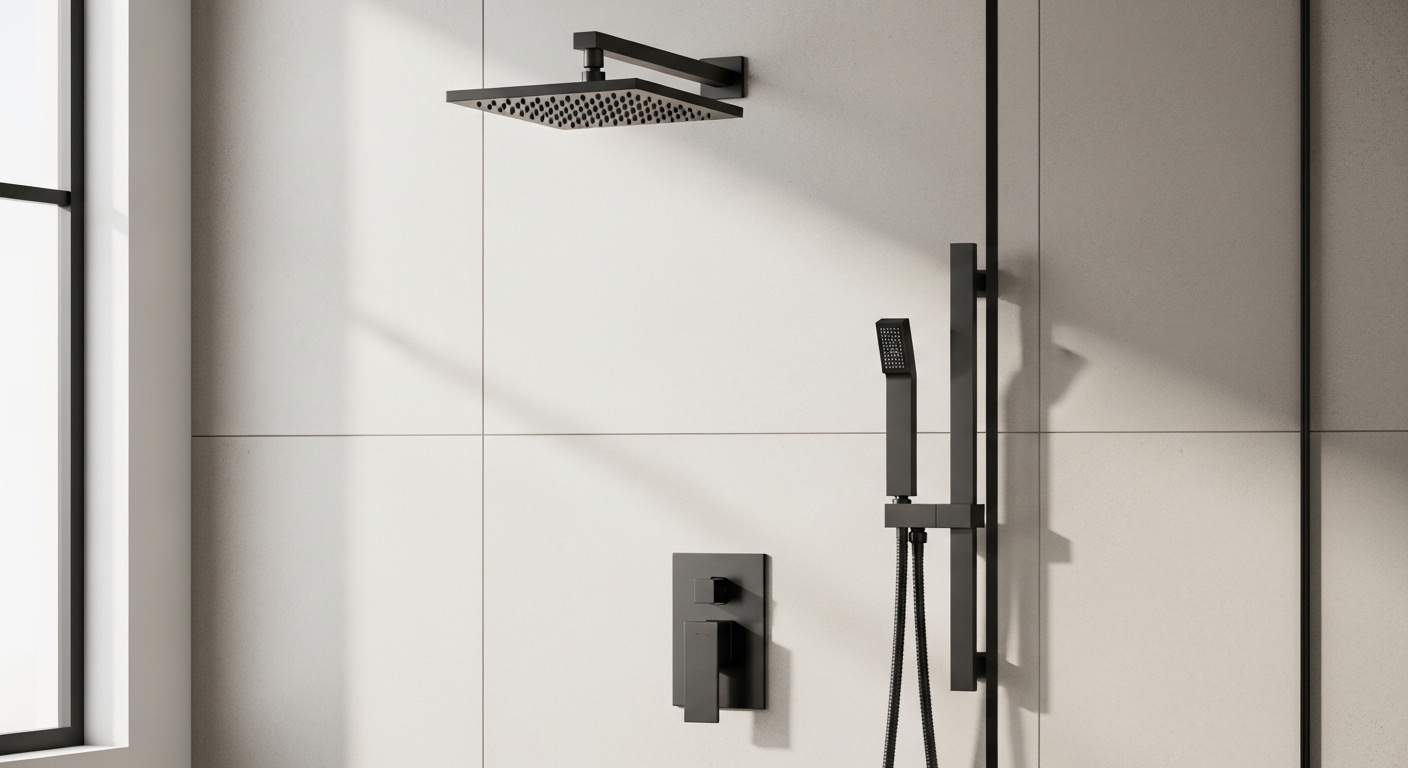
If you’ve been searching “shower faucet modern,” you’re usually after one of two things: a fixture that looks current and minimalist, or one that actually performs better than the builder-grade unit you’re replacing. The good news is that in 2026 those two goals overlap. A genuinely modern shower faucet combines a stripped-down visual style with real engineering upgrades — anti-scald valves, ceramic-disc cartridges, and finishes that resist water spots. This guide breaks down exactly what “modern” means in hardware terms, what to spend, and how to pick trim that won’t look dated in five years.
What actually makes a shower faucet “modern” versus just new?
“Modern” is a combination of valve technology and trim design — not just a recent purchase date. A modern shower faucet almost always uses a pressure-balancing or thermostatic valve behind the wall, a ceramic-disc cartridge for smooth handle action, and trim with clean geometry (square edges or thin cylinders), lever or blade handles, and a low-spot finish like matte black, brushed nickel, or brushed gold.
Here’s the distinction that matters. The visible part — the handle, escutcheon plate, and shower head — is the trim. The part buried in the wall is the valve. Older “new” faucets might have contemporary-looking trim bolted onto a dated compression valve that hunts for temperature every time someone flushes a toilet. A truly modern setup fixes the plumbing behind the wall too:
- Pressure-balance valve: keeps water temperature roughly steady when pressure drops elsewhere in the house. Standard on most modern single-handle showers.
- Thermostatic valve: holds a precise temperature you set on a dial, independent of flow. This is the premium, spa-style option and pairs naturally with multi-outlet systems.
- Ceramic-disc cartridge: two polished ceramic plates that seal without rubber washers wearing out — the reason modern faucets drip far less than the ones from 15 years ago.
- Solid-brass valve body: resists corrosion and thread stripping far better than zinc or plastic.
So when you shop for a “shower faucet modern” look, don’t just chase the photo. Check the valve type and cartridge material in the spec sheet — that’s what separates a fixture that looks modern from one that behaves like it.
Which type of modern shower faucet is right for my bathroom?
Match the valve to how many outlets you want to run. A single-handle pressure-balance faucet is right for the vast majority of standard showers; a thermostatic system is the upgrade you buy when you’re running a rain head plus a handheld plus body sprays. Here’s how the main types stack up.
| Type | Best for | Temperature control | Typical price (trim + valve) |
|---|---|---|---|
| Single-handle pressure balance | Standard tub/shower, most remodels | Anti-scald, adjusts with pressure changes | $90–$250 |
| Thermostatic (single or dual handle) | Spa showers, rain + handheld combos | Precise, set-and-hold temperature | $220–$600+ |
| Thermostatic shower system / panel | New builds, luxury walk-ins with multiple sprays | Precise, plus independent volume per outlet | $300–$900+ |
| Digital / smart shower valve | Tech-forward homes, preset temperatures per user | Programmable to the degree | $500–$1,500+ |
For a straightforward one-shower-head installation, the single-handle pressure-balance faucet is the sweet spot — it’s affordable, meets the anti-scald code most jurisdictions require (ASSE 1016 / ASME A112.18.1), and looks clean. If you want to run a rain head and a handheld at the same time, step up to a thermostatic valve with a separate diverter or volume controls. If you’re planning a full multi-spray build, a shower system mixer tap gives you the thermostatic core plus the outlets in one coordinated package.
Do I need a thermostatic valve, or is pressure balance enough?
Pressure balance is enough for most people; buy thermostatic only if you want an exact, repeatable temperature or you’re running more than one outlet. Pressure-balance valves protect you from scalding by reacting to pressure swings, but the water can still drift a few degrees. A thermostatic valve locks the temperature you dial in and holds it, which is genuinely nicer if you take long showers or share a bathroom where someone else runs hot water. The trade-off is cost and a slightly deeper wall rough-in — thermostatic bodies are bigger.
What finish should I choose so it still looks modern in 5 years?
Choose a matte or brushed finish over polished chrome if you want longevity: matte black, brushed nickel, and brushed/champagne gold read as current and hide water spots and fingerprints far better. Polished chrome is timeless but reads more “traditional builder,” and high-gloss finishes show every splash.
Finish is where “modern” is won or lost visually. A few realities from the showroom floor:
- Matte black is the defining modern finish of the last several years. It photographs beautifully and pairs with almost any tile. Downside: mineral-heavy water can leave chalky spots that show on black, so wipe it down if you have hard water.
- Brushed / satin nickel is the safe, warm neutral. It hides water spots best of any finish and rarely looks dated. If you want one finish you’ll never regret, this is it.
- Brushed gold / champagne bronze brings warmth and is very much in style, but commit to it across the room so it looks intentional rather than accidental. A single gold shower faucet can absolutely anchor a modern bathroom when the rest of the metals coordinate.
- Polished chrome is the cheapest and easiest to clean, but it leans classic. Nothing wrong with it — just less “modern statement.”
One practical rule: match your shower trim to your tub spout and any exposed valves. Mismatched blacks (a warm black spout against a cool black trim) are one of the most common regrets. If you’re pairing a black shower faucet with a black spout, our guide to the best black tub spout walks through getting the undertones to agree.
Is matte black hard to keep clean in hard-water areas?
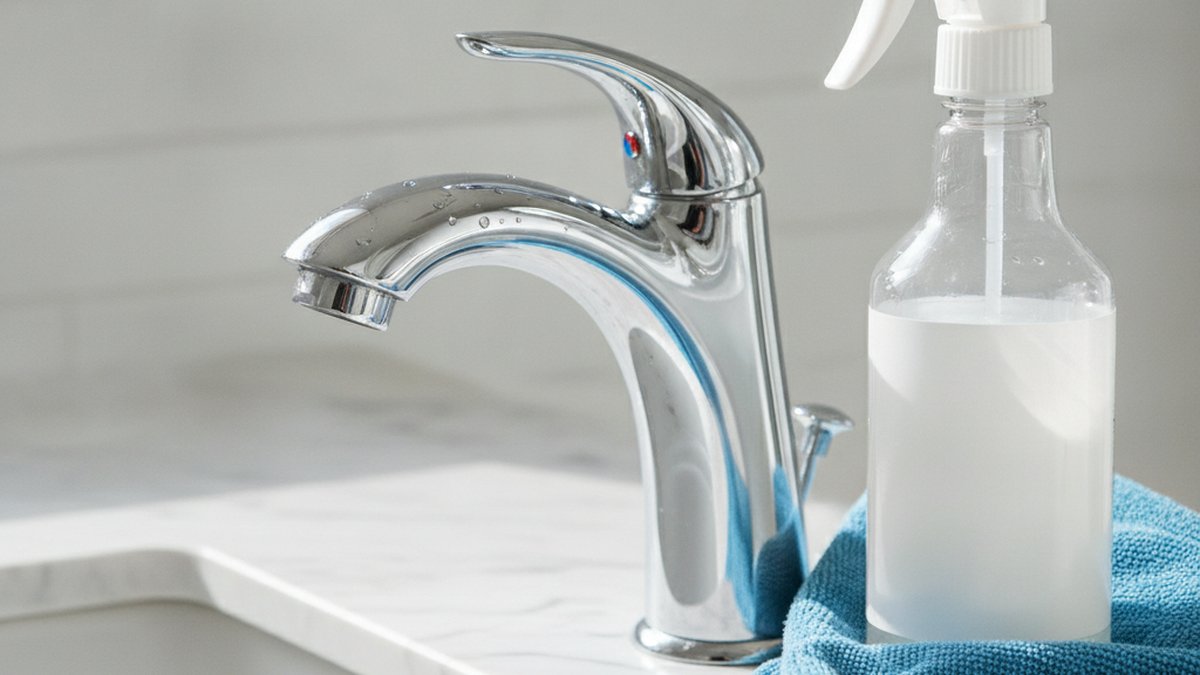
It’s not hard to clean, but it shows spots faster than brushed nickel. Matte black doesn’t corrode or fade on a quality PVD or powder-coated finish, but dried mineral deposits leave a visible white haze. The fix is simple: a quick wipe with a soft cloth after showers and an occasional pass with a 50/50 white-vinegar-and-water solution. Avoid abrasive pads and harsh cleaners, which can dull the matte texture over time.
How much should I spend on a modern shower faucet in 2026?
Plan on $120–$250 for a quality single-handle modern shower faucet (valve plus trim), and $250–$600 for a thermostatic or rain-plus-handheld system. Below about $80 you’re usually buying zinc or plastic internals that won’t age well; above $600 you’re paying for multi-spray systems, digital controls, or designer branding.
Here’s how the budget tiers actually break down in real terms:
- $80–$150 — Solid entry: single-handle pressure balance, brass valve body, ceramic cartridge, one shower head. Perfectly good for a guest bath or rental.
- $150–$300 — The sweet spot: better finishes (matte black, brushed gold), a rain head or a head-plus-handheld combo with a diverter, and stronger warranties. This is where most homeowners should land.
- $300–$600 — Spa territory: thermostatic valve, larger rain head, handheld on a slide bar, sometimes body sprays. Worth it if the shower is a daily luxury.
- $600+ — Premium / smart: digital valves, multiple simultaneous outlets, custom finishes. Buy this for a signature master shower, not a secondary bath.
A word on the hidden cost: the valve. If your remodel opens the wall, spend on a good rough-in valve even if you keep the trim modest — swapping trim later is easy, but replacing a buried valve means opening tile again. If you’re planning a multi-outlet build, read up on how a full shower loop system is plumbed before you commit, because the valve and outlet count drive most of the budget.
Will a new modern shower faucet fit my existing valve, or do I have to open the wall?
Often you can update the look without opening the wall — but only if you stay within the same brand’s valve family. Trim kits are designed to fit a specific rough-in valve. If your existing valve is a current model from the same manufacturer, you can usually buy just the trim and swap the visible parts in under an hour. If you’re switching brands or your valve is old or a different technology, you’ll need to replace the valve behind the wall.
Before you buy, do this quick check:
- Turn off the water and pull the handle and escutcheon to identify the valve’s brand and cartridge stamp.
- Confirm whether the new trim you want lists your valve as compatible (manufacturers publish trim-to-valve charts).
- If you’re going from a two-handle to a single-handle look, expect a valve change — the plumbing behind the wall is different.
Swapping trim on a matching valve is a confident DIY job. Replacing the valve body means soldering or press-fitting new supply lines and is where many people call a plumber — or choose a valve with a wide, forgiving rough-in so future trim changes stay easy. If your project is a wall-mounted or exposed setup rather than an in-wall valve, our walkthrough on wall mount spout replacement covers the parts and sealing steps so you don’t tear open finished surfaces unnecessarily.
What flow rate should a modern shower faucet have?
Standard modern shower heads are capped at 2.5 gallons per minute (GPM) federally, and WaterSense-labeled models run at 2.0 GPM or less while still feeling strong. If you live in California, Colorado, or Washington, the legal maximum is 1.8 GPM. A well-engineered 1.8 GPM head with good nozzle design will out-perform a cheap 2.5 GPM head — pressure feel comes from nozzle engineering, not just raw volume. If your shower already feels weak, don’t assume a new faucet is the cure; sometimes the culprit is elsewhere in the line, which our guide on a shower head with low pressure while the rest of the house is fine helps diagnose.
How do I install a modern shower faucet trim myself?
If the valve stays and you’re only changing trim, installation is a 30–60 minute job with basic tools. Here’s the short version — always follow the specific instructions in your kit.
- Shut off water to the shower (dedicated stops or the main).
- Remove the old handle screw, handle, and escutcheon plate.
- Inspect the cartridge; if it’s the same family and in good shape, leave it. If it’s worn, replace it now while the wall is open.
- Slide the new escutcheon and gasket over the valve, seating it flush against the tile; add a bead of clear silicone around the top and sides (leave the bottom open so any water can escape).
- Attach the new handle to the cartridge stem and tighten the set screw.
- Turn water back on, run both temperature extremes, and check for leaks around the plate.
Replacing the shower head or handheld is even simpler: unthread the old one, wrap the shower arm threads with plumber’s tape, and hand-tighten the new head. If you’re adding a handheld on a diverter, that’s where a thermostatic or diverter trim earns its keep.
FAQ
Is a modern shower faucet worth it over a cheap builder-grade one?
Yes, for almost everyone. The jump from a basic builder unit to a mid-tier modern faucet buys you a brass valve body, a ceramic-disc cartridge that resists dripping, real anti-scald protection, and a finish that won’t flake. For $150–$250 you get a fixture that looks current and lasts 10–15 years instead of failing in three.
What’s the difference between a shower faucet and a shower system?
A shower faucet is the valve, handle, and typically one head. A shower system bundles a thermostatic valve with multiple outlets — usually a rain head, a handheld, and sometimes body sprays — controlled together. Buy a faucet for a standard shower; buy a system when you want a spa experience with more than one spray running at once.
Can I mix finishes, like a black shower faucet with chrome elsewhere?
You can, but do it deliberately. The cleanest look keeps all the shower hardware — valve trim, shower head, tub spout, handheld — in one finish. Mixing metals works better across zones (say, black in the shower, brushed nickel at the vanity) than within a single wall. If two blacks or two golds don’t share undertones, they’ll look like a mistake.
How long does a good modern shower faucet last?
A quality unit with a solid-brass valve and ceramic-disc cartridge lasts 10–20 years, and reputable brands back the finish and function with a limited lifetime warranty for the original homeowner. Cartridges are the wear part; when a modern faucet finally drips, a $15–$30 cartridge swap usually restores it rather than a full replacement.
Does a modern shower faucet help with water pressure?
Indirectly. The faucet itself doesn’t add pressure, but a modern pressure-balance or thermostatic valve keeps the flow you have steady and consistent, and a well-designed low-flow head can feel stronger than an old high-flow one. If pressure is genuinely low, check the shower head aerator, the supply lines, and your home’s pressure before blaming the faucet.
What valve rough-in do I need for a modern single-handle shower?
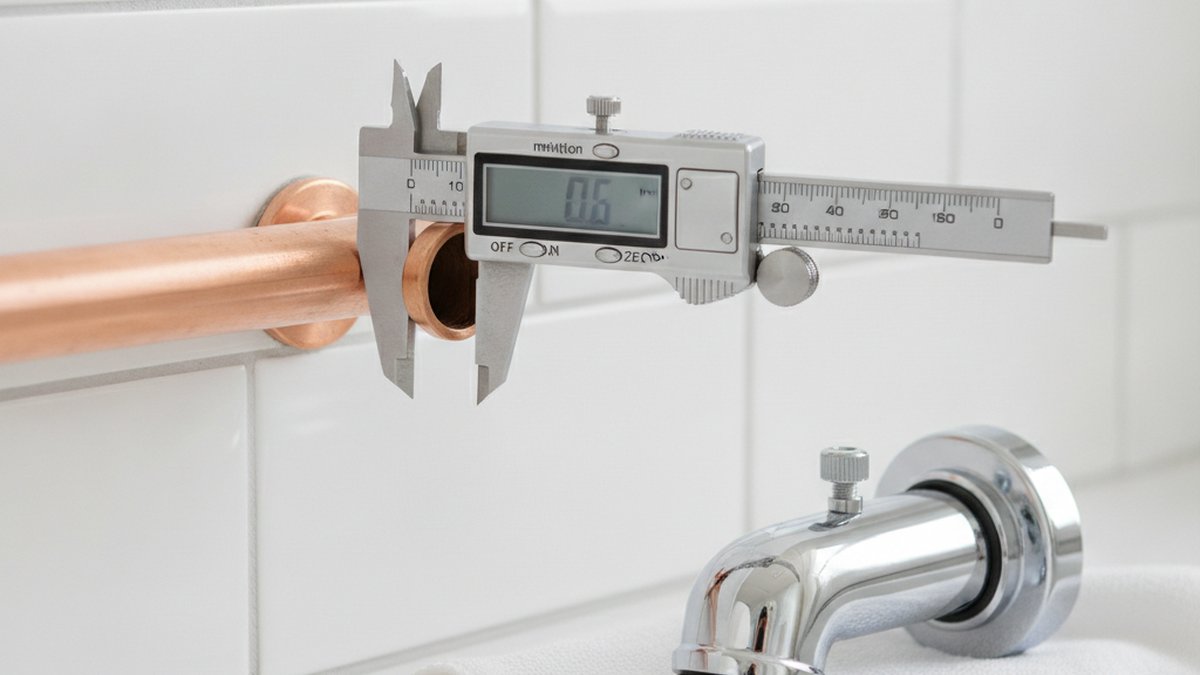
Most modern single-handle showers use a standard 1/2-inch pressure-balance rough-in valve with 1/2-inch inlets (copper, PEX, or IPS). Confirm the connection type your plumbing uses and buy a valve that offers universal inlets so you’re not locked into one supply material. Thermostatic valves need a larger, deeper rough-in, so plan wall depth accordingly.
Author note: This guide was written by the aleashafaucet fixtures team, drawing on hands-on installation and bench testing of pressure-balance and thermostatic shower valves. We evaluate cartridge durability, finish wear, and flow consistency the way a homeowner actually experiences them.
About aleashafaucet: aleashafaucet designs and sells modern faucets and shower fixtures built with solid-brass bodies and ceramic-disc cartridges. Our shower valves are engineered to meet ASSE 1016 anti-scald and ASME A112.18.1 / CSA B125.1 standards, and our trim finishes are backed by a limited lifetime warranty against tarnishing and flaking for the original homeowner. Learn more at www.aleashafaucet.com.