The article is complete. Here is the publish-ready HTML fragment:
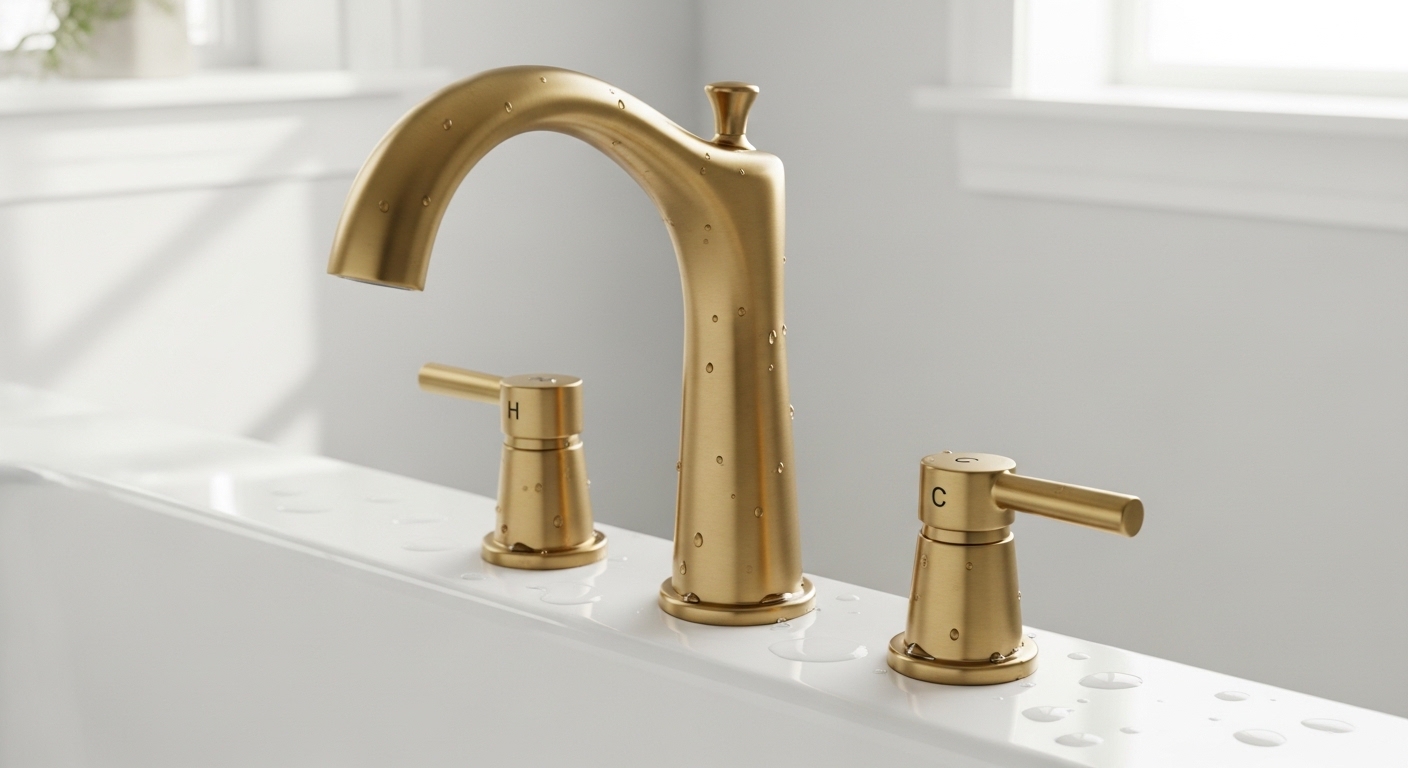
If you’ve been searching for a roman tub faucet nearby, you’re usually in one of two spots: your old deck-mount tub filler is dripping or looks dated, or you just installed a drop-in tub and the deck came pre-drilled with holes staring at you. Either way, “nearby” matters because a roman tub faucet is heavier and more plumbing-specific than a bathroom sink faucet — you want to hold it, confirm the hole spacing, and ideally not wait a week if you’ve got water shut off. This guide walks you through exactly what a roman tub faucet is, how to buy the correct one the first time, where to actually find them locally versus online, and how to avoid the two mistakes that send people back to the store.
What exactly is a roman tub faucet, and how is it different from a regular tub filler?
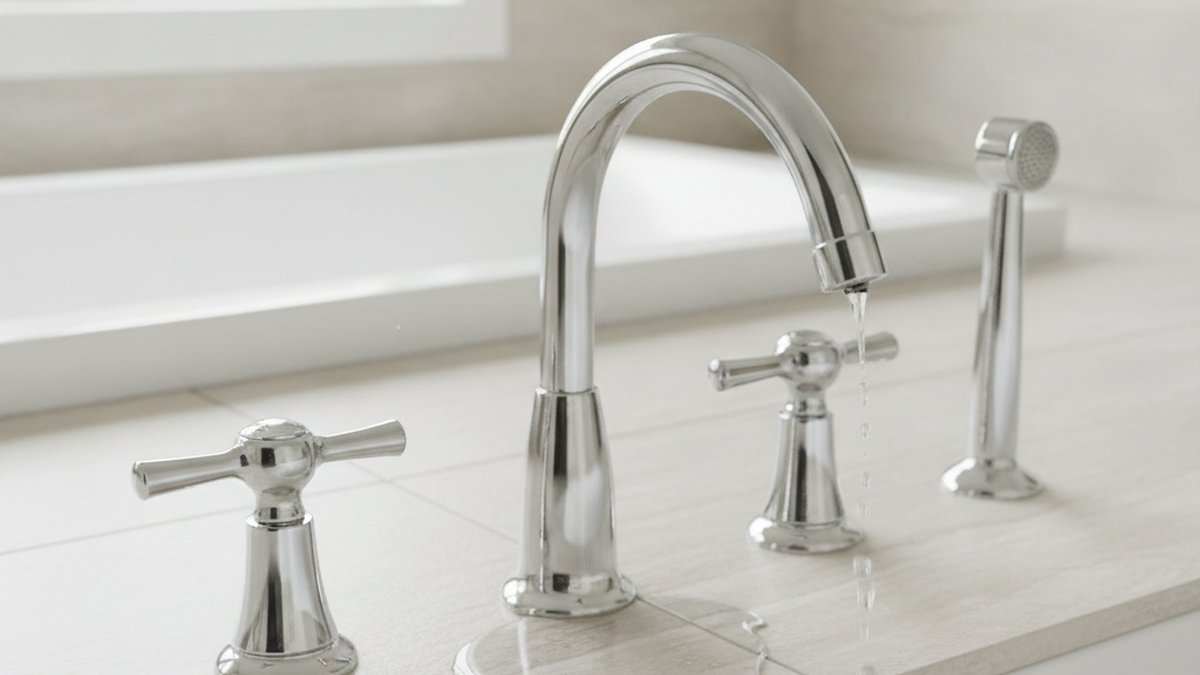
A roman tub faucet is a deck-mounted faucet that sits on the flat rim (the “deck”) of a bathtub rather than on the wall — and unlike a shower/tub combo valve, it only fills the tub; there’s no diverter for a showerhead. That single distinction drives almost every buying decision that follows.
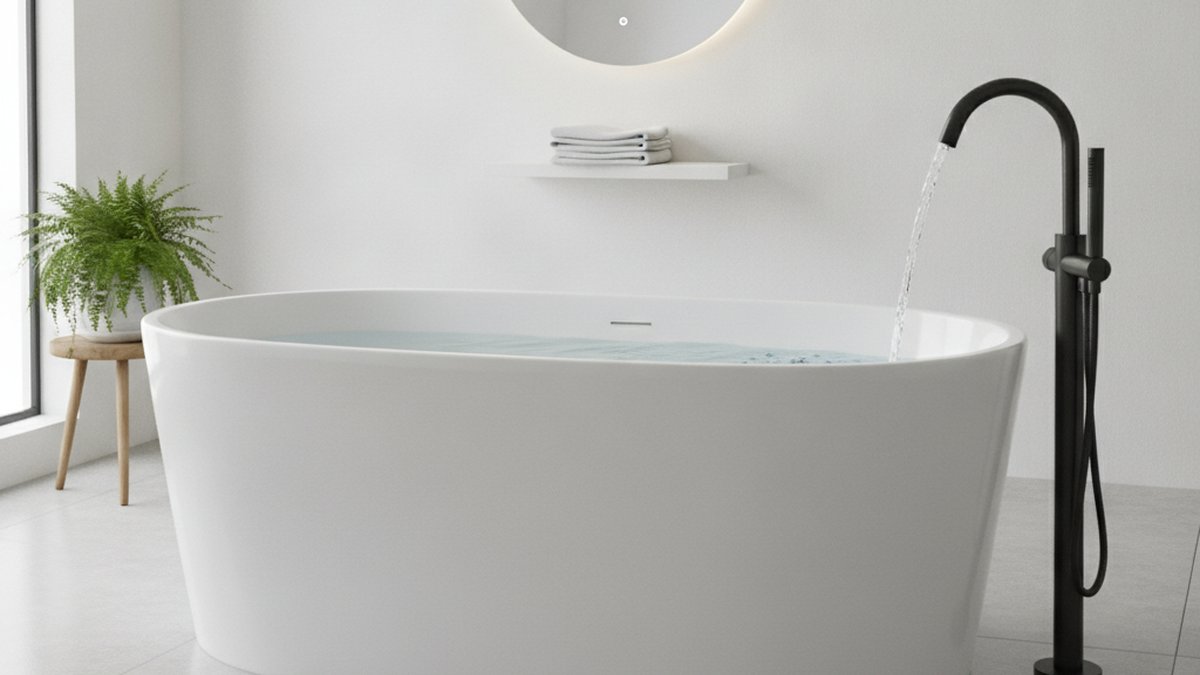
Traditional roman tub sets have a wide, low-arc spout because they were built to fill big soaking tubs fast, and they usually come as three or four separate pieces: a spout plus two handles (and sometimes a hand-held sprayer). Because the pieces mount into individual holes drilled in the tub deck, the faucet you buy has to match the number and spacing of those holes — this is the part people get wrong. A wall-mounted tub filler or a freestanding floor-mount filler solves a totally different plumbing situation, so if your water lines come up through the tub deck, a roman tub faucet is what you need.
One more practical difference: roman tub fillers move a lot of water. Where a bathroom sink faucet is capped near 1.2 gallons per minute (GPM), tub fillers are exempt from that cap and often flow 5–7+ GPM so an oversized tub doesn’t take 20 minutes to fill. That high flow is why the valve bodies and supply connections are physically bigger — and why you don’t want to substitute a lav faucet here.
How do I know which roman tub faucet fits my tub before I buy?
Measure two things before you buy anything: the number of deck holes and the center-to-center spacing between the outer holes. Get those two numbers and you can walk into any store or order online with confidence.
Here’s the quick field measurement, from someone who has redone this more than once:
- Count the holes. Most roman tub decks have 3 holes (two handles + spout) or 4 holes (add a sprayer). Some single-handle roman fillers use just 1–2 holes.
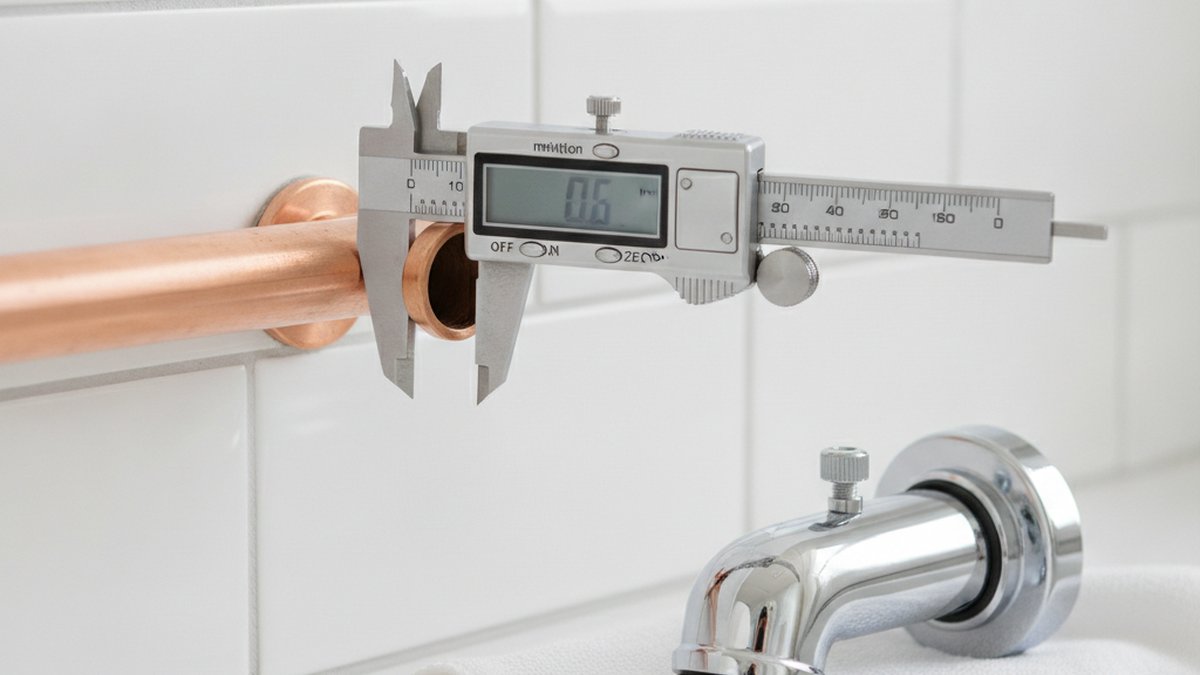
- Measure center-to-center from the far-left hole to the far-right hole. A “widespread” roman set is commonly 8 to 16 inches spread; many standard decks land around 8–12 inches. Adjustable sets use flexible supply hoses to cover a range.
- Check the deck thickness. Acrylic tub decks and tile decks differ. Confirm the faucet’s mounting shanks are long enough — quality sets handle roughly ½” to 2½” thick decks.
- Note the hole diameter. Standard is about 1⅜ inches (35 mm). If yours were drilled larger, you’ll want an escutcheon (base plate) that covers it.
If your deck is already drilled and you can’t change the holes, buy to match. If you’re drilling a brand-new deck, then you get to pick the faucet first and drill to its template — the easier path. Either way, jot the finish, the valve type (ceramic-disc cartridges last far longer than old rubber-washer stems), and whether you want a hand sprayer.
Where can I actually find a roman tub faucet nearby — local store or online?
You can find a roman tub faucet nearby at three types of places: big-box home improvement stores, dedicated plumbing-supply houses, and local kitchen-and-bath showrooms — but the widest selection of finishes and spout styles is almost always online, shipped in a few days. Which one’s right depends on how fast you need it and how specific your finish is.
| Where you buy | Selection | Speed | Best for |
|---|---|---|---|
| Big-box home store | Limited — a few models, mostly chrome/brushed nickel | Same day, in hand | Emergency replacement, standard finishes |
| Plumbing-supply house | Good — pro-grade valves, more parts | Same day or next day | Matching an existing rough-in or brand |
| Kitchen & bath showroom | Curated, higher-end | Order and wait (days–weeks) | Premium/designer finishes, in-person feel |
| Online (e.g. aleashafaucet.com) | Widest — every finish, spout style, sprayer option | Usually 2–5 days shipped | Specific finish (matte black, brushed gold, unlacquered brass), best price |
The honest tradeoff: local wins on speed and the ability to hold the piece; online wins on selection and price. If your tub’s water is off and you need a working filler tonight, drive to the store. If you’re renovating and you want a specific look — say a champagne-bronze widespread set or a matte black filler that matches your other fixtures — order online, because the local shelf almost never carries the finish you actually pictured. If you’re weighing a matte black finish, our breakdown of what Reddit really says about matte black finishes applies to tub fillers too: it’s durable powder-coat over the same brass body, and it hides water spots well.
How much should a good roman tub faucet cost in 2026?
Expect to pay roughly $80–$150 for a basic builder-grade roman tub faucet, $150–$400 for a solid mid-range set with a ceramic-disc cartridge and a real brass body, and $400–$1,200+ for premium/designer sets with specialty finishes and hand sprayers. Paying at the very bottom of that range is where people get burned.
Why? The cheapest roman tub fillers use zinc or plastic internals and rubber-washer valves that start dripping within a year or two. A tub filler passes a lot of water at higher pressure than a sink faucet, so the valve takes real abuse. Spend into the mid-range and you’re buying a solid-brass or lead-free-brass body with a ceramic cartridge rated for hundreds of thousands of cycles — that’s the difference between a faucet you forget about and one you’re rebuilding on a weekend. If drips are already on your mind, our guide to why a tub faucet drips and how to stop it shows exactly how much a bad cartridge costs you over time.
A quick note on material and safety: look for “lead-free brass” on the spec sheet. Since tub water isn’t typically consumed, the lead rules are less strict than for kitchen faucets, but a lead-free brass body is simply better metallurgy and resists corrosion longer. If you want the deeper reasoning on why brass beats zinc, our piece on the lead-free brass faucet body covers the material science in plain terms.
Which finish should I pick, and will it look dated in a few years?
For a roman tub faucet that won’t look dated, the safest long-term bets are brushed/satin nickel and matte black, while brushed gold (champagne bronze) is the trend finish that’s currently everywhere and holding strong through 2026. Polished chrome remains the timeless classic and the easiest to clean. The “wrong” choice is really just a finish that fights the rest of your bathroom hardware.
- Polished chrome: timeless, cheapest, shows water spots most.
- Brushed/satin nickel: warm, forgiving on spots and fingerprints, matches almost anything.
- Matte black: modern, high contrast on a white tub, hides spots well; confirm it’s powder-coated over brass.
- Brushed gold / champagne bronze: the current darling, warm and soft; pairs beautifully with white and marble decks.
- Unlacquered brass: living finish that patinas over time — polarizing but gorgeous if you want character.
The single most important rule: match your metals within the same room. Your tub filler, your shower trim, your towel bars, and your vanity faucet should all read the same finish family. If you’re leaning toward a living finish that changes over time, our guide to the best unlacquered brass bathroom faucet explains what “patina” actually looks like month to month so you’re not surprised.
Can I install a roman tub faucet myself, or do I need a plumber?
Most homeowners can install a deck-mount roman tub faucet in about 1–2 hours if the deck is already drilled and accessible from below — it’s mostly bolting the pieces down and connecting flexible supply hoses. You need a plumber if the tub deck isn’t drilled, if access to the underside is walled in, or if you have to move the rough-in plumbing.
The basic self-install flow: shut off the water, drop the spout and handle bodies into their holes with the rubber gaskets, secure the mounting nuts from underneath, connect the hot and cold supply lines to the valve bodies (hot on the left), then turn the water on and check every connection for weeping before you call it done. The trickiest part is almost always access — if the underside of your tub deck is boxed in with a panel or tile, plan to open it up. For the general mechanics of working with supply lines and mixer connections, the same principles in our DIY faucet-install walkthrough carry straight over to a tub deck.
Two rookie mistakes to avoid: over-tightening the mounting nuts on an acrylic deck (you’ll crack it — snug, not gorilla-tight), and forgetting to flush the lines before connecting the spout so debris doesn’t foul the new cartridge. Keep the manufacturer’s template and hardware bag; you’ll want them if a warranty question ever comes up.
How do I keep a roman tub faucet from dripping or leaking over time?
The number-one cause of a dripping roman tub faucet is a worn cartridge or O-ring — not the whole faucet — and it’s a cheap, 20-minute fix if you bought a quality set with a standard cartridge. Buying a faucet with a serviceable ceramic-disc cartridge up front is the single best thing you can do for longevity.
Hard water is the accelerant. Mineral buildup chews up rubber seats and scratches cartridge surfaces, which is why the same faucet lasts a decade in soft-water regions and two years in hard-water ones. A ceramic-disc cartridge resists that abuse far better than old washer-and-seat designs. When a drip does start, replace the cartridge or O-ring rather than the faucet — our step-by-step on replacing a faucet cartridge yourself uses the same tools and logic a roman tub filler needs. Keep the model number handy so you order the exact matching cartridge.
FAQ
What’s the difference between a roman tub faucet and a regular bathtub faucet?
A roman tub faucet mounts on the flat deck of the tub and only fills the tub (no shower diverter), while a “regular” bathtub faucet usually mounts on the wall and often includes a diverter to send water up to a showerhead. If your water lines come up through the tub deck, you need a roman/deck-mount tub faucet.
Do I need a plumber to install a roman tub faucet?
Not usually — if the deck is already drilled and you can reach the underside, it’s a 1–2 hour DIY job of bolting the pieces down and connecting supply hoses. Call a plumber if the deck needs drilling, the underside is sealed behind tile or a panel, or the rough-in plumbing has to move.
How many holes does a roman tub faucet need?
Most roman tub faucets use 3 holes (two handles plus a spout) or 4 holes if you add a hand sprayer, though some single-handle models need only 1–2. Always count and measure the existing holes before you buy, because the faucet has to match the deck’s drilling.
What’s the best finish for a roman tub faucet that won’t look dated?
Brushed/satin nickel and matte black are the most durable, forgiving, long-lasting choices, and brushed gold (champagne bronze) is the strong trend finish through 2026. Polished chrome is the timeless classic. The real rule is matching your tub filler to the rest of the bathroom’s hardware finish.
Why is my roman tub faucet dripping, and can I fix it myself?
A drip almost always means a worn ceramic cartridge or O-ring, not a dead faucet — and on a quality set it’s a cheap, roughly 20-minute swap. Shut off the water, pull the handle and cartridge, replace it with the exact matching part by model number, and reassemble.
Is it cheaper to buy a roman tub faucet locally or online?
Local big-box stores win on speed for standard chrome or nickel sets, but online almost always wins on both price and selection — especially for specific finishes like matte black, brushed gold, or unlacquered brass that local shelves rarely stock. If your water’s off and you need it today, buy local; if you want a particular look at a better price, order online.
The bottom line
Finding a roman tub faucet nearby comes down to a two-step move: measure your deck (hole count and center-to-center spacing) first, then decide whether speed or selection matters more. Local stores and plumbing-supply houses get a standard faucet in your hands today; online gets you the exact finish, spout style, and sprayer configuration you actually pictured, usually within a few days. Buy into the mid-range with a solid-brass body and a ceramic-disc cartridge, match your finish to the rest of the room, and you’ll have a tub filler you forget about for years — in the best way.
Author note: This guide was written by the Aleasha Faucet product team, who spec, pressure-test, and install deck-mount tub fillers day in and day out. Aleasha Faucet designs and sells bathroom and kitchen fixtures built on lead-free brass bodies and ceramic-disc cartridges, tested to industry standards and backed by warranty coverage — so the advice here reflects fixtures we actually stand behind, not generic filler. Always follow your local plumbing code and the manufacturer’s rough-in template when installing.