If you’re outfitting or repairing a food-service space, a brass faucet bar and grill setup is one of the smartest hardware decisions you can make — but only if you buy the right kind of brass and match the faucet to the actual station it serves. A bar sink, a hand-wash sink, a three-compartment warewashing sink, and a prep line each ask something different from a faucet. Below, I’ll walk you through exactly what “brass” should mean on a spec sheet, which faucet style belongs at which station, what certifications a health inspector will actually look for, and how to avoid the two mistakes that sink most bar and grill faucet purchases.
Why does a bar and grill need brass faucets specifically?
A bar and grill needs brass because brass is the only common faucet body material that tolerates near-continuous cycling, hot water, chlorides from sanitizer, and acidic splashback (lime, lemon, tomato, vinegar) without corroding through in a year or two. In a home, a faucet might run a few dozen times a day. Behind a bar, it runs hundreds of times a shift — and often gets yanked, twisted, and splashed by staff who don’t baby it.
The distinction that matters most: solid brass versus brass-plated zinc. Cheap “brass” faucets are actually zinc-alloy or plastic bodies with a thin brass-colored coating. They look identical on day one. Six months into commercial use, the plating pits, the zinc underneath corrodes (a process called dezincification when it happens inside real brass too), and the faucet either seizes or leaks at the base. A genuine solid-brass or DZR (dezincification-resistant) brass body is what earns its keep in food service.
- Corrosion resistance: Solid brass shrugs off the salt and chlorine in commercial sanitizers and dish detergents.
- Thread durability: Brass threads at the mounting shank and spout joints don’t strip the way zinc does under repeated tightening and vibration.
- Heat tolerance: Warewashing lines run hot (often 110°F+ at the tap, hotter for sanitizing), and brass holds dimensional stability where plastics soften.
- Repairability: Brass bodies accept standard replaceable cartridges and seats, so you fix a $12 cartridge instead of replacing the whole unit.
Which faucet style belongs at each station in a bar and grill?
Match the faucet to the station, not the room: bar sinks want a compact gooseneck, hand sinks want a simple lever faucet with a legally short spout reach, and the main dish/prep line wants a tall pre-rinse or splash-mount faucet with an 8-inch spread. Putting a giant pre-rinse over a delicate cocktail well is as wrong as putting a tiny bar spout over a three-compartment sink.
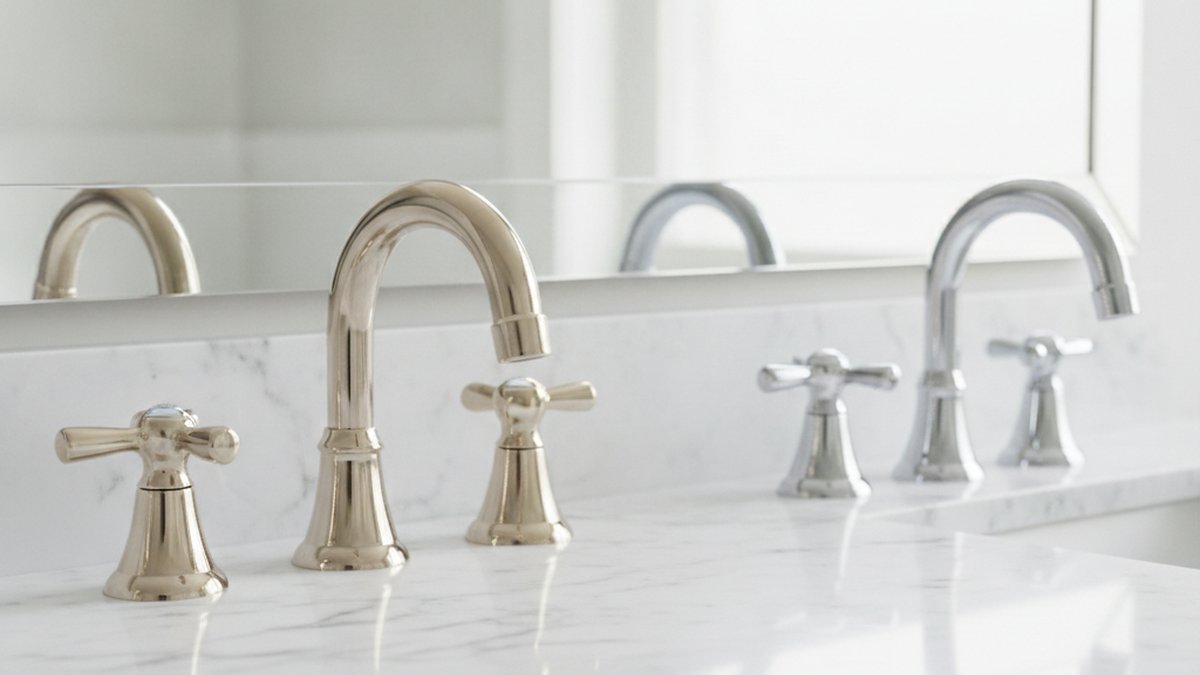
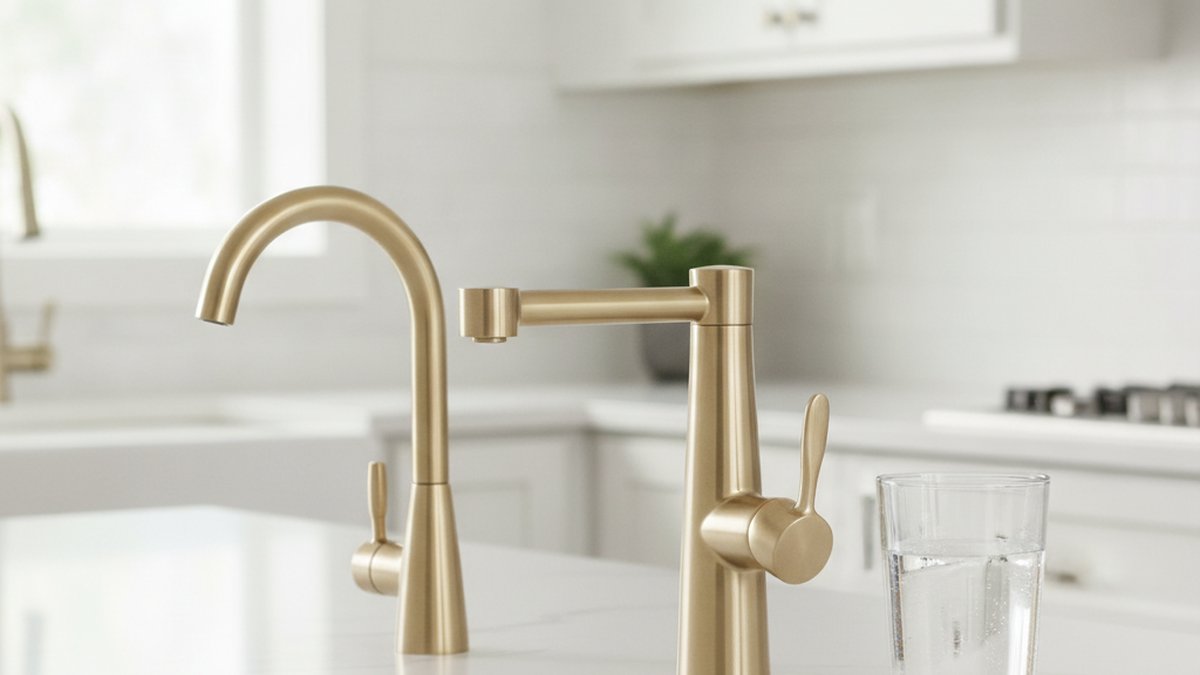
Here’s how the common stations break down. A well-chosen brass faucet bar and grill layout usually mixes two or three of these, all in a matching finish so the front-of-house bar reads as intentional rather than pieced together.
| Station | Best brass faucet style | Key spec to check | Typical mount |
|---|---|---|---|
| Cocktail / bar well | Compact gooseneck, single or dual lever | Spout height clears shakers & tins (8–12″) | Deck-mount, single hole |
| Hand-wash sink | Short lever or wrist-blade faucet | NSF hand-sink compliance, splash-free reach | Deck-mount, centerset |
| Three-compartment warewash | Splash-mount swing faucet, 8″ centers | Reach spans all three basins | Wall / splash-mount |
| Prep / garde manger | Pre-rinse spray unit + add-on faucet | Flexible hose, 1.15 gpm spray | Deck-mount, single hole |
| Service / underbar dump sink | Low gooseneck bar faucet | Compact footprint, lead-free body | Deck-mount |
If your bar setup is closer to a residential-scale prep bar or a light-use service counter, a heavy-duty consumer bar faucet can be the right call and save real money. In that case it’s worth reading how the major brands stack up in our guide to the best bar faucet Delta makes before you commit — many of those models use solid-brass waterways and hold up fine under moderate commercial-adjacent use.
Solid brass vs. brass-plated vs. stainless: what should you actually buy?
Buy solid brass (ideally DZR/lead-free brass) for the body and waterways; treat “brass-plated” as decorative only, and choose stainless mainly when you specifically want a modern look or the lowest possible metal-leaching profile. All three can be food-safe when certified, but they don’t age the same way under a bar.
| Material | Commercial durability | Corrosion under sanitizer | Relative cost | Verdict for bar & grill |
|---|---|---|---|---|
| Solid / DZR brass | Excellent | Very high resistance | $$–$$$ | Best all-around choice |
| Brass-plated zinc | Poor | Low — pits & corrodes | $ | Avoid for real service use |
| Stainless steel (316) | Excellent | Excellent | $$$ | Great, colder look, pricier |
| Chrome-plated brass | Excellent | Very high resistance | $$ | Solid budget pick if brass core |
The trap here is finish confusion. “Antique brass,” “brushed brass,” and “unlacquered brass” describe how the faucet looks, not what it’s made of. A chrome or matte-black faucet can be solid brass underneath, and a brass-colored faucet can be hollow zinc. Always read the body-material line, not the finish name. When a listing only brags about the finish and never states the body alloy, assume the worst and move on.
Do brass faucets meet health-code and lead-free rules?
Yes — quality commercial brass faucets are made from lead-free brass and carry the certifications inspectors check, but only if you buy certified product. Two things matter: the alloy must meet the U.S. “lead-free” standard (weighted average ≤0.25% lead on wetted surfaces, per the Safe Drinking Water Act and NSF/ANSI 372), and the faucet should be certified to NSF/ANSI 61 for drinking-water safety. For food-equipment placement, NSF/ANSI 2 and local plumbing code govern spout reach, air gaps, and hand-sink requirements. Reputable brass faucets are cast from low-lead alloys (like C46500 or C69300) specifically so they pass these tests.
How much should a bar and grill spend per faucet, and where’s the sweet spot?
Plan on roughly $80–$180 for a solid-brass bar or hand-sink faucet, $150–$400 for a splash-mount warewash faucet, and $200–$600 for a full pre-rinse unit — and treat anything under $50 marketed as “brass” with heavy suspicion. The sweet spot for most independent bar and grills is the $120–$250 band per fixture: that’s where you get a certified solid-brass body, a ceramic-disc cartridge, and a real parts supply chain without paying for a national-chain spec package.
- Budget tier ($50–$100): Fine for a low-traffic service bar or a seasonal patio setup. Insist on a stated solid-brass body and NSF 61.
- Core tier ($120–$250): The default for daily-use bar wells, hand sinks, and prep stations. Ceramic cartridge, lead-free brass, replaceable parts.
- Heavy-duty tier ($300–$600+): Pre-rinse assemblies and high-cycle dish lines. Commercial warranty, riveted spring, wall bracing.
Think in cost-per-year, not sticker price. A $60 plated faucet you replace every 8 months costs more in labor and downtime than a $180 solid-brass unit that runs five years. If you’re weighing features against your actual sink layout and volume, our walkthrough on how to select kitchen faucet features that fit your sink and budget maps cleanly onto commercial prep stations too.
What finish holds up best behind a working bar?
Chrome and brushed/satin finishes hold up best behind a bar because they hide water spots and fingerprints and resist the acid etching that dulls glossy gold and living finishes fast. Polished brass and unlacquered “living” brass look stunning in a craft-cocktail bar, but they patina and water-spot quickly under citrus and constant handling — which is either a feature (intentional aged look) or a maintenance headache, depending on your brand.
- Chrome (over brass): Cheapest to maintain, hides nothing but wipes clean instantly. The workhorse finish.
- Brushed/satin nickel or brass: Best at hiding spots and scratches — ideal for high-touch bar wells. See how a premium version performs in our take on the polished nickel faucet from Moen.
- Matte black (over brass): On-trend, hides fingerprints well, but shows hard-water scale as white film — plan on regular descaling.
- Polished/unlacquered brass: Beautiful, patinas over time; only choose it if the aged look is the aesthetic you want.
How do you install and maintain a brass bar faucet so it lasts?
Install on a properly sized deck or wall bracket, use the faucet’s own washers (never over-tighten brass threads), and maintain it by descaling monthly and swapping the ceramic cartridge at the first sign of drip. Brass is forgiving, but the two things that kill it early are cross-threaded shanks and neglected hard-water scale.
- Confirm the hole spread and deck thickness before ordering — single-hole, 4″ centerset, and 8″ splash-mount are not interchangeable.
- Hand-start every threaded connection to avoid cross-threading brass, then snug with a wrench a quarter-turn past hand-tight.
- Use thread sealant or PTFE tape on supply connections, not on the mounting shank.
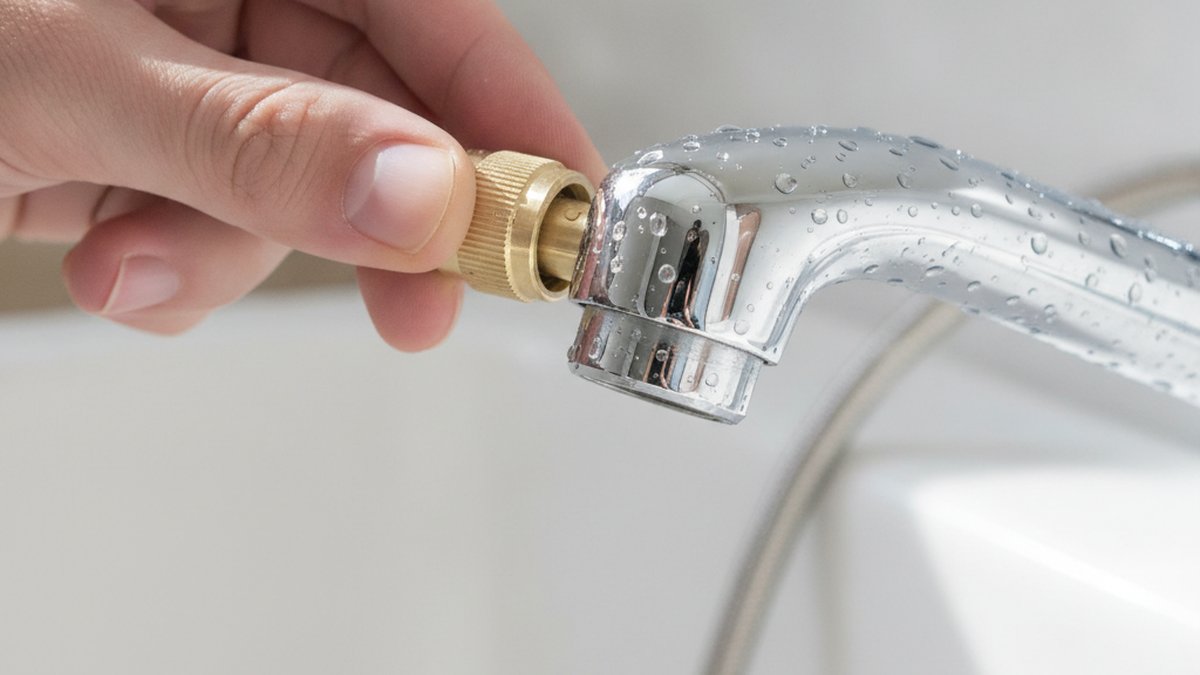
- Descale monthly with a food-safe descaler or diluted vinegar soak on the aerator/spray head to keep flow strong.
- Rebuild, don’t replace: when it drips, swap the ceramic-disc cartridge and seats — a 10-minute fix on a brass body.
A dripping commercial faucet wastes hot water and fails inspection, so don’t ignore it. If a valve starts leaking rather than the spout, the fix is usually the cartridge or seat; our guide on why a faucet drips from the valve and how to fix it yourself walks through the exact steps, and it applies to brass bar faucets the same way it does to residential ones.
Deck-mount or wall-mount for a commercial bar sink?
Use deck-mount for underbar cocktail wells and prep sinks where you have a countertop or sink deck to drill, and wall/splash-mount for three-compartment warewash sinks where the faucet must reach across multiple basins and stay clear of the wash zone. Wall-mount also makes wiping down the deck far easier because there’s no faucet base collecting grime — a real advantage in a health-inspected space.
Who makes reliable brass bar and grill faucets?
Reliable options come from dedicated commercial plumbing brands and from the heavy-duty lines of major residential makers whose bodies are genuinely solid brass. For pure food-service duty, look at commercial-focused brands (T&S, Krowne, Fisher, Chicago Faucets) built specifically for warewash and bar wells. For prep and service bars that don’t need full pre-rinse gear, residential heavy-duty pull-downs with solid-brass waterways can be the smarter buy — see our comparison of the best pull-out kitchen faucet Delta makes for models that translate well to a busy prep line.
Whatever brand you choose, the checklist is the same: stated solid-brass or DZR brass body, NSF/ANSI 61 certification, lead-free (NSF/ANSI 372) alloy, ceramic-disc cartridge, and an available parts kit. A faucet that checks all five will outlast three cheap ones.
Common mistakes buyers make with brass bar faucets
The two most expensive mistakes are buying on finish name alone (and getting plated zinc) and buying the wrong spout geometry for the station (a spout that can’t clear a cocktail tin, or a hand-sink spout that violates splash-reach code). Both are avoidable in five minutes of reading the spec sheet.
- Ignoring flow rate: Bar wells want lower flow for control; warewash wants strong, steady flow. Match the gpm to the job.
- Skipping the cartridge type: Ceramic-disc lasts far longer than rubber-washer compression valves under commercial cycling.
- Forgetting the aerator/vacuum breaker: Many codes require backflow protection on faucets with hose spray attachments.
- Mismatched finishes across the bar: Buy all front-of-house faucets in one finish family so the bar looks designed, not repaired.
FAQ
Is a solid brass faucet food-safe for a commercial bar?
Yes, as long as it’s made from lead-free brass and certified to NSF/ANSI 61 and 372. Modern commercial brass faucets use low-lead alloys specifically formulated to meet the U.S. lead-free standard (≤0.25% weighted lead on wetted surfaces), so the brass itself doesn’t leach meaningful metal into drinking or ice water. Always confirm the certification marks on the listing or box.
How long should a brass bar and grill faucet last?
A solid-brass commercial faucet typically lasts five to ten-plus years in daily service, and often much longer because the body is rebuildable. The cartridge and aerator are wear parts you’ll replace periodically — usually every year or two under heavy use — but the brass body itself rarely fails if you descale it and don’t cross-thread the connections during install.
Can I use a residential brass faucet in a bar and grill?
Sometimes, for low-to-moderate volume service or prep bars — but check your local plumbing and health code first. Many jurisdictions require NSF-listed commercial faucets on food-service sinks, particularly hand sinks and warewash stations. For a light-use back bar or a prep counter, a heavy-duty residential faucet with a solid-brass body and ceramic cartridge can be fully adequate and cheaper, provided it satisfies your inspector.
What’s the difference between a bar faucet and a pre-rinse faucet?
A bar faucet is a compact gooseneck sized for cocktail wells and small dump sinks, while a pre-rinse faucet is a tall unit with a flexible spring hose and high-pressure spray head built to blast food debris off dishes before washing. You’d put a bar faucet at the cocktail station and a pre-rinse over the dish or prep line — they solve different problems and aren’t interchangeable.
Does matte black or brushed finish work better in a commercial kitchen?
Brushed (satin) finishes are the most forgiving in a commercial kitchen because they hide water spots, scale, and minor scratches best. Matte black looks great and hides fingerprints, but it shows white hard-water scale readily, so you’ll descale it more often. Both are fine choices as long as the underlying body is solid brass — the finish is cosmetic, the alloy is what determines lifespan.
How do I stop my commercial brass faucet from dripping?
Replace the ceramic-disc cartridge and inspect the seats — that fixes the vast majority of drips on a brass faucet. A dripping faucet in a bar and grill wastes hot water and can flag during inspection, so address it fast. Shut off the supply, pull the handle and cartridge, drop in the manufacturer’s replacement, and reassemble; it’s usually a ten-minute job with no plumber required.
Author note & brand credibility
This guide was written by the Aleasha Faucet product team, drawing on hands-on testing of commercial and residential fixtures across finishes, cartridge types, and mounting styles. Aleasha (www.aleashafaucet.com) specializes in faucets and bathroom & kitchen fixtures, and we evaluate every product against real durability criteria — solid-brass body verification, NSF/ANSI 61 and 372 certification, ceramic-cartridge cycle testing, and manufacturer warranty terms — before we recommend it. When we say “buy solid brass,” it’s because we’ve watched the plated alternatives fail on the bench and in the field. Always confirm current certifications and warranty coverage with the manufacturer for your specific model and local code.