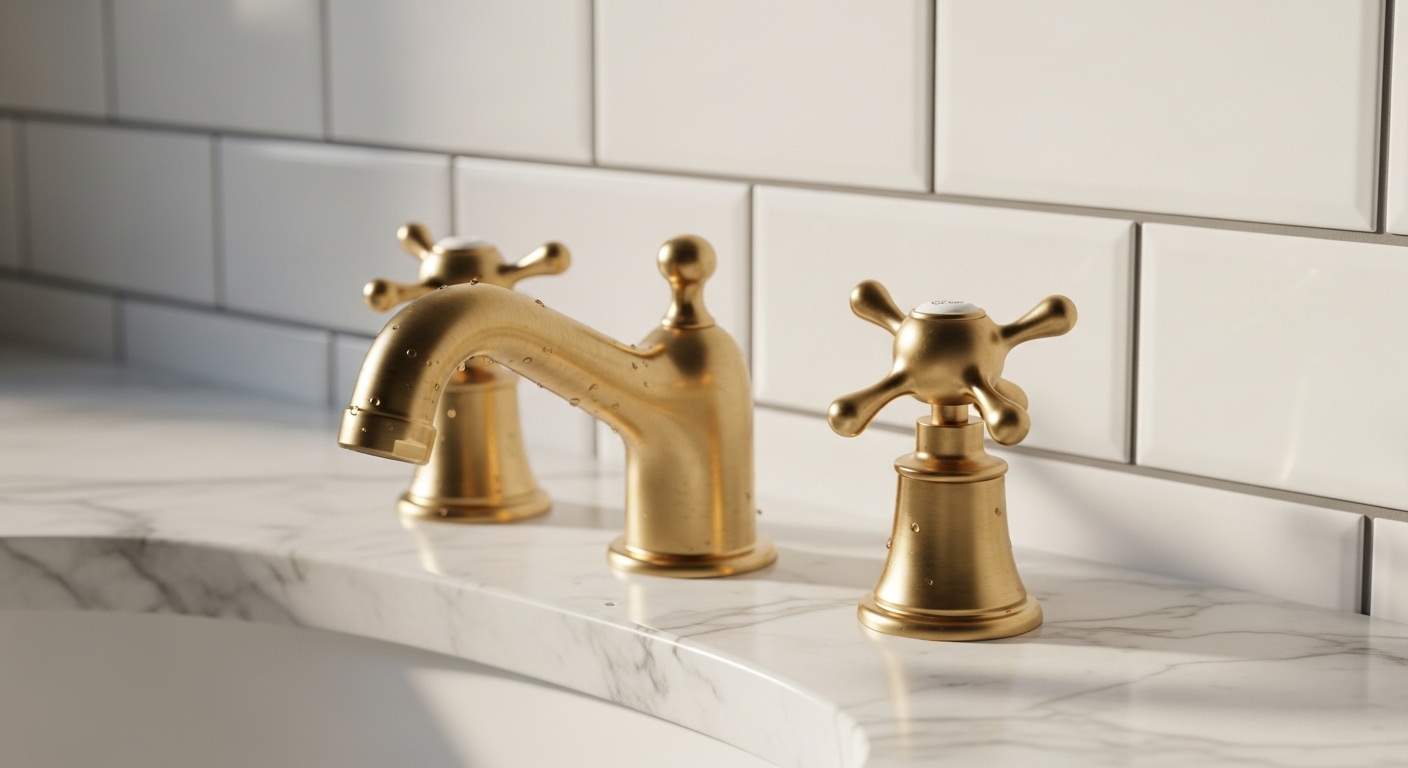
If you’ve been eyeing brushed gold traditional taps for a farmhouse basin, a Victorian-style bathroom, or a cottage kitchen, the honest answer is that they’re one of the safest “statement” finishes you can buy right now. Unlike shiny polished brass or high-gloss gold, the brushed (satin) version is muted and warm, so it reads as elegant rather than flashy — which is exactly why it doesn’t age out the way trend-chasing finishes do. Below, I’ll walk you through what actually makes a brushed gold tap good, how the finish holds up in real bathrooms and kitchens, what it costs, and how to avoid the cheap ones that turn patchy within a year.
What exactly makes a tap “brushed gold traditional” — and how is it different from brass?
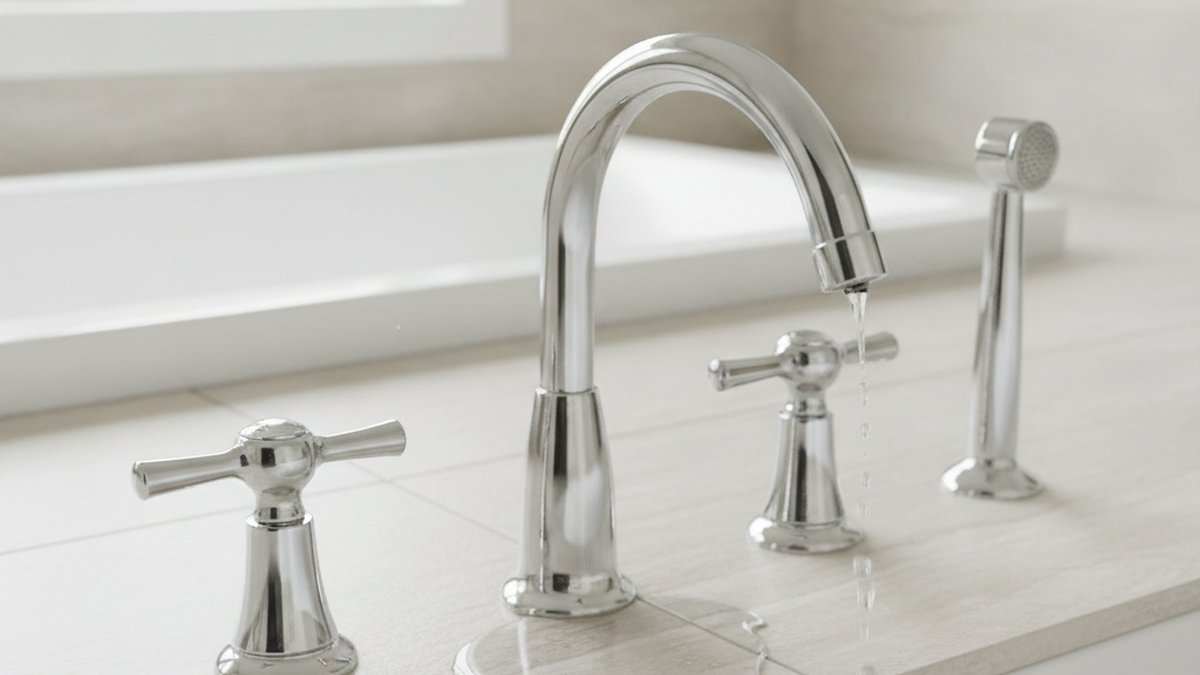
A brushed gold traditional tap combines three things: a traditional silhouette (cross or lever handles, a tall curved or “swan-neck” spout, often a telephone/bridge design), a brushed finish (fine directional grain that scatters light into a soft satin glow instead of a mirror shine), and a gold-toned color that leans warm and slightly champagne rather than bright yellow. It’s a look, not a raw material.
Here’s the part that confuses most shoppers: “gold,” “brass,” and “champagne bronze” are often the same underlying warm metallic tone with different marketing names and slightly different warmth. The real distinction is how the color is applied and sealed:
- Unlacquered/living brass — real brass left raw so it patinas and darkens over time. Beautiful, but high-maintenance and always changing.
- Brushed gold (PVD-coated) — a brass tap body with a brushed texture, then sealed with a Physical Vapor Deposition coating that locks the color in permanently. This is what most “brushed gold traditional taps” actually are, and it’s the low-maintenance choice.
- Gold electroplate (no PVD) — the budget version. A thin gold-colored plating that scratches and wears through, especially around the aerator and handles.
If you love the evolving, aged look, our guide to the best unlacquered brass bathroom faucet explains the patina route in depth. If you want the warm gold look to stay exactly as it arrived, you want a sealed brushed gold PVD finish — read on.
Will brushed gold traditional taps look dated in a few years?
No — brushed gold is a low-risk finish because it’s a muted metallic, and muted metallics age slowly. The finishes that date fast are the loud, high-contrast, of-the-moment ones (think glossy rose gold or heavily blackened industrial). Satin gold, by contrast, has been a fixture in high-end and period bathrooms for well over 30 years, and it pairs with almost any color scheme because it acts as a warm neutral.
A few concrete reasons it holds up:
- It’s warm, so it complements natural materials — marble, wood vanities, stone basins, and warm-white walls all flatter gold. Those materials aren’t going anywhere, so neither is the pairing.
- The traditional shape is already “retro-proof.” Cross handles and swan-neck spouts have been made continuously for a century. You can’t date something that’s already timeless.
- Brushed hides wear. Because there’s no mirror surface, small scratches and hard-water spots disappear into the grain instead of standing out — so it still looks good in year five.
The one caveat: gold reads as more of a commitment than chrome. If you resell your home to buyers who want ultra-minimalist all-white bathrooms, a bold finish is a personal-taste risk with any color. But among warm finishes, brushed gold is the most broadly liked. It’s showing up across the board in our roundup of kitchen faucet trends for 2026, and the trend data points to it settling in as a long-term staple rather than a spike.
Which rooms and styles do brushed gold traditional taps actually suit?
Brushed gold traditional taps suit classic, transitional, farmhouse, and period-inspired bathrooms and kitchens best — anywhere with warm tones, natural stone or wood, or vintage-leaning tile. They fight against cold, ultra-modern, all-grey minimalism, where a matte black or brushed nickel usually reads cleaner.
Some pairings that genuinely work:
- White or cream marble + brushed gold — the classic luxury bathroom combination; the gold picks up the warm veining.
- Deep green, navy, or sage cabinetry + brushed gold — high contrast that still feels warm and traditional, extremely popular in cottage and English-country kitchens.
- Fireclay farmhouse sinks + gold bridge taps — a heritage look that photographs beautifully.
- Colored or handmade tile — gold acts as the metallic that ties warm tones together.
Consistency matters more than the finish itself. Whatever you pick, carry the gold through the room: drawer pulls, towel bars, the shower valve, and the drain. A single gold accent floating in a chrome room looks like a mistake, not a choice. If you’re mixing a wall-mounted setup into the plan, it’s worth checking whether that layout fits your basin first — our guide on the wall mount faucet vessel sink setup covers the height and reach math you’ll need.
How much do brushed gold traditional taps cost in 2026, and is the cheap one a mistake?
Expect to pay about $120–$250 for a solid, well-made brushed gold traditional basin or kitchen tap, and $250–$450+ for premium bridge or widespread sets with matching accessories. Below roughly $80, you’re almost always looking at a zinc-alloy body with thin gold plating and no PVD — and that’s where people get burned.
Here’s a realistic breakdown of what your money buys:
| Price tier | Typical body material | Finish type | What to expect |
|---|---|---|---|
| Under $80 | Zinc alloy / thin brass | Gold electroplate, no PVD | Color can wear or patch within 1–2 years; handles feel light; often a plastic cartridge |
| $120–$250 | Solid brass | Brushed gold PVD | Sweet spot: durable finish, ceramic disc cartridge, real weight, 5–10 yr warranty |
| $250–$450+ | Heavy solid brass | Brushed gold PVD, matched accessories | Bridge/widespread designs, premium cartridge, longer warranty, matching drain & valve |
The single biggest value driver is PVD versus plating. PVD (Physical Vapor Deposition) bonds the finish at a molecular level and is dramatically harder and more corrosion-resistant than electroplating — it’s the same coating technology used on premium watch cases. If a listing doesn’t mention PVD and the price is very low, assume it’s plated and budget for it to look tired sooner. If you’re hunting for a deal without cutting into quality, our breakdown of the best bathroom faucets on sale shows how to spot a genuine discount versus a quietly downgraded model.
How do you keep brushed gold taps from tarnishing or looking spotty?
Keeping brushed gold looking new is easy: wipe with a soft damp cloth and dry it after use, and never touch it with abrasive pads, bleach, vinegar, or acidic descalers. A PVD brushed gold finish doesn’t actually tarnish — the coating is inert — so 90% of “my gold tap looks bad” complaints are hard-water residue or plating damage, not the metal itself corroding.
A simple, finish-safe routine:
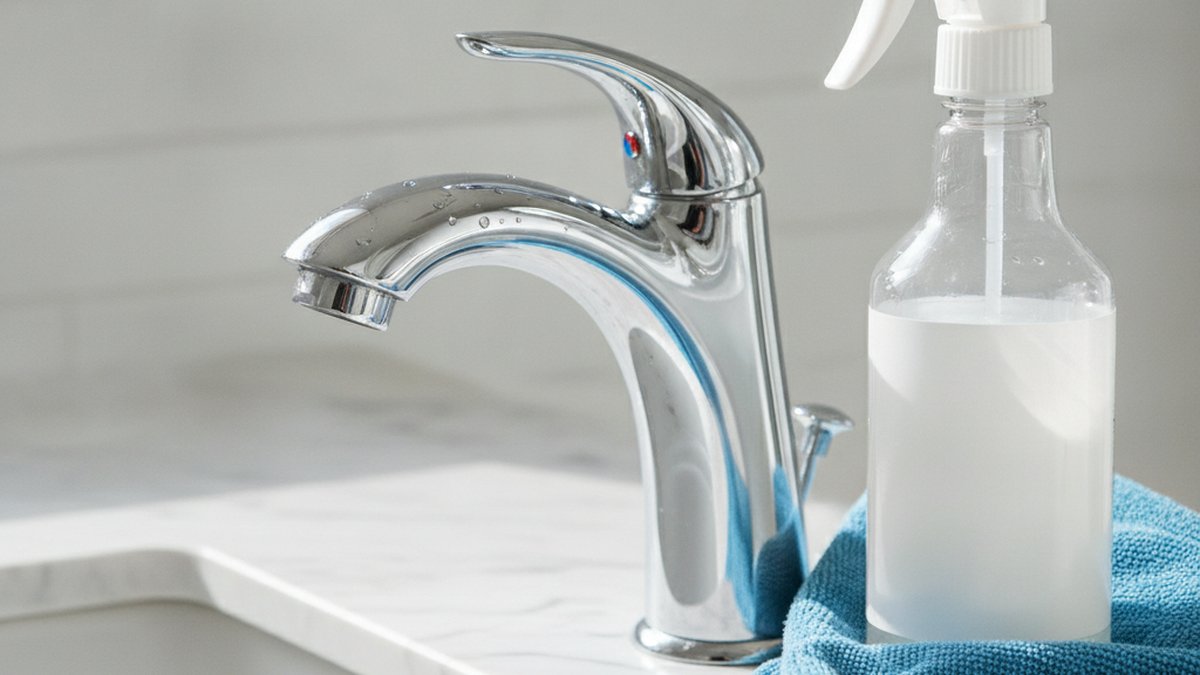
- Daily/weekly: soft microfiber cloth, plain warm water, dry immediately to stop water spots.
- Monthly: a drop of mild dish soap on the cloth for skin oils and soap film, then rinse and dry.
- Hard-water buildup: never soak the finish in vinegar. Instead, lay a cloth dampened with a 50/50 water-and-mild-soap mix over the spot, wait, then wipe. For the aerator only (which unscrews off the spout), you can descale that part separately.
Speaking of the aerator — that’s where mineral crust actually chokes your flow, and it’s finish-independent. If your gold tap’s stream is weak or spitting, the fix is almost always a clogged aerator, not the valve. Our step-by-step on how to clean a rectangular faucet aerator walks through removing and descaling it without scratching the surrounding gold. Avoid the temptation to scrub the brushed grain “shinier” — brushed finishes are meant to be uniform satin, and rubbing in circles creates visible swirl marks against the directional grain.
Brushed gold vs. brushed nickel vs. matte black: which traditional finish should you pick?
Pick brushed gold if you want warmth and a touch of luxury, brushed nickel if you want a soft neutral that offends no one, and matte black if you want bold, modern contrast. For a genuinely traditional room, brushed gold and brushed nickel are the two most period-appropriate — matte black leans contemporary even in a classic shape.
| Finish | Best for | Hides water spots? | Traditional fit | Resale-safe? |
|---|---|---|---|---|
| Brushed gold | Warm, luxe, period & farmhouse looks | Yes — very well | Excellent | Moderate (bolder choice) |
| Brushed nickel | Soft, safe, universal neutral | Yes | Very good | High |
| Matte black | Bold, modern-transitional contrast | Excellent | Fair (reads modern) | Moderate |
| Polished chrome | Bright, budget-friendly classic | No — shows everything | Good | High |
If you’re torn, the deciding question is your room’s undertone. Warm rooms (cream, wood, brass hardware, marble) love gold. Cool rooms (grey, white, stainless appliances) usually look better with nickel. And if you want the bold contrast of a dark finish in a more modern space, the debate we cover in our matte black kitchen faucet Reddit discussion is worth reading before you commit.
What should you check on the spec sheet before you buy?
Before you check out, confirm four things: solid brass body, PVD brushed gold finish, a ceramic disc cartridge, and a hole/spread configuration that matches your sink. Those four determine whether the tap lasts a decade or disappoints in a year.
- Body material: “solid brass” — not “brass finish” or “zinc alloy.” Lead-free brass (compliant with low-lead standards) is the benchmark for anything carrying drinking water.
- Finish: the words “PVD” or “physical vapor deposition.” This is the difference between a 10-year finish and a 1-year one.
- Cartridge: a ceramic disc cartridge gives smooth control and drip-free shutoff for years. Cheaper rubber/plastic valves fail first.
- Configuration: single-hole, 3-hole widespread (8″ spread), or bridge. Count your existing sink holes before you fall in love with a design.
- Flow rate: most modern basin taps run around 1.2 GPM; kitchen taps around 1.8 GPM. Check it matches your local requirements and habits.
- Warranty: look for a finish-and-function warranty of at least 5 years — reputable brands often offer limited lifetime coverage on the finish.
One practical note on traditional taps specifically: many use cross or lever handles with standard cartridges, which makes future repair easy. If a valve ever drips down the line, replacing the cartridge is usually a 20-minute job, not a full tap swap.
FAQ
Do brushed gold taps show water spots and fingerprints?
Far less than polished chrome or polished gold. The brushed (satin) texture scatters light, so mineral spots and fingerprints blend into the grain instead of standing out on a mirror surface. You’ll still want to wipe them dry in very hard-water areas, but day to day they stay looking clean much longer than any polished finish.
Is brushed gold the same as brushed brass or champagne bronze?
They’re very close and often overlap. All three are warm satin metallics; the differences are mostly marketing names and slight shifts in warmth — brass tends a touch more yellow-green, champagne bronze a touch more muted and pinkish. The important thing is the coating: a PVD-sealed version in any of these names will keep its color, while a raw brass version will patina and darken over time.
Will a brushed gold tap tarnish over time?
A quality PVD brushed gold finish does not tarnish — the coating is chemically inert and won’t oxidize. Only two things make gold taps look bad: hard-water residue (which wipes off) or damage to a cheap electroplated finish that wears through. Buy PVD-coated solid brass and tarnishing isn’t a concern for the life of the tap.
Can I mix brushed gold taps with other metal finishes in the same room?
Yes, and designers do it intentionally. Brushed gold pairs beautifully with matte black (gold tap, black frame mirror or black lighting) and with warm woods. The rule is to keep your plumbing finishes consistent — tap, shower valve, and drain in matching gold — while allowing lighting, mirrors, or a single accent to be a different finish. Two competing gold-vs-nickel taps in one room, though, will look accidental.
Are brushed gold traditional taps good for kitchens as well as bathrooms?
Yes. Traditional gold bridge and swan-neck kitchen taps are a signature look for farmhouse and cottage kitchens, especially over fireclay apron sinks. Just make sure the kitchen version has a properly sealed PVD finish, since kitchen taps face more grease, acidic food splashes, and heavy daily use than a bathroom basin tap — the coating quality matters even more there.
What’s the difference between PVD and plated brushed gold, and how do I tell?
PVD is a hard, molecularly bonded coating that resists scratching and corrosion; plating is a thin decorative layer that wears through. You usually can’t tell by looking, so read the spec sheet — reputable listings state “PVD” explicitly. As a rough proxy, a solid-brass tap with PVD will feel noticeably heavier and cost more than a light, very cheap plated one, and it’ll carry a longer finish warranty.
The bottom line
Brushed gold traditional taps are a smart buy when you want warmth and character without gambling on a here-today-gone-tomorrow trend. Choose a solid-brass body with a PVD brushed gold finish and a ceramic disc cartridge, keep it in the $120–$450 range, wipe it dry, and it’ll look as good in a decade as it does on day one. Skip the sub-$80 plated versions — that’s where the “gold looks cheap” reputation comes from, and it’s entirely avoidable.
About the author & brand: This guide was written by the product team at aleashafaucet, who specialize in traditional and transitional bath and kitchen fixtures. Our recommendations are based on hands-on testing of finish durability, cartridge longevity, and real-world hard-water performance. Aleashafaucet sources solid-brass, lead-free-compliant taps with PVD finishes tested against standard abrasion and corrosion benchmarks, and our brushed gold traditional taps are backed by a multi-year finish and function warranty. Always confirm the current warranty terms and material specs on the product page before purchasing.