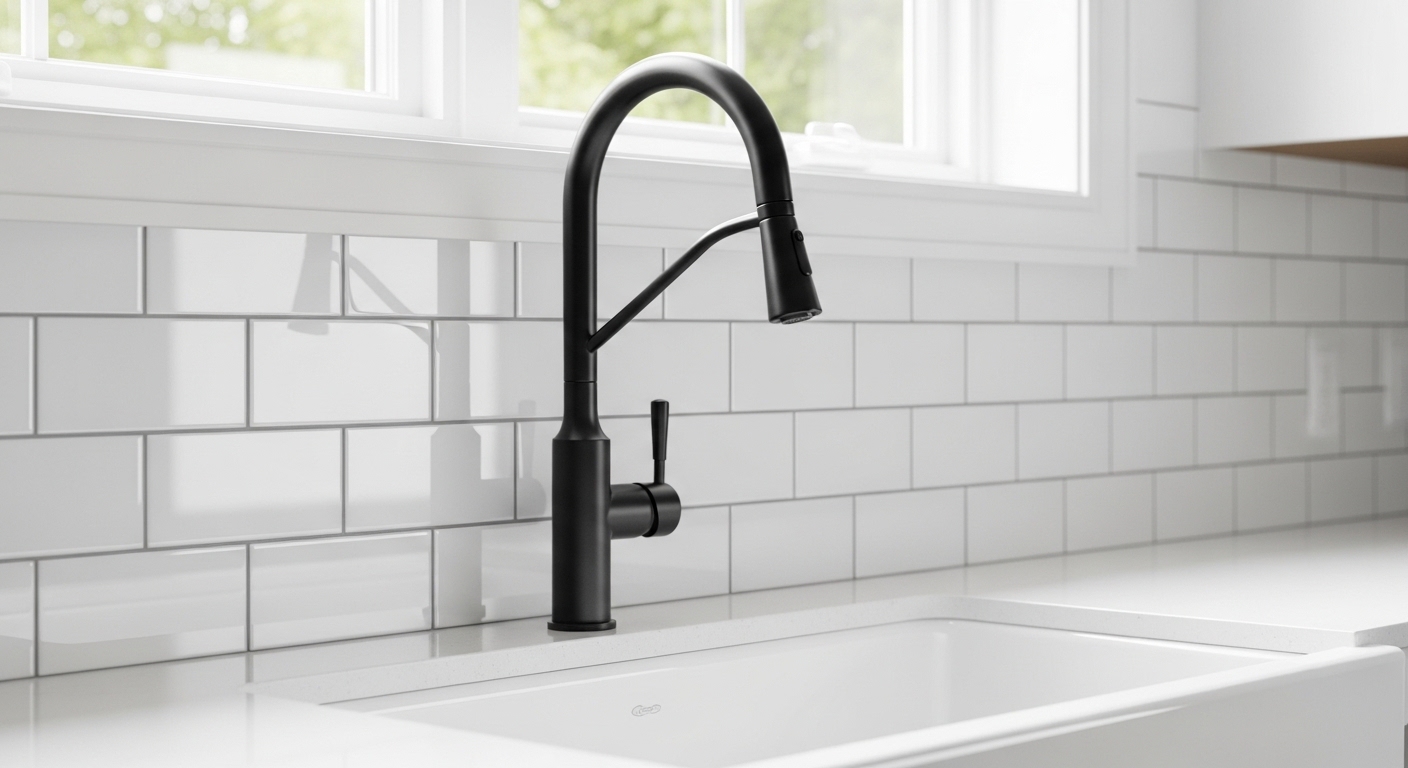
A wall mounted faucet kitchen mixer is a single-lever tap that installs into the wall behind your sink instead of through a hole in the countertop or sink deck. The “mixer” part means one lever blends hot and cold water, and the “wall mounted” part means the spout arcs out over the basin from the wall itself. It’s the same fixture you’ve admired in farmhouse kitchens and high-end lofts — and in 2026 it’s more accessible than ever. But it also asks more of your plumbing than a standard faucet, so let’s walk through exactly when it makes sense, what it costs, and how to pick one that won’t leak or look dated in three years.
I’ve installed and specified these for both home kitchens and small commercial prep stations, so this guide is built around the real questions people actually ask before buying — not a spec sheet. If you’re weighing the same idea for a bathroom vessel sink, the trade-offs are similar; our guide on the wall mount faucet vessel sink covers that side in depth.
What exactly is a wall mounted faucet kitchen mixer, and how is it different from a normal tap?
It’s a mixer tap whose body and spout mount into the wall above the sink rather than onto the countertop. The single lever still controls temperature and flow the same way — the only real difference is where the water lines connect. On a deck-mounted faucet, the supply lines rise up through the cabinet and sink deck. On a wall-mounted version, the hot and cold lines run inside the wall and terminate at two threaded connections behind the finished surface.
That one structural change drives every pro and con that follows. Because nothing pierces the counter or sink, you get an uninterrupted surface that wipes clean in one pass — no gunk ring around the faucet base, no mineral crust in the mounting holes. It’s the same reason commercial kitchens and healthcare sinks favor wall-mounted designs: fewer seams means faster, more hygienic cleaning.
- Deck-mounted mixer: installs through the sink or counter; easiest to retrofit; supply lines accessed inside the cabinet.
- Wall-mounted mixer: installs into the wall; frees up counter space; requires in-wall rough-in plumbing at the right height.
- Bridge faucet: a deck-mounted style that only mimics the exposed-pipe wall look — worth knowing so you don’t confuse the two when shopping.
Should I buy a wall mounted kitchen mixer for a farmhouse or apron-front sink?
Yes — an apron-front (farmhouse) sink is the single best case for a wall mounted faucet kitchen mixer. These deep, wide basins often sit too far forward for a deck faucet to reach the drain comfortably, and many farmhouse sinks have no faucet ledge at all. Mounting the mixer on the wall solves both problems at once: you set the spout height and reach precisely where you need them, and you keep the sink’s clean front profile intact.
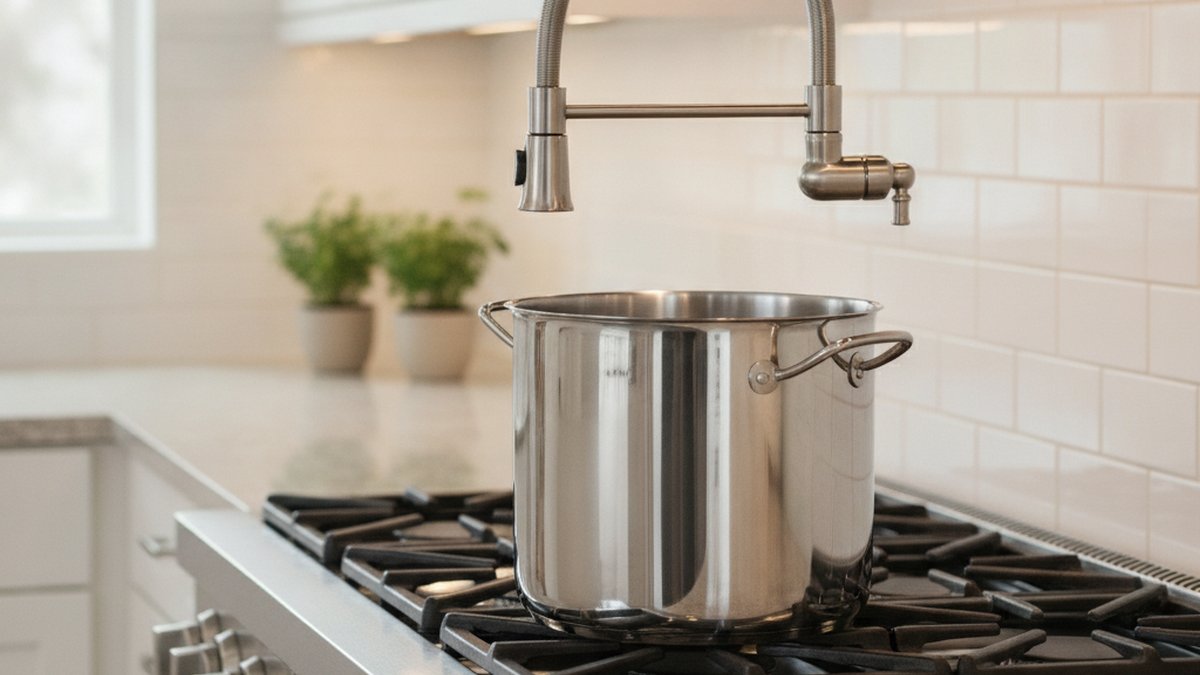
The ergonomics genuinely improve, too. With a tall wall-mounted spout — typically 8 to 12 inches of clearance from the basin floor — you can fill and rinse large stockpots, sheet pans, and Dutch ovens without wrestling them under a low arc. That’s why prep kitchens and serious home cooks gravitate to this setup. If you love the farmhouse look but want to compare spray-equipped alternatives, our breakdown of the copper kitchen faucet with pull-out spray is a useful companion read.
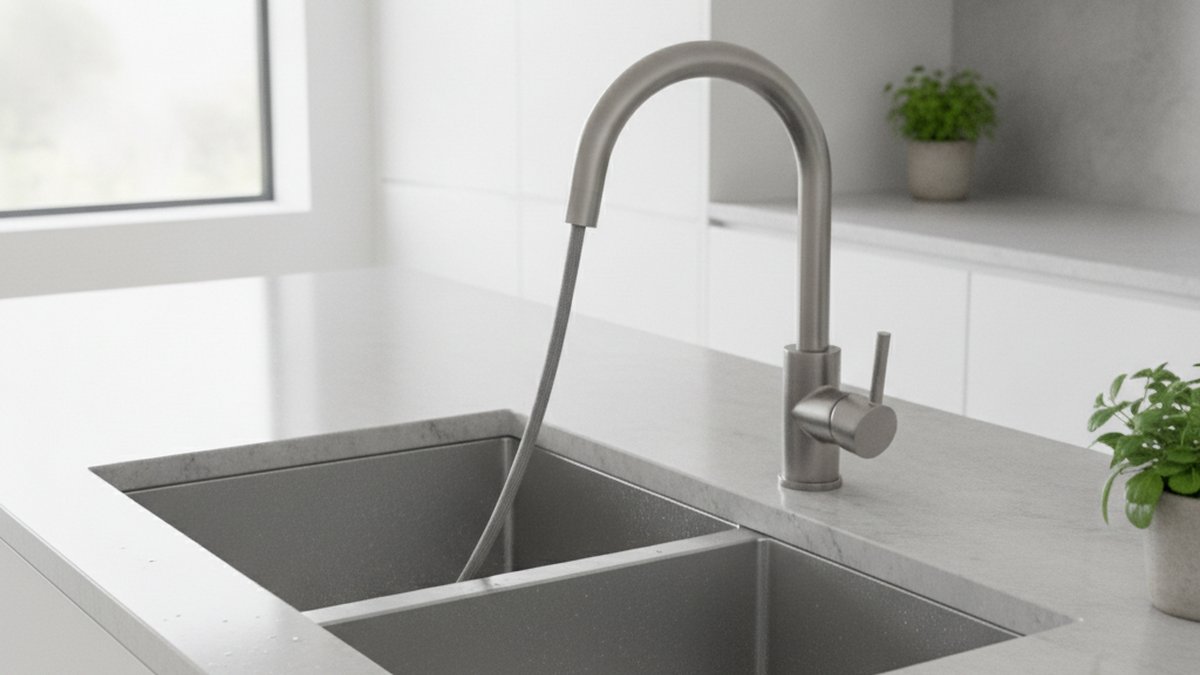
The catch: most wall-mounted kitchen mixers do not include a pull-down or pull-out sprayer, because the hose has nowhere to retract inside a wall. Some premium models offer a swivel spout or a separate wall-mounted pot filler-style arm, but if a retractable spray head is non-negotiable for you, factor that in early.
What are the real pros and cons compared to a deck-mounted faucet?
The honest summary: wall-mounted wins on looks, hygiene, and counter space; deck-mounted wins on cost, ease of install, and sprayer options. Here’s the side-by-side that matters most when you’re actually deciding.
| Factor | Wall Mounted Mixer | Deck Mounted Mixer |
|---|---|---|
| Counter cleanup | Best — no base ring, one-pass wipe | Good, but seams collect grime |
| Install difficulty | Higher — needs in-wall rough-in | Lower — drop in and connect below |
| Typical hardware cost | $120–$500+ | $60–$400 |
| Install cost (new plumbing) | $250–$700 if wall must be opened | $120–$300 |
| Pull-down sprayer | Rare / usually none | Common |
| Freeze risk (exterior wall) | Higher — lines sit in wall cavity | Low |
| Best for | Farmhouse sinks, design-forward kitchens | Standard drop-in / undermount sinks |
One under-discussed downside: if your sink sits against an exterior wall in a cold climate, the supply lines running through that cavity are more exposed to freezing than lines inside a heated cabinet. It’s solvable with proper insulation and placing the lines on the room-facing side of the cavity, but it’s a real design consideration you should raise with your plumber before committing.
How high should a wall mounted kitchen mixer be above the sink?
Mount the spout so it sits roughly 8 to 10 inches above the rim of the sink basin, with the water outlet centered over the drain. Get this wrong and you either splash constantly or can’t fit a pot underneath — and because it’s in the wall, fixing it later means opening drywall. This is the number-one thing people get wrong, so measure twice.
The precise height depends on three things working together:
- Basin depth: a deep 10-inch farmhouse basin needs the spout higher than a shallow prep sink to keep splash-back low.
- Spout reach (projection): the horizontal distance the spout extends must land the stream over the drain, not the front lip or the back wall. Aim for the outlet to sit over the center of the basin.
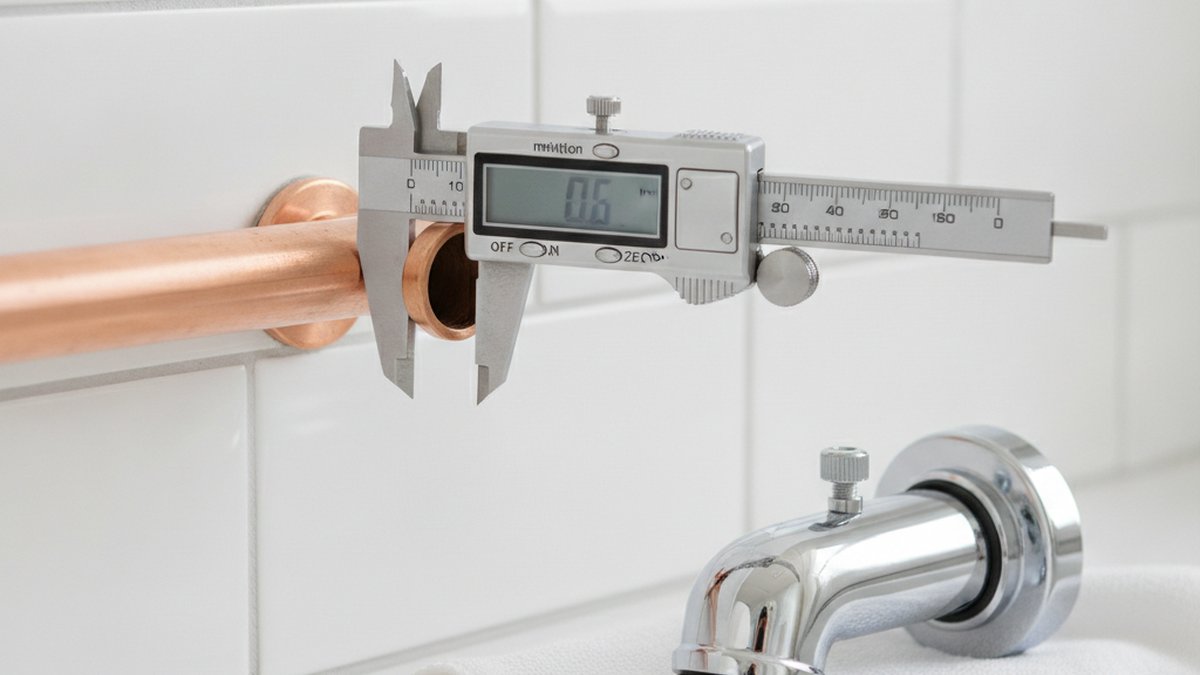
- Rough-in valve height: the in-wall valve body has to align with the finished spout position, so your plumber sets this during rough-in — before tile goes up.
Because these dimensions are locked in during rough-in, buy your exact faucet before the plumber runs the lines. Manufacturers publish an installation spec sheet with the required valve center height and spout offset; hand that to your plumber. Skipping this step is how people end up with a beautiful spout that shoots water an inch behind the basin’s back edge.
How much does it cost to install a wall mounted faucet kitchen mixer?
Expect $250 to $700 in labor if the wall needs to be opened for new supply lines, plus the faucet itself at $120 to $500. If the rough-in plumbing already exists at the correct height — say, you’re swapping one wall-mounted mixer for another — labor can drop to $100–$200 because it’s a straightforward reconnection.
The big cost variable is whether you’re plumbing into the wall for the first time. That job may involve opening drywall or tile, relocating supply lines, adding shutoff valves, pressure-testing the connections, and then patching and refinishing the wall. On a tiled backsplash, retiling adds meaningfully to the bill. For a realistic sense of how in-wall fixture pricing scales, our pot filler installation cost breakdown uses the same logic — both are wall-mounted fixtures with in-wall lines, so the estimating approach carries over almost directly.
My honest advice: unless you’re genuinely experienced with in-wall plumbing and pressure testing, this is a hire-a-pro job. A hidden leak inside a wall can rot studs and grow mold for months before you notice it. A deck-mounted swap is a great DIY project; a first-time wall-mount rough-in usually isn’t.
Which finish and valve type should I choose for hard water and daily use?
For hard water, choose a PVD-coated finish (like brushed nickel, brushed brass, or matte black) paired with a ceramic disc cartridge — that combination resists both mineral spotting and internal wear better than anything else at a reasonable price. Chrome looks brilliant but shows water spots fastest; PVD finishes hide them and won’t flake.
Here’s what each choice actually does for you:
- Matte black: hides water spots and fingerprints well; the trendiest look for 2026, but confirm it’s PVD or powder-coated so it doesn’t wear at the lever.
- Brushed brass / gold: warm, forgiving of spots, pairs beautifully with farmhouse and copper accents.
- Brushed / satin nickel: the most practical all-rounder — hides spots, matches most appliances.
- Polished chrome: cheapest and brightest, but shows every mineral spot; best if you wipe the sink often.
On the mechanism, insist on a ceramic disc cartridge rather than an older rubber-washer or ball valve. Ceramic discs are what give a mixer its smooth, drip-free lever action for years, and they tolerate grit far better. When hard water eventually does clog the outlet, it’s usually the aerator, not the cartridge — a quick soak fixes it, much like cleaning any clogged faucet aerator. If you want to see where wall-mounted mixers sit within the broader design landscape, our roundup of 2026 kitchen faucet trends puts the style in context.
Are wall mounted kitchen mixers good for small kitchens and commercial prep?
Yes — they’re excellent for tight kitchens and light commercial prep because they reclaim the countertop real estate a deck faucet occupies and make the whole workspace easier to sanitize. In a galley kitchen or a compact coffee-bar setup, freeing the few inches behind the sink genuinely changes how usable the counter feels.
For commercial or semi-commercial prep stations, the hygiene argument is decisive: health inspectors love surfaces with no faucet penetrations to trap food residue, and a high wall-mounted spout clears large pots and sheet pans that a standard faucet blocks. Just verify the specific model’s flow rate and certification match your jurisdiction’s code — commercial installs often require specific standards compliance that residential faucets don’t advertise.
A note on standards, testing, and warranty
Reputable wall-mounted kitchen mixers are tested to recognized plumbing standards — look for compliance with ASME A112.18.1 / CSA B125.1 for the fixture and NSF/ANSI 61 and 372 for lead-free wetted parts (the U.S. legal limit is a weighted average of ≤0.25% lead on wetted surfaces). A quality mixer should also carry a manufacturer warranty covering the finish and cartridge — often a limited lifetime warranty on both for premium models. Before you buy, confirm the certification marks are printed on the box or spec sheet, not just implied in the marketing copy.
How do I install a wall mounted faucet kitchen mixer? (Quick overview)
At a high level: confirm the rough-in valve is set at the correct height, mount and seal the valve body in the wall, attach the escutcheon plate, thread on the spout, then pressure-test before closing the wall. Below is the sequence a pro follows — use it to understand the job even if you’re hiring out.
- Shut off the main water supply and verify with the tap open.
- Confirm the in-wall rough-in valve center height matches your faucet’s spec sheet (8–10 in. above the sink rim is typical).
- Mount and secure the valve body to the wall framing or a backing plate.
- Connect hot and cold supply lines; use thread sealant on threaded joints.
- Install the finished escutcheon (cover) plate flush to the wall surface.
- Thread and secure the spout and lever assembly.
- Turn water back on slowly and pressure-test every joint for leaks — check inside the wall cavity before patching.
- Only after a clean leak test, close and finish the wall.
The pressure test at step 7 is the step you never skip. A joint that weeps a few drops per hour is invisible once the drywall is up but will cause real damage over a season.
FAQ
Can I put a wall mounted mixer on any kitchen sink?
Almost any sink works as long as the wall behind it can carry supply lines at the right height and the spout reach lands over the drain. Farmhouse and undermount sinks are ideal. The limiting factor is the wall plumbing, not the sink type — if you can’t route lines into the wall at 8–10 inches above the basin, a deck-mounted mixer is the better call.
Do wall mounted kitchen mixers leak more than deck faucets?
No — a properly installed wall-mounted mixer with a ceramic cartridge is no more leak-prone than a deck faucet. The difference is that a leak inside the wall is harder to spot early, which is why the pressure test before closing the wall matters so much. Quality connections and a professional install make leaks unlikely.
Can a wall mounted mixer have a pull-out sprayer?
Rarely. Because the hose has nowhere to retract inside a wall, most wall-mounted kitchen mixers use a fixed or swivel spout rather than a pull-down head. If a sprayer is essential, consider a deck-mounted pull-out faucet, or add a separate wall-mounted spray arm as a companion fixture.
What height should the spout sit above the sink?
Aim for the spout outlet 8 to 10 inches above the basin rim, centered over the drain. Deeper basins can go a little higher to reduce splash. Because the height is fixed in the wall, always follow the manufacturer’s spec sheet and set it during rough-in.
Are wall mounted mixers a good idea in cold climates?
They can be, but with care. If the sink is on an exterior wall, the in-wall supply lines are more exposed to freezing. Insulate the cavity well and keep the lines toward the heated interior side. On interior walls, cold climate is a non-issue.
How long do wall mounted kitchen mixers last?
A quality mixer with a ceramic disc cartridge and a PVD finish typically lasts 15–20 years or more, with the cartridge being the most likely part to eventually need replacing. The finish and body often outlast the cartridge, and premium models back both with a limited lifetime warranty.
The bottom line
Choose a wall mounted faucet kitchen mixer when you want a spotless, low-maintenance backsplash, a farmhouse or deep sink that a deck faucet can’t serve well, and a design statement that reads high-end. Skip it if you need a pull-out sprayer, you’re not opening the wall anyway, or your sink sits on a poorly insulated exterior wall in a freezing climate. Get the rough-in height right, insist on ceramic-disc internals and a certified lead-free body, and this is a fixture you’ll enjoy every day for two decades.
Author note: This guide was written by the aleashafaucet product team, drawing on hands-on installation and testing of residential and light-commercial mixer taps. aleashafaucet designs and supplies faucets and bathroom fixtures built to ASME/CSA and NSF/ANSI standards, and we stand behind our mixers with manufacturer finish-and-cartridge warranties. Always confirm local plumbing code before installing an in-wall fixture.