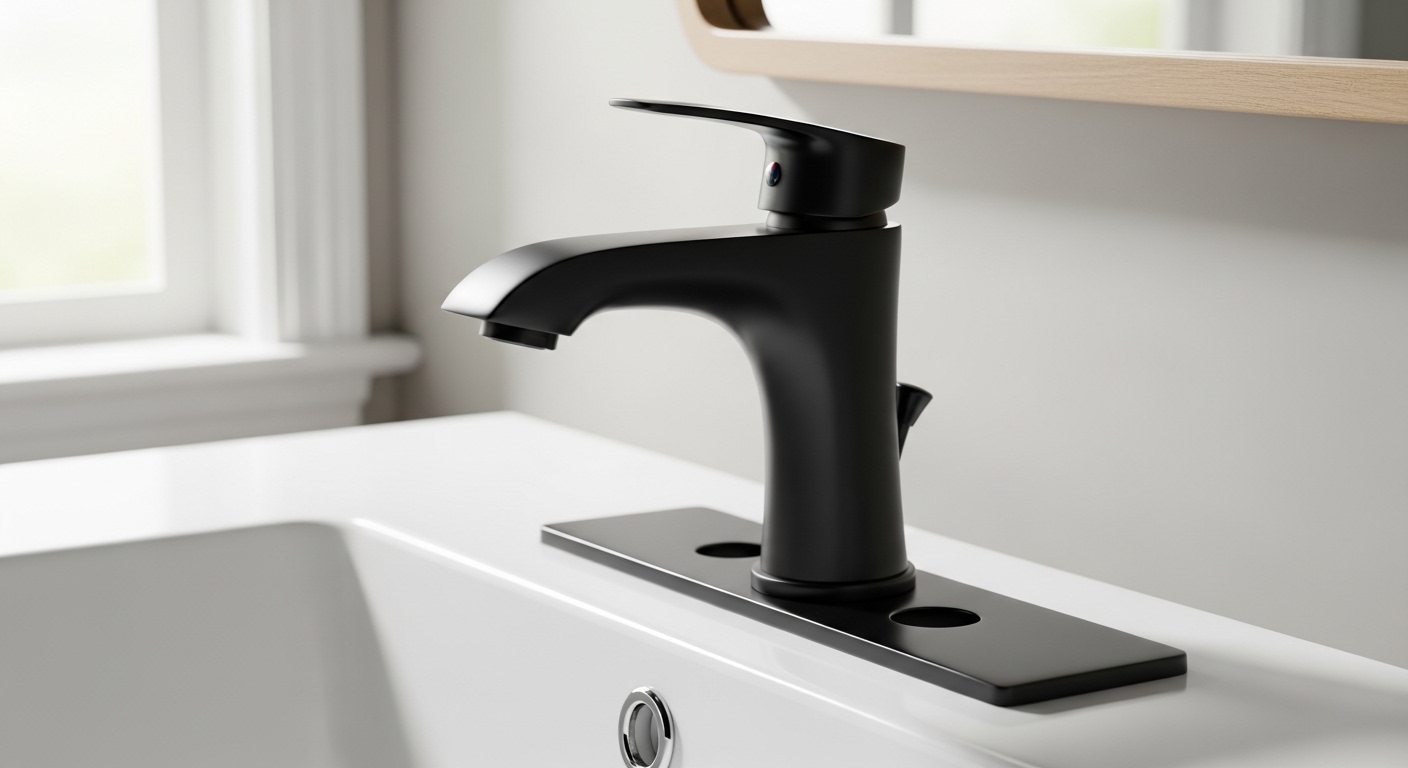
A matte black faucet deck plate is the flat metal cover that sits under your faucet and hides the unused mounting holes in your sink or countertop, all in a flat, non-reflective black finish. It sounds like a tiny detail, but it’s one of those parts that quietly makes or breaks how finished a bathroom or kitchen looks — get the wrong size or a slightly different shade of black, and the whole sink looks like a mismatched afterthought. This guide walks through exactly when you need one, how to size it, how to avoid the dreaded “two different blacks” problem, and how to install it without calling a plumber.
Below you’ll find the real questions people ask before buying — pulled from how shoppers actually search and the threads where people post photos of finishes that didn’t match. Let’s get you the answer you came for, then the details so you only buy this once.
What does a faucet deck plate actually do, and is it the same as an escutcheon?
A deck plate covers the extra mounting holes on a sink or countertop so a single-hole faucet can sit on a surface that was drilled for three. “Deck plate,” “escutcheon,” “base plate,” and “cover plate” all refer to the same part — manufacturers just use different names. It’s an optional accessory, not a working component, so it has no effect on water flow or pressure; its entire job is visual and to keep splash water out of the unused holes.
Here’s the situation it solves. Most older bathroom sinks and many kitchen sinks come pre-drilled with three holes spaced 4 or 8 inches apart — two for the hot/cold handles and one for the spout. Modern single-handle faucets only need one hole. So when you swap an old three-hole faucet for a sleek single-hole matte black model, you’re left with two empty holes staring back at you. The deck plate bridges that gap and turns “I clearly just changed faucets” into “this was designed this way.”
If your sink already has a single hole, or you’re buying a vessel sink and drilling fresh, you generally don’t need a deck plate at all. It’s specifically a fix for the mismatch between hole count and faucet type.
When do you actually need a matte black faucet deck plate vs. skipping it?
You need one when your faucet has fewer mounting posts than your sink has holes — almost always a single-hole faucet going onto a three-hole sink. You can skip it when the faucet and sink hole counts match, or when you want the minimalist “deckless” look on a single-hole installation.
Quick way to decide in 30 seconds:
- Single-hole faucet + 3-hole sink: Buy the deck plate. Without it you’ll see two open holes.
- Single-hole faucet + 1-hole sink: Skip it. Some people still add one for a more substantial, “anchored” look, but it’s purely aesthetic.
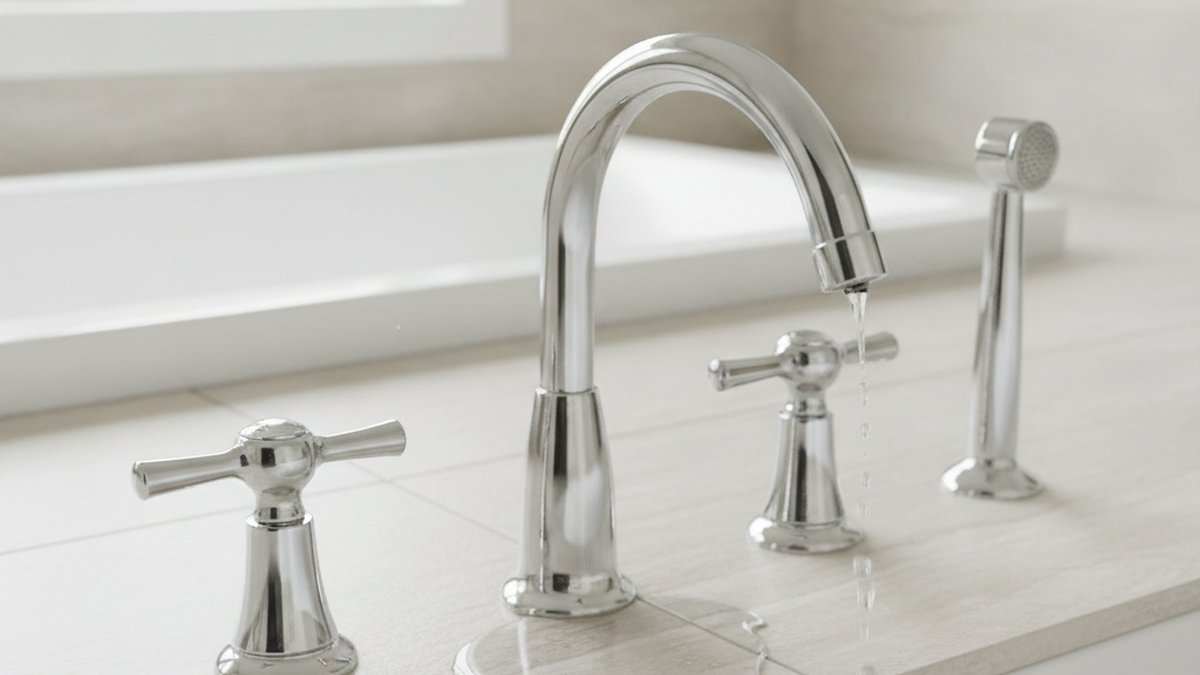
- Widespread faucet (3 separate pieces) + 3-hole sink: No deck plate needed — each piece fills its own hole.
- Centerset faucet (handles + spout on one 4-inch base): The base IS the deck plate; you don’t buy a separate one.
One more real-world reason people add a deck plate even when they technically don’t need it: it makes cleaning easier. A flat plate gives you one smooth surface to wipe instead of a fiddly gap where the faucet meets the counter, which is exactly where toothpaste, hard-water spots, and grime love to collect. If you’re choosing a matte black finish specifically, keep in mind that matte hides water spots far better than polished chrome but shows dust and dried soap a little more — a flat deck plate makes that wipe-down quicker.
How do I know what size deck plate to buy — 4-inch or 8-inch?
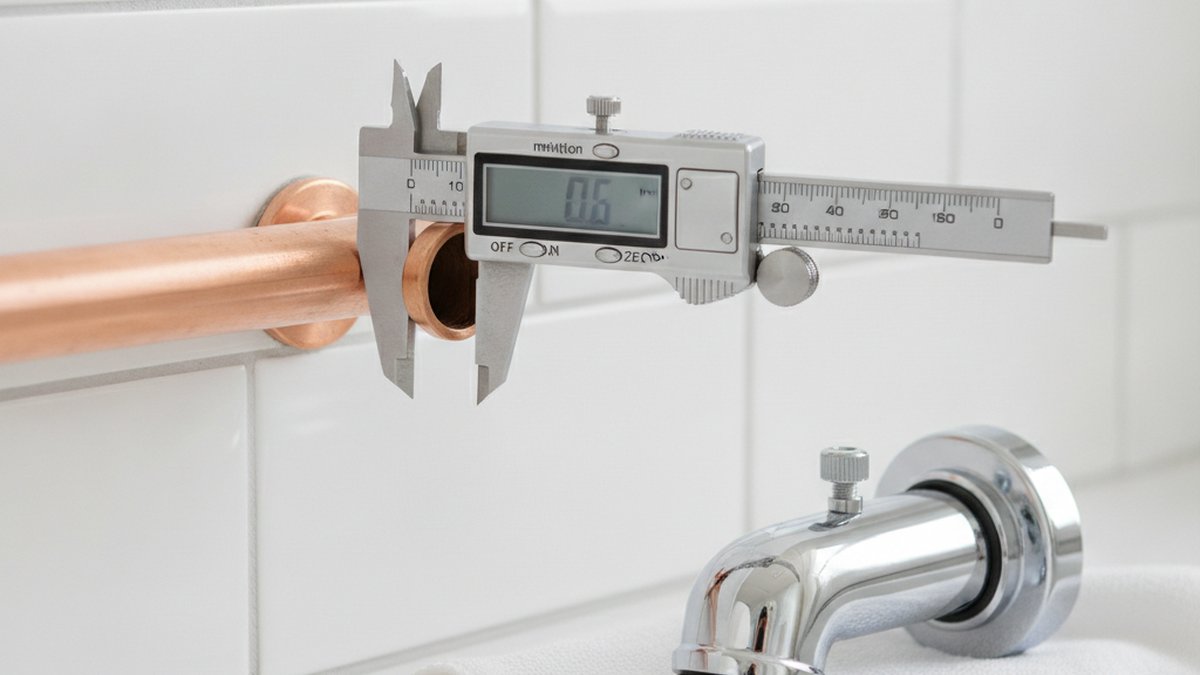
Measure the distance between the centers of your two outermost holes. If it’s about 4 inches, you need a centerset (4-inch) deck plate; if it’s about 8 inches (anywhere from 6 to 16 inches counts as “widespread”), you need an 8-inch deck plate. This single measurement is the most common reason a deck plate gets returned, so do it before you buy.
To measure correctly: take a tape measure and go from the center of the left hole to the center of the right hole — not edge to edge. Standard residential sinks land at either 4 inches (centerset) or 8 inches (widespread/3-hole spread). Most matte black deck plates are sold to match one of these two standards, and many widespread plates are around 10 to 12 inches long to comfortably cover an 8-inch spread with margin.
| Spec to check | Centerset (4″) | Widespread (8″) |
|---|---|---|
| Hole-center distance | ~4 inches | ~6–16 inches |
| Typical plate length | ~5–6 inches | ~10–12 inches |
| Common location | Smaller bath sinks, older homes | Larger vanities, kitchen sinks |
| Faucet type it pairs with | Single-hole faucet | Single-hole faucet |
| Gasket included? | Usually yes | Usually yes |
Also check the plate’s cutout/center hole diameter — it needs to fit over your faucet’s base shank (commonly 1.25 to 1.5 inches). And confirm the deck plate is sold for your fixture type: a kitchen deck plate is often longer and beefier than a bathroom one, even at the same “8-inch” rating.
How do I make sure the matte black actually matches my faucet?
Buy the deck plate from the same brand and product line as your faucet, or at minimum confirm both use the same finishing process — ideally PVD or powder coat. “Matte black” is not one single color; it ranges from a warm near-charcoal to a deep true black with different levels of sheen, and two flat-black parts from different makers will rarely be a perfect match.
This is the single biggest complaint people post after the fact: the faucet is one black, the deck plate is a slightly different black, and in person it’s obvious even though it looked fine on screen. A few rules that prevent it:
- Match the brand and finish name. If your faucet is sold as “matte black,” your deck plate should be the same brand’s “matte black,” not a generic third-party plate.
- Prefer PVD or powder-coated finishes. PVD (physical vapor deposition) bonds the color at a molecular level and resists scratching and fading; powder coat is a durable baked-on layer. Cheap sprayed/painted plates chip at the edges and fade unevenly, so a year later they no longer match even if they did on day one.
- Watch the sheen, not just the color. Some “matte” blacks have a faint satin sheen. A truly flat plate next to a slightly satin faucet reads as mismatched under bright bathroom lighting.
- Buy the faucet and plate together. If you’re already debating finishes, our breakdown of whether matte black finish is out of style in 2026 is worth a read before you commit a whole sink to it.
If you’re putting a matte black faucet over a stainless or contrasting sink, the deck plate also acts as a visual anchor that ties the whole composition together — there’s a great real-world discussion of how that pairing looks day to day in our piece on the matte black faucet with a stainless steel sink verdict.
Can I install a matte black faucet deck plate myself, and how long does it take?
Yes — installing a deck plate is a DIY job that takes 20 to 40 minutes and needs no special tools beyond an adjustable wrench, a towel, and possibly plumber’s putty or a silicone gasket. It’s genuinely one of the easiest plumbing upgrades you can do, because the plate goes on at the same time as the faucet and uses the faucet’s own mounting hardware.
The basic sequence, assuming you’re installing a new single-hole faucet with a deck plate:
- Shut off the water at the supply valves under the sink and open the faucet to release pressure.
- Remove the old faucet (if replacing) by disconnecting the supply lines and loosening the mounting nuts from below.
- Clean the sink deck thoroughly — any old caulk, putty, or hard-water crust will keep the new plate from sitting flat.
- Place the gasket or apply a thin bead of silicone to the underside of the deck plate so water can’t seep into the holes.
- Set the deck plate, then the faucet through the center hole, aligning everything straight.
- Tighten the mounting nut from below — snug but not gorilla-tight, since over-torquing can crack ceramic sinks or distort the plate.
- Reconnect supply lines, turn the water back on, and check for leaks around the base and under the sink.
A few tips that save grief: don’t over-tighten (matte black coatings can scuff if a wrench slips), wipe away excess silicone immediately with a damp cloth before it cures, and if your sink has a separate hole for a soap dispenser or sprayer you actually want to keep, make sure the deck plate doesn’t cover it. If you’re mounting onto a backsplash or wall rather than the sink deck, the approach differs — our guide to mounting a faucet to a backsplash covers that scenario in detail.
Are matte black deck plates harder to keep clean, and will the finish last?
A quality matte black deck plate is easy to maintain and the finish will last for years — but only if it’s PVD or powder-coated, and only if you clean it with the right method. Matte black hides water spots and fingerprints far better than chrome, which is a big reason it stays popular, but it can show dried soap film and dust, and it’s unforgiving of abrasive cleaners.
How to keep it looking new:
- Wipe with a soft damp cloth and mild soap, then dry. That’s 95% of maintenance.
- Never use abrasive pads, scouring powders, or acidic/bleach-based cleaners — they dull and etch the matte coating permanently.
- Skip the vinegar soak on the finish itself; acid that’s fine for descaling an aerator is not fine for a matte black surface.
- Dry after heavy use in hard-water areas to prevent mineral film building up in the flat texture.
On longevity: this is where the finishing process matters most. A reputable matte black deck plate uses the same PVD or powder-coat process as the faucet, which resists corrosion, UV fading, and everyday scratching. Cheaper painted plates are the ones you see fading to a chalky gray or chipping at the edges within a year. When you’re comparing finishes generally, the maintenance logic is similar across colors — our notes on keeping finish faucets looking new apply almost word for word to matte black, just with even less spotting.
How much should a matte black faucet deck plate cost?
Expect to pay roughly $10 to $40 for a standalone matte black deck plate, with brand-matched PVD plates at the higher end and generic third-party plates at the lower end. Many single-hole faucets include a coordinating deck plate in the box, which is the cheapest and most reliable way to guarantee a finish match.
| Option | Typical price | Finish match | Best for |
|---|---|---|---|
| Included with faucet | $0 (bundled) | Perfect | New faucet buyers |
| Same-brand add-on plate | $20–$40 | Excellent | Matching an existing faucet |
| Third-party PVD plate | $15–$30 | Good (verify in person) | Budget, careful shoppers |
| Generic painted plate | $8–$15 | Risky / fades | Temporary fixes only |
The math is simple: a few extra dollars for a brand-matched, PVD-finished plate is cheap insurance against the far more expensive frustration of a mismatched finish that you stare at every morning. If you’re shopping a broader bathroom refresh and watching the budget, our roundup of the best bathroom faucets on sale can help you time the faucet-plus-deck-plate purchase together so the finishes are guaranteed to match.
FAQ
Is a deck plate the same thing as an escutcheon?
Yes. “Deck plate,” “escutcheon,” “base plate,” and “cover plate” all describe the flat cover that hides unused sink holes under a single-hole faucet. Brands use the terms interchangeably, so don’t get thrown off if a product is listed under a different name — check the size and finish, not the label.
Can I use a matte black deck plate with a faucet from a different brand?
You can, but verify the finish match in person first. Matte black varies in shade and sheen between manufacturers, so a different-brand plate may look slightly off next to your faucet. If you can’t see them together before buying, the safest path is a same-brand plate or a faucet that ships with one included.
Will a deck plate cover a hole I want to keep for a soap dispenser?
It can, so plan around it. An 8-inch deck plate spans all three standard holes, which means it covers any side hole you’d otherwise use for a soap dispenser or side sprayer. If you want to keep that accessory, either choose a plate sized to leave the hole exposed or relocate the accessory. A long-spout soap dispenser is one popular pairing — see our take on whether a long-spout soap dispenser is worth it.
Do I need plumber’s putty or silicone under the deck plate?
Use whichever your faucet manufacturer specifies — most modern matte black faucets include a rubber gasket, so you may not need either. If there’s no gasket, a thin bead of clear silicone under the plate keeps splash water out of the holes. Avoid plumber’s putty on porous stone counters, since it can leave an oil stain; silicone is the safer all-around choice.
Does a matte black deck plate fade or rust over time?
A PVD or powder-coated plate resists fading and rust for many years; a cheap painted one can chalk or chip within a year. Stick to plates with a stated PVD or baked finish and a warranty, clean only with mild soap and water, and avoid abrasives. Treated that way, the finish should outlast most other parts of your sink.
What size deck plate do most bathroom sinks need?
Most three-hole bathroom sinks use an 8-inch (widespread) deck plate, while smaller or older sinks use a 4-inch (centerset) plate. Measure center-to-center between your two outer holes before buying — about 4 inches means centerset, about 8 inches means widespread. This one measurement prevents the most common return.
The bottom line
A matte black faucet deck plate is a small, inexpensive part with an outsized impact on how finished your sink looks. Buy one when you’re putting a single-hole faucet on a three-hole sink, measure your hole spread before ordering, insist on a PVD or powder-coated finish that matches your faucet’s exact black, and you’ll get a clean, cohesive result that holds up for years. Skip the generic painted plates — the few dollars you save aren’t worth a finish that fades out of match.
Author’s note: This guide was written by the aleashafaucet product team, who specialize exclusively in faucets and bathroom fixtures. We base our recommendations on hands-on testing of finishes, hole-spread standards, and real installation feedback — not stock-photo guesswork. About aleashafaucet: we design and sell faucets, shower systems, and bathroom accessories with a focus on durable PVD and powder-coated finishes. Our matte black fixtures are finish-tested for corrosion and abrasion resistance and backed by a manufacturer’s warranty, and our deck plates are engineered to standard 4-inch and 8-inch spreads so they match cleanly across our product lines.