If you’ve been shopping for a farmhouse kitchen faucet with pot filler, you’ve probably noticed the two pieces are almost never sold as one unit — and that confuses a lot of buyers. The truth is simple: a “farmhouse faucet” is your main sink faucet styled to suit an apron-front (farmhouse) sink, and a “pot filler” is a separate, jointed cold-water tap mounted on the wall behind your stove. People search for them together because they want a coordinated, high-end look across the whole cooking zone. This guide answers what you actually get, what it costs, whether you truly need both, and how to pick a matched set that won’t leak or look dated.
What Exactly Is a Farmhouse Kitchen Faucet With a Pot Filler?
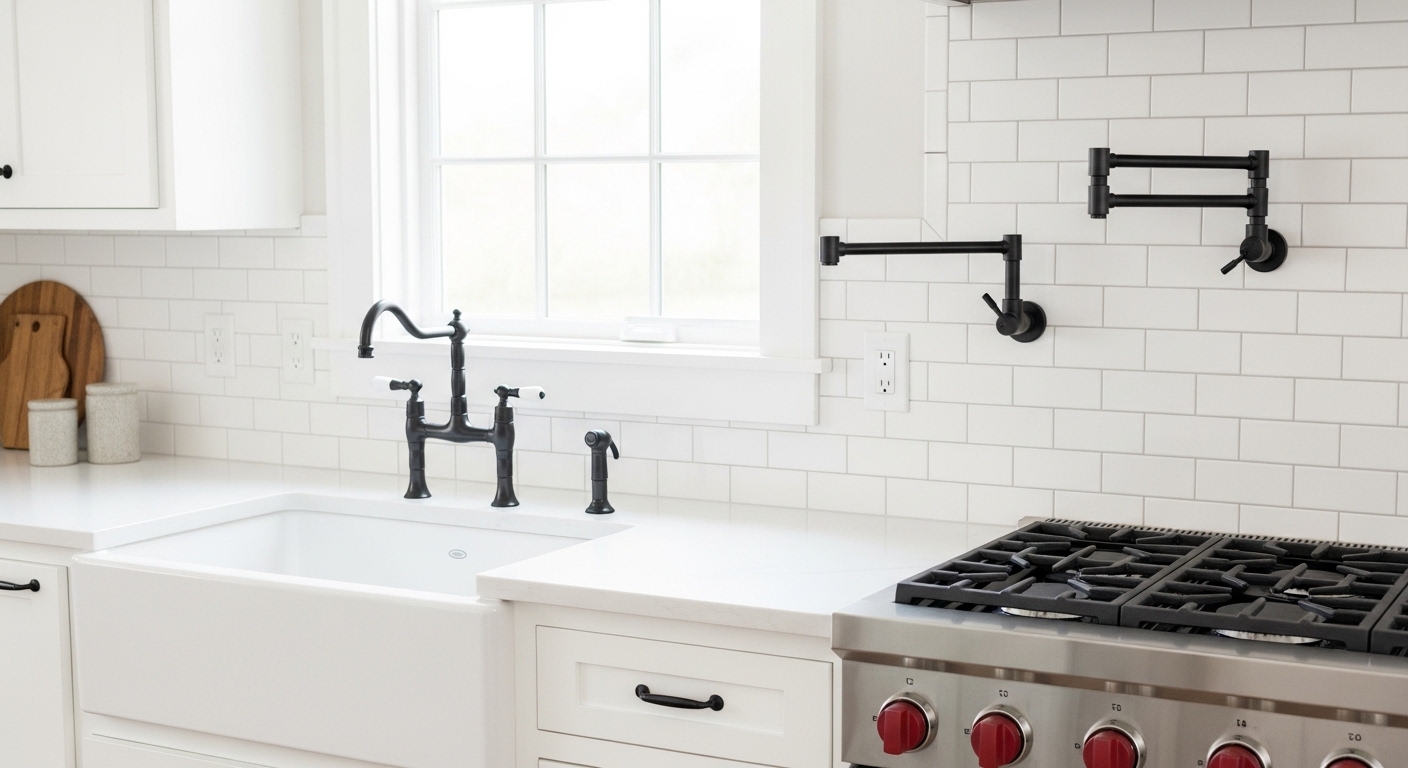
It’s a two-piece setup: a farmhouse-style faucet at your apron-front sink, plus a wall-mounted pot filler over your range. They’re bought together for a coordinated kitchen, but they’re plumbed and installed separately.
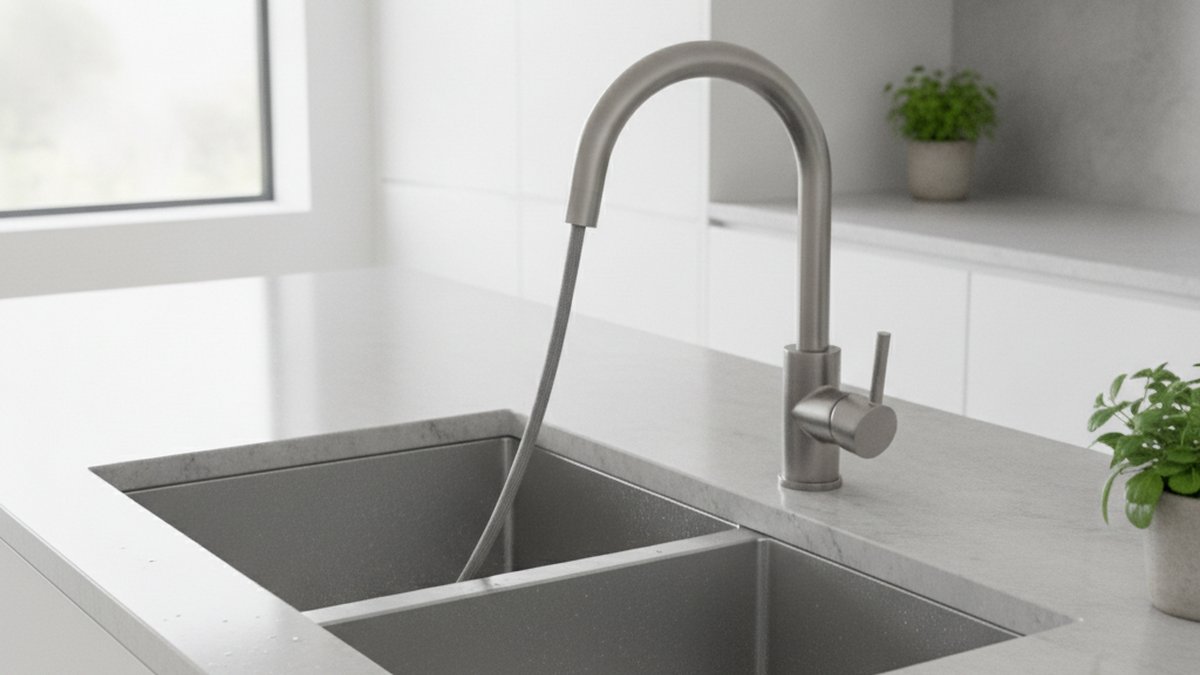
The farmhouse faucet itself usually takes one of two forms. A bridge faucet has two handles connected by an exposed horizontal tube — the classic vintage-farmhouse silhouette. A high-arc gooseneck with a pull-down sprayer is the more modern take that still reads “farmhouse” when paired with an apron sink and a warm finish like brushed brass or oil-rubbed bronze. Both work over a farmhouse sink; the choice is purely about the look you want.
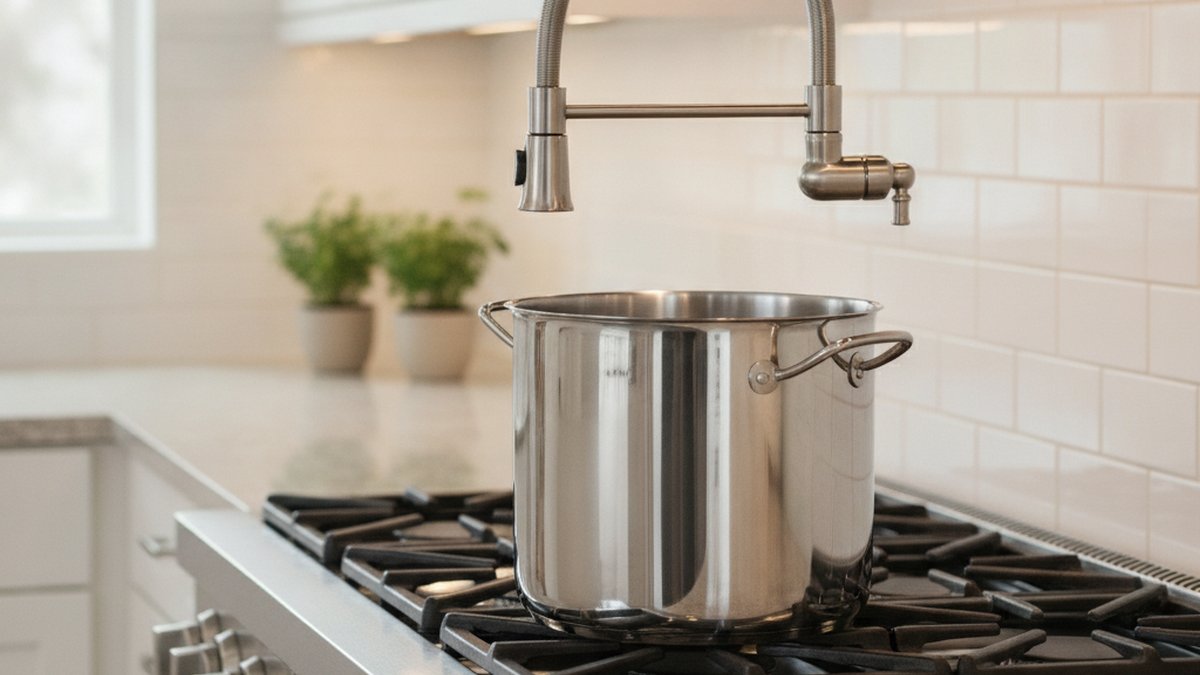
The pot filler is the part people misunderstand. It’s a cold-water-only, double-jointed arm that folds flat against the wall and swings out over a burner so you can fill a pot in place. It doesn’t replace your sink faucet — it saves you from carrying a full, heavy stockpot from the sink to the stove. If you regularly boil pasta, make stock, or can vegetables, that’s a real convenience; if you boil water twice a month, it’s mostly decorative.
Do You Actually Need a Pot Filler, or Is It Just for Looks?
You need a pot filler if you routinely move heavy pots of water and your range isn’t right next to your sink. For everyone else, it’s a nice-to-have that adds a professional, “chef’s kitchen” feel more than daily utility.
Here’s the honest math. A filled 12-quart stockpot weighs roughly 25–28 pounds. Carrying that from a sink across an island to the stove is where spills and strained backs happen. A pot filler eliminates that trip. But it only fills — it doesn’t drain, and you still carry the pot to the sink to empty it. So it solves half the problem, which is exactly why it makes sense for serious home cooks and feels excessive for light ones.
- Great fit: you cook large batches, host often, have a gas or induction range against a wall, and the stove is more than a step or two from the sink.
- Marginal fit: a compact galley kitchen where the sink and stove are already side by side.
- Skip it: a range on an island with no wall behind it (you’d need a deck-mounted pot filler and a dedicated water line run through the island — expensive and rarely worth it).
One practical note buyers miss: a pot filler needs a cold-water supply line run inside the wall behind your range, ideally before tile goes up. Retrofitting one into a finished, tiled wall means opening drywall or tile — so plan it during a remodel, not as a weekend add-on.
Which Faucet Style Suits a Farmhouse Sink Best — Bridge or Pull-Down?
Pick a bridge faucet for a traditional, vintage farmhouse look, and a high-arc pull-down for a modern farmhouse kitchen where you want maximum spray convenience. Both sit well behind an apron-front sink; the deciding factor is your deck space and how much you rinse large cookware.
Apron-front sinks are usually deep (9–10 inches) and wide, so you want enough spout height and reach to work comfortably. A gooseneck pull-down gives you a hose to rinse the far corners and fill pots at the sink; a bridge faucet looks period-correct but the fixed spout means less reach. If you’re weighing farmhouse-friendly styles and finishes more broadly, our rundown of the real kitchen faucet trends for 2026 is a good sanity check before you commit to a finish you’ll live with for a decade.
How Much Does a Farmhouse Faucet and Pot Filler Combo Cost in 2026?
Budget $250–$700 for a matched pair from a value-focused brand, and $700–$1,500+ if you want a premium name like Kohler, Waterstone, or Brizo. The faucet is usually the bigger line item; a solid pot filler runs $90–$300 on its own.
The table below breaks down realistic 2026 price bands and what you get at each tier. These are typical retail ranges for the two pieces combined, before installation.
| Tier | Combined price (faucet + pot filler) | What you typically get | Best for |
|---|---|---|---|
| Value | $250–$450 | Stainless or zinc body, ceramic-disc cartridge, standard finishes (chrome, brushed nickel, matte black) | First kitchen, rentals, budget remodels |
| Mid-range | $450–$800 | Solid brass body, better spray heads, warm finishes (brushed gold, bronze), longer warranty | Most homeowners wanting durability + looks |
| Premium | $800–$1,500+ | Heavy solid-brass construction, designer finishes, lifetime warranty, name-brand cachet | High-end remodels, luxury farmhouse kitchens |
Two cost traps to avoid. First, don’t buy the faucet and pot filler in slightly different finish names from different brands — “matte black” and “flat black” can read as two different colors under kitchen lighting. Second, factor in a plumber’s labor for the pot filler’s in-wall line if you’re not already open to studs; that alone can add $150–$400.
What Finish Should You Choose So the Set Looks Cohesive?
Choose one finish for both pieces and carry it to your cabinet hardware — the faucet, pot filler, and pulls should match or intentionally coordinate. For farmhouse kitchens, brushed gold, matte black, and oil-rubbed bronze are the most popular in 2026 because they add warmth against white sinks and cabinets.
Finish isn’t just looks — it affects upkeep. Matte black hides water spots but shows dust and dried soap film; if you go this route, a coordinating matte black faucet deck plate keeps the base clean when you’re covering unused sink holes on a farmhouse setup. Living finishes like unlacquered brass and copper patina over time, which some buyers love and others hate; know which camp you’re in before you buy. If a warm-metal, artisan look appeals to you, our guide to the best copper faucet kitchen with pull out spray options walks through how those finishes age.
- Brushed gold / champagne bronze: warm, forgiving of fingerprints, very on-trend for farmhouse.
- Matte black: high contrast against white sinks; hides limescale but shows dust.
- Oil-rubbed bronze: deep, traditional, hides water spots well.
- Brushed nickel / stainless: the safe, timeless default that resists fingerprints.
How Do You Install a Wall-Mounted Pot Filler Over Your Range?
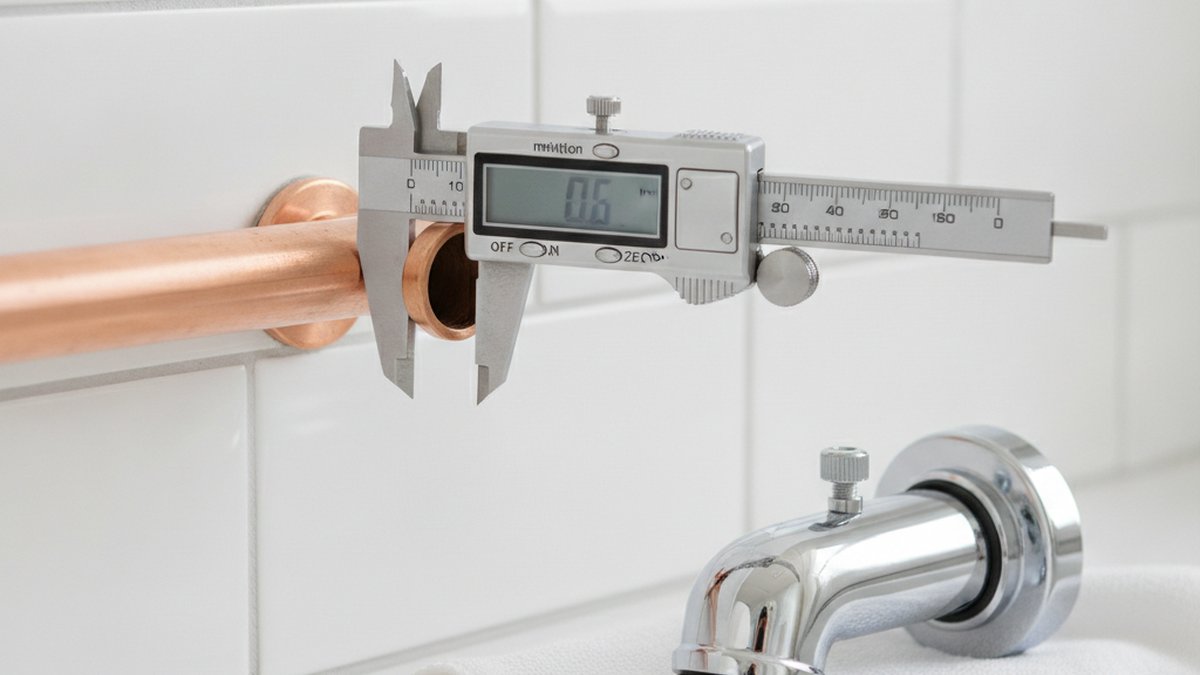
A pot filler installs by running a half-inch cold-water line inside the wall behind your range, terminating at a mounting bracket roughly 18–20 inches above the cooktop, then threading the faucet onto that stub-out. It’s genuinely best done during a remodel when the wall is open.
Here’s the sequence a plumber follows, so you know what you’re paying for:
- Tap into a nearby cold-water line and run new half-inch supply through the wall cavity.
- Secure a backing plate or blocking between studs to carry the faucet’s weight and leverage.
- Set the threaded stub-out to finish flush with your final wall surface (drywall + tile).
- Position the outlet 18–20 inches above the cooktop so the arm clears your tallest stockpot.
- After tile, thread on the pot filler, seal the joint, and pressure-test for leaks before first use.
Because a pot filler has two shut-off points — one at the wall joint and one at the spout — it’s designed to stay dry when folded away. If yours ever drips, it’s almost always the spout washer or the cartridge, the same repair logic that applies to any faucet valve. Always leave the pot filler folded and closed when not in use; unlike a sink faucet, there’s no drain underneath to catch a slow drip.
What Do Real Buyers Complain About — and How Do You Avoid It?
The three most common complaints are pot-filler drips onto the stove, mismatched finishes between the two pieces, and low water pressure at the pot filler. All three are avoidable with the right product choice and installation.
Drips usually trace back to a cheap internal washer or a valve that wasn’t fully closed — buy a pot filler with a quality ceramic-disc valve and always close it firmly. Finish mismatches come from buying the faucet and pot filler separately from different makers; buy both from the same brand and finish line when you can. Low pressure at the pot filler is normal to a degree — it’s cold-only and often on a longer supply run — but it shouldn’t trickle; if it does, check that the supply line wasn’t reduced below half-inch. For sink-faucet spray issues specifically, matching the right replacement faucet sprayer end can restore flow without replacing the whole faucet.
Farmhouse Faucet + Pot Filler: The Quick Buying Checklist
Before you check out, confirm these six things. If all six are yes, you’ve got a set that will look right and last.
- Both pieces share the exact same finish name from the same brand or product line.
- Faucet spout height and reach suit a deep apron-front sink (aim for 8+ inches of clearance).
- Bodies are solid brass or quality stainless — not thin zinc — for longevity.
- Valves are ceramic-disc (not rubber-washer) for drip-free service.
- Both are certified lead-free to NSF/ANSI 372 and meet local flow-rate rules.
- The pot filler’s in-wall line is planned before tile goes up, not after.
FAQ
Can you get a farmhouse faucet and pot filler as a single matched set?
Rarely as one SKU, but many brands sell them in matching finish lines so they look like a set. The two are plumbed separately — one at the sink, one at the wall behind the range — so you buy them as a coordinated pair rather than a single unit. Just confirm the finish name matches exactly on both boxes.
Is a pot filler worth it if my stove is on an island?
Usually not. A standard pot filler is wall-mounted, and an island range has no wall behind it, so you’d need a deck-mounted pot filler plus a dedicated water line run through the island cabinetry — expensive and prone to looking awkward. If your range is against a wall, it’s a much easier and more worthwhile install.
How high should a pot filler be mounted above the cooktop?
Mount the outlet about 18–20 inches above the cooktop surface. That clears your tallest stockpot while still letting the arm fold down flat against the wall. Measure your biggest pot on the tallest burner first, then add a few inches of clearance so you can lift it in and out easily.
Does a pot filler dispense hot water?
No — pot fillers are cold-water only by design. You’re filling a pot that goes onto a hot burner anyway, so hot water isn’t needed, and cold-only plumbing keeps the install simpler and safer. If you want instant hot water, that’s a separate under-sink dispenser, not a pot filler.
Will a pot filler leak onto my stove over time?
A quality pot filler with a ceramic-disc valve stays dry when closed and folded away; leaks almost always come from cheap internal washers or a valve left slightly open. Buy a well-built unit, close it firmly after each use, and keep it folded against the wall. If it ever drips, the washer or cartridge is a quick, inexpensive fix.
What finish lasts longest and looks best over a farmhouse sink?
Brushed nickel and PVD-coated brushed gold are the most durable and fingerprint-forgiving for daily use, while matte black and oil-rubbed bronze deliver the strongest farmhouse contrast against white sinks. Living finishes like unlacquered brass and copper will patina over time — beautiful if you want that aged look, frustrating if you expect a permanent shine.
The Bottom Line
A farmhouse kitchen faucet with pot filler is a genuine upgrade for people who cook big and often, and a stylish splurge for everyone else. Buy both pieces in the same finish line, choose solid-brass bodies with ceramic-disc valves, plan the pot filler’s water line before your tile goes up, and confirm lead-free certification. Do that, and you’ll have a cooking zone that looks like a professional kitchen and holds up for years.
Author note: This guide was written by the aleashafaucet product team, who spend their days testing kitchen and bath fixtures — installing faucets on real apron-front sinks, running valves through open-and-close cycles, and checking finishes for wear. aleashafaucet specializes in faucets, showers, and bathroom fixtures, and we recommend only fixtures that meet recognized lead-free standards such as NSF/ANSI 372 and come backed by a manufacturer warranty. When a product’s certification or warranty isn’t clearly stated, we say so rather than guess.