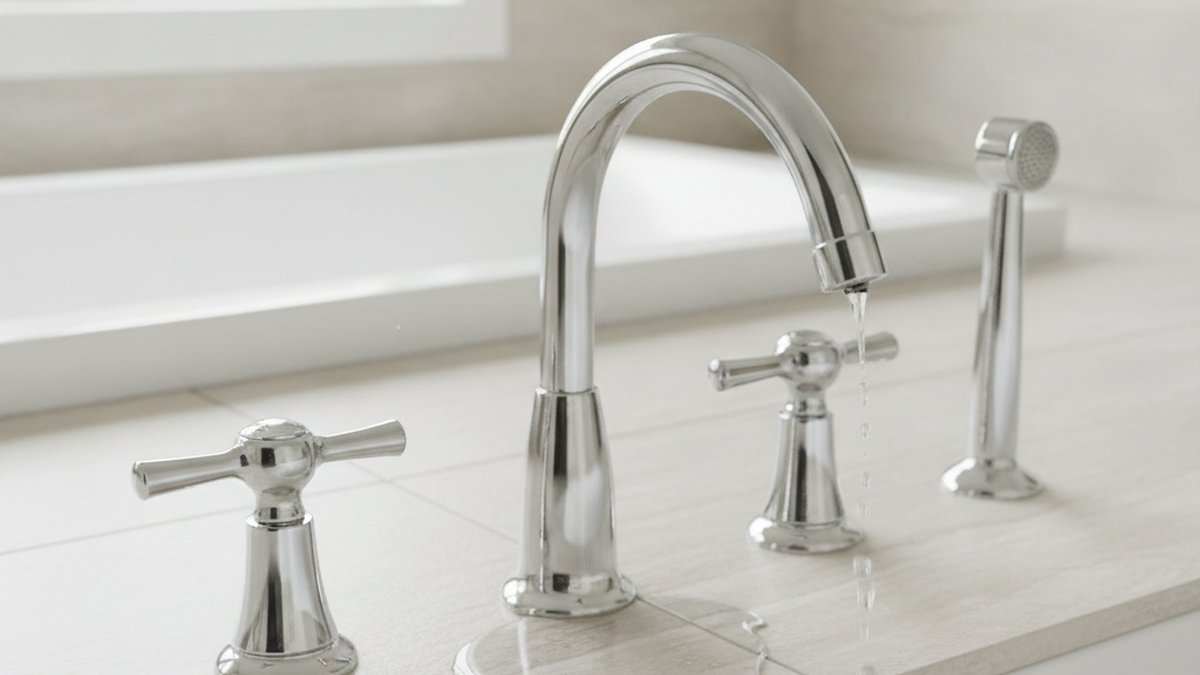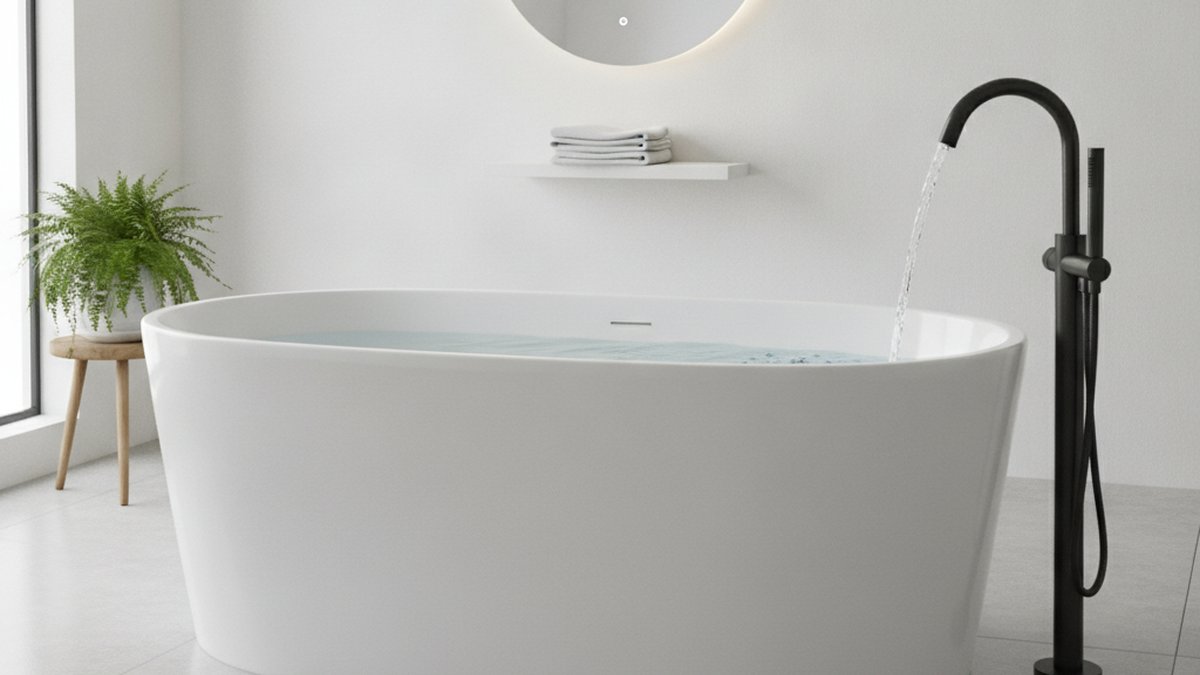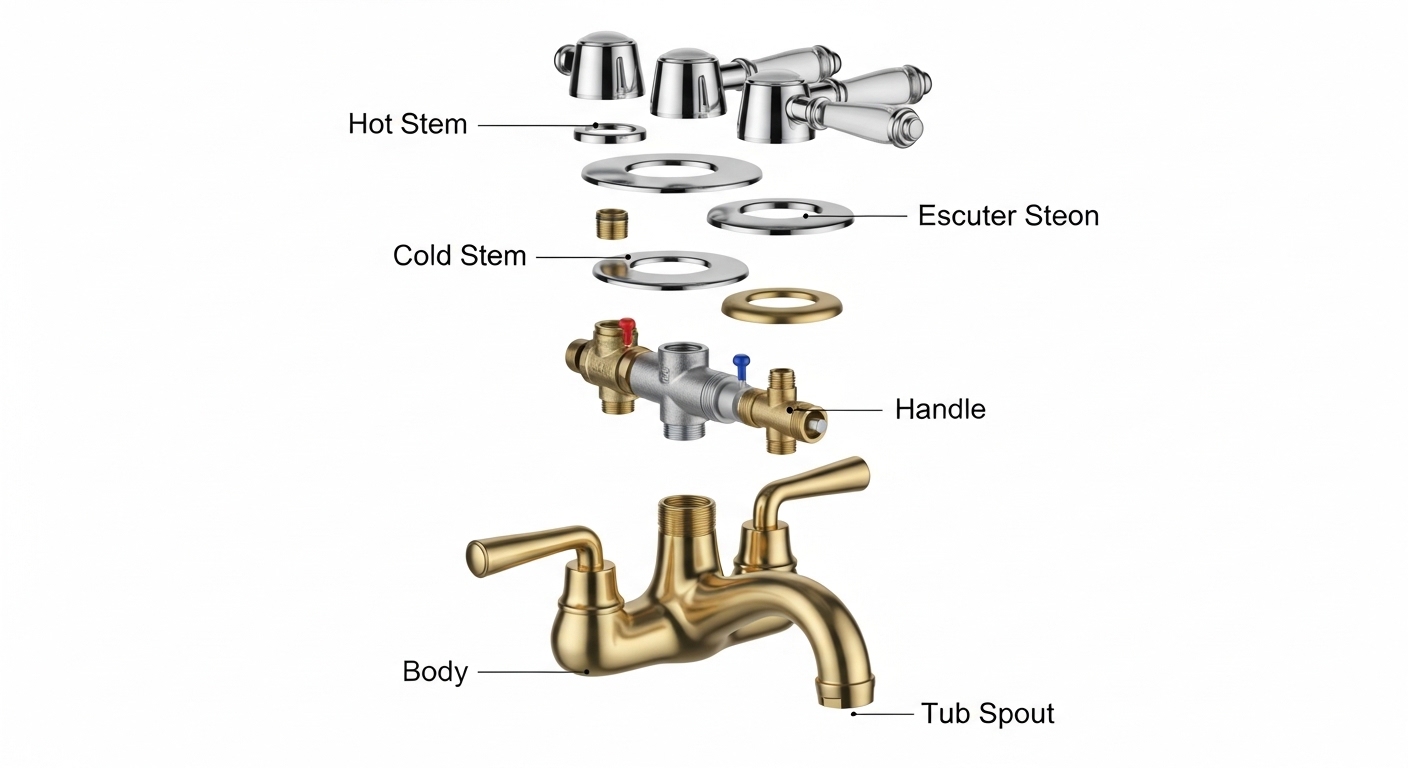
If your tub drips constantly, the handle feels gritty, or hot and cold mix unevenly, the bathtub faucet stem is almost always the culprit. This small brass cartridge sits behind the handle and acts as the on-off (and temperature) gatekeeper for every gallon flowing through your tub spout or showerhead. At Aleasha Faucet, we’ve spent more than a decade engineering, testing, and shipping precision tub valve components to homeowners, plumbers, and renovation contractors across North America — and we wrote this guide to demystify what is honestly the most misunderstood part in any bathroom.
Below you’ll find everything you need to identify, source, install, and maintain the correct bathtub faucet stem for your setup, plus a comparison of the most common stem types, a finish-by-finish breakdown of the handles that pair with them, and a detailed FAQ that answers the questions our customer support team receives every single week.
What Is a Bathtub Faucet Stem and Why Does It Matter?
A bathtub faucet stem — sometimes called a tub valve stem, compression stem, or simply a “stem cartridge” — is the internal mechanism that converts the turning of your tub handle into a precise water flow. When you rotate the handle, the splines at the top of the stem rotate the internal washer or ceramic disc, which lifts off (or seals against) the seat to release water at the volume and temperature you want. Without a functioning stem, no other part of the faucet matters; you would either have no water or, more commonly, a slow leak that wastes hundreds of gallons a month.
Stems are typically made from forged brass with a chrome-plated exterior and either a rubber compression washer or a ceramic disc cartridge at the tip. The body threads into the faucet’s valve body, while the splined top accepts the handle. Length, diameter, thread pitch, broach (spline) count, and seat configuration all vary by brand and model — which is exactly why a “universal” stem rarely exists in practice.
Common Symptoms of a Failing Tub Stem
- Persistent drip from the tub spout even after the handle is fully closed — the washer or O-ring is worn.
- Handle that turns too easily or spins freely — the splines on the stem are stripped.
- Hot water on the cold side (or vice versa) — the stem has been installed backward or the internal seal has failed.
- Squealing, chattering, or hammering noise when you open the handle — a degraded washer is vibrating against the seat.
- Reduced water pressure from the tub or shower — mineral buildup is clogging the stem’s flow ports.
- Visible water seeping around the handle base — the stem’s packing nut or O-ring is no longer sealing.
If you’re seeing any of these symptoms, replacing the bathtub faucet stem is almost always cheaper, faster, and more reliable than replacing the entire valve body in the wall.
The Main Types of Bathtub Faucet Stems
Before you order a replacement, you need to know which family of stems your faucet uses. There are four dominant designs on the U.S. market in 2026, each with its own pros, cons, and brand affinities.
1. Compression Stems
The oldest and most widespread design. A rubber washer at the tip of a threaded brass shaft seals against a brass seat. Compression stems are inexpensive, easy to rebuild, and found on virtually every two- and three-handle tub faucet manufactured before 2000. The downside: rubber washers wear out every 3–7 years, especially in hard-water regions.
2. Ceramic Disc Cartridges
Two polished ceramic discs slide against each other to control flow. Almost frictionless, drip-resistant, and rated for 500,000+ cycles in independent ASME A112.18.1 testing. Aleasha Faucet’s premium tub valves all use ceramic disc cartridges for this reason — they are the industry’s longest-lasting design.
3. Ball Valve Stems
A single slotted metal ball rotates inside the valve body to control both volume and temperature. Common on single-handle tub/shower combos from the 1980s and 1990s. Repairable but requires a brand-specific rebuild kit.
4. Diverter Stems
A specialized stem (usually the center handle on a three-handle setup) that redirects water from the tub spout up to the showerhead. Diverter stems wear out faster than hot/cold stems because of the constant pressure differential.
Bathtub Faucet Stem Comparison Table
| Stem Type | Typical Lifespan | Best For | Repairable? | Average Cost (2026) | Common Brands |
|---|---|---|---|---|---|
| Compression Stem | 3–7 years | Vintage two- & three-handle tubs | Yes — washer kit | $8–$22 | Price Pfister, Sayco, Central Brass |
| Ceramic Disc Cartridge | 15–25 years | Modern tub/shower valves, premium remodels | Replace entire cartridge | $28–$85 | Aleasha, Moen, Hansgrohe, Grohe |
| Ball Valve Stem | 8–12 years | Single-handle 1980s–1990s installs | Yes — rebuild kit | $18–$40 | Delta Classic, Peerless |
| Diverter Stem | 5–10 years | Three-handle tub/shower diverter | Sometimes — washer kit | $12–$35 | Universal multi-fit, Gerber, Kohler |
| Thermostatic Cartridge | 15–20 years | Spa-grade tub fillers, anti-scald shower | Replace entire cartridge | $75–$220 | Aleasha Thermo, Hansgrohe, Axor |
How to Identify the Exact Bathtub Faucet Stem You Need
This is where most DIY replacements go sideways. A stem that looks “close enough” almost never threads properly, and forcing one in can crack the valve body inside your wall. Use this five-point identification process before you order anything.
- Find the brand stamp. Look on the handle, escutcheon, or faucet body for a logo or brand name. If the trim is unbranded (common on builder-grade installs), measure the trim spacing — three handles on 8″ centers usually means Price Pfister or Sayco.
- Count the splines (broach). Remove the handle and count the vertical ridges on top of the stem. Common counts are 12, 16, 20, and 24. The wrong count will not engage the handle.
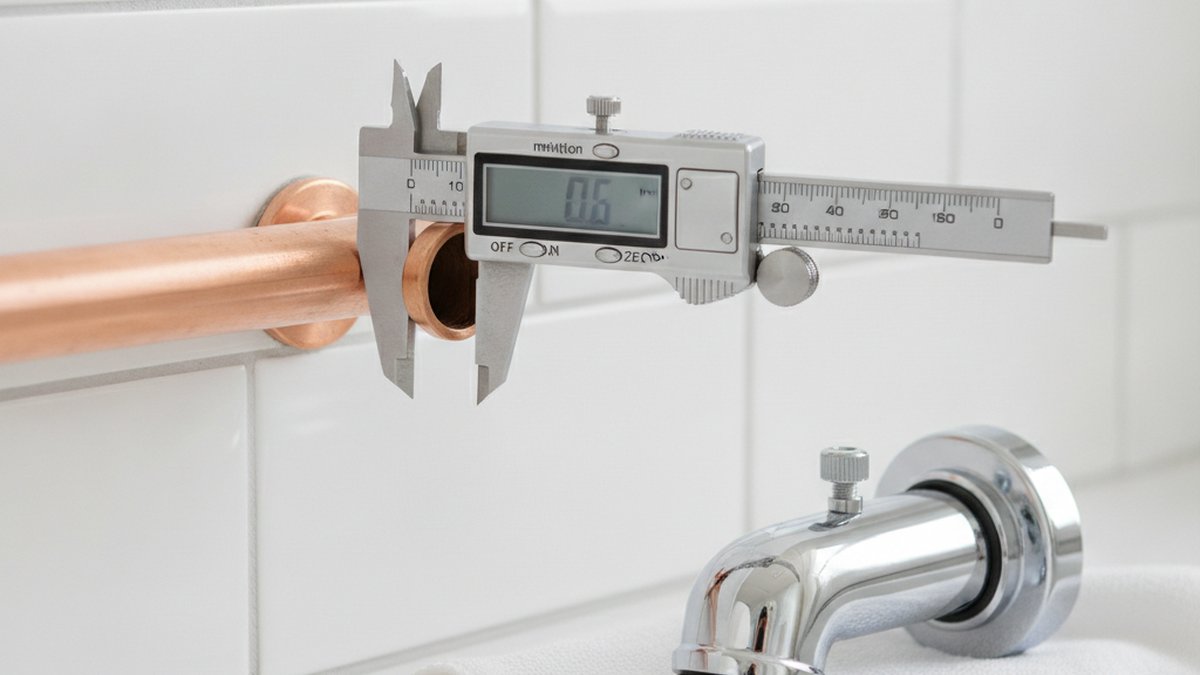
- Measure overall length. Measure from the tip of the seat washer to the top of the splines. Lengths range from 2-1/4″ to 4-1/2″.
- Measure the threaded diameter. Standard sizes are 1/2″-20, 9/16″-24, and 5/8″-18 threads per inch.
- Identify hot vs. cold vs. diverter. Hot stems are usually marked “H,” “RH,” or have a longer thread; cold stems are “C” or “LH.” Diverter stems sit in the middle and have a distinctive flat or grooved tip.
If you’re not sure, snap a photo with a ruler next to the stem and send it to our support team — we identify thousands of stems every month and can usually confirm the correct part within the hour.
Finish and Handle Compatibility for Bathtub Faucet Stems
While the stem itself is hidden behind the wall, the visible handle that mounts to it must match your bathroom’s design language. The good news is that most modern stems use industry-standard broach counts, which means you can swap a builder-grade chrome handle for a designer matte black or brushed gold handle without touching the stem. We cover finish trends in depth in our guides on whether matte black is still in style for 2026 and our deep dive on brushed nickel’s staying power, both of which are worth reading before you commit to a new handle set.
For a clean visual upgrade, pair your replacement bathtub faucet stem with one of these popular 2026 finish combinations:
- Matte Black + Brushed Gold accents — high contrast, modern farmhouse appeal.
- Brushed Nickel monochrome — safe, transitional, hides water spots and fingerprints.
- Polished Chrome — the easiest finish to clean and the most universally compatible with existing trim.
- Champagne Bronze — warm, on-trend, pairs beautifully with cream-colored tubs.
- Polished Nickel — softer than chrome, dressier than brushed nickel, increasingly popular in luxury remodels.
Step-by-Step: How to Replace a Bathtub Faucet Stem
Replacing a tub stem is a 30–60 minute job for an attentive DIYer with basic tools. Here’s the workflow our technicians follow on service calls.
Tools You’ll Need
- Tub socket wrench set (1/2″ through 1-1/4″)
- Phillips and flathead screwdrivers
- Adjustable wrench or channel-lock pliers
- Plumber’s grease (silicone-based, NSF-61 rated)
- White vinegar for mineral cleaning
- Old towel and small bucket
The Procedure
- Shut off the water supply. Use the main shutoff if there are no in-line stops. Open the tub spout to drain residual pressure.
- Pry off the handle index button with a flathead, remove the handle screw, and pull the handle straight off. Apply gentle, even pressure — never pry sideways.
- Unscrew the escutcheon (the decorative wall plate). Slide it off the stem.
- Insert the correct-size tub socket wrench over the stem’s packing nut. Turn counterclockwise to loosen — sometimes a tap from a hammer is needed to break corrosion.
- Pull the old stem straight out. Inspect the brass seat at the bottom of the valve body. If it’s pitted, use a seat wrench to remove and replace it.
- Apply plumber’s grease to the new stem’s threads and O-rings. This single step doubles the lifespan of the seal.
- Thread the new stem in by hand first, then snug it with the socket wrench. Do not overtighten — finger-tight plus a quarter turn is enough.
- Reinstall escutcheon, handle, and index button. Slowly restore water and test.
If you’ve never opened a valve before and you also want to flush out mineral deposits while you’re in there, our walkthrough on flushing bathroom faucets for clean water pairs perfectly with a stem replacement and adds maybe ten minutes to the job.
Why Stems Fail Prematurely (and How to Prevent It)
The number one cause of stem failure is not age — it’s water chemistry. Hard water deposits calcium and lime on the brass seat, which then chews through the rubber washer or scratches the ceramic disc every time the handle turns. Chlorinated municipal water accelerates the degradation of rubber compression washers, while corrosive well water can pit the brass body itself. We cover the broader corrosion picture in our article on why bathroom faucets corrode and how to prevent it, which is essential reading if your home is older than 25 years or your water is unusually aggressive.
Other factors that shorten stem life:
- Over-tightening the handle — this crushes the washer and deforms the seat.
- Using petroleum-based grease instead of silicone-based plumber’s grease.
- Skipping the seat replacement — a fresh stem on a pitted seat will leak within months.
- Letting drips continue for years — the constant erosion enlarges the seat aperture.
- Cross-threading during installation — visible damage to the valve body threads.
Aleasha Faucet’s Approach to Stem Engineering
Every bathtub faucet stem in our catalog is forged from low-lead C46500 brass (compliant with the U.S. Safe Drinking Water Act), machined to a tolerance of ±0.0015″, and pressure-tested at 400 psi — four times typical residential supply pressure. Our ceramic disc cartridges are sourced from the same Bavarian factory that supplies several premium German brands, and each lot is third-party verified to ASME A112.18.1 / CSA B125.1. We back our stems with a transferable lifetime warranty on the cartridge mechanism and a 10-year warranty on the brass body — and you can read our honest take on the industry’s warranty fine print in the truth about lifetime warranty faucets before you compare any spec sheets.
If you’re shopping in the broader tub fixture category, our deep-dive on what a freestanding tub filler is and why you need one is a useful companion piece, especially if your renovation is moving away from traditional wall-mounted tub valves entirely.
When to Repair vs. When to Replace the Entire Valve
A new stem costs $20–$80; a new in-wall valve body plus labor can run $400–$900. Repair the stem when:
- The valve body shows no cracks or thread damage.
- The seat is intact (or replaceable).
- Your current valve already meets modern anti-scald codes (ASSE 1016).
- The trim style still matches your bathroom.
Replace the entire valve when the body is cracked, the threads are stripped, you’re upgrading to a pressure-balancing or thermostatic system for safety, or you’re switching from a three-handle to a single-handle layout. A full valve swap also makes sense if your existing valve predates 1995 and lacks scald protection — modern code requires it in nearly every U.S. jurisdiction.
About the Author
Marcus Reeve is a senior product editor at Aleasha Faucet with 14 years of hands-on plumbing experience, including six years as a licensed master plumber in California (CSLB C-36). He has personally rebuilt more than 2,000 tub valves across residential and light-commercial projects and contributes to Aleasha’s internal QC testing protocols for stem and cartridge components. All technical claims in this article were reviewed by our in-house product engineering team prior to publication.
FAQ
How do I know what brand my bathtub faucet stem is?
Start by looking for a brand stamp on the handle, escutcheon, or faucet body. If nothing is marked, pull the stem and count the splines, measure the length and thread diameter, and compare against a stem identification chart. You can also photograph the stem next to a ruler and submit it to a manufacturer’s identification service — Aleasha offers this for free, and most other reputable brands do too.
Can I replace a bathtub faucet stem myself?
Yes. With a tub socket wrench set, a Phillips screwdriver, and basic mechanical aptitude, most homeowners can complete the job in 30–60 minutes. The hardest part is identifying the correct replacement part. If the stem is seized in the valve body or the threads strip during removal, call a licensed plumber to avoid damaging the in-wall valve.
How much does a bathtub faucet stem cost?
In 2026, replacement stems range from $8 for a basic compression stem to $220 for a thermostatic cartridge. Most ceramic disc cartridges fall in the $28–$85 range, and OEM stems for older brands like Price Pfister or Sayco are typically $15–$35. Always factor in a $4–$10 seat washer kit and a $6 tube of plumber’s grease for a complete repair.
Why is my bathtub faucet still leaking after I replaced the stem?
The most common reason is that the brass seat at the bottom of the valve body is pitted or corroded. A fresh stem cannot seal against a damaged seat. Remove the stem, use a seat wrench to unscrew the seat, and replace it with an identical part (they’re typically $3–$8). Other possibilities include an over-tightened handle crushing the new washer or a stem that’s almost-but-not-quite the right size.
Are bathtub faucet stems universal?
No. Despite what some hardware store packaging suggests, stems vary by brand, model year, spline count, length, and thread pitch. A handful of “universal” diverter stems exist for older three-handle setups, but for hot and cold control stems you should always match the exact part number to your faucet. Using the wrong stem can cause leaks, cross-threading, or permanent damage to the valve body.
How long should a bathtub faucet stem last?
A rubber-washer compression stem lasts 3–7 years under typical use, while a quality ceramic disc cartridge can run 15–25 years. Hard water, chlorine, and over-tightening the handle all shorten lifespan. If you’re replacing a compression stem and want a longer-lasting solution, consider upgrading the entire valve to a ceramic-disc design — the upfront cost pays for itself within a decade.
What’s the difference between a stem and a cartridge?
Functionally, both control water flow, but a “stem” usually refers to the older compression-style component with a rubber washer at the tip, while a “cartridge” refers to a sealed, modern assembly (typically ceramic disc) that’s replaced as a single unit rather than rebuilt. Most modern Aleasha tub valves use cartridges, while pre-2000 tubs predominantly use stems. The terms are sometimes used interchangeably in retail listings, so always confirm by image, not just by name.
Do I need to turn off the main water supply to replace a tub stem?
Yes, unless you have in-line shutoff valves dedicated to the tub (rare in U.S. construction). Shut off the main, open the tub spout to drain residual pressure, and place a towel in the tub to catch any drips. Restoring water before the new stem is fully seated will cause a sudden, messy spray.