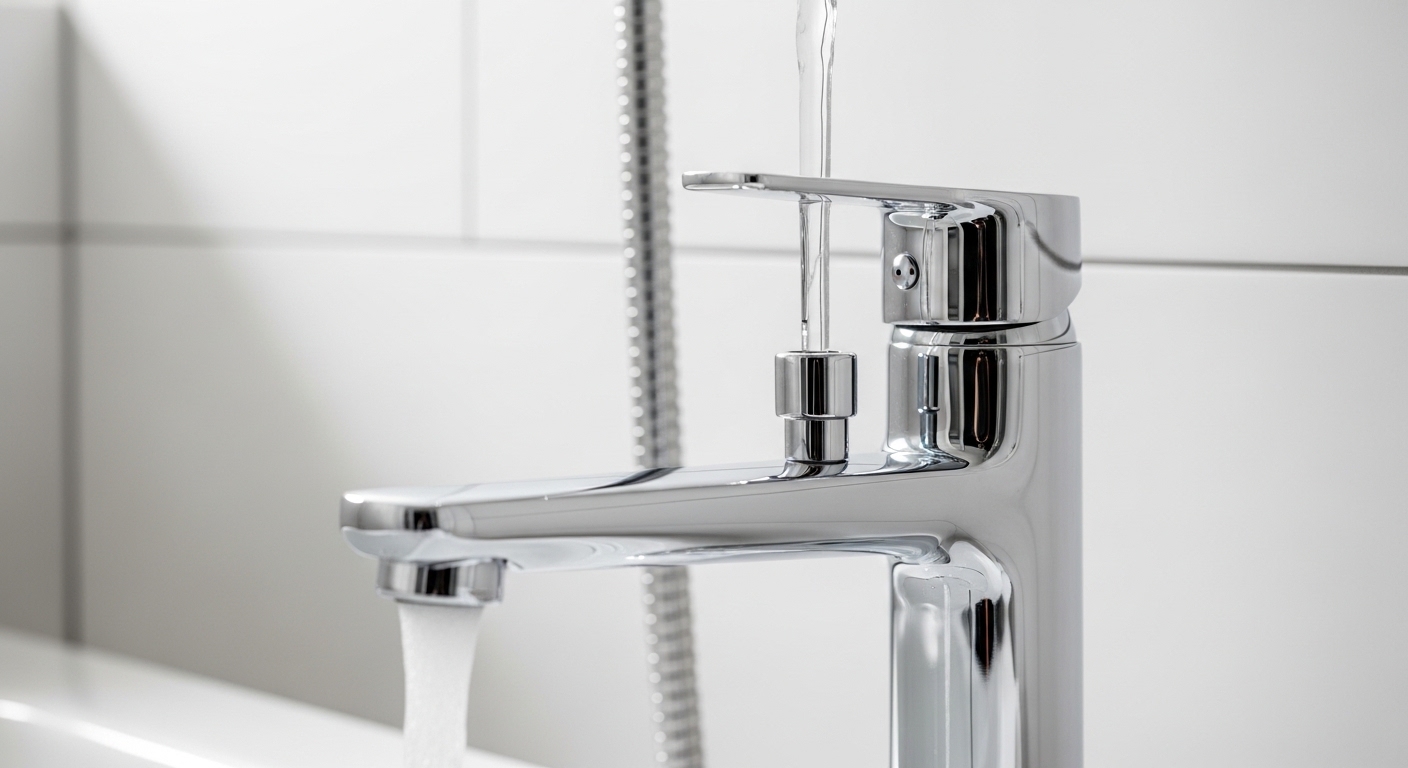
If you’ve ever pulled up a tub spout knob and heard that satisfying click before water rains down from above, you’ve used a bathtub faucet shower diverter — and you’ve probably never thought twice about it. But this unassuming piece of brass and rubber is the single most failure-prone component in a tub-shower combination, and the wrong choice can leave you with weak shower pressure, a dripping spout, and a renovation headache that costs more than the faucet itself. Whether you’re upgrading an aging trim kit, specifying fixtures for a new build, or troubleshooting a stubborn leak, understanding how diverters work — and which model fits your plumbing — is the difference between a five-minute swap and a Saturday lost to YouTube tutorials.
At Aleasha, we’ve engineered tub-shower trim systems for everything from compact guest baths to luxury spa retreats, and the questions we hear most often revolve around diverter mechanics. This guide consolidates a decade of field feedback, plumber interviews, and ANSI/ASME A112.18.1 testing data into one clear resource.
What Is a Bathtub Faucet Shower Diverter and Why It Matters
A bathtub faucet shower diverter is a valve mechanism that redirects pressurized water from the tub spout outlet upward through the riser pipe to the showerhead. When the diverter is in the “down” or “open” position, water flows from the spout to fill the tub. When engaged — usually by pulling up a small brass knob, rotating a lever, or twisting a third handle — the diverter blocks the spout’s outlet, forcing water to take the only remaining path: up the wall and out the shower arm.
It sounds simple, and mechanically it is. But the diverter sits in one of the harshest environments in your home: it cycles between hot and cold dozens of times a day, contends with hard-water mineral deposits, and faces constant pressure differentials. A diverter that fails halfway means water sprays from both the spout and showerhead simultaneously, cutting your shower pressure roughly in half and wasting gallons per minute. Understanding diverter type isn’t optional — it determines compatibility with your existing valve body, your wall depth, and your finish choices.
The Four Main Types of Bathtub Faucet Shower Diverters
Not all diverters are built the same. The right one for your bathroom depends on your rough-in plumbing, the age of your home, and how much wall demolition you’re willing to accept. Here are the four families you’ll encounter when shopping for a bathtub faucet shower diverter in 2026.
1. Tee Diverter (Pull-Up Spout Diverter)
The tee diverter — sometimes called a spout diverter or pull-up diverter — is integrated directly into the tub spout itself. A small knob protrudes from the top of the spout; lift it, and an internal gate seals the spout outlet, sending water upward. This is by far the most common diverter style in North American homes, and it’s the easiest to replace because the entire mechanism lives inside the spout. If it fails, you replace the spout, not the in-wall valve.
2. Two-Valve Diverter
A two-valve setup uses one handle for water temperature mixing and a second, dedicated handle for diverting flow between the tub and shower. This style was popular in mid-century homes and is still specified in some commercial applications. It offers precise control but requires a wider escutcheon and a more complex rough-in.
3. Three-Valve Diverter
The classic three-valve configuration features separate hot and cold handles flanking a central diverter handle. You’ll see this in older homes and certain heritage or transitional designs. It’s robust and serviceable but lacks the thermostatic anti-scald protection mandated by modern code in most jurisdictions.
4. Integrated Pressure-Balance Diverter
Modern Aleasha tub-shower trim kits use a single-handle pressure-balance valve with an integrated diverter — either a lever-style diverter on the trim plate or a push-button mechanism. These comply with ASSE 1016 anti-scald standards and offer the cleanest aesthetic with minimal wall penetrations.
Diverter Type Comparison: Which One Fits Your Bathroom?
| Diverter Type | Best For | Avg. Lifespan | Replacement Difficulty | Approx. Price Range |
|---|---|---|---|---|
| Tee (Pull-Up Spout) | Most renovations, rental units, quick upgrades | 5–8 years | Easy (no wall access) | $25–$90 |
| Two-Valve | Mid-century restorations, commercial | 10–15 years | Moderate (wall access required) | $120–$280 |
| Three-Valve | Heritage homes, traditional aesthetics | 15–20 years | Difficult (full rough-in) | $180–$450 |
| Integrated Pressure-Balance | New construction, modern remodels, code compliance | 15–25 years | Moderate to difficult (specialty valve) | $220–$650 |
How to Tell If Your Bathtub Faucet Shower Diverter Is Failing
Diverters rarely fail catastrophically. Instead, they degrade slowly — and most homeowners adapt to the symptoms without realizing the fix is straightforward. Watch for these warning signs:
- Water leaking from the tub spout while showering. A trickle is annoying; a steady stream means your diverter gate is no longer sealing.
- Weak showerhead pressure compared to when the fixture was new — often the first symptom of a degraded internal seal.
- The diverter knob won’t stay up, dropping back down mid-shower as water pressure overcomes the spring.
- Visible mineral crust around the diverter knob, lever, or spout outlet, especially in hard-water regions.
- Squealing or chattering sounds when engaging the diverter, indicating worn O-rings or a misaligned gate.
- Difficulty pulling up or rotating the diverter handle, which can also point to broader valve corrosion issues described in our guide on why bathroom faucets corrode and how to prevent it.
If you’re seeing two or more of these signs simultaneously, the diverter has reached end of life. For tee-style diverters, that means a new spout. For in-wall diverters, plan on a cartridge replacement or, if the valve body itself is pitted, a full trim refresh.
Choosing the Right Finish for Your Diverter Trim
Finish selection isn’t just cosmetic — it affects how well the diverter ages. Trim plates and spout housings are exposed to soap film, shampoo residue, and the slightly acidic mist of a hot shower. Premium PVD (physical vapor deposition) coatings and brushed metal finishes hold up dramatically better than electroplated alternatives. Here’s what’s trending and what’s enduring in 2026.
Polished Chrome
Chrome remains the workhorse finish for tub-shower diverter trim. It’s affordable, easy to clean, and timeless. Read more about whether it still belongs in modern bathrooms in our analysis of chrome’s standing as a classic finish or a trend of the past.
Matte Black
Matte black diverter trim has dominated design feeds for five straight years, and PVD-coated versions show no signs of fading. The contrast against white subway tile or marble surrounds is striking.
Brushed Nickel and Brushed Gold
Brushed metallics hide water spots better than polished alternatives, making them ideal for hard-water households. They pair beautifully with warmer wood vanities and natural stone.
Rose Gold and Specialty Finishes
Available for statement bathrooms, though specification with matching showerheads and tub fillers is critical to avoid mismatched undertones.
Installation: What to Expect When Replacing a Bathtub Faucet Shower Diverter
The complexity of replacing a bathtub faucet shower diverter depends entirely on which type you have. A tee-diverter spout can be swapped in under 20 minutes with a single tool. An in-wall pressure-balance diverter cartridge replacement might take an experienced DIYer two hours; a full valve body swap typically requires a licensed plumber and access from behind the wall.
Tee Diverter Spout Replacement (DIY)
- Identify your spout’s connection: slip-fit (set screw underneath) or threaded (twists onto a copper or brass nipple).
- Shut off water at the main if you want to be cautious — not strictly necessary for spout swaps.
- For slip-fit spouts, loosen the set screw on the underside with an Allen wrench and pull the spout straight off.
- For threaded spouts, wrap a soft cloth around the spout and rotate counterclockwise.
- Clean any mineral buildup from the copper nipple or brass adapter.
- Apply plumber’s tape to threads (threaded models only) and hand-tighten the new spout, then snug with a wrench guarded by a cloth.
- Test by running water and engaging the new diverter.
In-Wall Diverter Cartridge Replacement
For pressure-balance or thermostatic in-wall diverters, you’ll need the manufacturer’s specific cartridge kit, an Allen wrench set, a cartridge puller (often included or rentable), and either access to the back of the valve or a willingness to work through the trim opening. We strongly recommend reviewing our complete bathtub faucet and drain installation guide before tackling an in-wall diverter project. For homeowners undertaking broader plumbing work, our breakdown of the bathtub faucet stem replacement process covers the underlying valve mechanics in detail.
Compatibility: Will a New Diverter Fit Your Existing Plumbing?
This is where most homeowners get tripped up. Diverter trim kits are not universal — they’re matched to specific valve bodies. Before purchasing, identify:
- Valve manufacturer and series. Look for engraved branding on the existing trim plate or the valve cartridge itself.
- Rough-in depth. Most modern valves accommodate 2-1/2″ to 3-1/4″ of finished wall thickness. Outside that range, you’ll need an extension kit.
- Inlet/outlet configuration. Standard tub-shower valves have a hot inlet, a cold inlet, a top outlet (to shower), and a bottom outlet (to tub).
- Center-to-center spacing on three-valve or two-valve setups, typically 8″ on older homes.
- Code compliance. Most U.S. jurisdictions now require pressure-balance or thermostatic anti-scald protection per ASSE 1016.
Aleasha tub-shower trim kits are designed around a universal pressure-balance rough-in valve, which simplifies finish swaps later — change the trim without ever touching the in-wall plumbing.
Top Diverter Brands Compared
| Brand | Typical Diverter Style | Warranty | Best Known For | Price Tier |
|---|---|---|---|---|
| Aleasha | Integrated pressure-balance + tee spout options | Limited lifetime on finish & function | Premium finishes, modern aesthetics, lead-free brass | $$–$$$ |
| Moen | Posi-Temp pressure-balance | Limited lifetime | Wide availability, serviceable cartridges | $–$$ |
| Delta | Monitor pressure-balance, MultiChoice rough-in | Lifetime | Trim-swap flexibility, DIY-friendly | $–$$ |
| Kohler | Rite-Temp pressure-balance, thermostatic options | Limited lifetime | Designer trim, broad style range | $$–$$$ |
| Hansgrohe | Thermostatic with integrated diverter | Limited lifetime | European precision, multi-function diverters | $$$–$$$$ |
Warranty language matters more than headline coverage. A “lifetime” warranty often excludes commercial use, finish damage from improper cleaners, and consequential water damage. Read the fine print — our deep dive on the truth about lifetime warranty faucets unpacks what’s actually covered.
Materials and Standards: What Quality Actually Looks Like
The phrase “solid brass” gets thrown around loosely. For a diverter you can trust for fifteen-plus years, look for these specifications:
- Lead-free brass certified to NSF/ANSI 372 (≤0.25% weighted lead content).
- Ceramic disc cartridges rated for 500,000+ cycles on the temperature side, with EPDM diverter seals rated for 100,000+ engagements.
- ASME A112.18.1 / CSA B125.1 compliance for plumbing fixture fittings.
- ASSE 1016 for pressure-balance or thermostatic anti-scald protection.
- WaterSense labeling for showerhead compatibility (≤1.8 GPM in many cases).
- PVD finish coating for scratch and corrosion resistance — particularly important for non-chrome finishes.
Every Aleasha tub-shower diverter trim is third-party tested to these standards and ships with a verified compliance certificate. Our finish coatings undergo 200-hour salt-spray testing per ASTM B117.
Conversion-Focused Recommendations: What to Buy in 2026
If you’re shopping right now, here’s how to narrow the field:
- For a quick aesthetic upgrade: Replace just the tub spout with a matching tee-diverter model in your preferred finish. Budget: $40–$120.
- For a mid-project refresh: Swap the trim kit (handle, escutcheon, spout, showerhead) while keeping the existing rough-in valve. Budget: $250–$650.
- For a full renovation: Specify a pressure-balance valve with integrated diverter and modular trim — this future-proofs your bathroom for one or two finish refreshes over the next 20 years. Budget: $600–$1,400 for trim and valve, plus installation.
- For a luxury build: Consider a thermostatic valve with a three-way or four-way diverter that routes water between the showerhead, handheld, body sprays, and tub spout. Budget: $1,500–$3,500+.
About the Author and Aleasha’s Engineering Commitment
This guide was written by the Aleasha product editorial team, which includes a master plumber with 22 years of residential and light-commercial experience, a certified kitchen and bath designer (CKBD), and our in-house product engineers responsible for tub-shower trim development. Every recommendation reflects hands-on installation data, manufacturer service-call reports, and the IAPMO/UPC and IPC code requirements in effect for 2026.
Aleasha designs and manufactures faucets and bathroom fixtures specifically for North American plumbing standards, with all tub-shower diverter components tested against ASME A112.18.1, NSF/ANSI 372, and ASSE 1016. Our trim kits carry a limited lifetime warranty on both function and finish under residential use, and our customer service team includes licensed plumbers who can talk you through compatibility questions before you order.
FAQ
How long does a bathtub faucet shower diverter typically last?
A tee-style pull-up diverter integrated into the tub spout typically lasts 5–8 years before the internal gate seal degrades. In-wall pressure-balance diverters last 15–25 years, with the cartridge replaceable every 10–15 years in hard-water regions. Mineral content, water pressure, and frequency of use all influence lifespan.
Can I replace just the diverter without replacing the whole faucet?
Yes, in most cases. For tee diverters, you replace the entire tub spout, which is fast and inexpensive. For in-wall diverters, you can usually replace just the cartridge if the valve body is in good condition. Only when the valve body itself is pitted or cracked do you need a full rough-in replacement.
Why does water still come out of my tub spout when the shower is on?
This is the classic sign of diverter failure. The internal gate inside the diverter is no longer fully sealing the spout outlet, allowing water to escape through both paths. Replace the spout (for tee diverters) or the cartridge (for in-wall models). Don’t ignore it — you’re losing significant shower pressure and wasting water.
Are pressure-balance diverters required by code?
In most U.S. jurisdictions, yes. Both the Uniform Plumbing Code (UPC) and International Plumbing Code (IPC) require anti-scald protection — either pressure-balance or thermostatic — on tub-shower valves in residential construction. Older three-valve setups are typically grandfathered until you replace the valve body, at which point current code applies.
What’s the difference between a diverter and a transfer valve?
A diverter sends water from one outlet to another (e.g., spout to showerhead), and any leftover water from the inactive outlet usually trickles out. A transfer valve, used in more complex shower systems, cleanly routes water between multiple outlets — showerhead, handheld, body sprays — with no cross-flow. Transfer valves are common in luxury multi-function showers.
Can hard water damage my bathtub faucet shower diverter?
Absolutely. Calcium and magnesium deposits build up inside the diverter mechanism, preventing the gate from seating properly and causing the knob to stick. If you have hard water above 7 grains per gallon, consider a whole-house water softener or check our guide on tap water filter options for point-of-use solutions that also extend fixture life.
Should I hire a plumber or DIY my diverter replacement?
Tee-diverter spout replacements are squarely DIY territory — most homeowners can complete the swap in under 30 minutes with basic tools. In-wall diverter cartridge replacements are intermediate DIY; full valve body replacements should be left to a licensed plumber unless you have advanced plumbing experience and proper wall access.