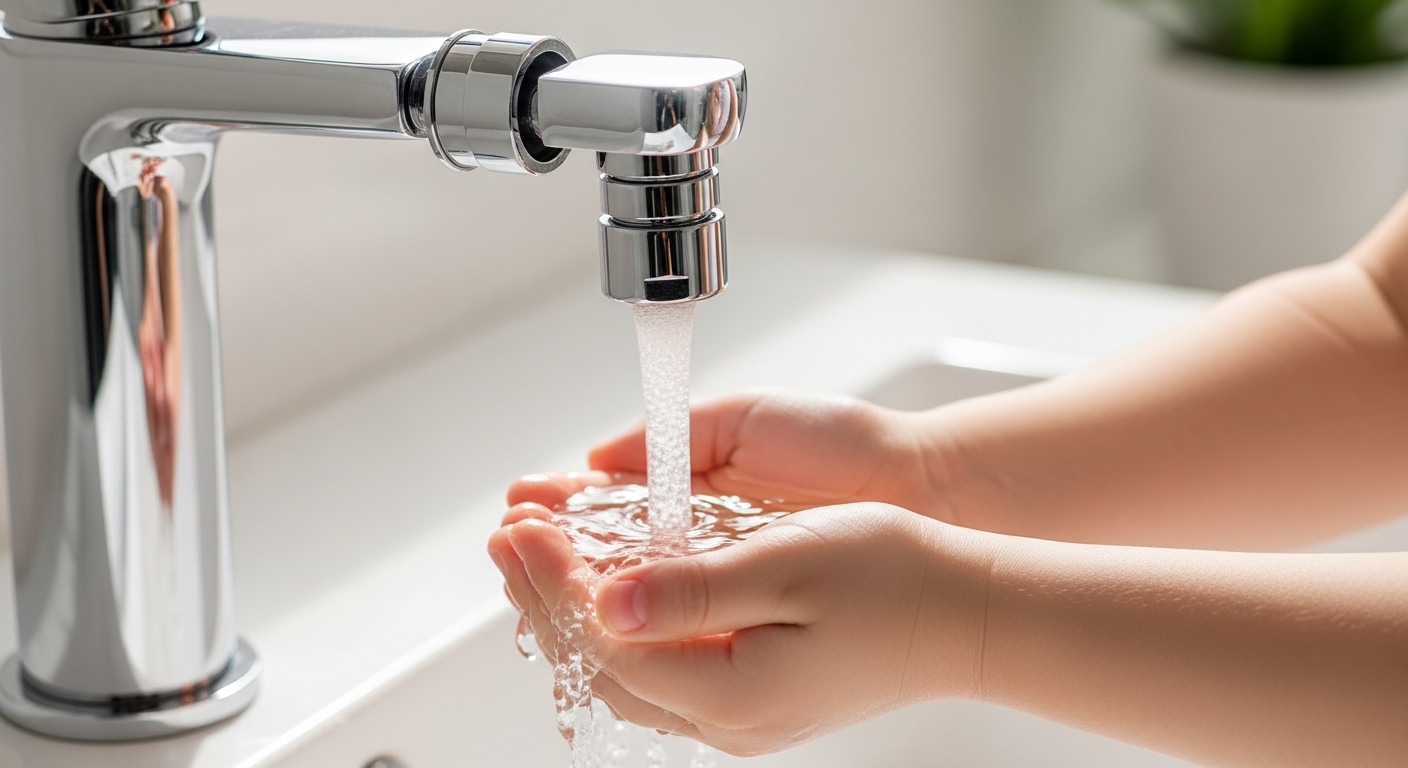
A faucet extender rotating attachment is one of those tiny, cheap upgrades that quietly fixes a daily annoyance you’ve stopped noticing — water that splashes the back of the basin, a spout that’s too short to fill a tall pot, or a sink that’s just out of reach for little hands. Instead of replacing the whole faucet (a $150–$400 job with a plumber), you spend the price of a sandwich and twist on an extension that swivels, angles, and lengthens your existing stream. The catch is that the market is flooded with near-identical-looking parts of wildly different quality, so the real question isn’t “do they work” — they do — it’s which one fits your faucet and won’t crack or leak in three months.
What exactly is a rotating faucet extender, and what does it do?
A rotating faucet extender is a small adapter that threads onto the tip of your faucet (where the aerator screws in) and adds length plus a swiveling joint so you can rotate and angle the water flow. In plain terms: it makes a short, fixed spout reach farther and point where you want — toward your hands, a bottle, or the far corner of the sink — without touching the plumbing.
Most units add roughly 2 to 4 inches of reach and pivot on a ball joint that turns a full 360°, and many advertise 720° because the head spins independently of the stem. Inside, the better ones keep an aerator so you still get a soft, splash-free stream rather than a hard jet. They’re sometimes sold as “kids faucet extenders,” “sink handle extenders,” or “splash-proof extension nozzles,” but mechanically they’re the same family of part.
- Reach: pushes the stream 2–4 inches forward, ideal for shallow or wall-set basins.
- Rotation: 360°/720° swivel so you aim water at hands, dishes, or a glass instead of the drain.
- Splash control: built-in aerator softens flow and cuts back-splash off the basin.
- Accessibility: brings water within reach for kids, shorter family members, or anyone with limited mobility.
Do I really need one, or is my faucet fine the way it is?
You need one if you regularly reposition your hands, the dish, or your whole body to get under the water — that’s the daily friction a rotating extender erases. If your stream already lands where you want and fills what you need, skip it; this is a problem-solver, not a decoration.
Here are the specific, real-world situations where people buy one and don’t regret it:
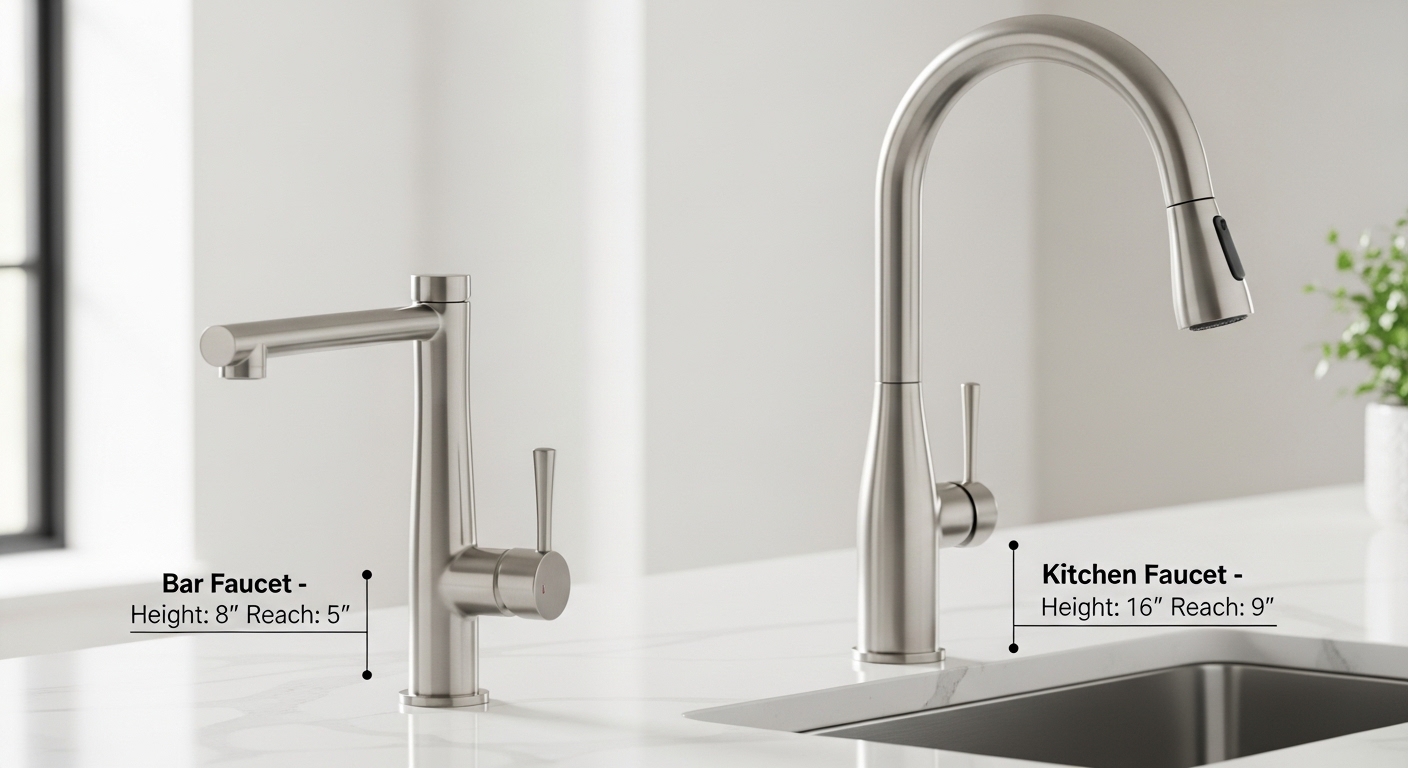
- The “too far back” sink: on many vanities and bar sinks, the faucet is mounted close to the wall and the water hits the back of the basin instead of the center. An extender pulls the stream forward over the drain.
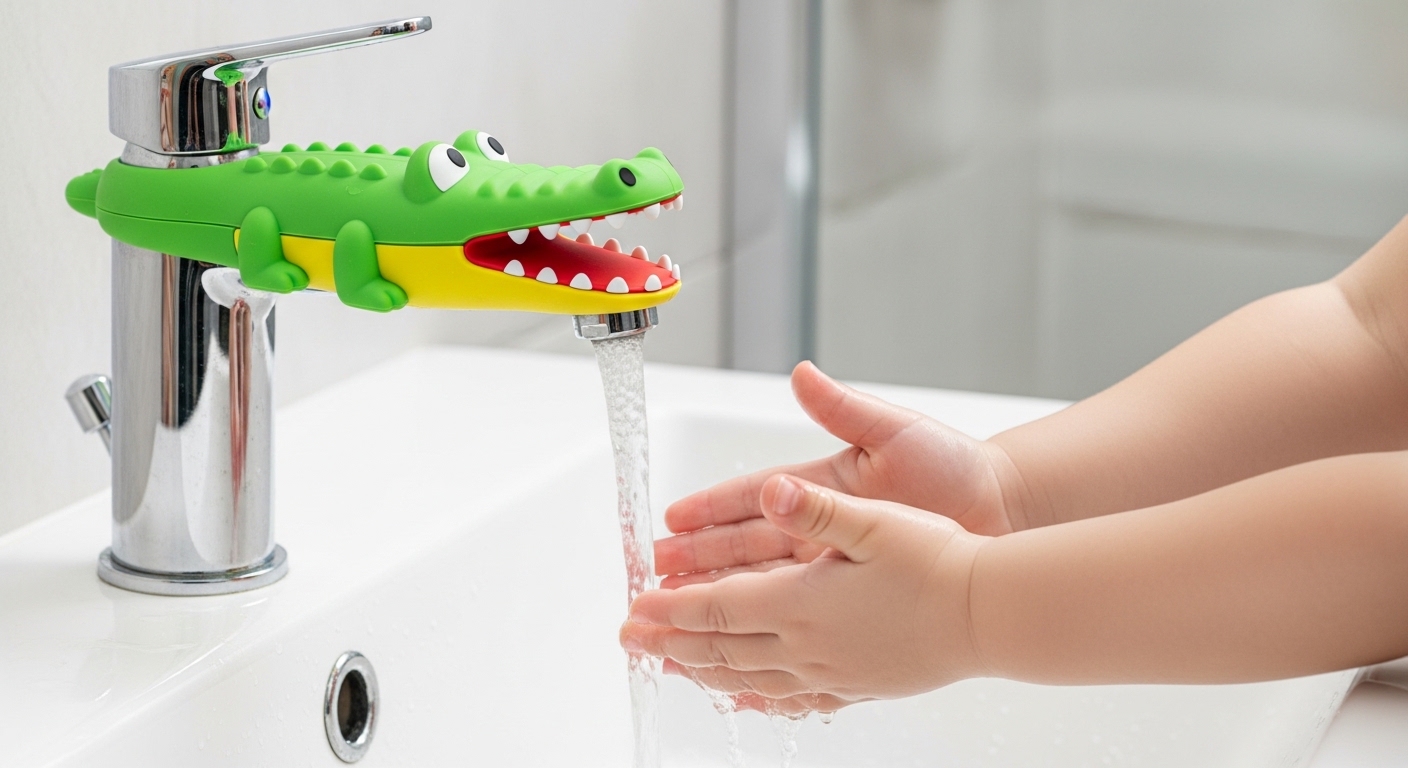
- Kids who can’t reach: toddlers learning to wash hands often lean their whole torso onto the counter. A downward-angled extender brings the water to the front edge of the sink so they can reach without climbing.
- Filling tall or wide containers: water bottles, watering cans, and pots that won’t fit under a low spout. Angle the extender out and up and you gain clearance.
- Hard-to-rinse basins: deep utility sinks or awkward corners where you’re constantly fighting the fixed angle.
One honest caveat: an extender adds a joint, and every joint is a potential leak point and a spot for mineral buildup. If you have very hard water, you’ll need to clean it periodically — the same way you would a standard aerator. If your faucet is already perfectly positioned, adding a part just gives hard water one more place to crust up.
How do I know which size and thread will fit my faucet?
Check the threads on your current aerator: most household faucets use a 22mm male (outer) or 24mm female (inner) thread, and the vast majority of rotating extenders are made to match those two sizes, often with a small rubber adapter washer in the box. If yours fits a standard aerator, an extender will almost certainly fit too.
Here’s the quick way to confirm before you buy:
- Unscrew your aerator by hand (turn it toward you/counterclockwise as you face up at it). If it’s stuck, that’s a hard-water issue worth addressing first — our guide on a clogged faucet aerator full of hard-water buildup walks through freeing it without damage.
- Look at the threads. Threads on the outside of the faucet tip = male (commonly 22mm). Threads recessed inside = female (commonly 24mm).
- Measure across the threads with a ruler or caliper if you’re unsure — 22mm and 24mm are only 2mm apart but it matters.
- Buy a “dual-fit” extender. Most quality kits include both an internal and external adapter plus washers, so they cover both standard sizes.
Faucets that are not a slam dunk: pull-down sprayers (the aerator is part of the spray head), touchless/sensor faucets, and some European or designer fixtures with proprietary tips. If you’ve got an unusual fixture, measure first or you’ll be returning it. And if your aerator is so corroded you can’t move it, deal with that root problem — corrosion tends to come back; see why bathroom faucets corrode and how to prevent it.
What’s the difference between cheap and good rotating extenders?
The difference is almost entirely material and the swivel mechanism: a good extender is lead-free brass or food-grade ABS with a stainless or brass ball joint and a real aerator, while a cheap one is plated zinc or brittle plastic with a loose O-ring that leaks and a joint that goes floppy. They look identical in photos; they don’t perform identically over a year.
Here’s how the common types stack up:
| Type | Material | Typical price | Best for | Watch out for |
|---|---|---|---|---|
| Budget plastic swivel | ABS plastic, plastic joint | $5–$10 | Kids’ bathroom, light/occasional use | Joint loosens, can crack if over-tightened |
| Mid-range metal-look | Zinc alloy, chrome plated | $10–$18 | Renters wanting a metal look on a budget | Zinc can corrode; check it’s lead-free |
| Quality brass swivel | Lead-free brass, brass/SS ball joint | $15–$30 | Daily-driver kitchen/bath, hard water | Slightly pricier; confirm finish matches faucet |
| Filter-style extender | ABS + replaceable filter cartridge | $15–$25 | Basic sediment reduction at the tap | Filter is light-duty, not a real water filter |
A note on that last row: some extenders bundle a tiny “filter” that catches visible sediment and rust flakes. It’s better than nothing, but don’t confuse it with proper filtration. If water quality is your actual goal, a dedicated solution beats a gimmick nozzle — compare your options in our tap water filter buyer’s guide and the breakdown of how filter faucets compare to standard faucets.
The single most important spec for a part that touches your drinking and cooking water is that it’s lead-free and certified to a recognized standard (look for compliance with NSF/ANSI 61 and 372, the U.S. Safe Drinking Water Act lead limits). Cheap unbranded zinc parts often skip this. If you care about what’s in your water, it’s worth knowing how to identify lead-free bathroom faucets and applying the same logic to any add-on.
How do I install a rotating faucet extender? (No plumber needed)
You install it by hand in about a minute: unscrew the old aerator, fit the matching adapter and washer, then thread the extender on snug — no tools, no shutting off the water. It’s genuinely one of the easiest upgrades in the house.
- Remove the existing aerator. Turn it counterclockwise by hand. If it won’t budge, wrap it in a cloth and use slip-joint pliers gently, or soak the tip in white vinegar to dissolve mineral grip.
- Pick the right adapter. Match your faucet’s thread (22mm external or 24mm internal) using the included pieces. Seat the rubber washer — this is what actually seals it.
- Hand-tighten the extender. Thread it on clockwise until snug. Do not crank it with pliers; you’ll crush the washer or crack plastic threads. Snug-plus-a-nudge is enough.
- Test for leaks. Run the water at full pressure and check around the threads. A drip almost always means the washer isn’t seated or the extender is cross-threaded — back it off and try again.
- Set your angle. Rotate the swivel head to your preferred position. That’s it.
If, after install, the water is suddenly hard to turn on or the flow feels weak, the cause is usually a pinched washer or trapped debris, not the faucet itself. Our piece on why a faucet gets hard to turn covers the likely culprits.
Will a rotating extender lower my water pressure or waste water?
A quality rotating extender shouldn’t noticeably drop your pressure, and because it keeps an aerator, it can actually reduce water use — aerated streams mix in air, so you get good rinsing feel at a lower flow rate. The exception is a cheap unit with a too-narrow internal channel, which can choke flow and feel weak.
Look for a flow rate stamped on the box, usually 1.5 to 2.2 GPM (gallons per minute). A 1.8 GPM aerated extender feels as strong as an old 2.5 GPM faucet while using less water — a small but real saving over a year of daily use. If trimming consumption is a priority, pair this thinking with our tips on how to reduce water waste with your faucet.
If you do notice weak flow after installing one, the most common reasons are: a partially clogged aerator screen (rinse it), a kinked supply line that was already marginal, or a bargain extender with a restrictive bore. Swapping to a brass unit with a standard aerator usually restores normal feel.
Rotating extender vs. replacing the faucet — which makes sense?
Get the extender if your faucet works fine and you only need to change where the water goes; replace the faucet if it leaks, drips, looks dated, or the finish is failing. The extender is a $10–$25 reach-and-angle fix, not a cure for a tired or broken fixture.
| Situation | Better choice | Why |
|---|---|---|
| Water lands too far back / too low | Rotating extender | Fixes aim and reach for a few dollars in 60 seconds |
| Kids can’t reach the water | Rotating extender | Angles the stream to the front of the basin |
| Faucet drips, leaks, or won’t shut off | Repair or replace faucet | An extender can’t fix internal cartridge/valve failure |
| Finish is peeling or corroded | Replace faucet | Cosmetic and structural — an add-on won’t hide it |
| You want a fundamentally better faucet (pull-down, etc.) | Replace faucet | Upgrade the fixture; see our pull-down guide |
If you’ve landed on “the faucet itself is the problem,” an extender is the wrong tool — you’ll want a real upgrade. Our overview of pull-down kitchen faucets in 2026 is a good next stop, since a pull-down spray head solves reach and angle problems permanently and adds a sprayer your extender can’t match.
How do I keep a rotating extender working and leak-free?
Keep it working by cleaning the aerator and swivel monthly in hard-water areas and never over-tightening it — mineral buildup and a crushed washer are the only two things that reliably kill these parts. Both take five minutes to prevent.
- Descale monthly: unscrew the head, soak it in white vinegar for 15–30 minutes, and brush the aerator screen. Hard water clogs the tiny holes fast.
- Don’t gorilla-grip it: hand-tight plus a small nudge. Over-tightening cracks plastic threads and deforms the seal washer.
- Replace the washer if it drips: a 10-cent rubber washer fixes 90% of thread leaks.
- Match the finish: chrome, brushed nickel, matte black, and gold extenders exist — pick one close to your faucet so it doesn’t look like an afterthought.
Author note & why trust this guide
This guide was written by the product team at aleashafaucet, where we design, bench-test, and sell faucets and fixtures full-time. We pressure-test our threaded components and aerators against recognized drinking-water standards (including NSF/ANSI 61 and 372 lead-content limits) and back our fixtures with a manufacturer warranty, because a part that touches your water should be held to the same bar as the faucet it screws onto. Everything above reflects what we see in real returns, real installs, and real hard-water failures — not spec-sheet theory.
FAQ
Will a rotating faucet extender fit any faucet?
It fits almost any standard faucet that takes a removable aerator — typically 22mm external or 24mm internal threads, and most kits include adapters for both. It generally will not fit pull-down spray heads, sensor/touchless faucets, or some proprietary designer tips. Unscrew your current aerator and check the threads before buying.
Are rotating faucet extenders safe for drinking water?
Yes — if you buy a lead-free brass or food-grade ABS model certified to drinking-water standards (NSF/ANSI 61 and 372). Avoid unbranded zinc-alloy parts with no certification, since cheap metal can leach into water. Treat the extender like any fixture that contacts your water and confirm it’s lead-free.
Do they reduce water pressure?
A good one won’t noticeably reduce pressure, and its built-in aerator can lower water use while keeping the stream feeling strong. Weak flow after installing usually means a clogged aerator screen or a cheap, narrow-bore unit — clean it or upgrade to a brass model with a standard aerator.
How long do faucet extenders last?
A quality brass extender can last for years with monthly descaling; budget plastic units often last several months to a couple of years before the swivel loosens or the threads wear. The two things that shorten their life are hard-water buildup and over-tightening, both of which are easy to avoid.
Can a rotating extender stop my sink from splashing?
Often, yes. Splashing usually happens when the stream hits the basin at a bad angle or too hard; a rotating extender lets you aim the flow over the drain and its aerator softens the stream, which cuts back-splash. If splashing continues, your basin may simply be too shallow for the faucet height.