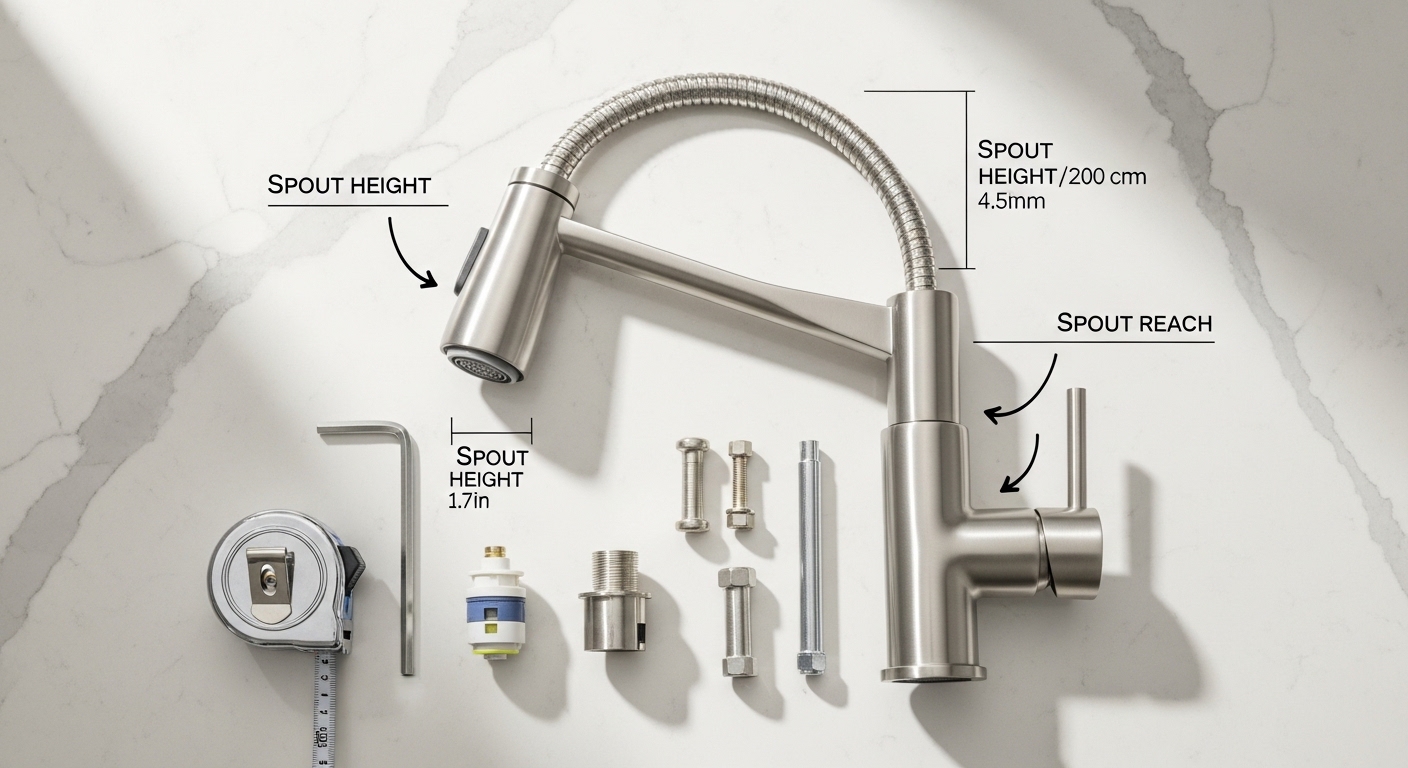
A lead free brass kitchen faucet is a faucet whose body, spout, and internal waterways are made from a brass alloy specially reformulated to contain almost no lead, then independently certified so that the metal touching your water can’t leach a meaningful amount of lead into it. That matters because “regular” brass — the workhorse metal of faucets for a century — is naturally alloyed with a few percent of lead to make it easier to machine, and some of that lead can slowly dissolve into water that sits in the tap overnight. This article answers the real questions people actually ask before buying: is it truly safer, how do you know a faucet is really lead free, is solid brass better than stainless or zinc, and is it worth paying more. Let’s get into it like a friend who’s spent way too long reading certification standards.
Why does brass contain lead in the first place, and is that dangerous?
Brass contains lead because lead makes the metal dramatically easier to machine and cast — it acts like a built-in lubricant so drills and lathes can cut clean threads and smooth waterways. Traditional “free-machining” brass is usually around 2–3% lead. That’s great for the factory, but lead is a neurotoxin with no safe level for children, and water that sits still inside the faucet body for hours (overnight, or while you’re at work) can pick up trace amounts.
Here’s the honest, non-alarmist version: a modern faucet is rarely the biggest lead source in a home — old lead service lines and pre-1986 lead solder joints usually matter more. But the faucet is the very last thing your water touches before it hits your glass, and it’s the one part you can swap in 30 minutes for under $200. So it’s the highest-leverage fix. “Lead free” brass reformulates the alloy — often using bismuth or silicon in place of lead — so it machines almost as well while keeping lead out of the water path.
What does “lead free” actually mean legally — is it truly zero lead?
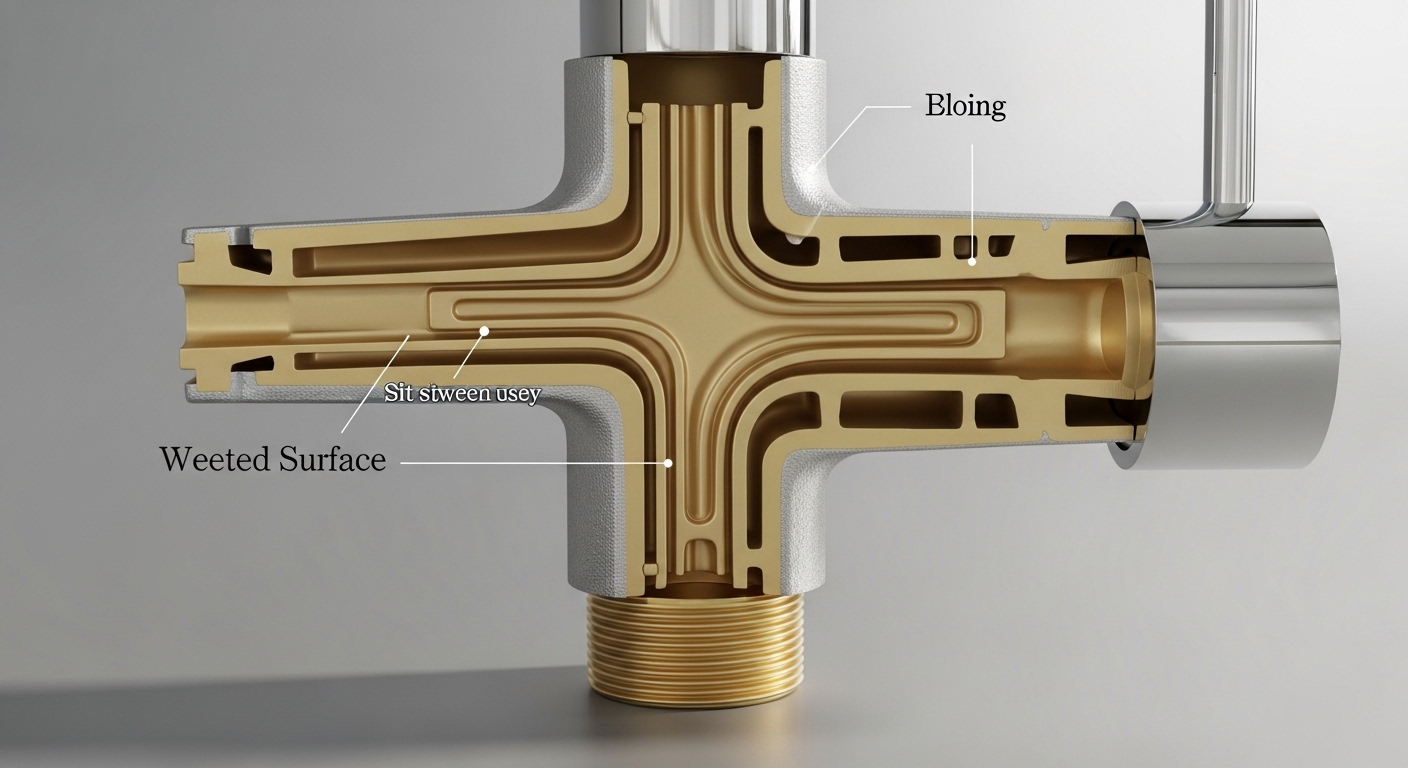
“Lead free” does not mean zero lead — it means the weighted average lead content of all wetted surfaces is at or below 0.25%. That’s the definition written into the U.S. Safe Drinking Water Act (the 2011 Reduced Lead in Drinking Water Act, effective 2014), and it’s the number every reputable manufacturer is certifying against. Older brass could be 2–3% lead across the water path; lead free brass cuts that by roughly 8–12x.
Two things people constantly mix up:
- “Lead free” (0.25% max wetted surface) is the federal legal ceiling for anything sold as a drinking-water faucet in the U.S.
- NSF/ANSI 61 and NSF/ANSI 372 are the third-party certifications that prove a specific faucet actually meets that limit under lab testing. NSF 372 covers the low-lead content; NSF 61 covers how much of any contaminant leaches into water over time.
So the phrase you want stamped on the box or spec sheet isn’t just the words “lead free” — it’s “NSF/ANSI 61 & 372 certified.” Words on marketing copy are free; a certification listing is verifiable. If you want to go a step further, California’s stricter NSF/ANSI 372 with the “lead free” mark plus AB 1953 / Prop 65 compliance is the toughest bar in the U.S. market, and a faucet built to satisfy California is safe to buy in all 50 states.
How can I tell if a kitchen faucet is really lead free before I buy it?
Check for a third-party certification mark and a solid-brass or stainless waterway spec — not just the words “lead free” in the title. Here’s the quick checklist I use when I’m reading a product page and deciding whether to trust it:
- Look for “NSF/ANSI 61 & 372” or a “lead free / low-lead” compliance line in the specs, ideally with a certifying body named (NSF, IAPMO/UPC, or WaterSense which requires low-lead).
- Check the waterway material. “Lead free brass” or “PEX/PPO lined waterway” are both good. A concealed plastic (PEX) waterway physically prevents water from touching brass at all — a legitimate lead-free strategy some brands use.
- Watch for the difference between “solid brass” and “brass finish.” “Brass finish” or “brass-plated zinc” is a coating over a cheaper base metal — that’s a durability and quality question, not the same as a certified lead-free waterway.
- Find the compliance statement, usually a small line like “Complies with U.S. federal lead free law (≤0.25% wetted surface).”
- If it’s dirt cheap and vague, assume nothing. A no-name faucet with zero certification listed is a gamble with the one thing you shouldn’t gamble on.
Lead free brass vs stainless steel vs zinc: which is best for a kitchen faucet?
For most kitchens, lead free brass is the best all-around choice — it’s corrosion-resistant, heavy and durable, easy to finish in any color, and certified safe. Stainless steel (SUS304) is the other genuinely good option and is naturally lead-free. Zinc alloy (zamak) is the one to be cautious about: it’s cheap, lighter, and more prone to corrosion and stress cracking over years. Here’s the honest comparison:
| Material | Lead / water safety | Durability & corrosion | Weight / feel | Typical price | Best for |
|---|---|---|---|---|---|
| Lead free brass | Excellent — certified ≤0.25%, reformulated alloy | Excellent — resists corrosion, great thread life | Heavy, premium | $120–$400 | Most kitchens; long-term daily use |
| Stainless steel (SUS304) | Excellent — naturally lead-free | Very good — rust-resistant, hard | Medium-heavy | $130–$450 | Modern/brushed looks, salt-air homes |
| Zinc alloy (zamak) | Varies — must still be certified | Fair — can corrode/crack over years | Light, hollow feel | $40–$120 | Budget builds, rentals, short-term |
| Brass-plated zinc | Depends on waterway — check cert | Fair — plating can flake at wear points | Light | $50–$130 | Looks-only buys; not long-term |
The practical tell is weight. Pick up two faucets and the solid lead-free brass one feels noticeably denser in your hand. That heft correlates with a thicker cast body, better threads that won’t strip, and a waterway that won’t crack when your water hammer slams the valve shut. If you’re comparing specific brands and their material honesty, our breakdown of the best kitchen faucet companies to buy from in 2026 digs into which makers actually publish their certifications versus which just say “premium.”
Does a lead free brass faucet still leach lead if I have hard water?
A certified lead free brass faucet stays under the legal lead limit even in hard water — but hard water and acidic (low-pH) water do generally increase how aggressively any plumbing leaches metals, which is exactly why the ≤0.25% ceiling exists as a safety margin. The bigger day-to-day issue hard water causes isn’t lead; it’s mineral scale that clogs your aerator and slows your flow.
If you’re on well water or a hard-water municipal supply, two things help: (1) buy the certified lead-free faucet so the metal itself is a non-issue, and (2) actually maintain the aerator, because calcium and magnesium buildup will throttle your stream and trap sediment. We wrote a full walkthrough on cleaning a faucet aerator that’s clogged with hard-water buildup — it’s a five-minute vinegar soak that most people never do. One more habit worth building: if water has been sitting in the faucet overnight, let it run cold for 15–30 seconds before you fill a glass or a pot. That flushes any water that sat against metal and is good practice regardless of how new or certified your faucet is.
Is a lead free brass kitchen faucet worth the extra money in 2026?
Yes, for almost everyone — the price gap between a certified lead free brass faucet and a cheap uncertified zinc one is usually $50–$100, and you’re buying it once for 10–15 years of drinking-water contact. Amortized, that’s a few dollars a year for verified water safety plus a body that won’t corrode or crack. The only scenarios where I’d hesitate are a short-term rental you don’t own or a utility/laundry sink nobody drinks from.
Think of it in terms of what you’re really paying for: it’s not the “lead free” chemistry alone (many decent faucets now meet the legal minimum), it’s the combination of a certified low-lead waterway and a genuinely solid brass body. The cheap versions cut corners on the second part — thin zinc, flaking plate, plastic threads — and those are the faucets that drip and wobble within two years. If you’re already shopping the current styles, our guide to the real kitchen faucet trends for 2026 covers which finishes and features are actually worth it versus which are hype, and many of the models people cross-shop are also reviewed in our deep dive on whether WEWE kitchen faucet reviews are worth trusting.
How do I switch to a lead free faucet — and does the old plumbing still matter?
Swapping to a lead free faucet is a straightforward DIY job, but remember the faucet is only the last link in the chain — your supply lines, shutoff valves, and any old solder joints matter too. Replacing the faucet is the easy, high-impact first move; if you have a pre-1986 home, it’s worth also checking your service line and using lead-free supply connectors.
The install itself is usually the same for any single-hole or three-hole deck-mount faucet: shut off the hot and cold angle stops under the sink, disconnect the old supply lines, drop the new faucet through the mounting hole, tighten the mounting nut from below, reconnect the (lead-free) braided supply lines, and run the water to check for leaks. If that sounds intimidating, it’s genuinely more approachable than it looks — our step-by-step on how to install kitchen taps and mixers yourself without calling a plumber walks through every connection. A few tips specific to a lead-free upgrade:
- Replace the supply lines too. New braided stainless lines are cheap and modern ones are lead-free — no reason to reuse crusty old ones.
- Flush before first use. Run the new faucet full-blast for a couple of minutes to clear any machining residue from installation.
- Keep the paperwork. The certification and warranty documents are your proof of what the faucet is — store them with your home records.
FAQ
Are all new kitchen faucets sold in the U.S. lead free by law?
Any faucet legally sold for potable (drinking) water in the U.S. must meet the federal ≤0.25% wetted-surface lead limit, so in theory yes. In practice, imported no-name faucets and older clearance stock sometimes slip through without proper certification, and faucets explicitly sold for “non-potable” or utility use aren’t held to the same bar. That’s why you still verify the NSF/ANSI 372 mark rather than assuming.
What’s the difference between “lead free brass” and “solid brass”?
“Solid brass” describes the construction — the faucet body is cast from brass rather than plated zinc — and speaks to durability. “Lead free brass” describes the alloy chemistry — the brass is reformulated to contain almost no lead — and speaks to water safety. The best faucets are both: a solid, heavy brass body made from a certified lead-free alloy. A faucet can be solid brass but old-formula (leaded), or lead-free but built from thin plated zinc, so read both specs.
Does a lead free brass faucet affect the taste of my water?
It should improve it, or at least remove a source of metallic taste. That faint metallic or “penny” taste people notice in the first pour of the morning often comes from water sitting against leaded brass and old fittings overnight. A lead-free waterway reduces metal contact, and pairing it with fresh supply lines and a quick morning flush usually clears up taste complaints entirely.
Is stainless steel a better choice than lead free brass for water safety?
Both are excellent and both are safe — it’s mostly a preference call. Stainless steel (SUS304) is inherently lead-free and very corrosion-resistant, so it’s a great pick, especially in coastal/salt-air homes. Lead free brass is heavier, easier to finish in warm colors like champagne bronze or unlacquered brass, and machines into more intricate shapes. For water safety specifically, a certified version of either is a non-issue.
Can an old faucet be made lead free, or do I have to replace it?
You can’t retroactively make a leaded-brass faucet lead-free — the lead is in the metal itself. Replacement is the only real fix if lead is your concern. The good news is it’s the cheapest and fastest plumbing upgrade in the house, and while you’re under there you can also swap to lead-free supply lines and a modern shutoff valve to clean up the whole last stretch of your plumbing.
How long does a good lead free brass kitchen faucet last?
A solid, certified lead-free brass faucet from a reputable maker typically lasts 10–15 years or more, with the only routine maintenance being an occasional aerator cleaning and, eventually, a cheap cartridge replacement if it starts to drip. The brass body itself often outlives the cartridge, which is a $10–$25 wear part you can replace yourself rather than tossing the whole faucet.
Author note: This guide was written by the aleashafaucet product content team, drawing on hands-on evaluation of kitchen faucet bodies, waterway materials, and certification documentation. We physically weigh and disassemble the fixtures we write about to check whether “solid brass” and “lead free” claims hold up.
About aleashafaucet: aleashafaucet specializes in kitchen and bathroom fixtures — faucets, shower heads, tub fillers, and accessories — with a focus on certified materials and honest specs. The faucets we recommend and sell are built to meet U.S. lead-free requirements (≤0.25% wetted surface, NSF/ANSI 61 & 372 where certified) and are backed by manufacturer warranties on the body and finish. We publish certification and testing details rather than hiding behind the word “premium,” because your drinking water deserves verifiable answers, not marketing.