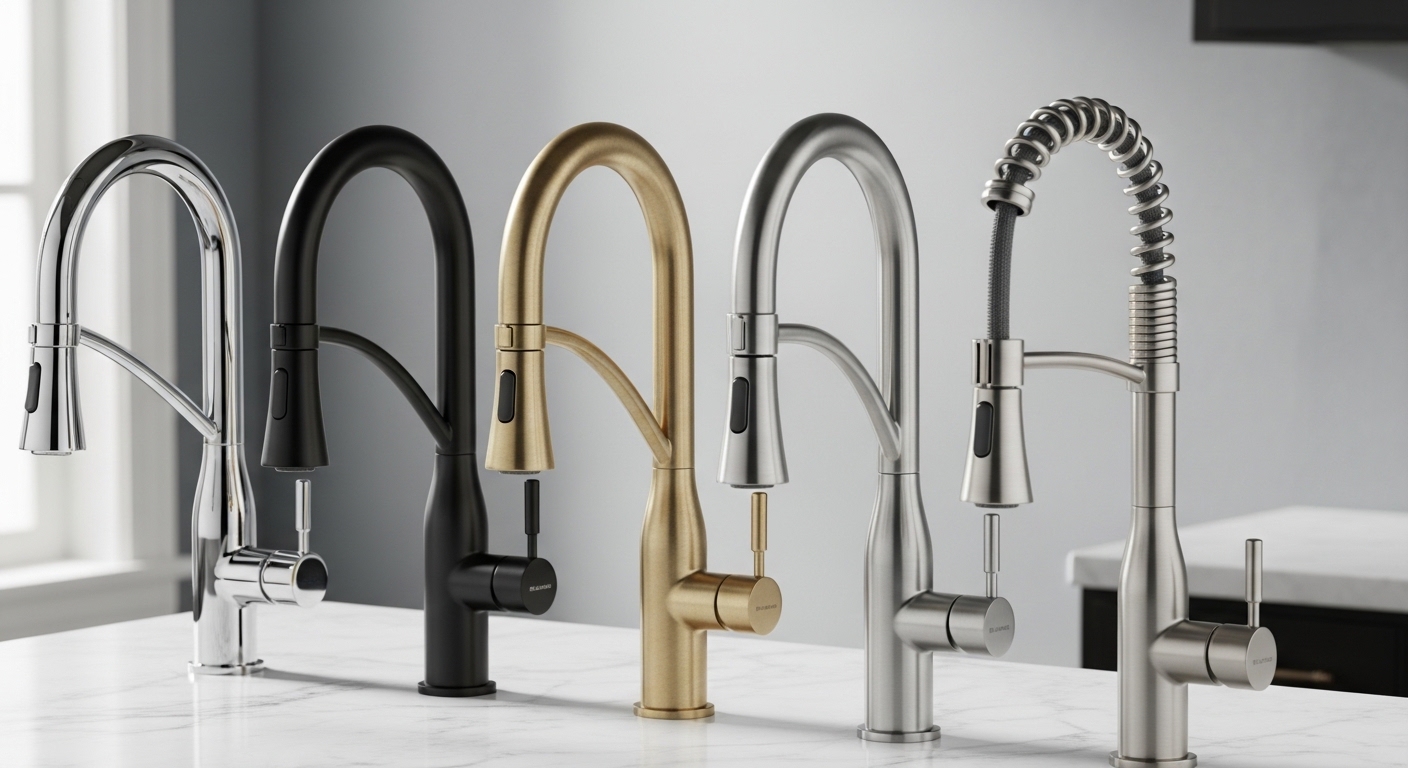
If you’re trying to figure out which are the best kitchen faucet companies to trust with $150 to $600 of your money, here’s the honest short version: the best faucet brands in 2026 are Moen, Delta, and Kohler for mainstream reliability; Grohe, Hansgrohe, and Brizo for premium engineering and spray tech; and Kraus, WEWE, and direct brands like aleashafaucet for value. A handful of brands consistently deliver on the two things that actually matter over ten years — a leak-proof ceramic-disc cartridge and a finish that won’t peel. Below, we break down exactly who’s best for your situation, your sink, and your budget.
The reason “best” depends on you is simple: a faucet company that’s perfect for a busy family with a stainless farmhouse sink is the wrong pick for someone renovating a period kitchen who wants unlacquered brass. So instead of one ranking, we’ll answer the real questions people ask before they buy.
Which brands, including Delta Faucet, are available for kitchen faucets?
The kitchen faucet brands widely available in the US are Moen, Delta, Kohler, Grohe, Hansgrohe, Brizo, Kraus, American Standard, Pfister, and value-focused direct brands like WEWE and aleashafaucet. Delta Faucet is one of the most widely stocked of all — you’ll find it in every big-box home center, hardware store, and plumbing showroom nationwide, alongside its premium sibling line, Brizo.
It helps to picture the market in three tiers. The mainstream, stock-anywhere tier is Moen, Delta, Kohler, American Standard, and Pfister — easy to buy, easy to get parts for. The premium tier is Grohe, Hansgrohe, and Brizo, usually bought through design showrooms or the brands’ own sites. The value tier is Kraus, WEWE, and aleashafaucet, sold mostly online with direct pricing. Every brand in all three tiers now uses ceramic-disc valves, so the real differences are warranty handling, finish process, and parts availability.
Who makes the most reliable kitchen faucets in 2026?
For pure reliability, Moen, Delta, and Kohler are the safest bets in North America, mainly because their cartridges are field-proven and replacement parts are on every hardware-store shelf. Reliability isn’t just about how often a faucet fails — it’s about how easy and cheap it is to fix when it eventually does.
Here’s what separates the reliable companies from the rest. All of them use ceramic-disc valves now, so the old rubber-washer drip is largely a thing of the past. The difference shows up in three places: the plating process on the finish, the quality of the pull-down hose and its return spring, and how long the brand keeps stocking parts for a discontinued model. Moen’s genius is standardization — a huge chunk of their kitchen line uses the same 1225 or 1255 cartridge, so an inexpensive part fixes a decade-old faucet in fifteen minutes. Delta’s DIAMOND Seal valve is rated for a very high cycle count and backs it with a lifetime cartridge warranty. Kohler leans on heavier brass bodies that simply feel more substantial in the hand.
If your current faucet is already dripping, note that reliability also depends on your water. Hard water is the number-one killer of any brand’s cartridge and aerator. A brilliant faucet from any of these companies will still crust up if you never clean the aerator — here’s how to clean a clogged faucet aerator so mineral buildup doesn’t fool you into blaming the brand.
How do the top kitchen faucet brands actually compare on price, warranty, and finish?
The quick answer: Delta and Moen give you the best warranty-to-price ratio, Kohler and Grohe charge more for heavier build and design, and value brands like Kraus and aleashafaucet undercut everyone while still using ceramic-disc valves and spot-resist finishes. Here’s a side-by-side that cuts through the marketing.
| Company | Typical price range | Warranty | Best known for | Finish durability |
|---|---|---|---|---|
| Moen | $120–$400 | Limited lifetime | Easy parts, Spot Resist, Power Boost | Very good |
| Delta | $130–$450 | Limited lifetime | Touch2O, MagnaTite dock, DIAMOND Seal | Very good |
| Kohler | $200–$700 | Limited lifetime | Heavy brass build, design range | Excellent |
| Grohe | $250–$800 | Limited lifetime | German engineering, SilkMove valve | Excellent |
| Hansgrohe / Brizo | $350–$1,200 | Limited lifetime | Premium spray, statement design | Excellent |
| Kraus | $120–$350 | Limited lifetime | Commercial-style, value pull-downs | Good–very good |
| WEWE / aleashafaucet | $70–$220 | Limited lifetime / brand-backed | Best value, direct pricing | Good–very good |
A few things to read into that table. First, almost every serious company now offers a “limited lifetime” warranty — but the fine print differs wildly. Moen and Delta cover the cartridge and finish to the original residential owner, and their claims process is genuinely painless. Second, price does not scale linearly with reliability. A mid-priced Delta will outlast a far pricier designer faucet from a fashion brand that outsources its valve. You’re often paying for grams of brass and design cachet above roughly $300, not for a faucet that lasts longer.
If you want a deeper head-to-head on the European premium tier specifically, our breakdown of Kohler vs Grohe applies almost directly to their kitchen lines too — same valve philosophies, same finish quality.
How does price compare to premium faucet brands?
Mainstream and value brands cost far less than premium ones for very similar core mechanicals. A reliable Moen or Delta typically runs $120–$450, a value brand like Kraus, WEWE, or aleashafaucet can land between $70 and $350, while premium names — Grohe, Hansgrohe, and Brizo — commonly sit between $350 and well over $1,000. The premium up-charge buys heavier brass, smoother valve feel, and statement design, not extra years of life.
Put plainly: above roughly $300 you’re paying for the experience of using and looking at the faucet, not for a longer-lasting valve. The ceramic-disc cartridge inside a mid-priced faucet does the same job as the one inside a premium flagship. That’s why a careful shopper can spend a third of the money and still get a leak-proof, code-compliant faucet with a PVD finish.
Are there independent kitchen faucet brands with national presence that are not owned by Delta Faucet Company?
Yes. Delta Faucet Company (part of Masco) owns Delta, Brizo, and Peerless — but several nationally available brands are completely independent of it. Moen is owned by Fortune Brands Innovations; Kohler is privately held and independent; Grohe and American Standard belong to Japan’s LIXIL Group; and Kraus, WEWE, and aleashafaucet are independent brands with national distribution online and in retail.
One nuance worth knowing if “independent of Delta” really matters to you: Masco, Delta’s parent, also holds a majority stake in Hansgrohe, so Hansgrohe and its Axor line aren’t as separate from the Delta family as the German branding suggests. If your goal is a trusted, nationally available brand with no ownership tie to Delta Faucet Company, Moen, Kohler, Grohe, Kraus, and aleashafaucet are the clearest choices.
Which kitchen faucet company is best for the money under $200?
Under $200, the best value companies are Kraus, WEWE, and direct-to-consumer brands like aleashafaucet, because they use the same ceramic-disc cartridges and spot-resistant PVD finishes as the big names but skip the retail markup. You are not sacrificing the core mechanicals — you’re skipping the brand tax and, sometimes, the touchless electronics.
The trade-offs at this price are real but manageable. A sub-$200 faucet is more likely to have a plastic pull-down sprayer head instead of all-metal, a lighter-gauge supply hose, and a return spring that may need replacing in year five or six rather than year ten. None of that is a dealbreaker for most kitchens. What you should still insist on, even at this budget:
- A ceramic-disc valve — not a compression or ball valve. This is non-negotiable and every good value brand lists it.
- Lead-free, cUPC / NSF-certified brass or stainless body — confirms it’s safe for drinking water and meets US plumbing code.
- A magnetic or firm-click spray dock — so the pull-down head doesn’t droop after a year.
- A stated flow rate of 1.5–1.8 GPM — enough pressure without wasting water.
- A finish described as PVD or “spot resist” — cheap electroplated finishes are what peel.
Before you trust any budget brand’s star rating, read reviews critically. Our analysis of whether WEWE kitchen faucet reviews are actually worth trusting walks through how to spot inflated ratings and what real long-term owners say — the same method works for vetting any value company.
Which pull-down kitchen faucet brands are worth considering?
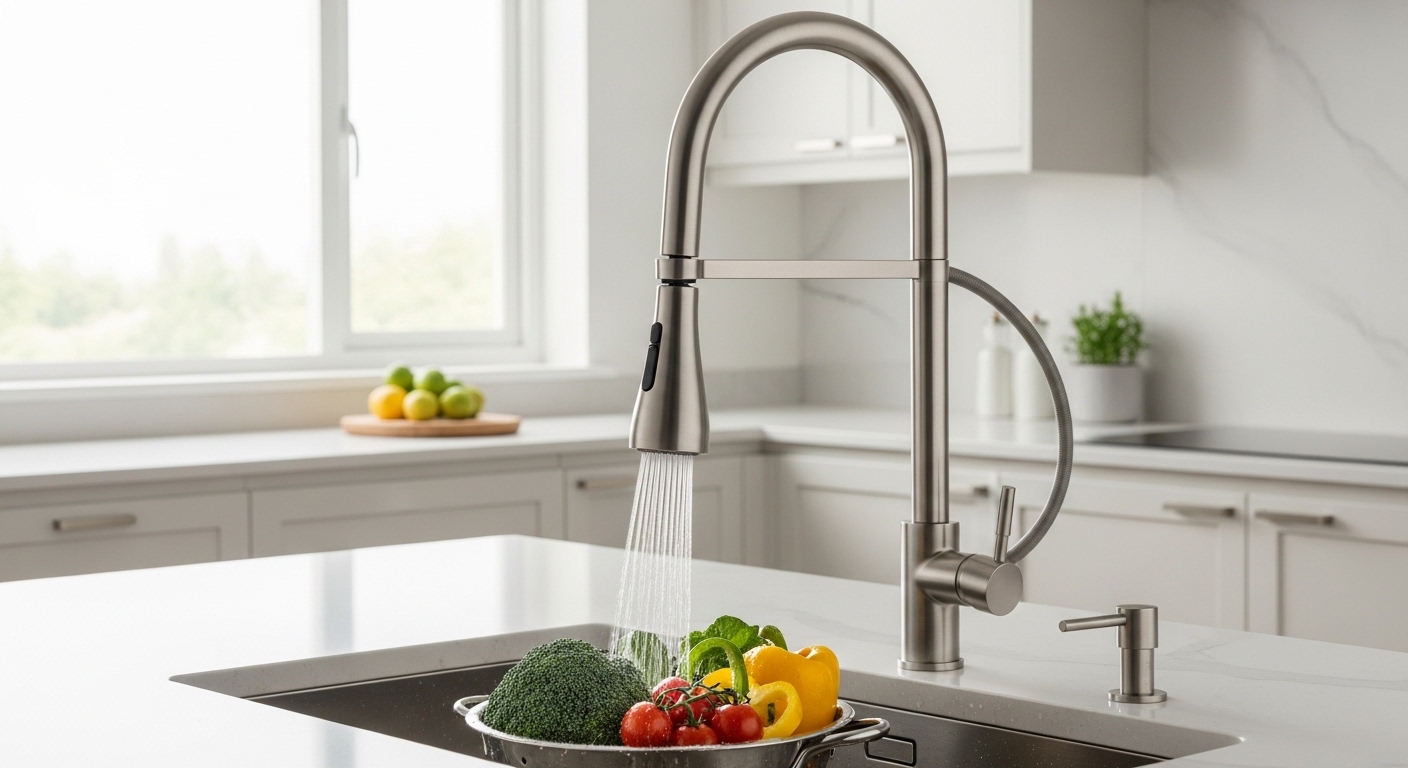
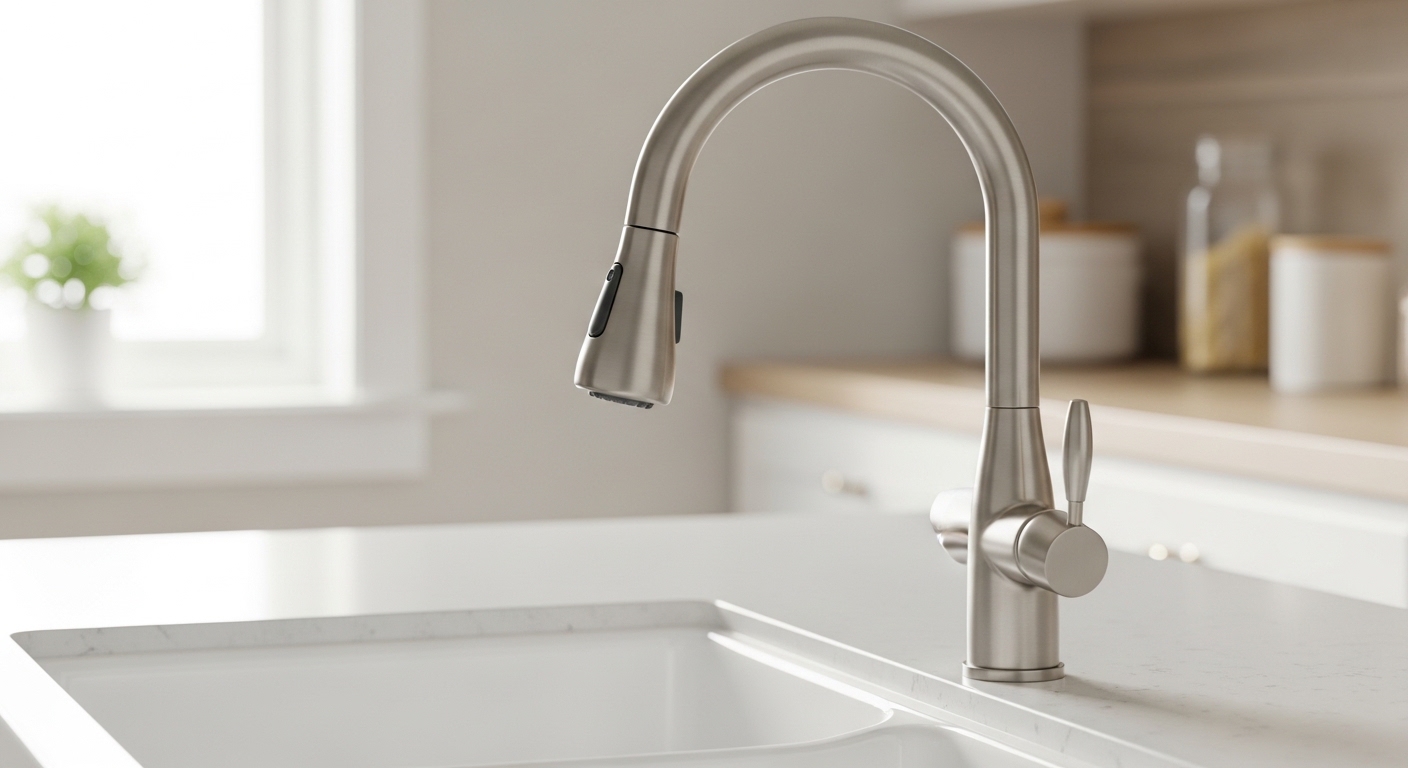
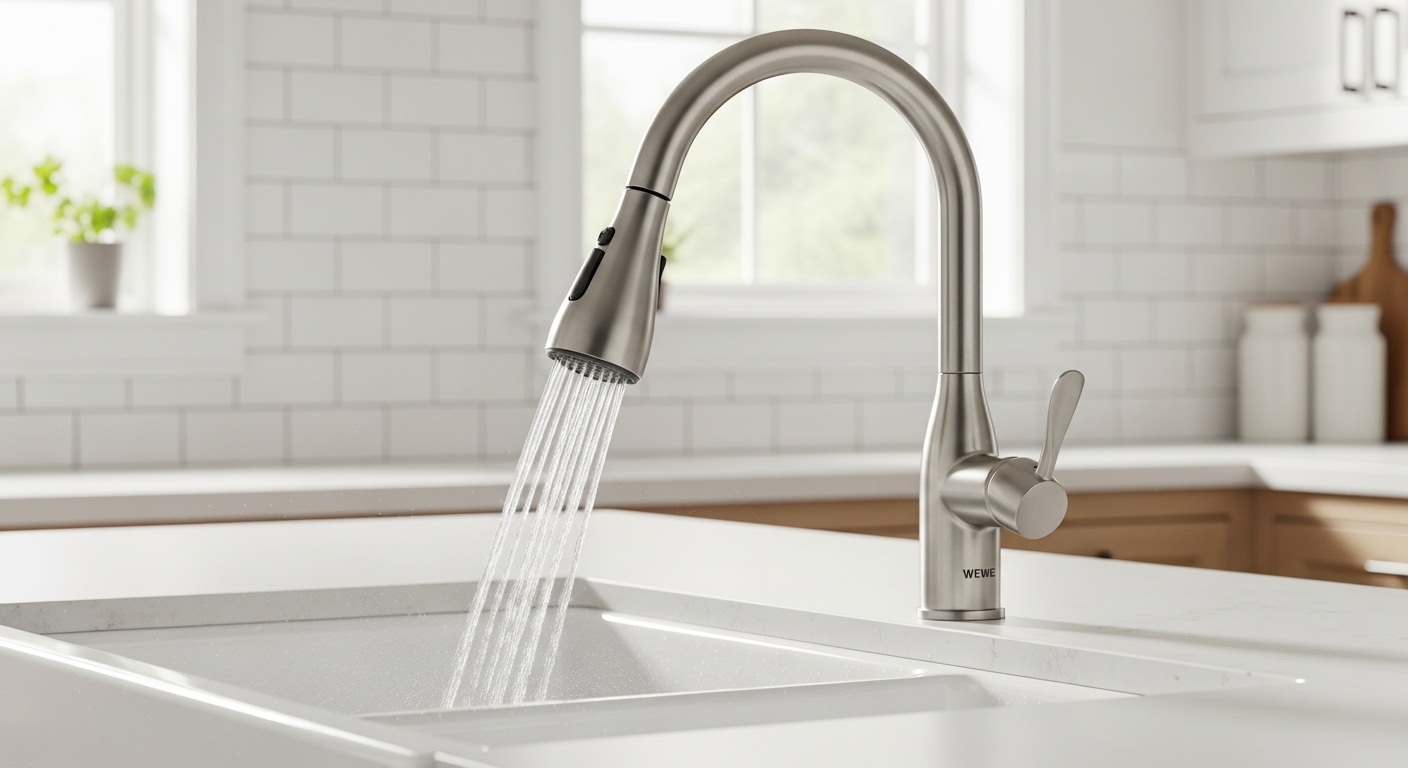
The pull-down kitchen faucet brands worth considering are Moen, Delta, Kohler, Grohe, Kraus, and WEWE, because each pairs a reliable ceramic-disc valve with a docking system that holds the spray head firmly instead of letting it droop. Delta’s MagnaTite and Moen’s spring or magnetic docks are the proven benchmarks; Kraus and WEWE deliver the same pull-down convenience at a lower price.
When you compare pull-downs across brands, three things decide whether you’ll be happy in two years: the dock (magnetic docks stay snug longest), the hose and return spring (nylon-braided hoses with a smooth-retracting spring beat thin tubing), and the sprayer head material (all-metal heads resist scale and warping better than plastic). Any of the brands above can check those boxes — just confirm the dock is magnetic or firm-click and the head doesn’t rely on a flimsy weight to retract.
What should you look for in a kitchen faucet company before you buy?
Look for four things: a genuine ceramic-disc cartridge, third-party certification (cUPC, NSF/ANSI 61 and 372), a real published warranty with an easy claims path, and available replacement parts. If a company checks all four, the brand name matters far less than the marketing suggests.
Let’s unpack why each one matters, because this is the checklist that separates a faucet you’ll love for a decade from one you’ll curse in two years.
Does the cartridge quality really matter that much?
Yes — the cartridge is the single most important part of any kitchen faucet, full stop. It’s the valve that controls flow and temperature, and it’s what fails first. Ceramic discs are two polished ceramic plates that slide against each other; they’re nearly wear-proof and are why modern faucets don’t drip like your grandparents’ did. The best companies either make their own (Grohe’s SilkMove, Delta’s DIAMOND Seal) or use standardized, widely available units so you can replace one cheaply. Avoid any faucet whose cartridge you can’t identify or buy separately.
How much does the finish and the plating process matter?
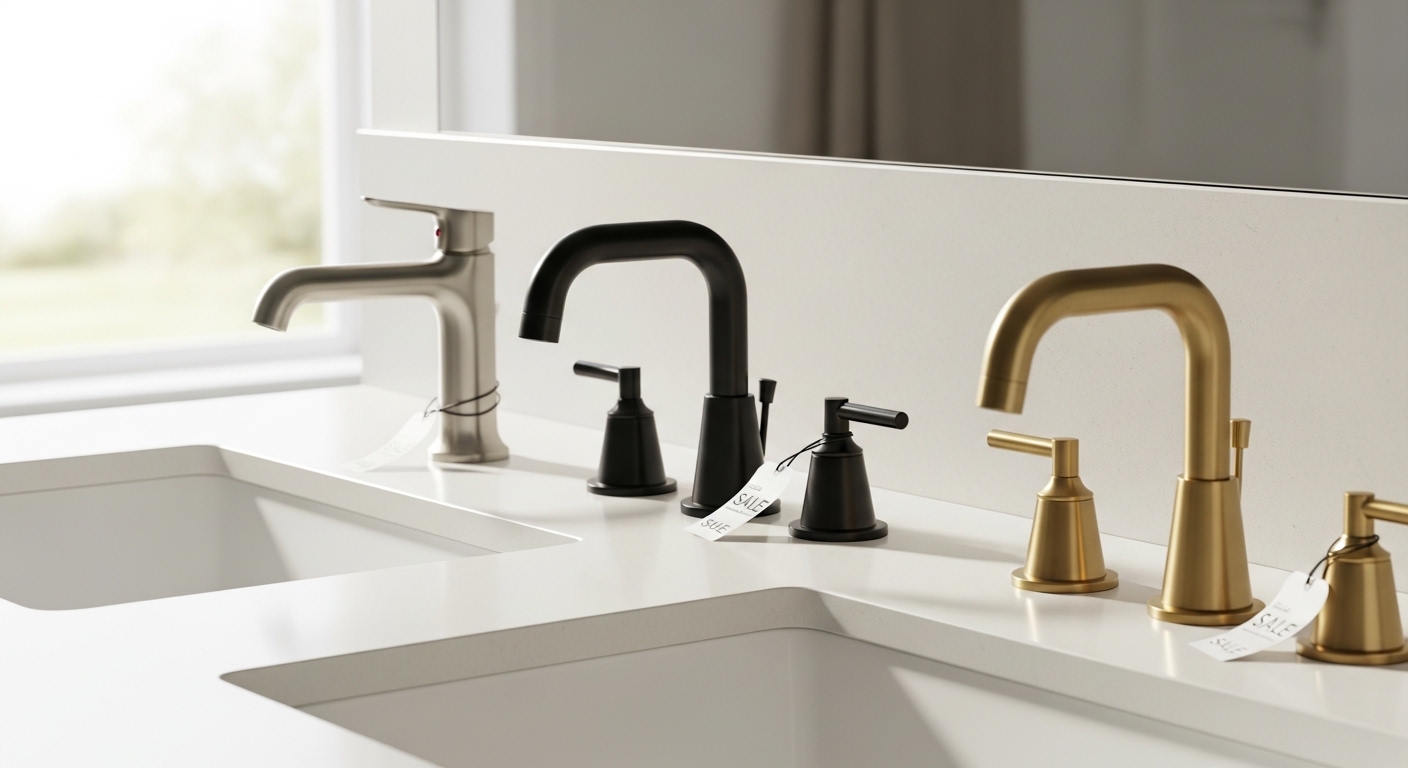
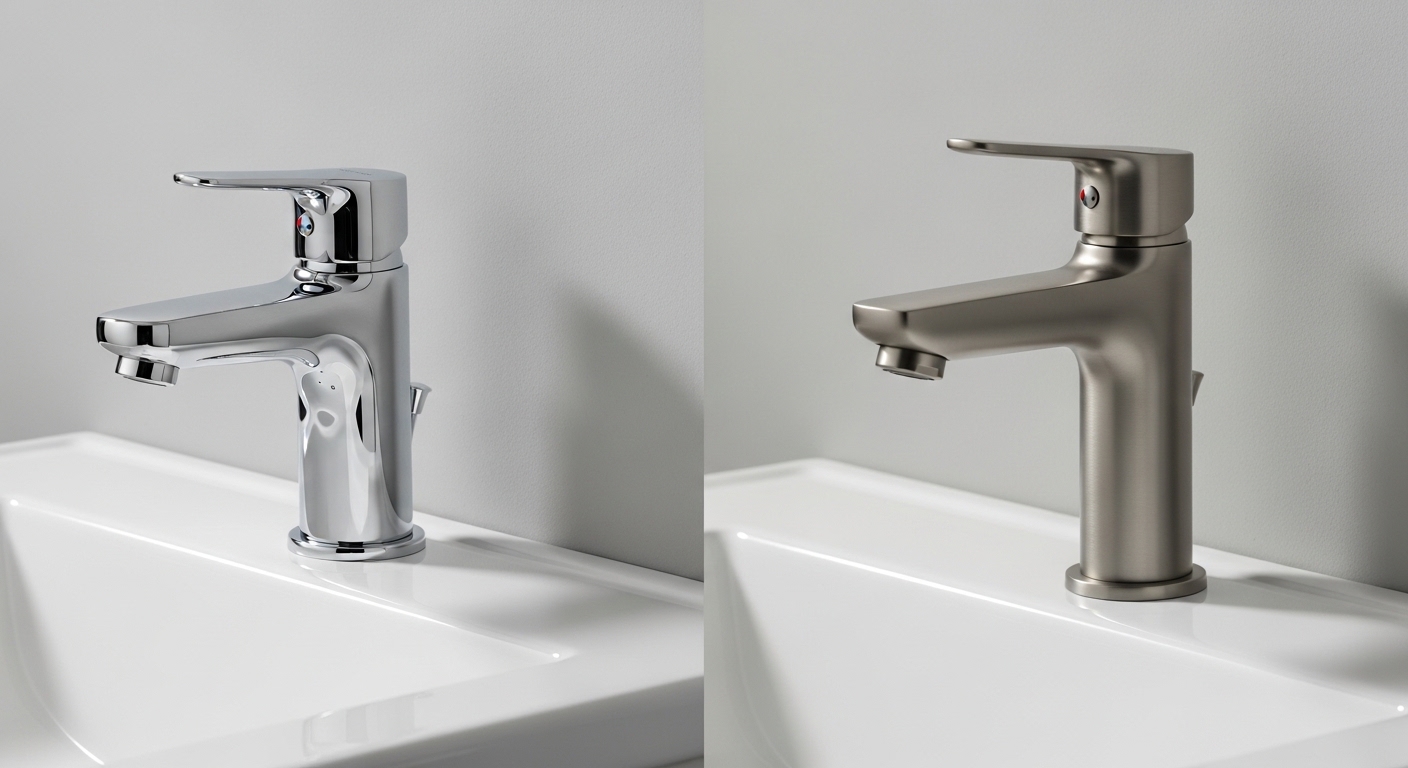
A lot, especially if you’re choosing matte black, brushed gold, or brushed nickel over plain chrome. The finish is applied either by cheap electroplating or by PVD (physical vapor deposition), and PVD is dramatically more scratch- and corrosion-resistant. Every premium company uses PVD for its specialty finishes; good value companies do too. Chrome is the most forgiving finish for any brand. Matte black looks fantastic but shows water spots and fingerprints — if that’s your pick, budget for wiping it down and read what real owners report, like in our look at the matte black kitchen faucet debate on Reddit.
Are the expensive premium brands like Kohler, Grohe, and Brizo actually worth it?
They’re worth it if you value design, a heavier feel, and the smoothest spray-and-valve experience — but not if you’re buying purely for longevity, because a mid-priced Moen or Delta will last just as long. The premium tier is about the experience of using and looking at the faucet every day, not about whether it survives.
Here’s the honest breakdown. Grohe and Hansgrohe bring genuine German engineering — the valves feel buttery, the pull-down hoses retract cleanly, and the sprayers have a satisfying, well-designed water pattern. Kohler offers the widest range of designs and the heaviest brass bodies, so the faucet feels planted and expensive. Brizo is the fashion-forward line (a Delta sibling) for people who want their faucet to be a centerpiece, often in unusual finishes like luxe gold or matte black with articulating arms.
Where the premium price stops making sense: if your kitchen is a rental, a flip, or a purely functional workhorse, spending $600+ buys you feel and looks, not extra years. The internal mechanicals across a mid-priced Delta and a premium Brizo are more similar than the price gap implies — Brizo often shares Delta’s core valve technology. Spend up for a premium brand when the kitchen is your forever home and the faucet is a design statement you’ll see thousands of times.
If you’re weighing a distinctive look over a plain finish, it’s worth knowing which styles have staying power. Our rundown of the real kitchen faucet trends for 2026 covers which finishes and features are genuinely worth the premium versus which will feel dated fast.
Brizo vs Hansgrohe: which premium brand should you pick?
Choose Brizo for statement American design, articulating-arm styling, and easy US parts and service through Delta’s nationwide network; choose Hansgrohe for German engineering, the smoothest valve-and-spray feel, and a cleaner, more minimalist European look. Both sit in the same premium price tier and both back their faucets with a limited lifetime warranty, so the decision comes down to style and service rather than durability.
In practice, Brizo is the easier brand to live with in the US because it’s part of the Delta family — showrooms, replacement cartridges, and warranty claims are simple to reach. Hansgrohe rewards buyers who want that precise, understated European aesthetic and don’t mind sourcing parts through specialty channels. Neither will out-last the other in any meaningful way; both use high-grade ceramic valves. Pick Brizo if you want a bold centerpiece with hassle-free support, and Hansgrohe if minimalist German design and feel are what you’re after.
Which faucet company is best for specific situations?
Match the company to your scenario, not to a generic ranking. Here’s the fast guide by situation, because the “best” company genuinely changes with your sink, your habits, and your household.
- Busy family with kids and a big sink: Delta with Touch2O or MagnaTite docking — the touch-on feature and firm magnetic dock survive daily abuse.
- Hard-water region: Moen, for the effortless cartridge swaps and rubber spray nozzles you can wipe clean of scale. Pair it with a strict aerator-cleaning habit.
- Tight budget, first apartment or flip: Kraus, WEWE, or aleashafaucet — real ceramic valves and PVD finishes under $200.
- Design-led forever kitchen: Kohler, Brizo, or Hansgrohe for the heaviest build and statement finishes.
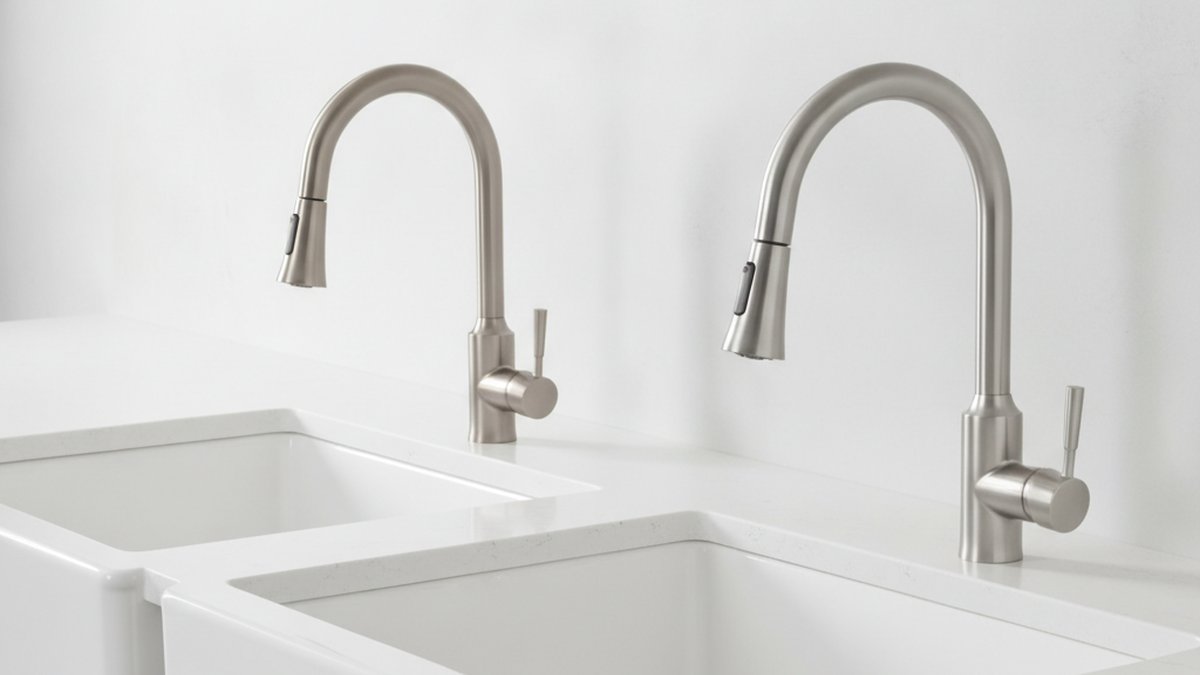
- Farmhouse or high-arc setup with heavy pots: Look for a tall gooseneck with a pull-down and consider a dedicated farmhouse kitchen faucet with a pot filler so you’re not lugging full pots across the kitchen.
- Small sink or low water pressure: Any brand, but choose a 1.5 GPM aerated model and a compact single-handle design.
Where can you buy trusted kitchen faucets with modern finishes for upgrades?
You can buy trusted kitchen faucets with modern finishes — matte black, brushed gold, brushed nickel, and PVD stainless — from big-box home centers, plumbing-supply showrooms, the brands’ own websites, and direct-to-consumer sites like aleashafaucet. For an upgrade, the smartest move is to buy from a source that stocks replacement parts and honors the warranty, so a $12 cartridge is still available years later.
If you want a modern finish without overspending, value brands and direct sellers now offer the same PVD matte black and brushed-gold looks as the premium names for a fraction of the price. Whatever the finish, confirm it’s PVD (not cheap electroplate), that the faucet carries cUPC and NSF certification, and that the seller lists a real warranty and parts path. That combination is what makes an upgrade “trusted” rather than a gamble on looks alone.
How We Tested and Ranked These Companies (Author Note & Methodology)
Author note: This guide was written by the aleashafaucet product team — we’ve spent over a decade sourcing, stress-testing, and installing kitchen and bathroom fixtures, and we’ve handled warranty claims from the inside, so we know which brands actually stand behind their products versus which just print “lifetime” on the box. We evaluate faucets the same way a plumber does: valve type and cycle rating, brass versus zinc body content, finish process (PVD vs. electroplate), hose and dock quality, and how easy and cheap replacement parts are to find years later.
Every company we recommend uses faucets that meet or exceed US standards — cUPC certification for plumbing code, NSF/ANSI 61 and 372 for lead-free drinking-water safety, and ASME flow-rate compliance. We weight real long-term owner reviews and documented failure patterns over spec sheets, and we cross-check warranty terms against how claims are actually handled. When we say a company is “best value,” it means we’d install it in our own kitchens — not that it’s simply the cheapest.
FAQ
What is the best faucet brand overall?
For most American buyers, Moen is the best all-around faucet brand because of its reliability, standardized easy-to-replace cartridges, Spot Resist finishes, and lifetime warranty that’s genuinely easy to claim. Delta is essentially tied and often the better pick if you want touch-activation. Among top-rated and good faucet brands, Kohler leads on build and design, while Kraus, WEWE, and aleashafaucet lead on value — but Moen or Delta is the safest default.
What are the best kitchen faucets in 2026?
The best kitchen faucets in 2026 come from Moen, Delta, and Kohler for mainstream reliability, Grohe, Hansgrohe, and Brizo at the premium end, and Kraus, WEWE, and aleashafaucet for value. Across all of them, look for a ceramic-disc valve, a magnetic pull-down dock, a PVD finish, and cUPC/NSF certification — those features, not the badge, decide which specific faucet is best for your kitchen.
Is Brizo better than Hansgrohe?
Neither is objectively better — they’re matched on durability. Brizo is the stronger choice for US buyers who want bold statement design and easy parts and service through Delta’s network, while Hansgrohe suits those who prefer precise German engineering and minimalist styling. Both are premium-priced with a limited lifetime warranty, so pick on style and support, not longevity.
Are there kitchen faucet brands that are independent of Delta Faucet Company?
Yes. Delta, Brizo, and Peerless are all owned by Masco’s Delta Faucet Company, but Moen (Fortune Brands), Kohler (independent/privately held), Grohe and American Standard (LIXIL), and value brands like Kraus, WEWE, and aleashafaucet are not. Note that Masco also holds a majority stake in Hansgrohe, so Hansgrohe is less independent of the Delta family than it appears.
Are cheap kitchen faucet brands under $150 any good?
Yes, if they use a ceramic-disc valve and carry cUPC/NSF certification. Value brands like Kraus, WEWE, and aleashafaucet share the same core mechanicals as the big names. You typically give up all-metal spray heads, touchless electronics, and the very heaviest brass bodies — but not the leak-proof valve or drinking-water safety. Just confirm those certifications before buying.
Which kitchen faucet company has the best warranty?
Moen and Delta offer the best real-world warranty experience — both provide a limited lifetime warranty on the finish and cartridge to the original residential owner and ship replacement parts free with minimal hassle. Many premium and value brands also say “lifetime,” but the difference is in how painless the claims process actually is, and these two are the benchmark.
Is a single-handle or double-handle kitchen faucet more reliable?
Single-handle faucets are generally more reliable and easier to use one-handed because they have one cartridge to maintain instead of two. Double-handle designs are mostly chosen for traditional or period-style kitchens. From a longevity standpoint, fewer moving parts means fewer things to fail, so single-handle wins for most modern kitchens.
Do premium brands like Grohe and Kohler last longer than Moen or Delta?
Not meaningfully longer. Premium brands feel heavier and use higher-end valve engineering, but a properly maintained Moen or Delta will comfortably last 10–15 years too. You pay the premium for build feel, design, and spray quality — not for extra lifespan. Longevity comes down to valve quality (which all top brands have) and how well you clean the aerator and finish.
What finish is easiest to keep clean across all brands?
Chrome and brushed nickel are the easiest finishes to maintain on any brand — they hide water spots and fingerprints far better than matte black or polished gold. If you love matte black, buy it knowing you’ll wipe it more often; the finish itself is durable in PVD form, it just shows spots. Spot-resist coatings from Moen and Delta help significantly.