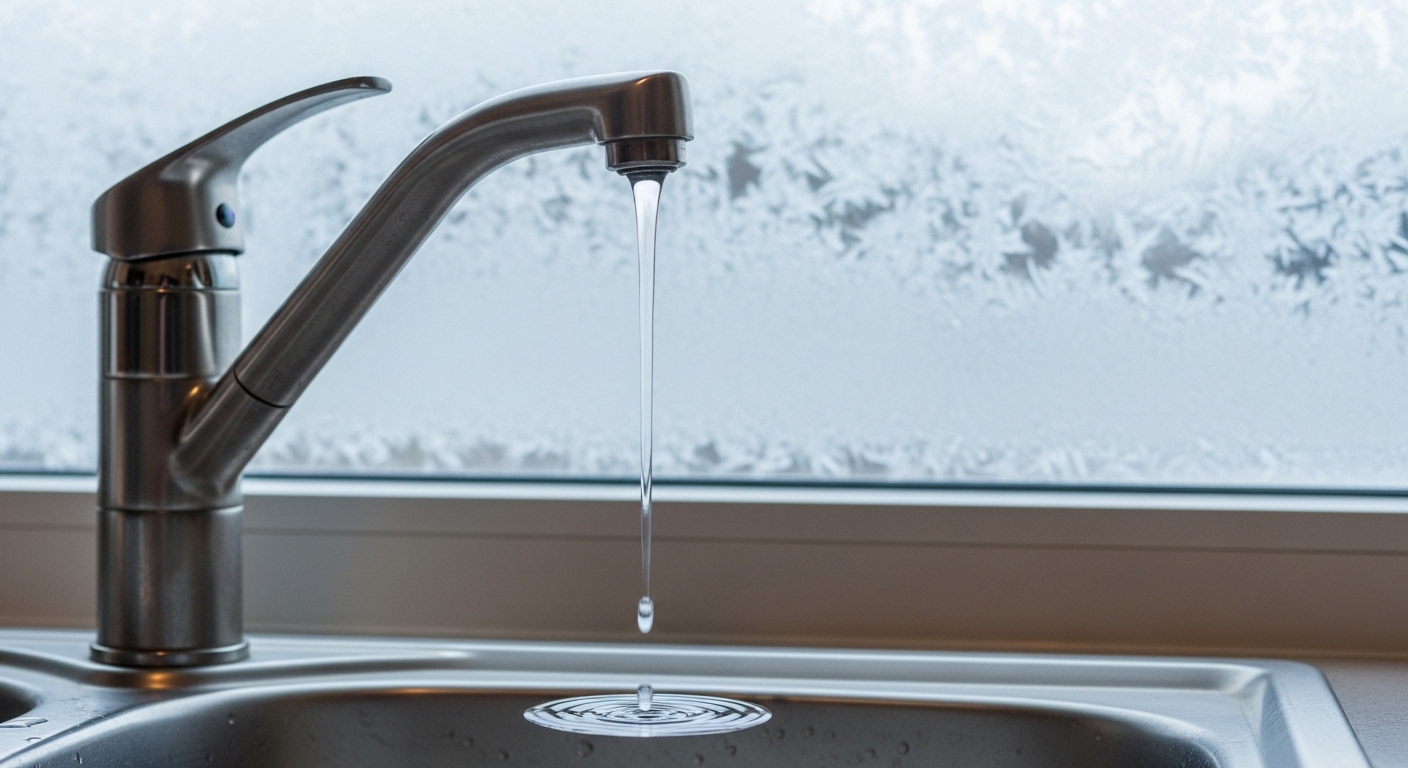
The whole “drip faucet or not” debate comes up every winter, and the honest answer is that it depends on how cold it’s getting, where your pipes run, and whether your faucet is even healthy enough to hold a steady drip. A dripping faucet in July usually means a worn cartridge you should fix; a deliberate drip in January is a cheap insurance policy against a burst pipe. This guide walks you through exactly when to drip, how much, which faucets to open, and — just as importantly — how to tell a protective winter drip apart from a faucet that’s failing and needs repair.
We’ll keep it plain and practical, with real numbers and real scenarios, so you can decide in about two minutes what to do tonight before the temperature drops.
Should you let your faucet drip when it’s below freezing?
Let your faucet drip once the forecast low hits roughly 20°F (-6°C) or colder for a sustained stretch — think overnight into early morning. That’s the threshold most plumbers and utility companies use, and it exists because freezing water expands about 9% in volume, and the ice plug that forms doesn’t burst the pipe directly. The real culprit is the trapped, pressurized water between the ice plug and your closed faucet. A drip keeps that section from sealing shut, so pressure never spikes to the 2,000+ PSI that splits copper or PEX.
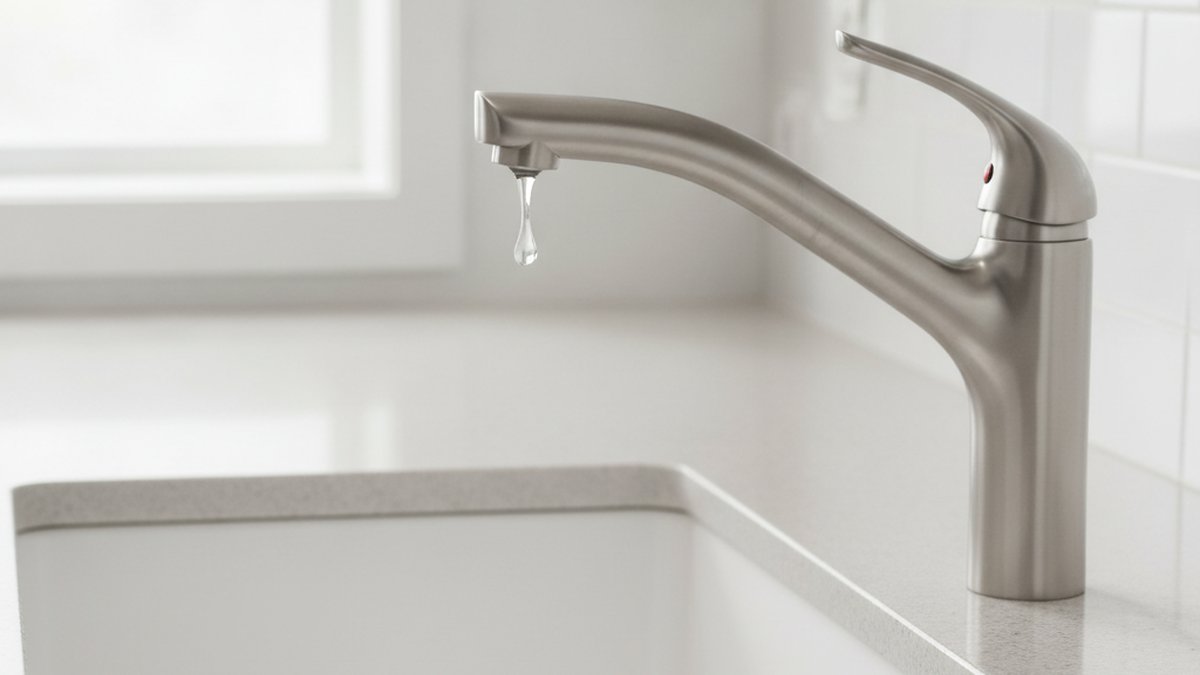
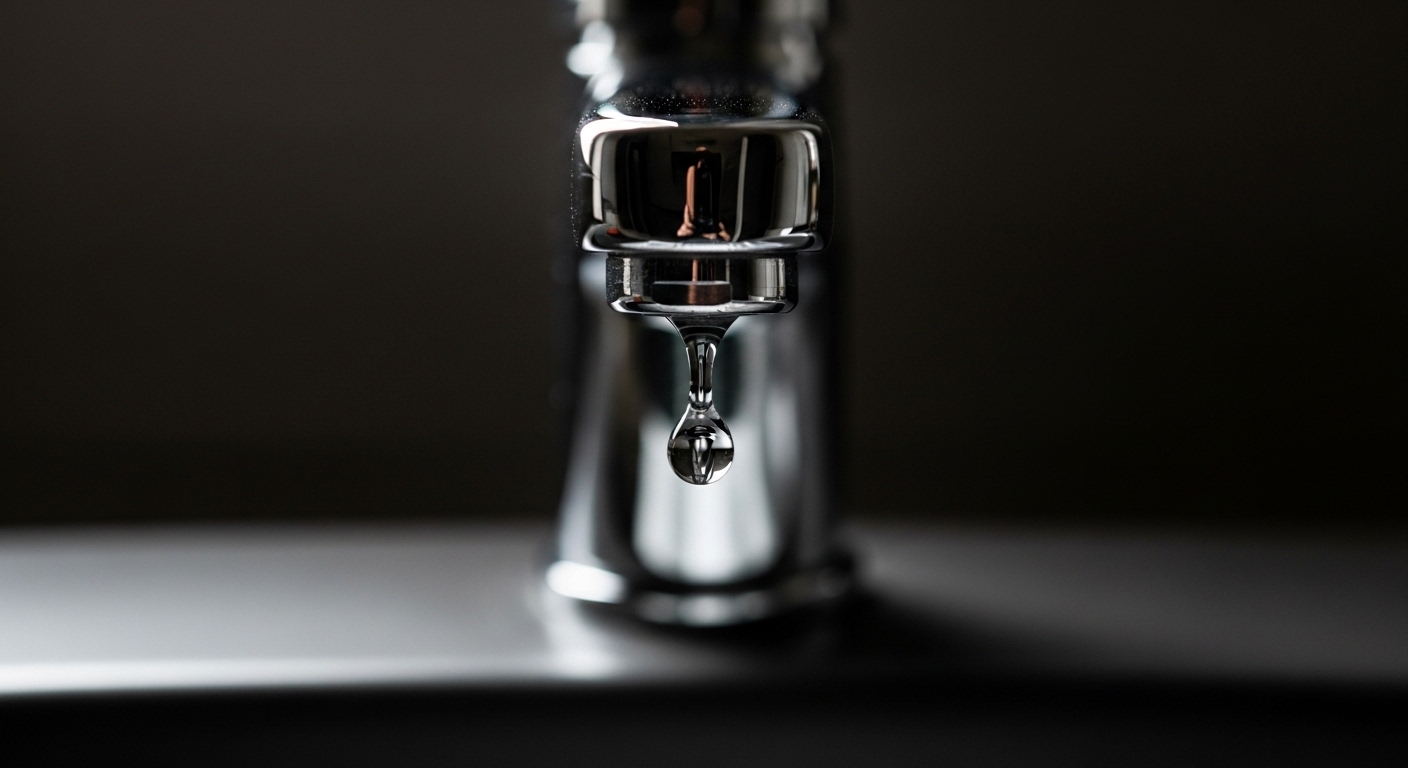
You don’t need a gushing stream. A trickle roughly the width of a pencil lead — around one drip per second — is enough to keep water moving and pressure relieved. Open both the hot and cold handles slightly on a two-handle faucet, or set a single-handle mixer to the middle (warm) position so both supply lines stay active. The hot-water lines freeze too, and people forget them.
Here’s the quick decision framework:
- Above 25°F (-4°C): Usually no need to drip if your home is insulated and heated.
- 20–25°F (-6 to -4°C): Drip the faucets on exterior walls and any pipe in an unheated space.
- Below 20°F (-6°C), or a multi-day cold snap: Drip multiple faucets, open cabinet doors under sinks, and keep the heat on.
- Below 0°F (-18°C) or a long power/heat outage: Drip aggressively at the faucet farthest from your main shutoff and consider shutting off and draining if you’ll be away.
Which faucet should you drip — the one farthest from the main?
Drip the faucet located farthest from where water enters your home, because that pulls water through the entire run of pipe and protects the most vulnerable stretches. Water only needs to move through a pipe to resist freezing, so the faucet at the end of the line does the most work — every pipe upstream of it gets flow too.
Beyond that single “farthest” faucet, prioritize any fixture whose supply lines run through cold zones:
- Kitchen sinks on an exterior wall (very common weak point).
- Bathroom faucets and tub fillers backing to an outside wall or over a crawl space.
- Utility/laundry sinks in unheated garages or basements.
- Any faucet fed by pipes you can see running through an attic or crawl space.
If your bathtub or shower valve sits on an outside wall, don’t ignore it — tub and shower valves freeze just as readily as sink faucets, and they’re far more expensive to repair when the internal bathtub faucet stem or valve body cracks from ice. A slow drip from the tub spout on a bitter night is cheap protection for an expensive fixture.
How much water does dripping a faucet actually waste and cost?
A protective winter drip typically uses about 5 to 10 gallons over an entire night, costing most U.S. households somewhere between roughly 5 and 20 cents per faucet per night. Compare that to a burst pipe, which can dump hundreds of gallons per hour and cause an average water-damage insurance claim north of $10,000 — the math isn’t close.
Here’s a realistic breakdown so you can see it clearly:
| Scenario | Water used | Approx. cost | Risk covered |
|---|---|---|---|
| One faucet, slow drip, 8-hr night | ~5–8 gallons | $0.05–$0.15 | Single pipe run on exterior wall |
| Three faucets, moderate trickle, 12-hr freeze | ~20–35 gallons | $0.30–$0.90 | Whole-home during hard freeze |
| No drip, pipe freezes and bursts | Hundreds–thousands of gallons | $5,000–$15,000+ | Nothing — this is the disaster |
So when someone asks “drip faucet or not,” the cost side of the argument is basically settled: a few nights of dripping across a cold snap won’t move your water bill in any noticeable way, while one burst pipe can wreck floors, drywall, and cabinets. Drip when it’s genuinely cold; don’t leave faucets running 24/7 all winter for no reason.
Is your faucet dripping to protect pipes, or is it broken and leaking?
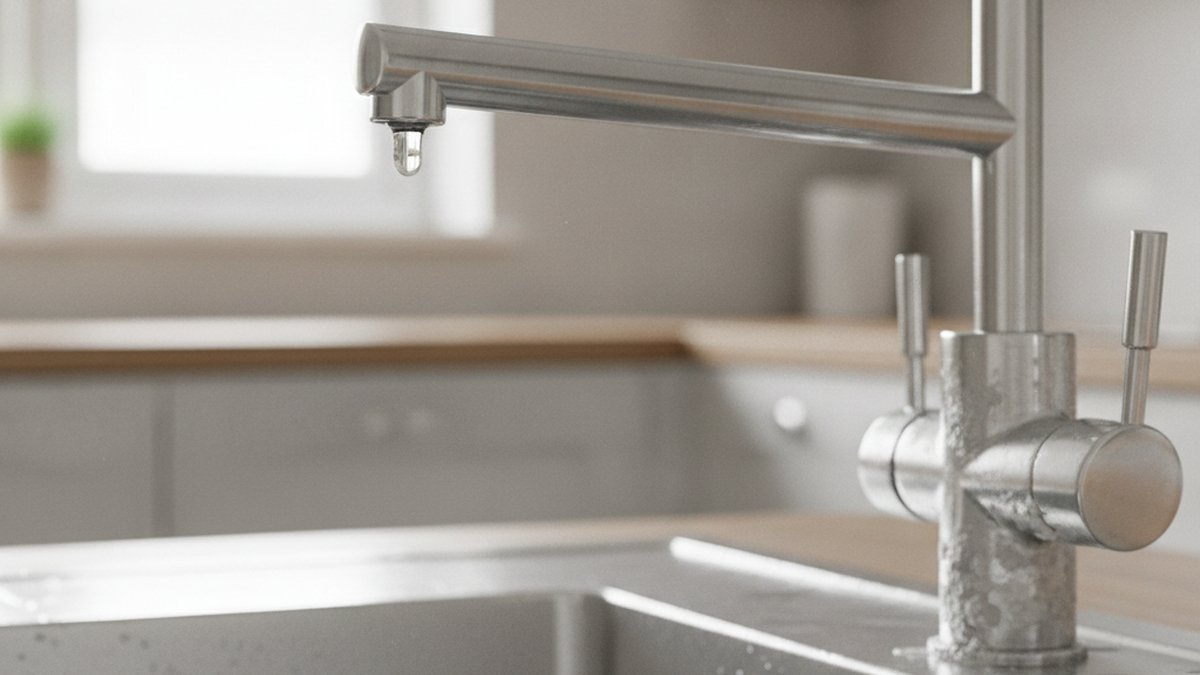
If your faucet drips when you didn’t open it — or keeps dripping after you’ve fully closed both handles in mild weather — that’s not protection, that’s a worn part you need to repair. A protective drip is something you deliberately turn on and off. A leak is water escaping past a seal that’s supposed to hold, and it points to a failing cartridge, a cracked O-ring, or a worn valve seat.
The tell-tale differences:
| Sign | Protective winter drip | Faucet that needs repair |
|---|---|---|
| When it happens | Only when you open the handle on cold nights | Constant, even with handle fully closed |
| Where water appears | From the spout, into the sink | Spout won’t stop, or leaks at the base/handle |
| Sound | Quiet, steady drip you chose | Random drip, sometimes a whistle or ticking |
| Fix | Just close the handle when it warms up | Replace cartridge, O-ring, washer, or seat |
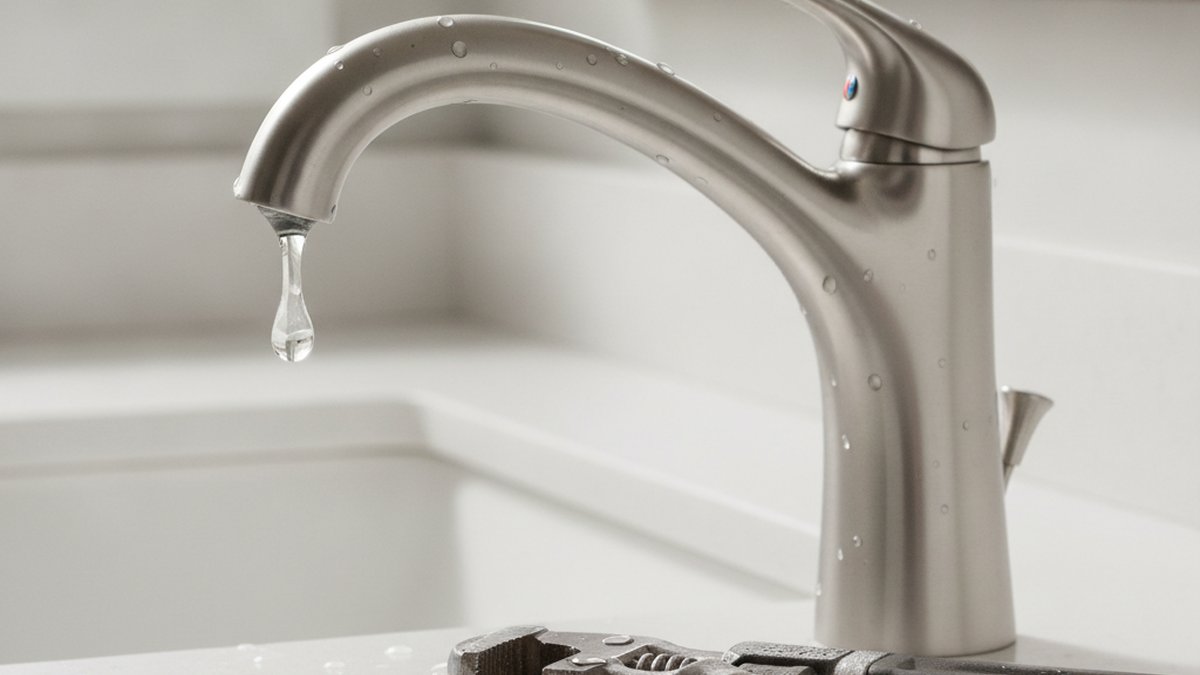
If you’re seeing the right-hand column, the drip isn’t saving your pipes — it’s slowly wasting water and can worsen over time. A steady leak of one drip per second wastes roughly 3,000 gallons a year. The usual culprit inside a single-handle faucet is a worn cartridge; in a two-handle faucet it’s typically the rubber washer or seat. If it’s a Moen, our guide on how to fix a Moen kitchen faucet from leaking walks through cartridge swaps step by step, and for a bathtub filler that won’t quit, see why a freestanding tub faucet keeps dripping and how to stop it.
How do you quickly test which one you’ve got?
Close both handles firmly (don’t crank them — over-tightening ruins the seat) and wait five minutes in normal indoor temperature. If the spout still drips, you have a repair on your hands, not a freeze-protection situation. Pull the cartridge, inspect the O-rings and washer for cracks or flattening, and replace what’s worn. If you’re on a Glacier Bay or similar valve, a straightforward Glacier Bay faucet cartridge replacement usually solves a persistent drip in under 30 minutes with basic tools.
What else should you do besides dripping to prevent frozen pipes?
Dripping is one layer — pair it with heat retention and you cover almost every failure mode. The drip relieves pressure, but keeping the pipe warmer in the first place is what prevents the ice plug from forming at all. Do both on the coldest nights.
- Open cabinet doors under kitchen and bathroom sinks so heated room air reaches the supply lines against exterior walls.
- Keep the thermostat steady — don’t set it back at night during a freeze. A constant 60–65°F (16–18°C) is cheaper than a repair.
- Insulate exposed pipes with foam sleeves in crawl spaces, garages, and basements. It’s a few dollars per length at any hardware store.
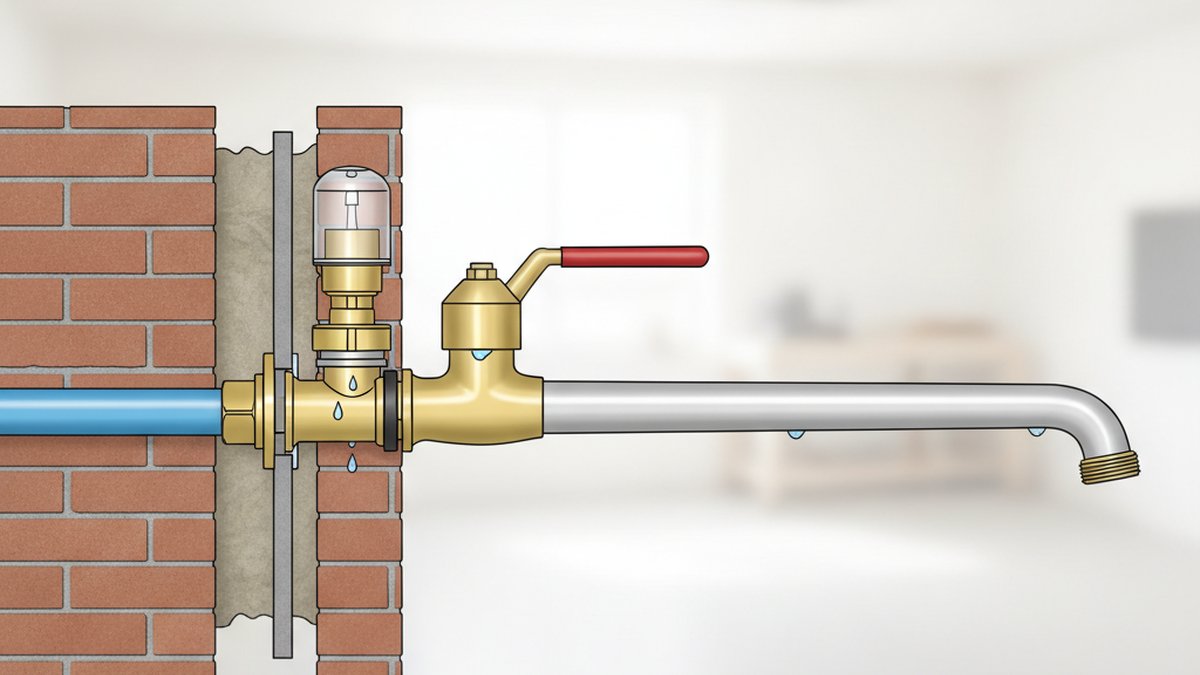
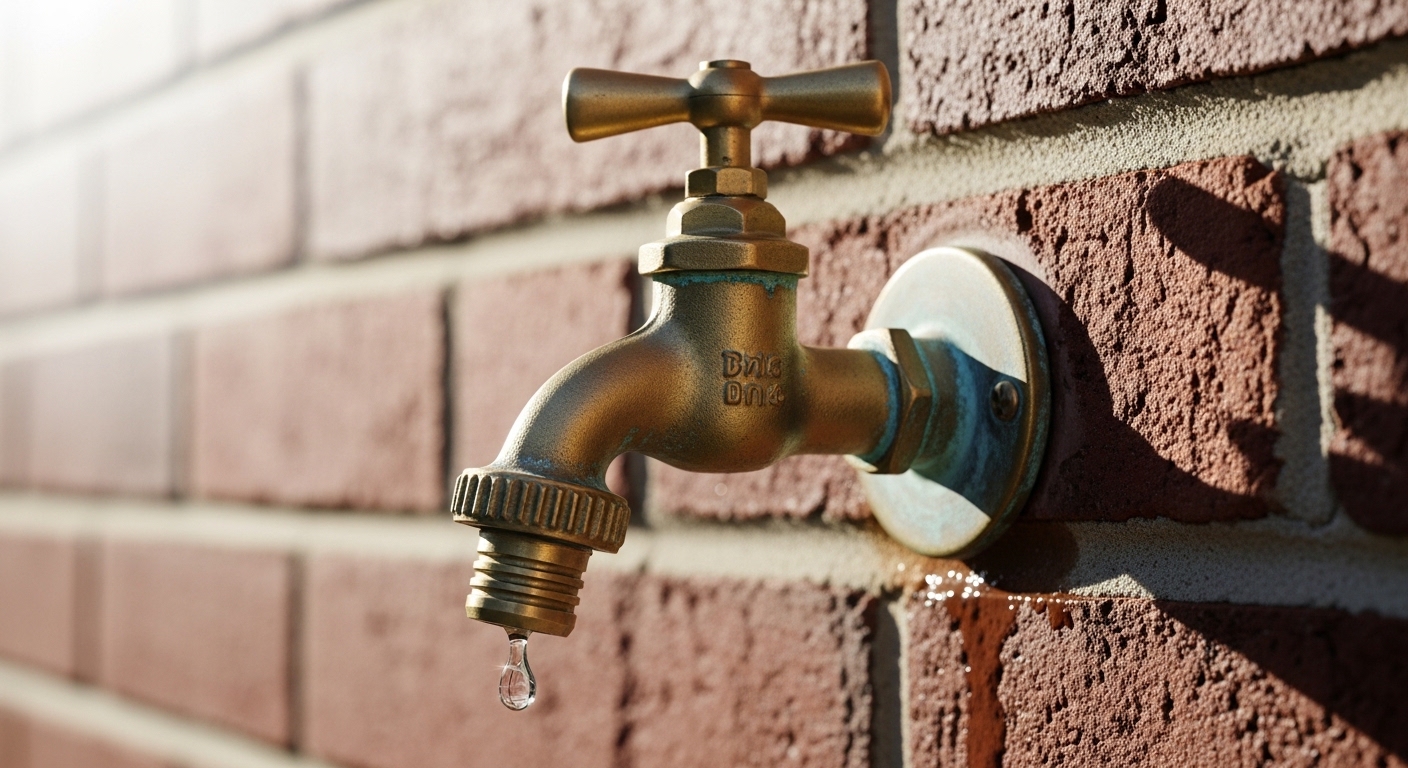
- Disconnect garden hoses and shut off/drain outdoor spigots before the first freeze — hose bibs are the single most common burst point.
- Seal drafts near pipe penetrations in exterior walls; a small gap blowing 15°F air onto a pipe defeats everything else.
- Know your main shutoff location and test it now, so if a pipe does burst you can stop the flood in seconds.
If you’ll be away during a hard freeze, the safest move is to shut off the main and open faucets to drain the system, or drip continuously and leave the heat on. An empty pipe can’t burst.
Does a single-handle faucet need special handling to drip both lines?
Yes — set a single-handle faucet to the center (lukewarm) position so both the hot and cold supply lines flow, not just one. Many people leave a single-lever faucet pushed to full cold, which leaves the hot line static and vulnerable. On a two-handle faucet, crack both handles open a little. The goal is movement in every supply line that runs through a cold zone.
When is dripping NOT the right call?
Skip the drip when temperatures stay above freezing, when your pipes run only through well-heated interior walls, or when the “drip” is actually a leak you should be repairing. Dripping a faucet that’s on a septic system for days on end can also overload a drain field, so use judgment on multi-day snaps and lean on insulation instead where you can.
And if you’re mid-remodel or the fixture is aging out anyway, a chronic drip is your cue to upgrade rather than nurse an old valve through another winter. A modern ceramic-disc cartridge holds a positive seal far better than the old rubber-washer designs and is much less likely to weep in the cold. Choosing a quality faucet built to sealing and flow standards up front saves you the annual repair dance.
A quick word on faucet quality, testing, and warranty
The faucets least likely to leave you guessing “drip faucet or not” are the ones built to real standards and backed by a real warranty. Reputable fixtures are tested to standards like ASME A112.18.1/CSA B125.1 for performance and NSF/ANSI 61 and 372 for lead-free safety, and better cartridges are cycle-tested to hundreds of thousands of open/close actions before they ship. That’s the difference between a faucet that seals cleanly for a decade and one that starts weeping in year two.
At aleashafaucet, we design kitchen and bathroom faucets around ceramic-disc cartridges, corrosion-resistant brass bodies, and finishes tested to hold up against hard water and daily use — and we back them with a warranty because we expect them to hold their seal season after season, freezing nights included. When a faucet is built right, your only winter drip is the deliberate, protective one.
FAQ
At what temperature should I start dripping my faucets?
Start when the forecast low is around 20°F (-6°C) or below for several hours, and definitely below that during a multi-day cold snap. If your pipes run through uninsulated crawl spaces, garages, or exterior walls, err on the earlier side and begin around 25°F (-4°C).
Should I drip hot water, cold water, or both?
Both. Hot-water supply lines freeze just as easily as cold ones. On a two-handle faucet, open each handle slightly; on a single-handle faucet, set the lever to the middle so warm water flows and both lines stay active.
How much should the faucet drip — a stream or a trickle?
A trickle about the width of a pencil lead, roughly one drop per second, is plenty. You’re relieving pressure and keeping water moving, not trying to run the faucet. That uses only about 5–10 gallons overnight.
My faucet keeps dripping even in warm weather — is that the same thing?
No. A drip you didn’t turn on, or one that continues after both handles are fully closed in mild weather, is a leak that needs repair — usually a worn cartridge, O-ring, or washer. Replace the failing part rather than letting it drip; a one-drop-per-second leak wastes about 3,000 gallons a year.
Does dripping one faucet protect the whole house?
Dripping the faucet farthest from your main shutoff pulls water through the longest run of pipe and protects a lot of the system, but it won’t cover branches that split off elsewhere. During a hard freeze, drip several faucets on exterior walls and open under-sink cabinet doors so warm air reaches the pipes.
Can I just insulate my pipes instead of dripping?
Insulation slows heat loss but doesn’t add heat, so on extreme nights pipes can still freeze. The most reliable approach combines both: insulate exposed lines, keep the heat on, and drip during the coldest hours. Belt and suspenders beats either one alone.
Author note: This guide was written by the aleashafaucet product and plumbing content team, drawing on hands-on faucet testing, cartridge teardown analysis, and manufacturer valve-sealing standards. We build and stress-test faucets for a living, so the advice here reflects how these fixtures actually behave in cold weather — not generic web copy.