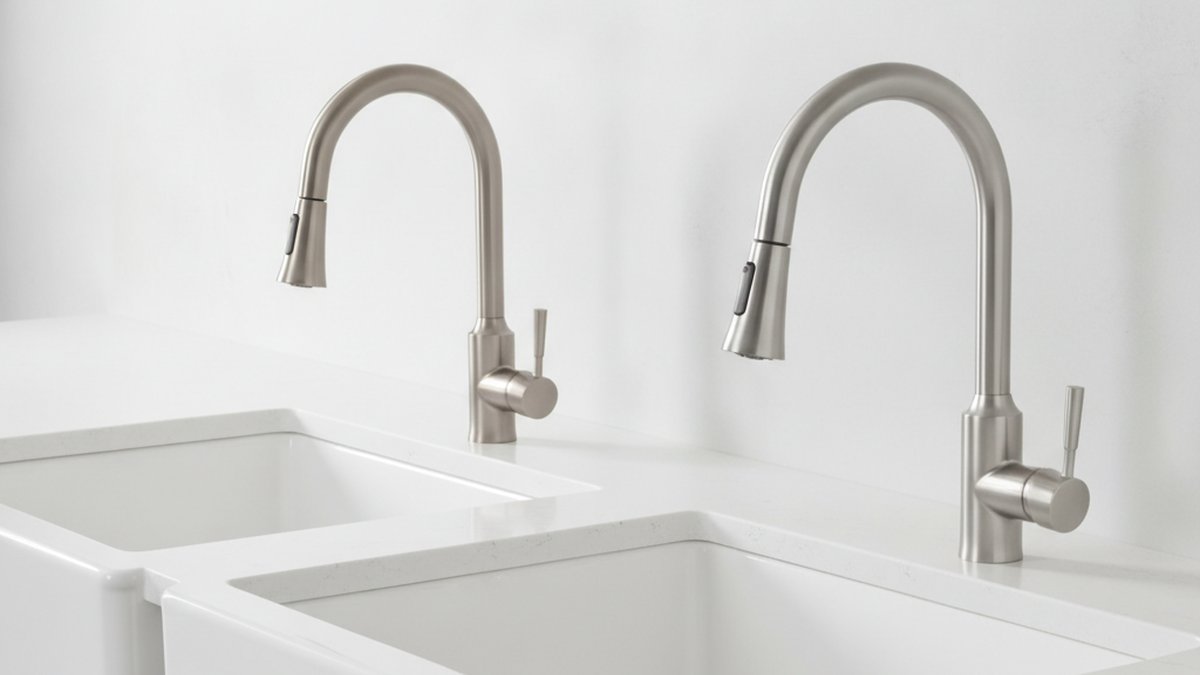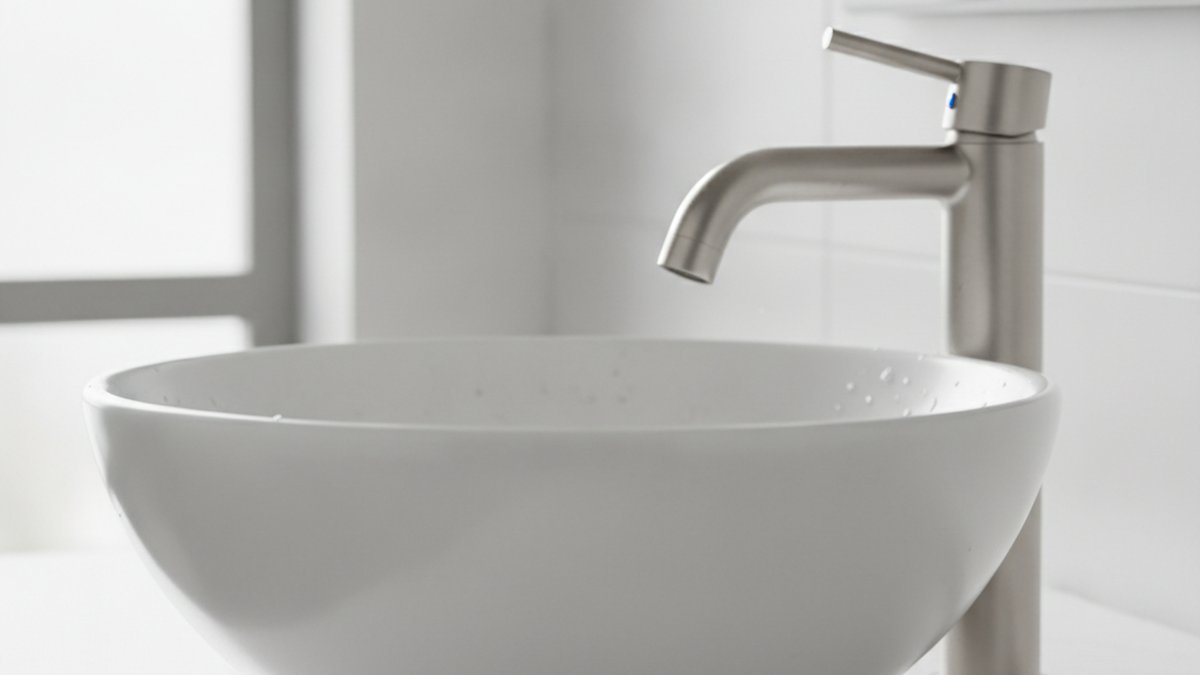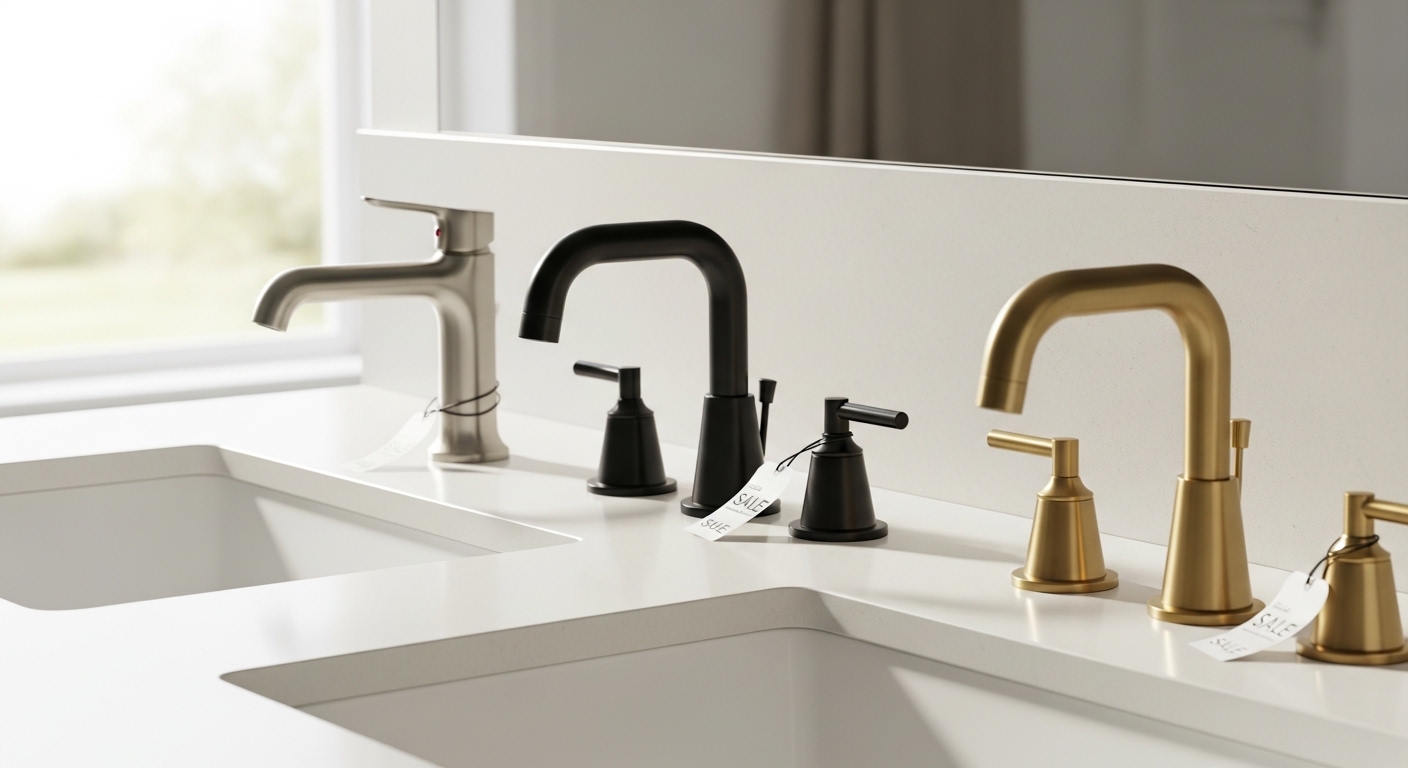
If you’ve been searching for the best bathroom faucets on sale, the hard part isn’t finding a discount — discounts are everywhere, all year. The hard part is telling the difference between a genuinely good faucet that happens to be marked down and a cheap faucet that’s always “on sale” because the inflated original price was never real. This guide walks you through exactly how to read a faucet deal: what specs actually matter, which finishes and mount types hold their value, what a fair sale price looks like, and the red flags that mean “walk away” even at 60% off.
We’ll keep it concrete — real numbers, real terminology, real scenarios — so whether you’re replacing one tired chrome faucet or outfitting a whole remodel, you can spot the difference between a bargain and a trap in about thirty seconds.
How do you know if a bathroom faucet on sale is actually a good deal?
A bathroom faucet on sale is a good deal when the discounted price is below market for that build quality — not just below the seller’s own “original” price. Check three things in order: the body material, the cartridge, and the finish warranty. If all three check out and the price is 25–50% under what comparable brass faucets sell for, it’s a real deal. If the listing hides any of those three specs, assume the worst.
Here’s the trap most shoppers fall into. A faucet listed at “$149, now $59” feels like a steal. But if that faucet has a zinc-alloy body and a plastic cartridge, $59 is roughly what it’s worth — the “$149” was a fictional anchor price designed to make the sale feel urgent. Meanwhile a solid-brass faucet with a ceramic-disc cartridge marked from “$160 to $115” is the genuinely better buy, even though the discount percentage looks smaller.
The percentage off is marketing. The price-per-quality is what you actually pay. Always compare the sale price against other faucets of the same build — never against the strike-through number next to it.
What’s a fair sale price for a quality bathroom faucet in 2026?
For a solid-brass bathroom faucet with a ceramic cartridge and a lifetime finish warranty, a fair sale price lands in these ranges:
| Faucet type | Typical full price | Good sale price | Best for |
|---|---|---|---|
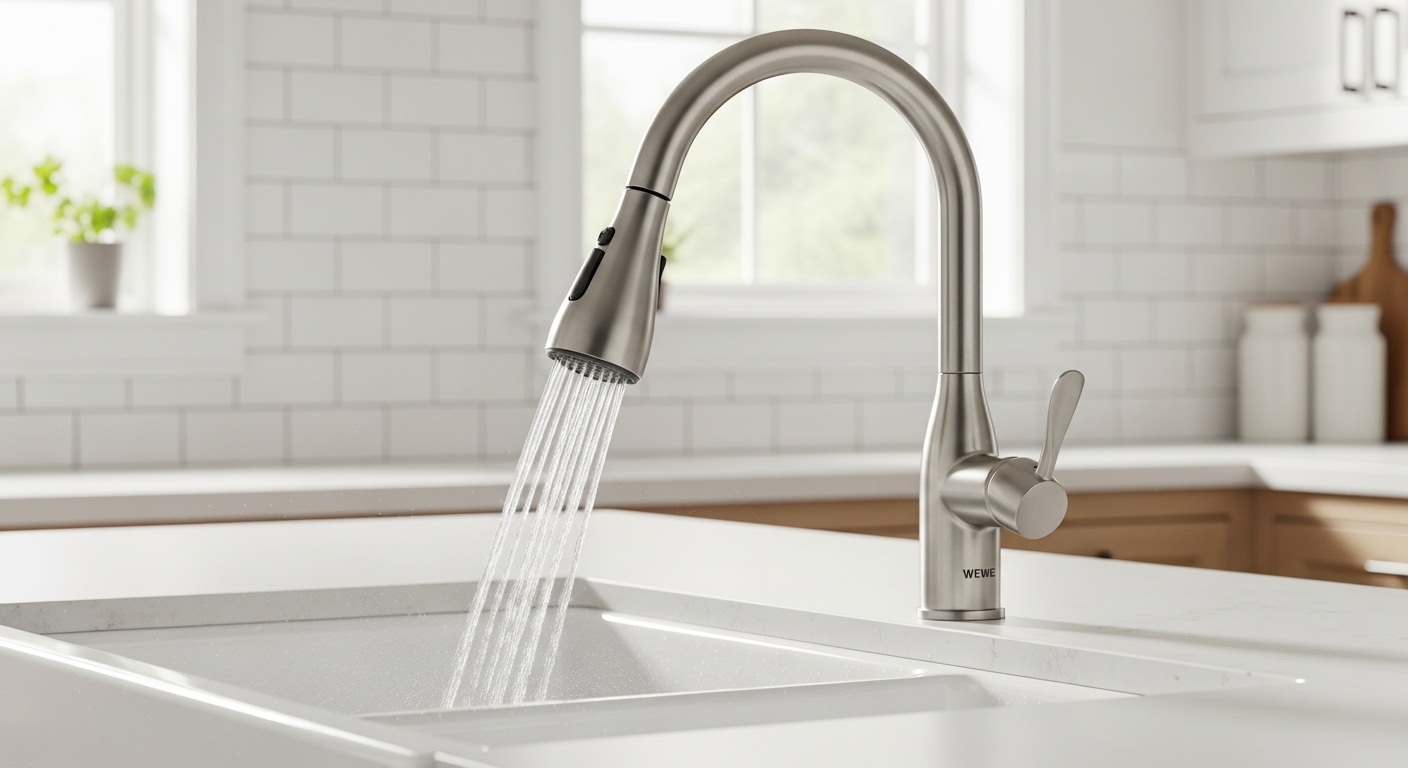
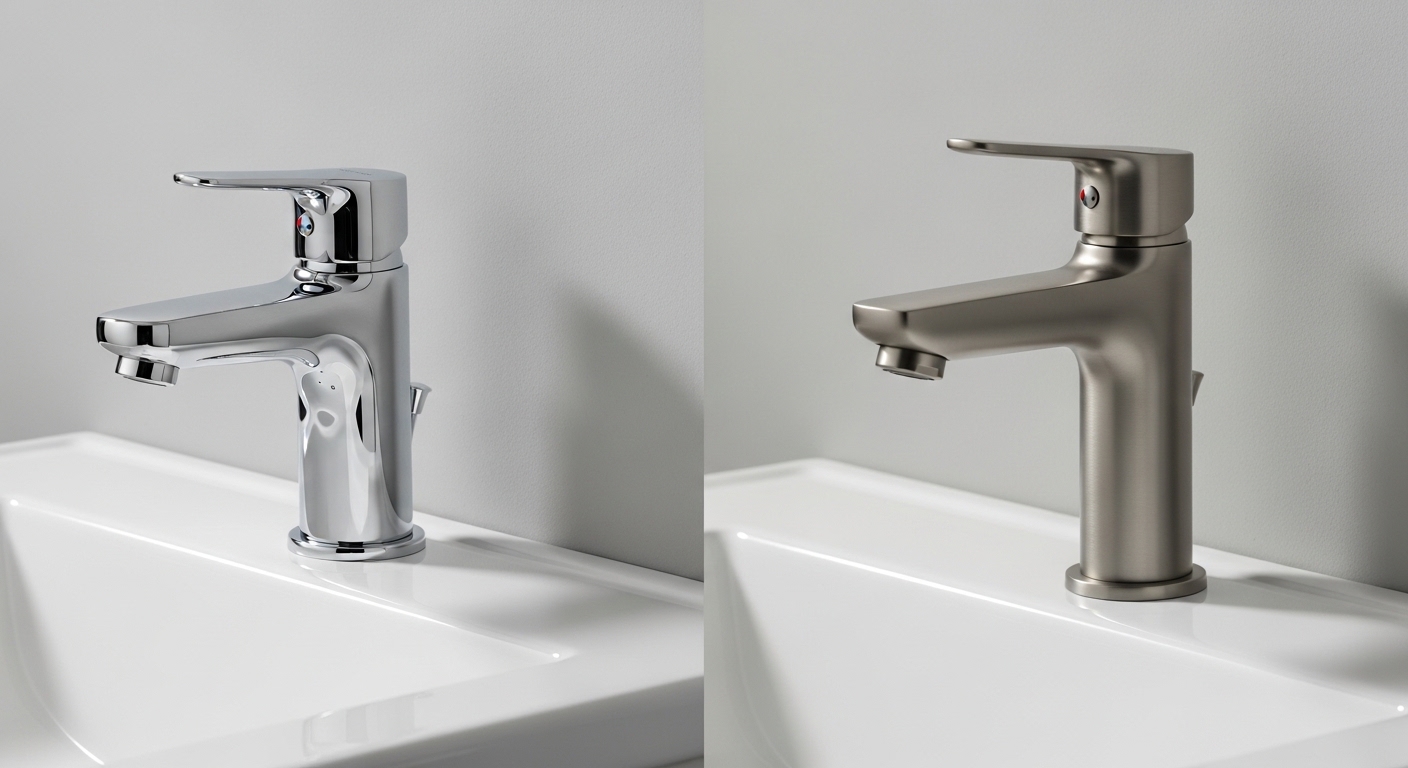
| Single-hole bathroom faucet | $110–$190 | $60–$120 | Small vanities, modern look, easy install |
| Centerset (4″ spread) | $90–$160 | $55–$105 | Replacing an existing 3-hole faucet |
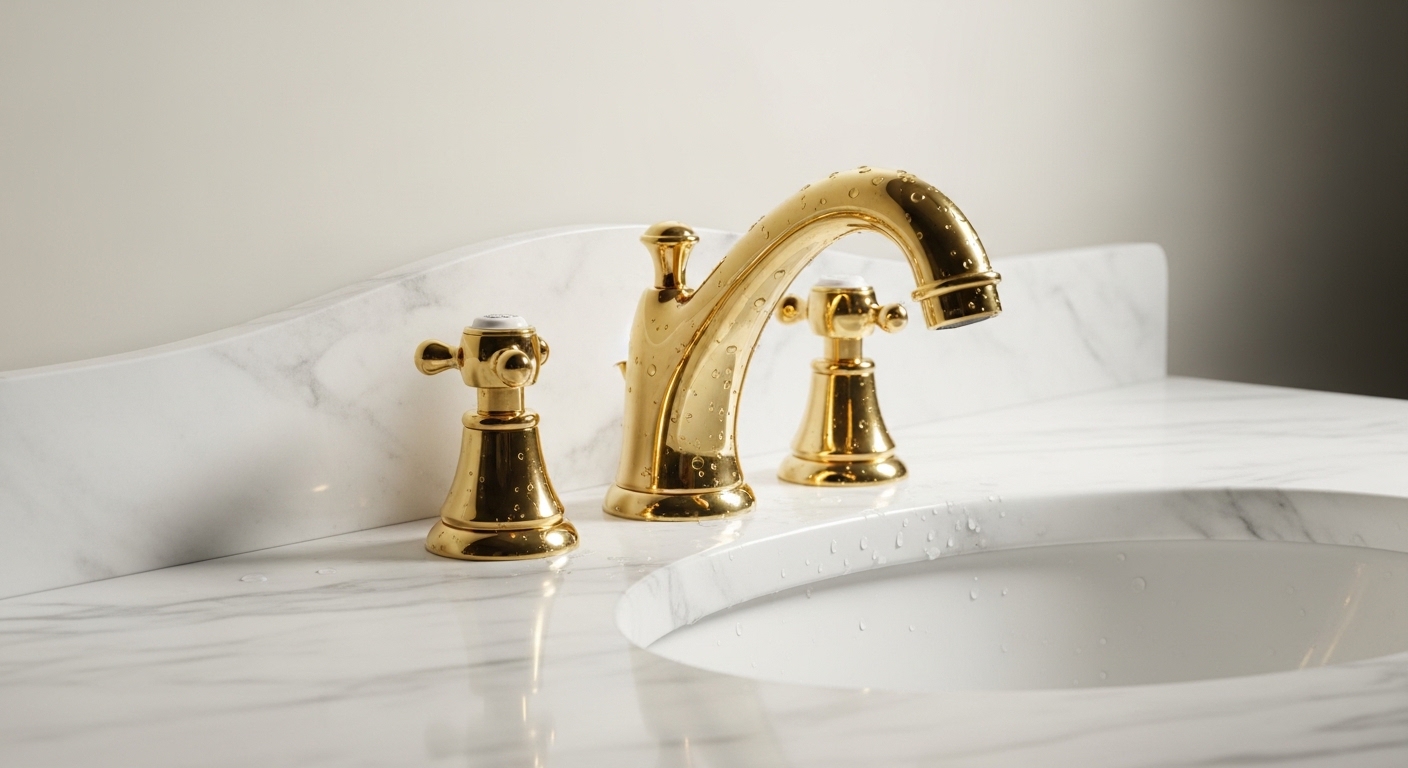
| Widespread (8″ spread) | $160–$320 | $110–$210 | Larger vanities, premium/traditional look |
| Wall-mount bathroom faucet | $180–$380 | $130–$260 | Vessel sinks, statement bathrooms |
If a sale price sits below the bottom of these ranges, don’t assume you won the lottery — assume it’s a lighter-weight body or a budget cartridge, and verify before you buy. If you’re weighing a wall-mount setup specifically, our deeper look at whether a wall-mount faucet is right for a vessel sink covers the rough-in and valve considerations that change the math.
What should you actually look for in a discounted bathroom faucet?
Look for a solid brass body, a ceramic-disc cartridge, a lead-free certification, and a lifetime warranty on both the finish and the cartridge. Those four things separate a faucet that lasts 15+ years from one you’ll be replacing in three. The sale price is irrelevant if the faucet fails — a $59 faucet that leaks in two years is more expensive than a $115 faucet that never does.
Let’s break down each one, because the spec sheet is where deals are won or lost.
Body material: brass vs. zinc vs. stainless
- Solid brass — the gold standard. Corrosion-resistant, heavy, threads hold up to repeated tightening, and it tolerates hard water far better than alloys. This is what you want on sale.
- Stainless steel — excellent and naturally lead-free, common on modern minimalist faucets. Slightly lighter feel than brass but very durable.
- Zinc alloy (sometimes labeled “metal” or “zamak”) — the budget filler. Fine for a handle or a decorative shell, but as the main waterway body it pits and cracks over time, especially with hard water. Most “too good to be true” faucet sales are zinc.
A quick field test: pick the faucet up if you can, or check the shipping weight. A real solid-brass single-hole faucet usually weighs 3–5 lbs. If a listing brags about being “lightweight,” that’s often code for zinc.
The cartridge: the part that actually decides longevity
The cartridge is the valve that controls flow and temperature, and it’s the single most important moving part. You want a ceramic-disc cartridge — two polished ceramic plates that slide against each other and seal without rubber that wears out. Quality faucets rate their cartridges to 500,000+ open/close cycles. Cheap faucets use rubber-washer or plastic cartridges that drip within a couple of years.
If you’ve ever fought a drip you couldn’t fix, you know why this matters. Our guides on fixing a leaking faucet without calling a plumber exist precisely because budget cartridges fail — buying a ceramic-disc faucet up front saves you that whole headache.
Finish and lead-free certification
The finish is what you see every day, so it needs to survive cleaning, water spots, and toothpaste. Look for a PVD (physical vapor deposition) finish — it’s bonded at a molecular level and resists scratching and tarnishing far better than electroplating. And insist on a lead-free certification (look for “meets NSF/ANSI 372” or “complies with the U.S. Safe Drinking Water Act”). If you’re not sure how to verify that, here’s how to identify lead-free bathroom faucets from the markings and documentation.
Which faucet finish is the best buy when it’s on sale?
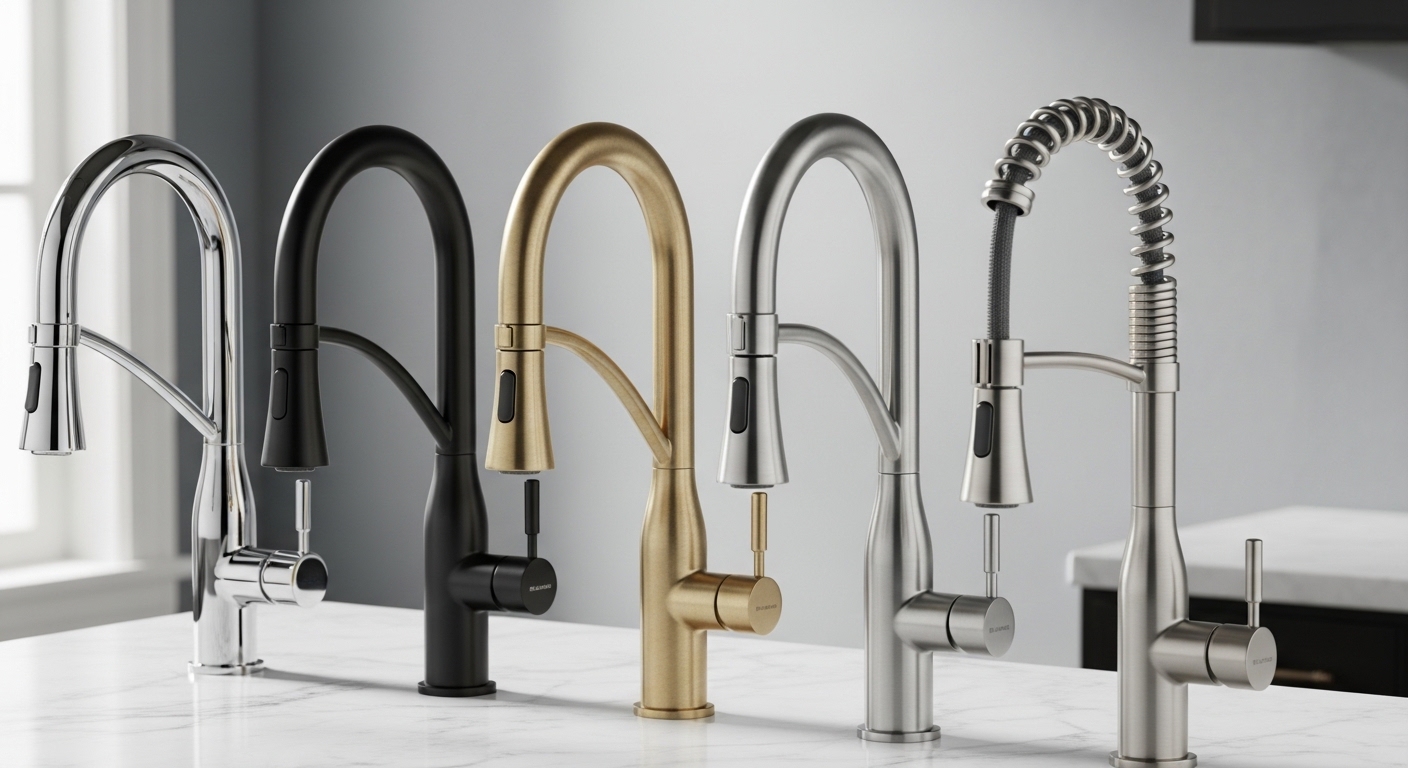
The best finish to buy on sale is one that’s both durable and still in style, so you’re not redecorating around it in two years. In 2026 that means brushed nickel (the safe all-rounder), matte black (modern and high-contrast), and brushed/champagne gold (warm and on-trend). Polished chrome is the cheapest and most discounted, but it shows water spots the most. Here’s how they stack up.
| Finish | Hides water spots? | Style staying power | Best room/vibe |
|---|---|---|---|
| Brushed nickel | Excellent | Very high — timeless | Almost any bathroom |
| Matte black | Good (shows dust/limescale) | High — strong but stable | Modern, transitional |
| Brushed gold / champagne bronze | Good | High and rising | Warm, contemporary, spa-like |
| Polished chrome | Poor — shows everything | Moderate | Classic, budget builds |
Worried a trendy finish will date your bathroom? Good news: the data says otherwise. We dug into whether brushed nickel is out of style in 2026 (it isn’t) and whether matte black is fading (also no) — both remain safe, resale-friendly picks. So when a sale lands on one of these finishes, you can buy with confidence rather than chasing a fad you’ll regret.
Does matte black on sale need more maintenance?
Yes, a little. Matte black hides water spots well but shows dried limescale and dust more than brushed finishes, so it benefits from a quick wipe with a damp microfiber cloth a couple times a week. It’s a tiny trade-off for a dramatic look — just never use abrasive pads or acidic cleaners on it, which can dull the matte coating. The same gentle-care rule applies to gold finishes, which is why a brushed gold faucet on sale is a great value if you’re willing to do that 30-second wipe-down.
Single-hole or widespread — which is the smarter sale buy?
Buy whichever matches the holes already drilled in your sink or countertop — that constraint matters more than the discount. A single-hole faucet needs one hole; a centerset covers three holes within 4 inches on a single base plate; a widespread uses three separate pieces spaced 8 inches apart. Buying the wrong configuration on sale means either drilling new holes or buying a cover plate, which eats your savings.
Quick decision guide:
- You have one hole, or a small vanity: go single-hole. Clean, modern, easiest to install.
- You’re replacing a standard three-hole faucet: a centerset (or a single-hole with a deck plate) drops right in with no new drilling.
- You have an 8-inch three-hole layout or a wide vanity: widespread looks the most premium and is often the type with the deepest dollar discounts at sale time because it carries the highest list price.
That last point is worth pausing on: because widespread faucets have the highest MSRPs, a percentage-off sale puts more actual dollars back in your pocket. A 35% discount on a $260 widespread saves you $91 — far more than 35% off a $90 centerset. If your sink supports it, widespread is often where the best bathroom faucets on sale deliver the biggest real savings.
What red flags mean you should skip a faucet deal entirely?
Skip any faucet deal that hides the body material, has no finish or cartridge warranty, shows a suspiciously round “original” price, or uses only glamour photos with no spec sheet. Those four signals almost always mean the discount is a marketing device wrapped around a low-quality faucet. A real deal is transparent about what you’re buying.
- No material listed. If the listing won’t say “solid brass” or “stainless steel,” it’s almost certainly zinc alloy. Reputable sellers advertise brass loudly because it costs more.
- “Lifetime sale.” If the same item has been “50% off” for six months, the sale price is the price, and the strike-through is theater.
- No warranty terms. A faucet with no stated finish or cartridge warranty is telling you the maker doesn’t expect it to last.
- No flow rate (GPM). Quality faucets list their flow rate (typically 1.2 GPM for bathroom faucets to meet WaterSense). Missing specs signal a missing standard.
- Reviews mention “leaks after a few months” or “finish peeled.” Believe them. Those are cartridge and plating failures, the two things a good faucet gets right.
One more durability note that’s easy to overlook: corrosion. Even a discounted faucet can rust prematurely if the base metal is poor or the finish is thin. If you live somewhere humid or with aggressive water, it’s worth understanding why bathroom faucets corrode and how to prevent it before you commit to any deal — it’ll make the brass-and-PVD advice above feel a lot less optional.
How do you make sure the sale faucet actually fits and installs cleanly?
Before you buy any faucet on sale, measure your sink’s hole count and spacing, check the deck thickness against the faucet’s mounting range, and confirm your supply lines match the faucet’s connectors. Ninety percent of “the deal was a hassle” stories come from a fit mismatch, not the faucet itself. Five minutes of measuring protects your savings.
Here’s the pre-purchase checklist:
- Count your holes and measure center-to-center spacing (1 hole, 4″, or 8″).
- Measure deck thickness — most faucets mount on decks up to about 1.5″; thick stone counters sometimes need an extension.
- Check supply connections — most U.S. faucets use 3/8″ compression supply lines; confirm yours match or grab adapters.
- Confirm the drain — many bathroom faucets include a pop-up drain assembly; if yours doesn’t, factor that small cost into the “deal.”
- Mind the spout reach and height — a tall vessel-style spout over a shallow sink will splash; match spout height to bowl depth.
If your deal includes a faucet that mounts somewhere unusual — like onto a backsplash rather than the deck — the install differs, and our walkthrough on how to mount a faucet to a backsplash covers the rough-in details so the sale faucet goes on right the first time.
Author’s note & why you can trust this guide
This guide was written by the Aleasha Faucet product team, drawing on years of hands-on faucet testing, returns analysis, and customer-service data — we see exactly which faucets come back and why, which is the most honest teacher there is. At aleashafaucet.com, every bathroom faucet we sell is built on a solid-brass or stainless body, fitted with a ceramic-disc cartridge rated for long-cycle use, finished with PVD coating, and certified lead-free to NSF/ANSI 372. Our faucets carry a limited lifetime warranty on finish and function, and we test cartridges against standard cycle-endurance benchmarks before anything ships. We’d rather lose a sale than put our name on a faucet that fails in two years — that’s the whole reason this article exists.
FAQ
When is the best time to buy bathroom faucets on sale?
The biggest faucet discounts cluster around major shopping holidays — Black Friday/Cyber Monday, Memorial Day, July 4th, and Labor Day — plus end-of-season clearances when retailers rotate finishes. But because faucets don’t really “expire,” the smartest move is to watch the price on a specific model you’ve already vetted and buy when that faucet drops, rather than buying whatever happens to be discounted this week.
Are cheap bathroom faucets on sale worth it, or will they leak?
A cheap faucet is worth it only if it still has a brass or stainless body and a ceramic-disc cartridge — those can genuinely be inexpensive when discounted. What leaks is the combination of a plastic/rubber cartridge and a zinc body, which is what most rock-bottom “deals” actually are. Spend a little more for the cartridge and material, and a sale faucet will last just as long as a full-price one.
What’s the difference between a faucet that’s truly discounted and one that’s always on sale?
A truly discounted faucet has a real, verifiable market price that you can confirm by comparing similar brass faucets elsewhere; the sale just lowers it temporarily. A “permanently on sale” faucet uses a fictional anchor price that never changes — the strike-through is decoration. Compare the sale price to comparable faucets, never to the number crossed out beside it.
Do bathroom faucets on sale come with the same warranty as full-price ones?
From a reputable brand, yes — a sale price doesn’t change the warranty, because the discount is about inventory and timing, not quality. Be cautious, though, with marketplace listings or off-brand closeouts that quietly strip the warranty to hit a low price. Always confirm the finish and cartridge warranty terms before you buy, regardless of the discount.
Can I install a bathroom faucet I bought on sale myself, or do I need a plumber?
Most single-hole and centerset bathroom faucets are a confident-DIY job — typically 30–60 minutes with an adjustable wrench, a basin wrench, and plumber’s tape, no soldering required. Widespread and wall-mount faucets are more involved because of the separate valve bodies and rough-in plumbing. If your supply lines or shutoff valves are old and corroded, that’s the point where calling a plumber is worth it, sale savings or not.
Is a more expensive bathroom faucet on sale always better than a cheap one at full price?
Not automatically — judge by specs, not price tags. A discounted mid-tier faucet with solid brass and a ceramic cartridge beats a full-price budget faucet with a zinc body every time. But a deeply discounted premium faucet that still has those quality fundamentals plus a better finish and warranty is the best of both worlds. Read the spec sheet first; let the price decide only after the build quality passes.