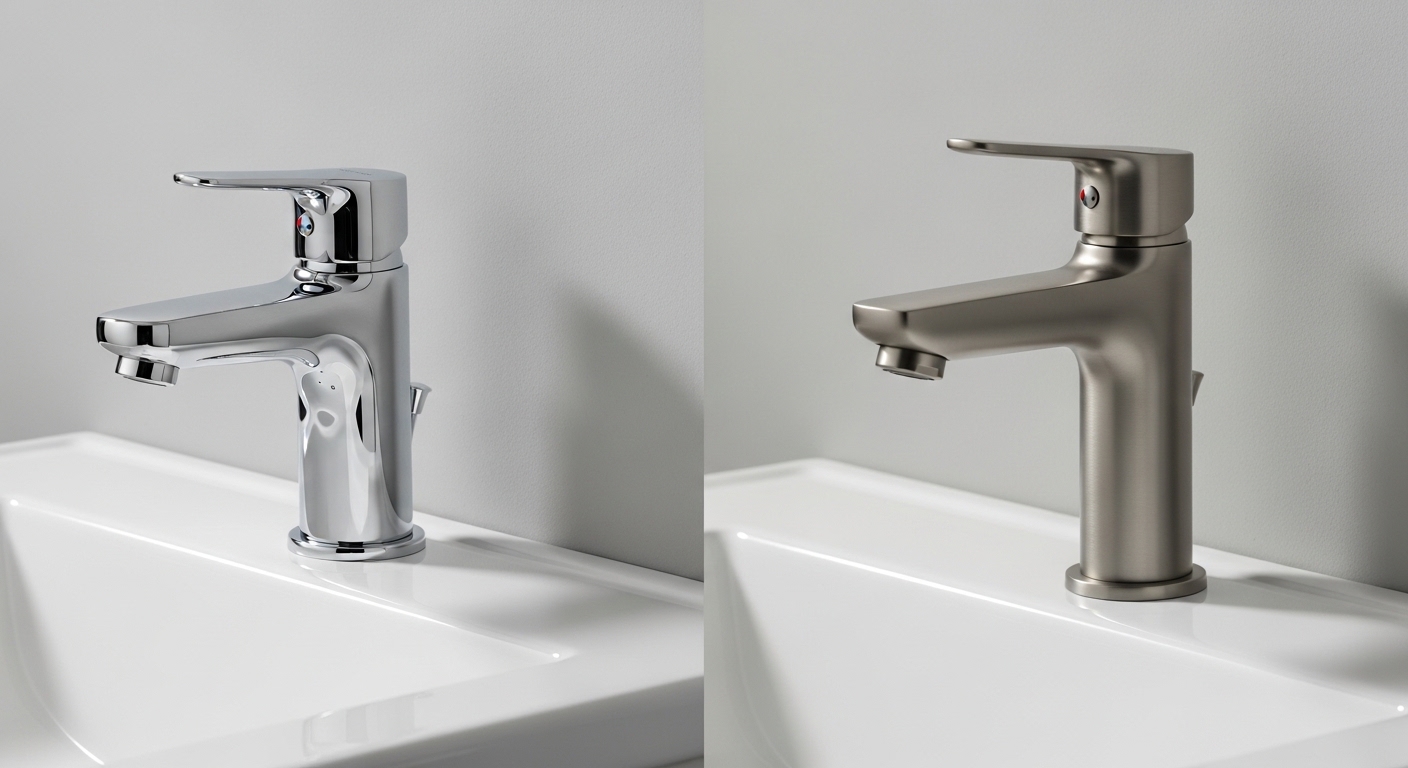
If you’ve been comparing kohler vs grohe bathroom faucets and feel stuck, you’re not alone — these are two of the most respected names in the fixture world, and on paper they look almost interchangeable. They’re not. They come from different design philosophies, different warranty structures, and different price tiers, and the “right” one depends entirely on your water, your budget, and how the faucet will actually live in your bathroom. Below, we break down the real differences the way a knowledgeable plumber-friend would explain them over coffee — no marketing fluff, just the stuff that changes your daily experience and your repair bills five years from now.
As a brand that sells, installs feedback on, and tests bathroom fixtures every day, Aleasha Faucet has handled hundreds of Kohler and Grohe units across remodels and warranty claims. This guide reflects what we actually see hold up — and what fails.
What’s the real difference between Kohler and Grohe bathroom faucets?
The short answer: Kohler is an American brand built around style variety and accessible service, while Grohe is a German brand built around engineering precision and minimalist design. Kohler gives you more finishes, more shapes, and parts you can grab at any big-box store on a Sunday. Grohe gives you tighter manufacturing tolerances, smoother handle action, and tech features like their SilkMove cartridge and StarLight chrome plating.
Think of it this way. Kohler is the dependable, design-rich generalist — you can find a Kohler faucet that looks Victorian, farmhouse, transitional, or ultra-modern, and you’ll never struggle to find a replacement cartridge. Grohe is the specialist — fewer “looks,” but each one is engineered to feel buttery and last under hard, high-pressure water conditions. Neither approach is wrong; they’re just optimized for different priorities.
Here’s the practical kicker most comparison articles skip: in the U.S., Kohler has a far denser service and parts network. If a cartridge fails in year six, you’ll likely have a Kohler replacement in your hand within 48 hours. Grohe parts exist and are excellent, but you may be ordering online and waiting. For a fixture you plan to keep for 15+ years, that logistics reality matters as much as the spec sheet.
Is Kohler or Grohe better for hard water and high water pressure?
For hard water and high pressure, Grohe has a slight engineering edge thanks to its ceramic SilkMove cartridge and pressure-tested valve design, but Kohler’s ceramic-disc cartridges are also excellent and easier to replace when mineral buildup eventually takes its toll. If your home runs above 60 psi or you’re on well water with heavy mineral content, both brands will outperform budget faucets — the difference is in serviceability, not survival.
Hard water is the silent killer of faucets. Mineral scale clogs aerators, stiffens handles, and causes drips. Both Kohler and Grohe use ceramic-disc valving (not the old rubber-washer compression style), which is dramatically more scale-resistant. Grohe’s cartridges are precision-ground in Germany and tend to keep that smooth “SilkMove” feel longer under abrasive water. Kohler’s advantage is that when scale finally wins, a replacement cartridge is cheap and everywhere.
If you’re battling mineral buildup, the faucet brand is only half the fight — your aerator maintenance habit matters just as much. We cover the exact descaling process in our guide on how to clean a rectangular faucet aerator clogged with hard water buildup, and it applies to round Kohler and Grohe aerators too. Ten minutes of vinegar soaking every few months can add years to either brand.
- Best for severe hard water + you DIY repairs: Kohler (cheap, ubiquitous cartridges)
- Best for high pressure + you want the smoothest feel: Grohe (SilkMove ceramic cartridge)
- Best for well water with grit: Either, but install an inline filter first
- Worst choice: any no-name faucet with a plastic cartridge — both Kohler and Grohe crush these
Kohler vs Grohe bathroom faucets: full comparison table
Here’s the head-to-head at a glance. If you only read one section, make it this one — it covers the factors that actually drive buyer regret or satisfaction.
| Factor | Kohler | Grohe |
|---|---|---|
| Origin | USA (Wisconsin) | Germany |
| Design philosophy | Huge style range, traditional to modern | Minimalist, contemporary, European |
| Cartridge tech | Ceramic disc | SilkMove ceramic cartridge |
| Typical price (single-handle) | $120–$450 | $180–$600 |
| Finish tech | Vibrant / PVD finishes | StarLight chrome, PVD |
| U.S. parts availability | Excellent (big-box + online) | Good (mostly online) |
| Warranty (residential) | Limited lifetime | Limited lifetime |
| Handle feel | Solid, slightly firmer | Exceptionally smooth |
| Best for | Most U.S. homes, easy service | Design-forward, precision lovers |
Which brand has better finishes — and will they stay looking new?
Both brands offer durable PVD (physical vapor deposition) finishes that resist tarnishing, but Grohe’s StarLight chrome is famous for staying bright with almost no effort, while Kohler offers a wider palette including warm tones, matte black, and brushed gold that fit American design trends better. If your top priority is a flawless chrome that never spots, Grohe edges ahead; if you want a specific trendy color, Kohler usually has more options.
Finish longevity comes down to two things: the plating technology and your cleaning habits. Both companies use PVD on their premium lines, which bonds the color at a molecular level so it won’t flake or corrode like cheap electroplating. The cheaper “Vibrant” or standard chrome lines are still good, but treat them gently. Avoid abrasive pads and acidic cleaners on any finish from either brand.
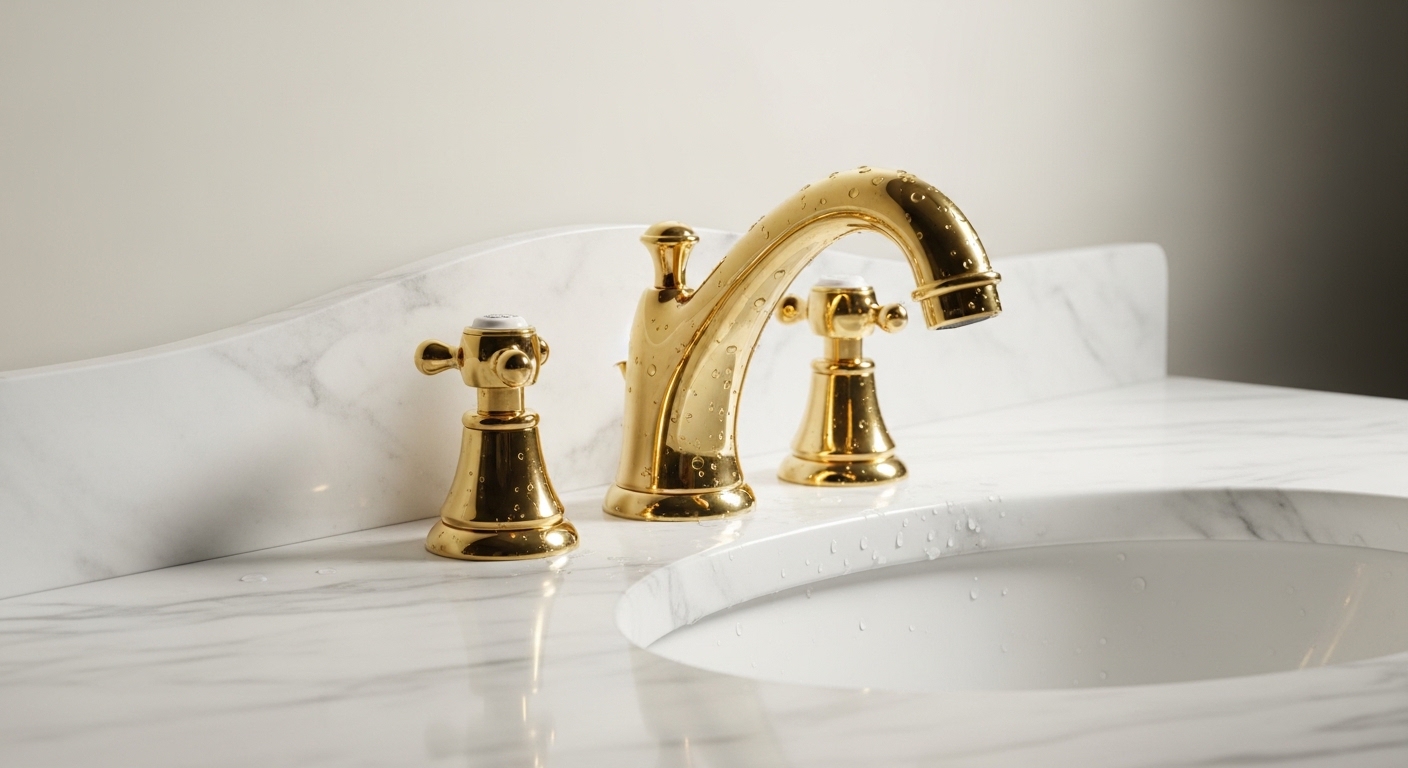
Warm metallic finishes are having a moment, and both brands have leaned in. If you’re weighing a gold or champagne tone, our guide on how to keep gold finish faucets looking new walks through the exact products that won’t strip the coating. And if you’re torn on whether a finish is even still in style, we tackle that directly in our breakdown of whether brushed nickel is out of style in 2026 — relevant because brushed nickel remains one of the most popular finishes in both Kohler and Grohe catalogs.
One real-world note: matte black, offered by both, shows water spots and toothpaste flecks more than any chrome. It looks stunning but demands a quick daily wipe. Don’t choose it for a kids’ bathroom unless you enjoy cleaning.
Is Grohe worth the extra money over Kohler for a mid-range bathroom?
For a mid-range bathroom in the $200–$400 range, Grohe is worth the premium only if you specifically value the silky handle feel, the minimalist German look, or top-tier chrome that never spots — otherwise Kohler delivers 90% of the experience for less money and with far easier local service. Most homeowners doing a single-bathroom refresh will be perfectly happy with Kohler and won’t miss the difference day to day.
Where Grohe genuinely earns its price bump is in high-use or design-statement settings. A primary bathroom you’ll use 10,000 times a year, a modern build where the faucet is a focal point, or a household that simply notices and appreciates precision — those are Grohe’s sweet spots. The handle action on a Grohe SilkMove cartridge really is noticeably smoother, and engineering-minded buyers feel that every single time they turn it on.
Kohler’s counter-argument is value and flexibility. For the price of one premium Grohe, you might outfit two bathrooms in Kohler with finishes that better match your décor. And because Kohler is sold everywhere, your contractor probably already knows the install quirks, which can shave labor cost. For a rental property or a flip, Kohler is almost always the smarter financial call.
Whichever you choose, don’t cheap out on the rough-in valve or the supply lines — those hidden parts cause more leaks than the faucet body itself. While you’re upgrading, it’s worth understanding why bathroom faucets corrode and how to prevent it, because even a premium Grohe or Kohler will suffer if installed with mismatched metals or left in standing-water conditions.
How do warranty, durability, and service compare between Kohler and Grohe?
Both Kohler and Grohe back their residential bathroom faucets with a limited lifetime warranty covering finish and function for the original homeowner, so on paper they’re even — but Kohler’s denser U.S. service network makes claims faster and easier to resolve in practice. Durability is excellent for both; failures are rare and usually trace back to bad installation or hard water, not manufacturing defects.
A lifetime warranty sounds bulletproof, but read the fine print on both. They cover the original consumer, defects in materials and workmanship, and finish — but not damage from harsh cleaners, mineral buildup, or DIY installation mistakes. That’s why we always stress proper installation and gentle maintenance: most “warranty” problems aren’t actually covered because they’re maintenance issues.
On standards and testing, both brands certify their faucets to U.S. requirements including NSF/ANSI 61 and 372 for lead-free safety and ASME A112.18.1 for performance. That lead-free compliance is non-negotiable for any faucet that touches your drinking or brushing water. If you want to verify a faucet meets the legal lead-free threshold yourself, here’s our guide on how to identify lead-free bathroom faucets — it applies to both Kohler and Grohe and to any third-party model you’re considering.
- Register your faucet after install — both brands process claims faster with proof of purchase.
- Keep the model/cartridge number — snap a photo of the box before recycling it.
- Use only soft cloths and pH-neutral cleaners to keep the finish warranty valid.
- Descale aerators quarterly in hard-water homes to prevent flow complaints.
So which should you choose — a simple decision framework
Pick Kohler if you want the widest style selection, the easiest parts and service in the U.S., and strong value for one or multiple bathrooms. Pick Grohe if you prioritize the smoothest handle feel, a clean minimalist European aesthetic, and best-in-class spot-resistant chrome, and you don’t mind paying more or ordering parts online. Both are genuinely excellent; there is no wrong answer, only a better fit for your situation.
Quick gut-check questions: Do you value design variety and local service over precision feel? Go Kohler. Is the faucet a centerpiece in a modern bathroom where the tactile experience matters? Go Grohe. Are you furnishing a rental or flipping a house? Kohler, almost every time. Building your forever home and you want the nicest-feeling fixture in the room? Grohe is worth it.
Whatever you decide, match the faucet to the rest of your fixture ecosystem — handle style, finish, and mounting type should be consistent across the vanity, tub, and shower. A coordinated bathroom always looks more expensive than a mix of premium pieces that don’t talk to each other.
FAQ
Are Kohler and Grohe bathroom faucets interchangeable for installation?
Mostly yes for standard configurations. Both follow common U.S. mounting standards — single-hole, centerset (4 inches), and widespread (8 inches) — so you can usually swap one brand for another in the same hole layout. The exception is wall-mounted and certain widespread models where the rough-in valve is brand-specific; in those cases you may need to replace the valve too, which means opening the wall. Always confirm your existing hole count and spacing before buying.
Which brand is quieter and smoother to use day to day?
Grohe generally wins on smoothness thanks to its SilkMove ceramic cartridge, which feels noticeably silkier when you turn the handle. Both are equally quiet in terms of water noise when properly installed with good supply lines. If tactile feel is something you’ll notice and enjoy every day, Grohe has the edge; if you just want reliable on/off function, you won’t feel a meaningful difference with Kohler.
Is Grohe a luxury brand compared to Kohler?
Grohe positions slightly more upscale on average, especially in its premium lines, but both brands span from accessible mid-range to genuine luxury. Kohler’s high-end Artifacts or Purist collections compete directly with Grohe’s premium tiers in both price and prestige. Neither is “the budget option” — both sit well above big-box no-name faucets in quality and longevity.
How long do Kohler and Grohe bathroom faucets last?
With proper installation and basic maintenance, both typically last 15 to 20+ years, and the brass faucet body itself often outlives the home’s owners. The cartridge is the wear part — it may need replacement once or twice over that lifespan, especially in hard-water areas. Kohler cartridges are cheaper and easier to source in the U.S., which can make long-term ownership slightly more convenient.
Do Kohler or Grohe faucets come in eco-friendly low-flow versions?
Yes, both offer WaterSense-certified models that cap flow at 1.2 gallons per minute or lower while maintaining strong perceived pressure through aerator design. These save water and money without the weak-trickle feeling older low-flow faucets had. If water conservation or a tight local code matters to you, look for the WaterSense label on either brand — it’s clearly marked on the box and product page.
Author note: This guide was written by the Aleasha Faucet product team, drawing on hands-on installation, warranty handling, and head-to-head testing of Kohler and Grohe fixtures across real residential remodels. Aleasha Faucet specializes in bathroom and kitchen fixtures and evaluates every faucet against U.S. standards including NSF/ANSI 61/372 lead-free certification and ASME A112.18.1 performance requirements. We recommend products based on real-world durability, not marketing claims.