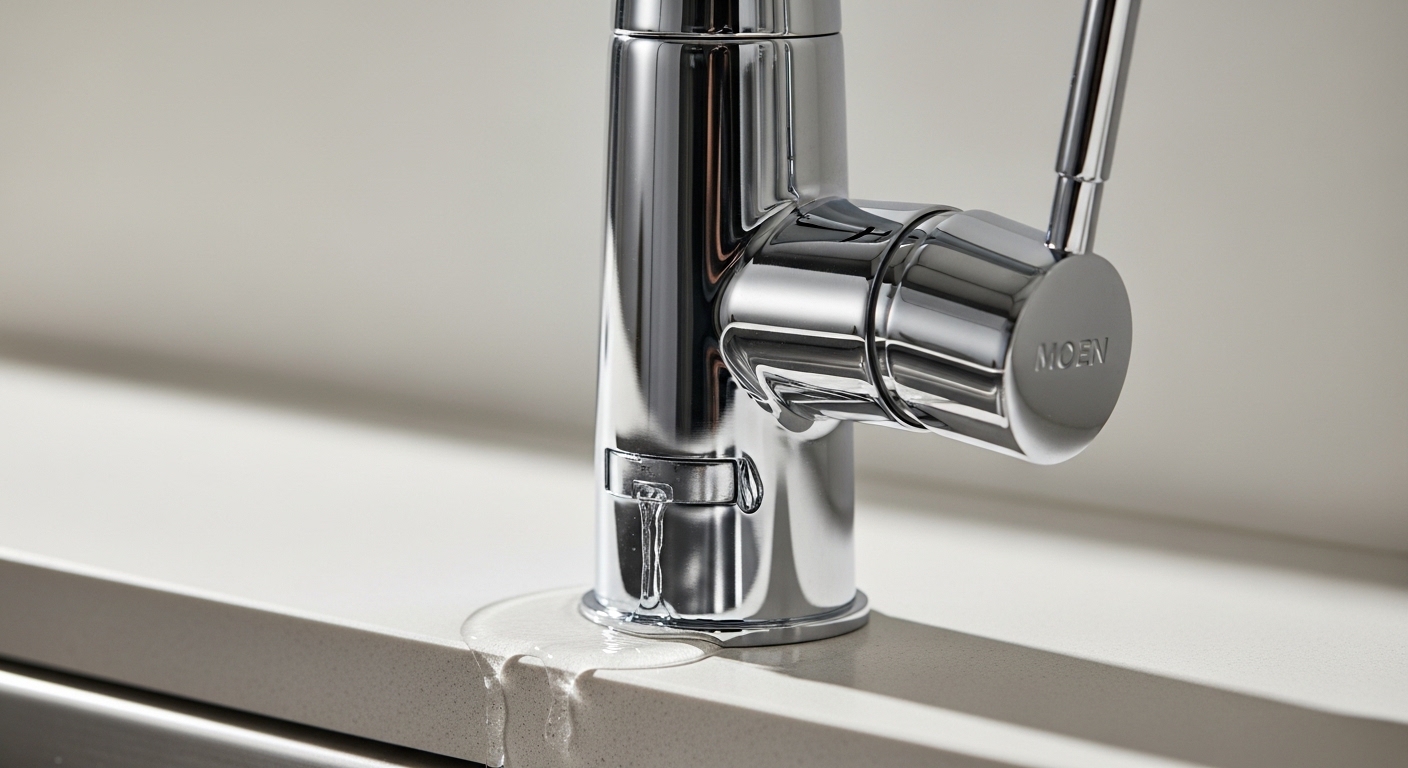
A Moen kitchen faucet spout O ring replacement is the fix for the most common Moen complaint there is: water seeping out from under the base of the spout — usually only when you swing the faucet left or right, or turn the water on full. The good news is that this is not a cartridge problem, not a crack, and definitely not a reason to buy a new faucet. It’s two little rubber rings that have gone hard and flat, and swapping them is one of the easiest plumbing repairs you can do at home with zero special tools.
Below I’ll walk you through exactly how to tell it’s the O-rings (and not something worse), which rings your model actually uses, the step-by-step swap, and how to keep it from happening again. I’ve repaired hundreds of these on high-arc pull-down and standard Moen spouts, so this is the real-world version — not the sanitized one.
How Do I Know the Leak Is Coming From the Spout O-Rings and Not the Cartridge?
If water appears at the base of the spout only when you swivel it or run it hard, it’s the spout O-rings. If water drips from the end of the spout when everything is shut off, that’s the cartridge — a completely different repair.
Here’s the simple test. Dry the whole faucet with a towel. Turn the water on and slowly swing the spout side to side. Watch the seam where the spout base meets the valve body. If a ribbon of water creeps out of that seam or runs down onto the deck, your O-rings have failed. The rubber has lost its “squish” and no longer seals the gap between the spinning spout tube and the stationary brass body underneath it.
By contrast, a cartridge that’s worn will let the faucet drip from the aerator when the handle is off, or make the water hard to shut off completely. If that’s your symptom, the O-ring swap won’t help you — and you’ll want our full guide on how to fix a Moen kitchen faucet from leaking instead, which covers cartridge diagnosis in detail. It’s worth doing this two-minute test before you buy anything, because the wrong part is the number-one reason people redo this job twice.
What O-Rings Does a Moen Kitchen Faucet Spout Actually Use?
Most Moen kitchen spouts seal against the valve body with two O-rings stacked in grooves near the bottom of the spout tube — a larger lower ring and a smaller upper ring. The exact sizes depend on your model, but Moen sells the correct pair in a single repair kit so you don’t have to measure.
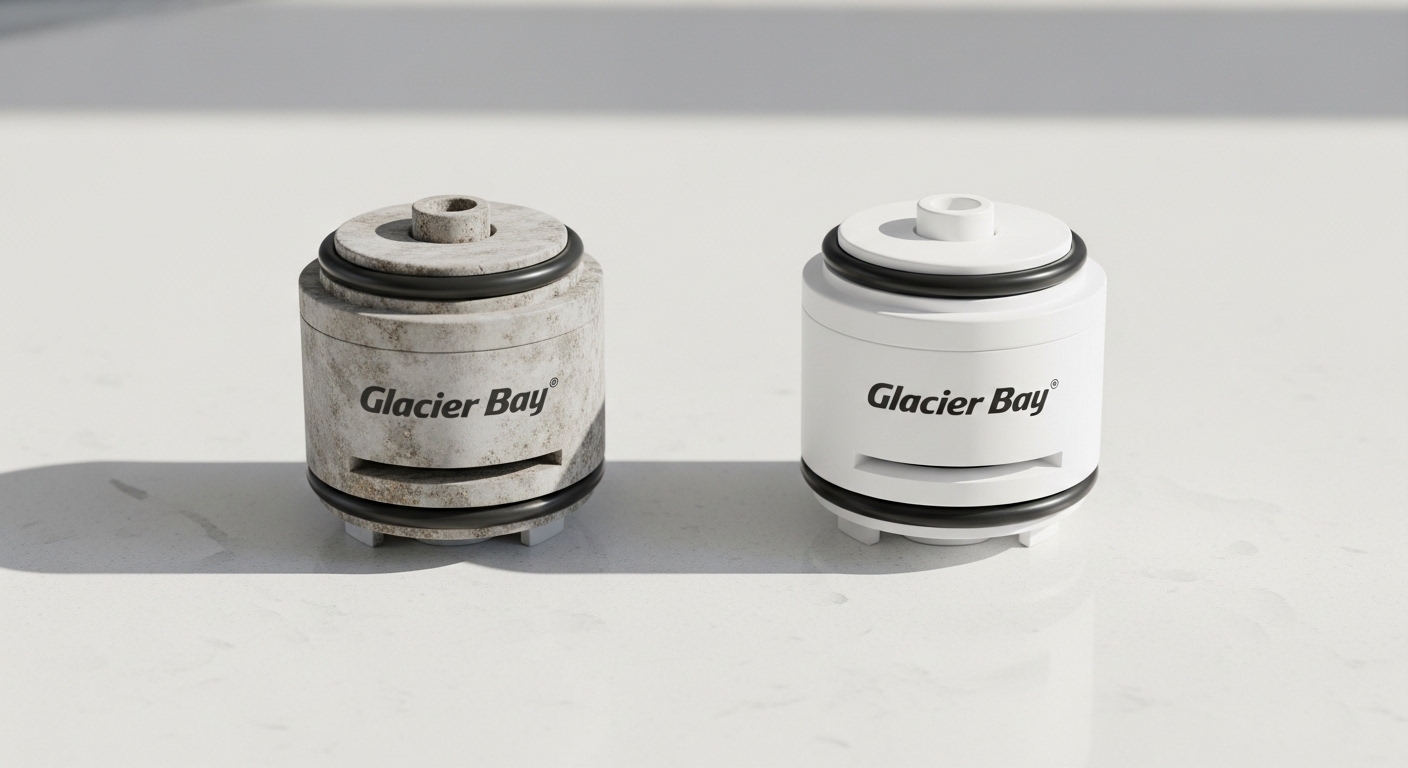
The easiest path is to buy Moen’s genuine O-ring kit for your faucet family rather than guessing at generic rings from a hardware-store drawer. Generic rubber rings are usually nitrile (Buna-N), which hardens fast against hot water and chlorine. Moen’s kits — and any quality replacement — use silicone or EPDM, which stay soft for years. Here’s how the common options stack up:
| O-Ring Type | Material | Typical Lifespan | Cost (pair/kit) | Best For |
|---|---|---|---|---|
| Moen genuine repair kit | Silicone / EPDM | 8–12 years | $8–$15 | Guaranteed correct fit, lifetime-warranty models |
| Aftermarket silicone kit | Silicone | 6–10 years | $5–$10 | Budget fix if sizes are verified |
| Generic Buna-N (nitrile) | Nitrile rubber | 2–4 years | $2–$5 | Emergency only — hardens quickly |
| Assorted plumber’s O-ring box | Mixed | Varies | $6–$12 | Odd/discontinued models when you can measure |
My honest advice: spend the extra couple of dollars on the genuine or a known silicone kit. The part is cheap and the labor is your Saturday morning — you don’t want to redo it because a bargain nitrile ring went stiff in three years.
What Tools and Parts Do I Need Before I Start?
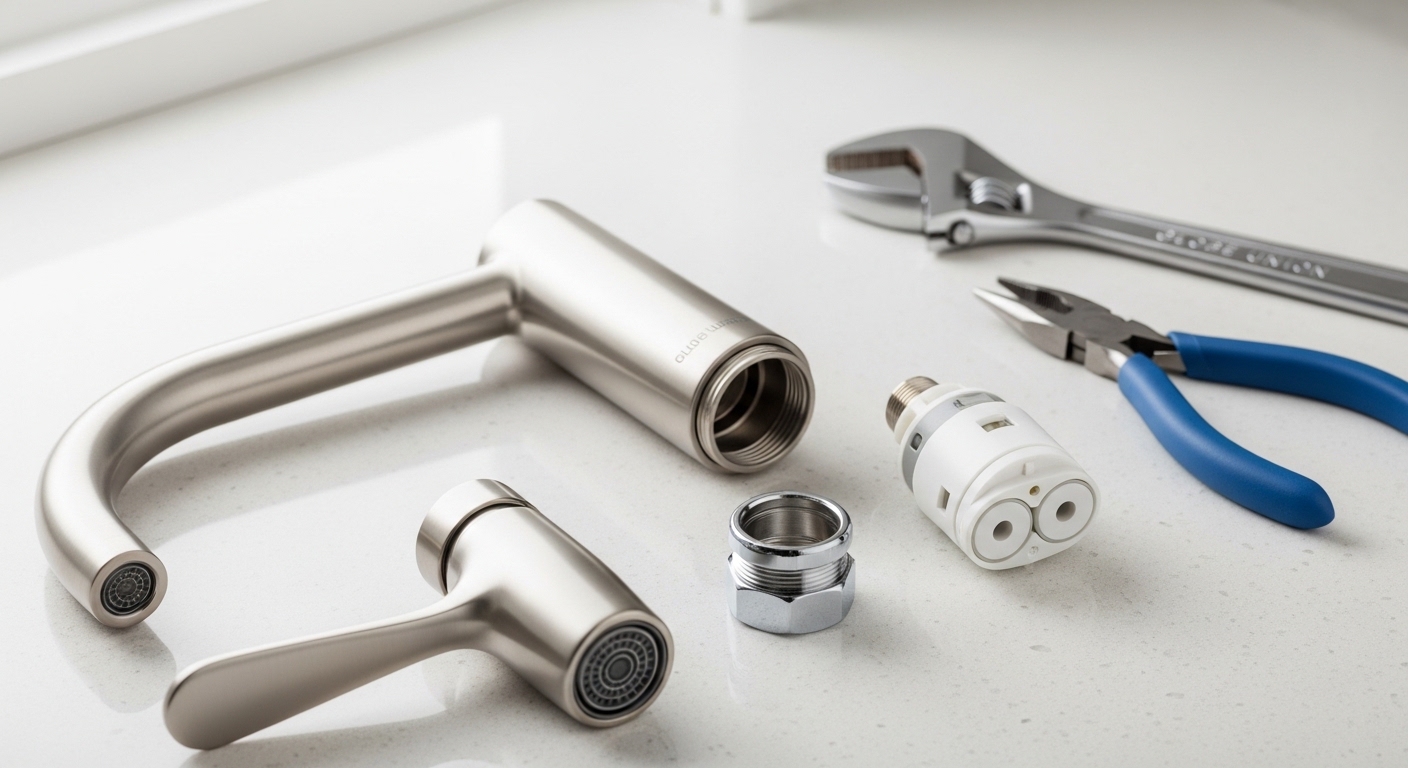
You need almost nothing — a hex key, a pick, and silicone grease cover 90% of Moen spouts. Gather these before you turn off the water so you’re not running to the garage with wet hands:
- Replacement O-rings — the correct Moen kit or verified silicone pair.
- 2.5 mm hex/Allen key — for the handle set screw (many Moen handles use this).
- Plumber’s silicone grease — food-safe, NOT petroleum jelly (petroleum degrades rubber).
- A dental pick or small flat screwdriver — to roll the old rings out of their grooves.
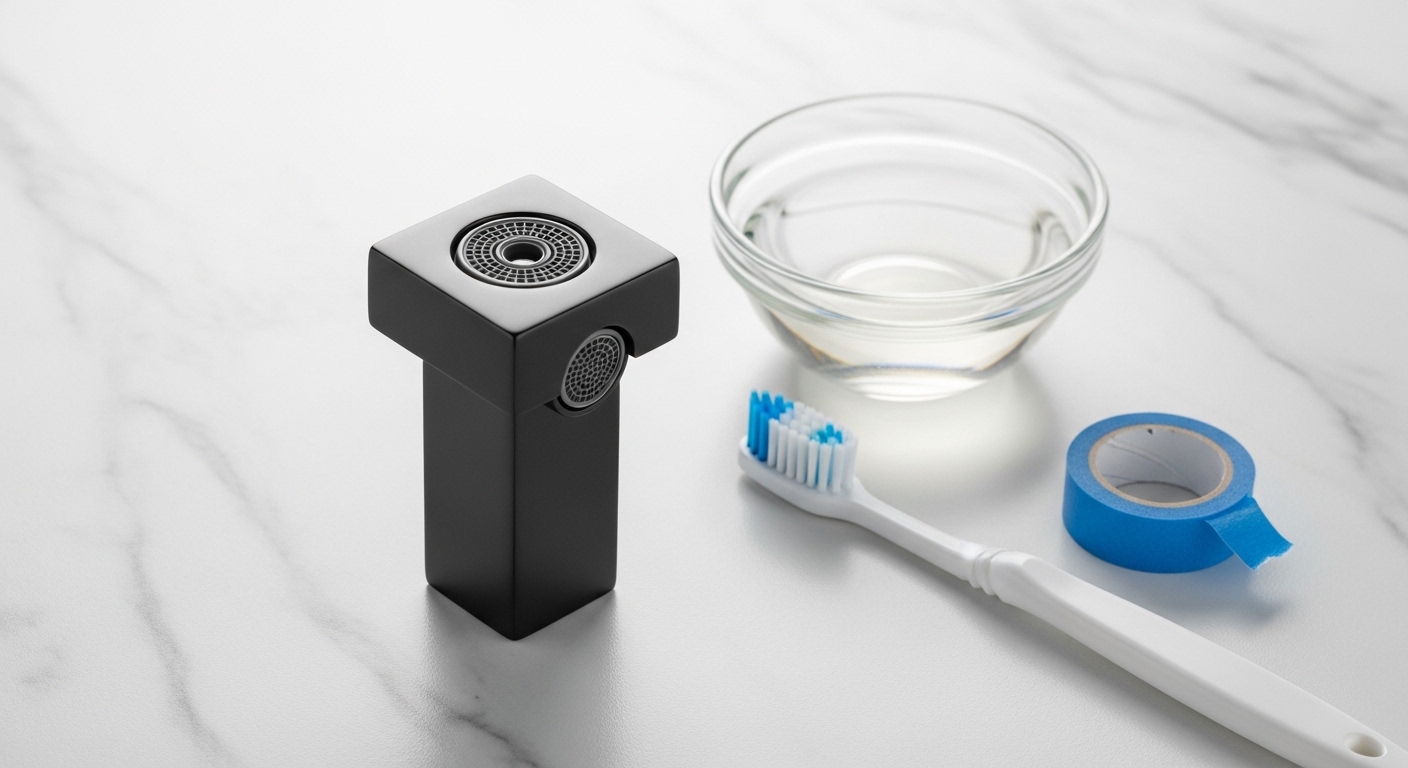
- A soft cloth and white vinegar — to clean mineral scale off the brass valve body.
- Adjustable pliers with a rag — only if a retaining nut or clip is stubborn.
Do not skip the silicone grease. Dry O-rings tear as you slide the spout back down over the brass, and a torn ring leaks immediately — the single most common cause of a “I just replaced it and it still leaks” post on Reddit.
How Do You Replace the Spout O-Rings on a Moen Kitchen Faucet Step by Step?
The core of the job is lifting the spout straight off and rolling two rings on and off — here’s the exact sequence I use, start to finish:
- Shut off the water. Turn both angle-stop valves under the sink clockwise until they stop. Open the faucet to release pressure and confirm the water is truly off.
- Remove the handle. On a single-handle Moen, find the small set screw (usually under the handle or behind the lever) and back it out with your hex key. Lift the handle off. Some pull-down models have a decorative cap you pry off first.
- Take off the retaining hardware. Under the handle you’ll find a dome/bonnet nut or a retaining clip. Unthread the nut by hand or with rag-wrapped pliers, or slide the clip out with your pick.
- Lift the spout straight up. Pull the spout tube vertically off the valve body. It may take a firm, straight tug if mineral scale has it stuck — rock it gently, don’t yank sideways. The old O-rings are on the bottom section of the tube (or in the body’s bore).
- Roll off the old O-rings. Use the pick to lift each ring out of its groove and roll it off. Note the position and size of each so the new ones go back in the same spots.
- Clean everything. Wipe the brass body and the spout bore. If there’s chalky white scale, scrub it with a vinegar-dampened cloth. A clean, smooth surface is what makes the new seal hold.
- Grease and install the new rings. Coat each new O-ring lightly with plumber’s silicone grease and seat it fully in its groove — no twists, no pinches. Add a thin film of grease to the brass body too.
- Reassemble. Slide the spout straight back down with a gentle twist so the rings glide over the body. Replace the clip/nut, the handle, and the set screw.
- Test. Slowly reopen the shut-off valves, run the faucet, and swing the spout side to side while watching the base. Dry seam = done.
If you’re comfortable pulling a spout apart, you’re more than ready for adjacent repairs too — the same patience pays off in a faucet cartridge replacement on other brands, which uses nearly identical disassembly logic.
My New O-Rings Still Leak — What Did I Do Wrong?
Nine times out of ten a fresh O-ring that still leaks means the ring was pinched or torn during reassembly, or you installed the wrong size. Both are fixable in ten minutes.
Run through this quick checklist before you assume the faucet is beyond help:
- Pinched ring: You forced the dry spout down and rolled a ring out of its groove. Re-grease and reinstall carefully.
- Wrong size: A too-small ring won’t compress evenly; a too-large one bunches. Match the Moen kit to your model number.
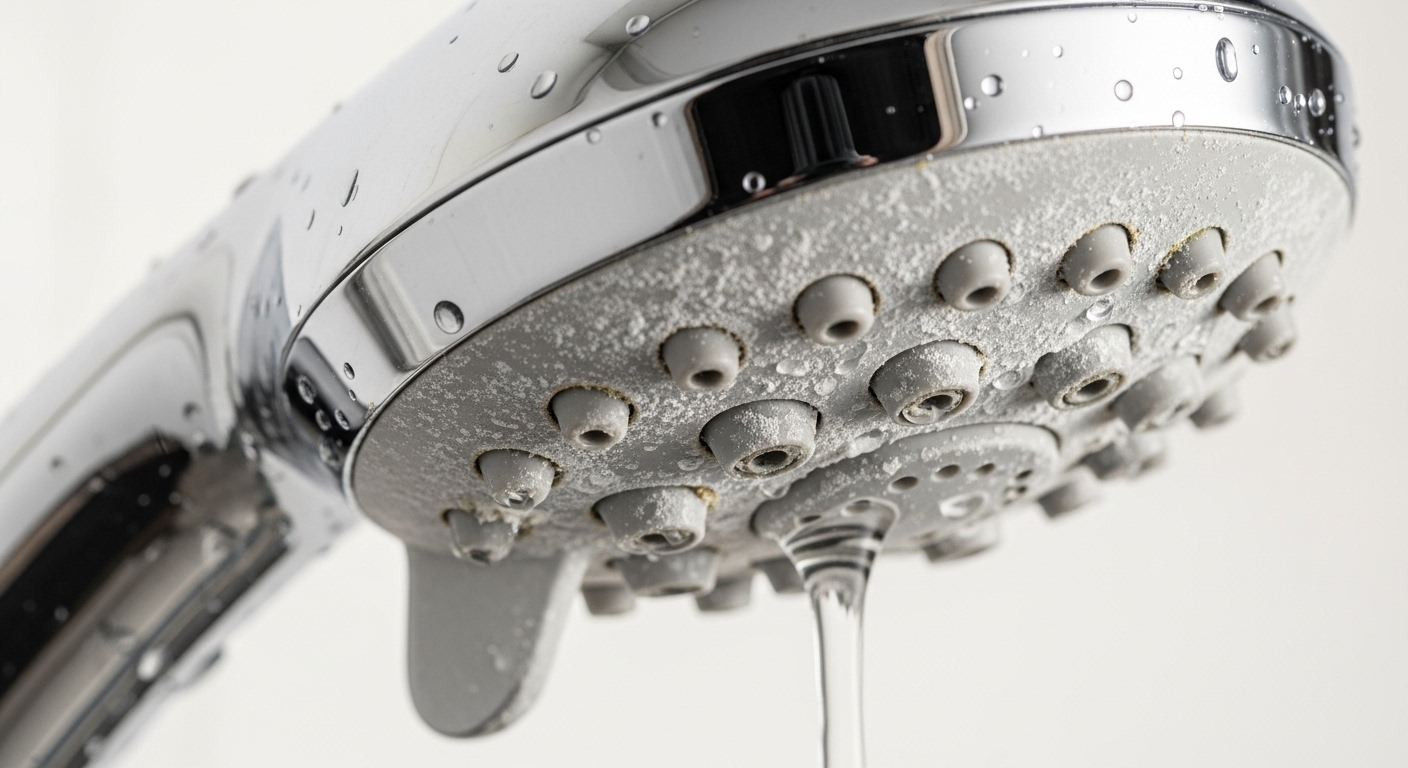
- Scale left behind: Grit or mineral buildup on the brass keeps the ring from seating. Clean until smooth.
- It was never the O-rings: If water still comes from the aerator when off, the cartridge is the culprit, not the spout seal.
- Cracked spout base: Rare, but a hairline crack in the plastic spout hub leaks no matter what ring you use — replace the spout.
While the faucet is apart, it’s smart to check the aerator too, since hard-water scale that chews up O-rings also clogs the screen. Our walkthrough on how to clean a faucet aerator clogged with hard-water buildup pairs perfectly with this repair and restores your flow at the same time.
Should I Just Replace the Whole Faucet Instead?
Almost never — not for leaking spout O-rings. A $10 O-ring kit fixes the exact problem a $300 faucet swap would, and Moen’s cartridges and seals are designed to be serviced, not thrown away. Replacement makes sense only in specific cases.
Consider a full replacement if: the spout body itself is cracked, the finish is peeling badly, you’re mid-remodel and changing the sink anyway, or the faucet is a discontinued model with no available parts. If you are in the market for an upgrade, a modern pull-down kitchen faucet gives you better spray control and serviceable seals from day one. But for a healthy faucet that simply weeps at the base, the O-ring fix is the clear winner on both cost and time.
How Do I Stop Moen Spout O-Rings From Leaking Again?
The two enemies of spout O-rings are hard-water scale and dried-out grease. Beat both and a set of silicone rings can last a decade. Here’s what actually extends their life:
- Re-grease every few years. A quick re-lube with silicone grease during any faucet service keeps the rubber supple.
- Address hard water. Mineral crystals act like sandpaper on the rings. A softener or point-of-use filtration slows the wear dramatically.
- Don’t over-swing the spout. Yanking the spout to its hard stop repeatedly accelerates ring wear.
- Use silicone or EPDM rings, not nitrile. Material choice is the single biggest factor in lifespan.
Do those and you likely won’t touch this faucet again until it’s time for a style upgrade.
FAQ
How much does a Moen kitchen faucet spout O-ring replacement cost?
If you do it yourself, $5–$15 for the O-ring kit and silicone grease. That’s it. A plumber will typically charge $75–$150 for the same visit because most of the bill is the trip and labor, not the parts — which is exactly why this is such a satisfying DIY.
Are Moen O-rings covered under the lifetime warranty?
Yes. Moen’s residential faucets carry a Limited Lifetime Warranty that covers replacement parts, including O-rings and cartridges, for the original homeowner. You can request the correct repair kit directly from Moen at no charge by providing your model number — a genuine advantage of buying a warrantied brand.
Can I use Vaseline or petroleum jelly instead of plumber’s grease?
No. Petroleum-based products swell and degrade rubber and silicone O-rings, causing them to fail faster. Always use food-safe plumber’s silicone grease, which is chemically compatible with the rings and safe for drinking water.
What’s the difference between the spout O-rings and the cartridge?
The spout O-rings seal the swiveling connection at the base of the spout, so their failure shows up as water at the base when you turn or swing the faucet. The cartridge controls hot/cold mixing and on/off flow; its failure shows up as dripping from the aerator or a handle that won’t fully shut off. They’re separate parts with separate symptoms.
How long does the whole job take for a beginner?
About 20–30 minutes the first time, including cleanup. The disassembly is quick; the part that slows people down is cleaning stubborn mineral scale off the brass valve body. Have your vinegar and cloth ready and you’ll finish well under half an hour.
Do all Moen kitchen faucets use the same O-rings?
No. Sizes vary between spout families (standard high-arc, pull-down, pull-out, and bar faucets), which is why you should match the repair kit to your specific model number rather than reusing a random ring. Moen prints the model number on the original box or you can identify it on Moen’s site by spout shape.
A Note From Our Team
This guide was written and technically reviewed by the fixture specialists at aleashafaucet, where we design, pressure-test, and sell kitchen and bathroom faucets every day. Our test bench cycles spout swivels and O-ring seals to simulate years of daily use before a product ships, and we follow the same low-lead and drinking-water safety standards (NSF/ANSI 61 and 372) that reputable faucet brands build to. We wrote this because we field the “water at the base of my spout” question constantly — and the honest answer is almost always a $10 pair of O-rings, not a new faucet. When a repair genuinely isn’t worth it, we’ll tell you that too.