Day 28 | How to Choose Renovation Workers? Reliable Workers Mean Half the Renovation Success
Author: Lao Wang Talks Renovation
Hello everyone, I’m Lao Wang.
In the renovation industry, it’s often said “30% materials, 70% workmanship.” Many homeowners fall into renovation pitfalls not because they chose the wrong materials, but because they hired the wrong workers. Good materials in the hands of poor craftsmen can produce flawed projects; ordinary materials in the hands of reliable workers can produce results that exceed expectations.
Reliable workers strictly follow construction standards, handle details with meticulous care, and maintain stable project timelines, leaving almost no hidden renovation problems after move-in—worry-free and effortless. In contrast, poor-quality workers cut corners, rush through tasks carelessly, and produce crude workmanship, leading to endless problems like cracked walls, hollow tiles, and leaking pipes, with later rework costing time, money, and peace of mind. Today, Lao Wang will share all the essential tips for selecting renovation workers, teaching you step by step how to precisely avoid pitfalls and choose reliable masters for every trade.
I. Look at Past Projects: Reject Verbal Boasting, Only Trust Real Craftsmanship
Never blindly trust a worker’s verbal promises like “I’ve been doing this for over a decade, my craftsmanship is absolutely guaranteed.” Whether the craftsmanship is good or not—real cases don’t lie.
1. Ask for Real Site Materials: Directly ask workers to provide on-site photos and construction videos of 3-5 recently completed projects. Ideally, watch live streams or visit ongoing construction sites in person to avoid them using stolen online images or peers’ work to pass off as their own.
2. Examine Workmanship Details Closely
◦ Plumbing/Electrical Sites: Check whether electrical wiring runs horizontally and vertically straight, whether strong and weak currents are separated into different slots, and whether junction boxes are flat and standardized; check whether water pipe routing is reasonable, whether joints are cleanly finished, and whether there are obvious leaks or misalignments.
◦ Masonry Sites: Check whether tile laying is flat, whether grout lines are even and straight, and whether internal and external corners are straight. Run your hand along tile seams to feel for noticeable height differences; check whether edges around windows and doors are finished meticulously.
◦ Carpentry Sites: Check whether ceiling keels are firmly fixed, whether cabinet frames are square, whether cabinet doors open and close smoothly, and whether edge sealing is tight, with no excessive gaps or panel deformation.
◦ Painting Sites: Check whether walls are flat and smooth, whether internal and external corners are straight, whether latex paint/putty has no sagging, brush marks, or color differences, and whether there are no waves or bulges under lighting.
3. Decisively Eliminate: Workers who cannot produce real cases, only dare to talk but not show, or whose case details are crude—exclude them directly. Don’t harbor any wishful thinking.

II. On-Site Communication + Trial Work: Test Professionalism and Avoid Pitfalls
Selecting workers can’t be based on quotes alone. Communication and trial work are the core steps for testing a master’s sense of responsibility and professionalism.
1. In-Depth Communication on Craftsmanship: Communicate face-to-face with workers about construction processes, craftsmanship standards, and precautions. For example, ask an electrician, “Should the wiring make wide bends, and how much pressure should the pressure test use?”; ask a mason, “What’s the standard for tile hollowness rate, and how do you slope kitchen/bathroom floors?” Professional masters can clearly and accurately state the standard practices and answer fluently; unprofessional workers will only give vague answers and perfunctory responses.
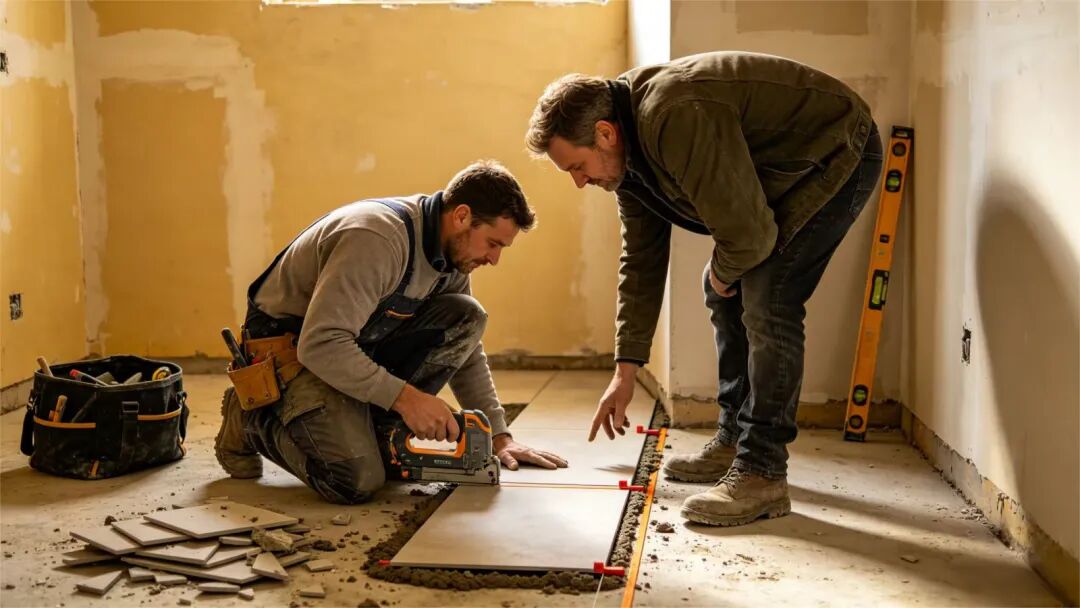
2. Small-Area Trial Work Verification: Don’t lock in the entire project upfront, especially with unfamiliar workers. Be sure to arrange a small-scale trial—for example, have the mason lay 1-2 square meters of tile, have the painter paint a small wall section, have the carpenter make a small section of ceiling, or have the electrician run a small section of wiring. Only formalize cooperation if the trial passes.
3. Observe Work Attitude: Watch whether the master works carefully, whether tools are complete and clean, and whether the construction site is tidy. Masters who are sloppy, have messy tools, don’t listen to communication, or are stubborn—no matter how good their craftsmanship—are not recommended, as construction disputes are very likely to arise later.
III. Ask About Reputation + Confirm Prices: Avoid Low-Price Traps, Ensure Cooperation
When finding workers for renovation, reputation always comes first, and reasonable prices form the foundation of long-term cooperation.
1. Ask Around About Reputation: Prioritize reliable masters recommended by relatives, friends, and neighbors who have renovated—the most authentic reputation comes from those who have used them; you can also ask building material merchants and community property management to avoid workers with poor reputations and frequent complaints.
2. Beware of Ultra-Low-Price Traps: Labor prices must refer to the local market average. Don’t be greedy and choose workers far below market price. Low prices often mean cutting corners, using inferior materials for superior, delaying the project, and raising prices midway—seemingly saving money, but later rework costs double.
3. Clarify Cooperation Details: Verbal agreements don’t count. Be sure to briefly write down construction content, project duration, payment milestones, acceptance standards, and after-sales responsibilities to avoid later disputes; at the same time, don’t maliciously withhold wages—when workers receive reasonable pay, they will work more attentively and responsibly.
IV. Core Focus for Selecting Each Trade: Precise Control, No Professional Pitfalls
Different renovation trades have vastly different standards for evaluating craftsmanship. Remember the key points for each, and you’ll never make a wrong choice when picking masters.
Plumbers/Electricians (Core of Renovation, Most Critical Hidden Engineering)
Focus on understanding standards, performing acceptance checks, and strong sense of responsibility: Must be familiar with home plumbing/electrical construction standards, with reasonable electrical routing and standardized wiring without hidden dangers. After water pipe installation, they should proactively conduct pressure tests (qualified when pressure is 0.8MPa, with pressure drop not exceeding 0.05MPa after 30+ minutes of holding pressure). They should mark plumbing/electrical routes well so later repairs can precisely locate points.
Masons (Affect Aesthetics and Use, Difficult to Rework)
Carpenters (Determine Durability of Cabinets and Ceilings)
Focus on solid structure, square workmanship, no deformation or cracking: Ceiling keel spacing should comply with standards and be firmly fixed to avoid later ceiling cracking; custom cabinet frames should be square, panels precisely cut, cabinet doors should open and close without abnormal sounds, edge sealing should be tight and burr-free, and wood products should have no deformation or wobbling issues.
Painters (The “Face” Project of Home Renovation, Affects Overall Aesthetics)
Focus on flat walls, even coating, no defects: Putty sanding should be flat, internal and external corners straight, latex paint/wall paint applied evenly, with no brush marks, sagging, color differences, bulges, or cracks. Under lighting, walls should have no wave patterns, and finished products should feel delicate and smooth to the touch.
Learn a little renovation knowledge every day, avoid all renovation tricks, and you too can become a renovation expert, never getting cheated throughout the renovation process.
Follow me, and tomorrow I’ll continue sharing renovation after-sales rights protection strategies. If you really encounter construction problems, don’t panic—I’ll teach you to legally protect your rights and easily solve them!
Originally published in WeChat by 工地实话实说 on 2026-05-15. Translated and edited for English-language readers.