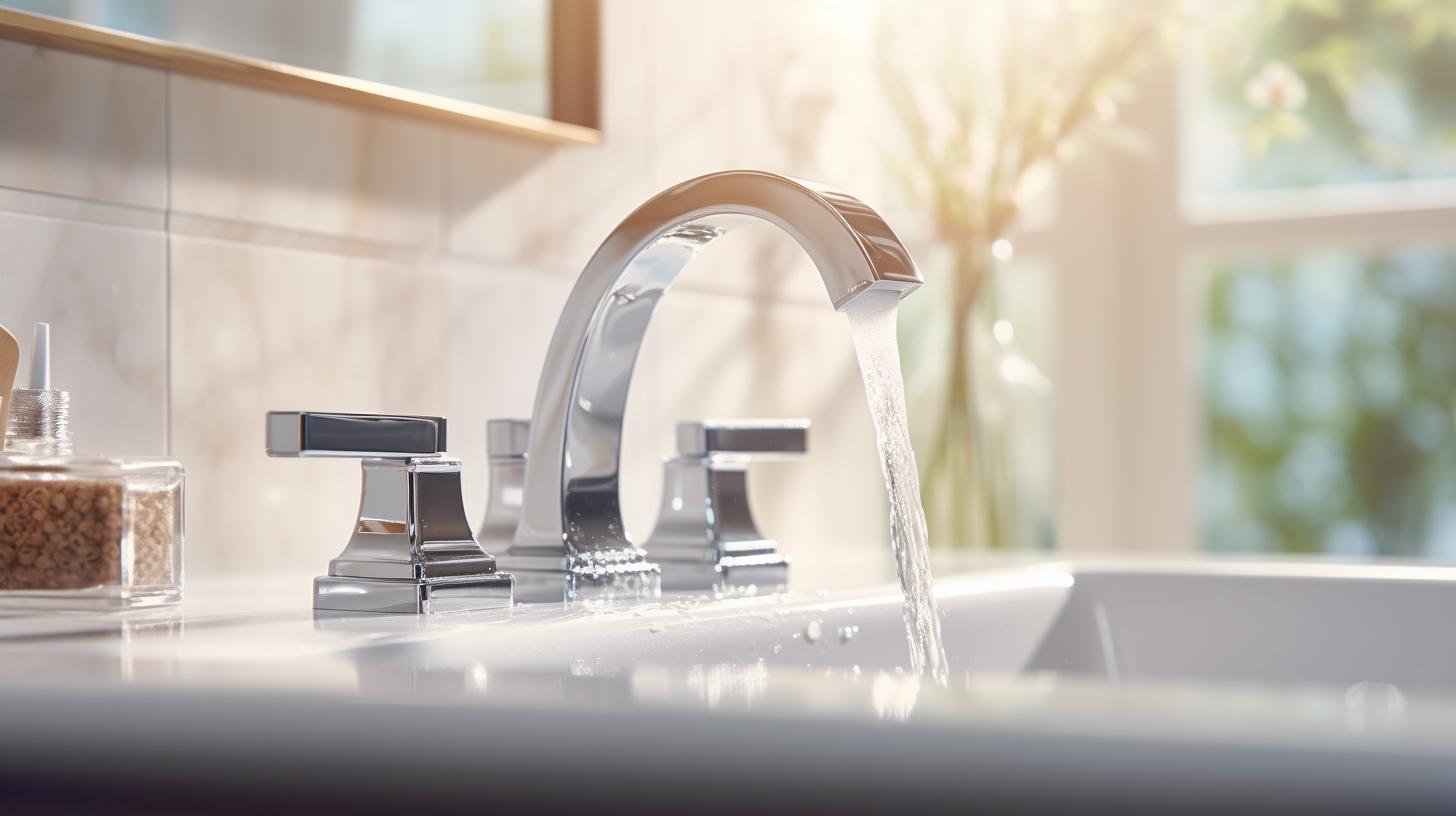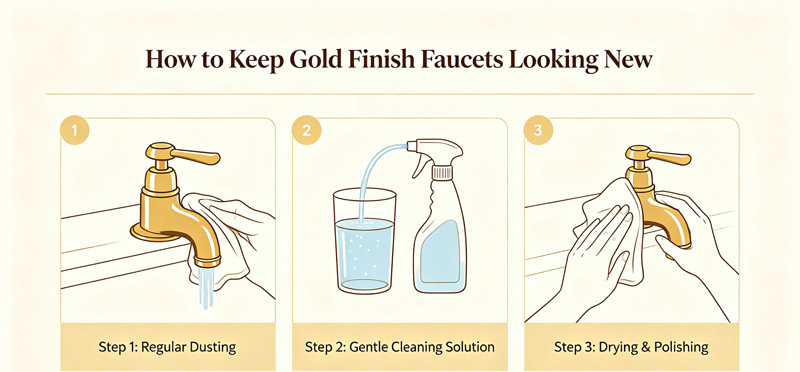
Gold finish faucets bring warmth, elegance, and luxury into kitchens and bathrooms, making them a favorite choice for homeowners who want a refined, upscale look. Whether polished, brushed, or matte gold, these faucets can become the centerpiece of a sink area—but only if they are properly maintained. Without regular care, fingerprints, water spots, soap residue, and mineral buildup can dull their shine and shorten their lifespan. Fortunately, keeping gold finish faucets looking new is easier than many people think when the right cleaning habits and preventive measures are used.
The first step in preserving gold finish faucets is understanding the nature of the finish itself. Unlike solid gold fixtures, most gold faucets are made from brass or stainless steel coated with a decorative finish such as PVD (Physical Vapor Deposition) or electroplated gold-tone layers. These coatings are durable but still vulnerable to scratches, harsh chemicals, and abrasive cleaning tools. Treating them gently is essential to prevent fading or peeling over time.
Daily cleaning is one of the most effective ways to keep gold faucets in pristine condition. After each day’s use, wipe the faucet dry with a soft microfiber cloth. This simple habit removes water droplets before they evaporate and leave mineral spots behind. In areas with hard water, this step becomes especially important because calcium deposits can quickly build up and dull the gold surface.
For weekly cleaning, use warm water mixed with a few drops of mild dish soap. Dampen a soft cloth or sponge and gently wipe the faucet surface, paying attention to handles, spout joints, and crevices where soap residue may collect. Avoid soaking the faucet or letting water sit on the surface for long periods. Once cleaned, rinse with clean water and dry thoroughly with a lint-free towel to restore shine.
One of the biggest mistakes homeowners make is using harsh cleaners on gold finish faucets. Products containing bleach, ammonia, vinegar, or acidic descalers can damage the protective coating and cause discoloration. Even some bathroom cleaners marketed as “multi-surface” may be too aggressive. Always check product labels carefully, and when in doubt, stick to pH-neutral soap solutions designed for delicate finishes.
Abrasive scrubbers should also be avoided. Steel wool, rough scouring pads, and stiff brushes can scratch the gold surface, leaving visible marks that cannot be repaired easily. Instead, use soft microfiber cloths, cotton pads, or non-abrasive sponges. If mineral buildup is stubborn, wrap a damp soft cloth around the affected area for a few minutes to loosen residue before wiping gently.
Fingerprints are another common issue, especially on polished gold faucets. Because gold finishes reflect light so well, smudges become more noticeable than on matte or brushed surfaces. To reduce fingerprint buildup, keep a dry microfiber cloth nearby and quickly buff the faucet after use. This not only removes oils from hands but also helps maintain a glossy, mirror-like appearance.
Hard water is one of the greatest threats to gold finish longevity. If your home has mineral-rich water, consider installing a water softener system or faucet filter. Reducing mineral content in water decreases limescale formation and protects all plumbing fixtures, not just gold faucets. In severe hard water regions, cleaning frequency may need to increase to prevent deposits from becoming difficult to remove.
Proper polishing can also help preserve brilliance, but it must be done carefully. Never use metal polish unless the manufacturer specifically recommends it for gold finishes. In most cases, a dry microfiber cloth is sufficient to buff the faucet to a shine. Over-polishing with inappropriate products may wear down the finish layer prematurely.
Protecting the faucet from accidental scratches is equally important. Avoid placing metal razors, jewelry, tools, or heavy objects near the faucet base where they might scrape against the finish. In kitchens, be cautious when washing pots and pans, as bumping cookware into the spout can chip or dent decorative coatings.
Another overlooked factor is moisture around the faucet base. Water pooling around mounting points can lead to hidden corrosion beneath the fixture over time. Regularly inspect the base of the faucet and wipe away standing water to prevent both cosmetic damage and structural wear. If leaks develop around seals or joints, repair them promptly before they affect the finish.
Manufacturer care instructions should always be followed whenever available. Different brands use different coating technologies, and some premium finishes have special maintenance requirements. Reading the warranty guidelines can also help avoid accidental misuse that may void coverage.
Seasonal deep maintenance is a smart way to extend faucet life. Every few months, inspect aerators for mineral buildup and clean them gently if needed. Remove debris from around handles and joints using a soft toothbrush designed only for delicate surfaces. This prevents grime accumulation that can make even well-maintained faucets appear aged.
If discoloration begins to appear despite regular care, avoid DIY chemical restoration methods. Instead, contact the faucet manufacturer for approved touch-up recommendations. Attempting to strip or recoat gold finishes at home often causes irreversible damage.
Ultimately, keeping gold finish faucets looking new comes down to consistency rather than complexity. Gentle daily drying, mild weekly cleaning, protection from harsh chemicals, and prompt attention to buildup all work together to preserve the faucet’s original elegance. Gold faucets are an investment in style, and with proper care, they can remain radiant and luxurious for many years.
A well-maintained gold faucet does more than function efficiently—it continues to make a design statement every time someone enters the room. By adopting a few careful habits, homeowners can enjoy the timeless beauty of gold finishes without worrying about fading shine or premature wear.